
Taking a surf lesson is the single most effective first step for any beginner or traveler who wants to ride waves safely and build real skills fast. This renting vs lesson surfboard guide breaks down exactly what each option costs, what you actually get, and how to combine both for the fastest progress. Surfboard rentals give you freedom and flexibility. Surf lessons give you technique, safety coaching, and form correction from day one. For most beginners, the smartest move is to start with a lesson and then rent a board to keep practicing on your own time.
What does renting a surfboard actually cost and include?
Surfboard rentals are the most accessible entry point to surfing. Daily rental costs run between $15 and $50, and multi-day discounts are common. A week’s rental often costs about the same as three single days. That math makes rentals a solid choice for travelers staying more than a few days.
Most rental shops stock soft-top longboards for beginners. These boards are wider, thicker, and more stable than performance shortboards. They are the right tool for learning. A reputable shop will also give you a quick rundown on local wave conditions, which matters more than most beginners realize.
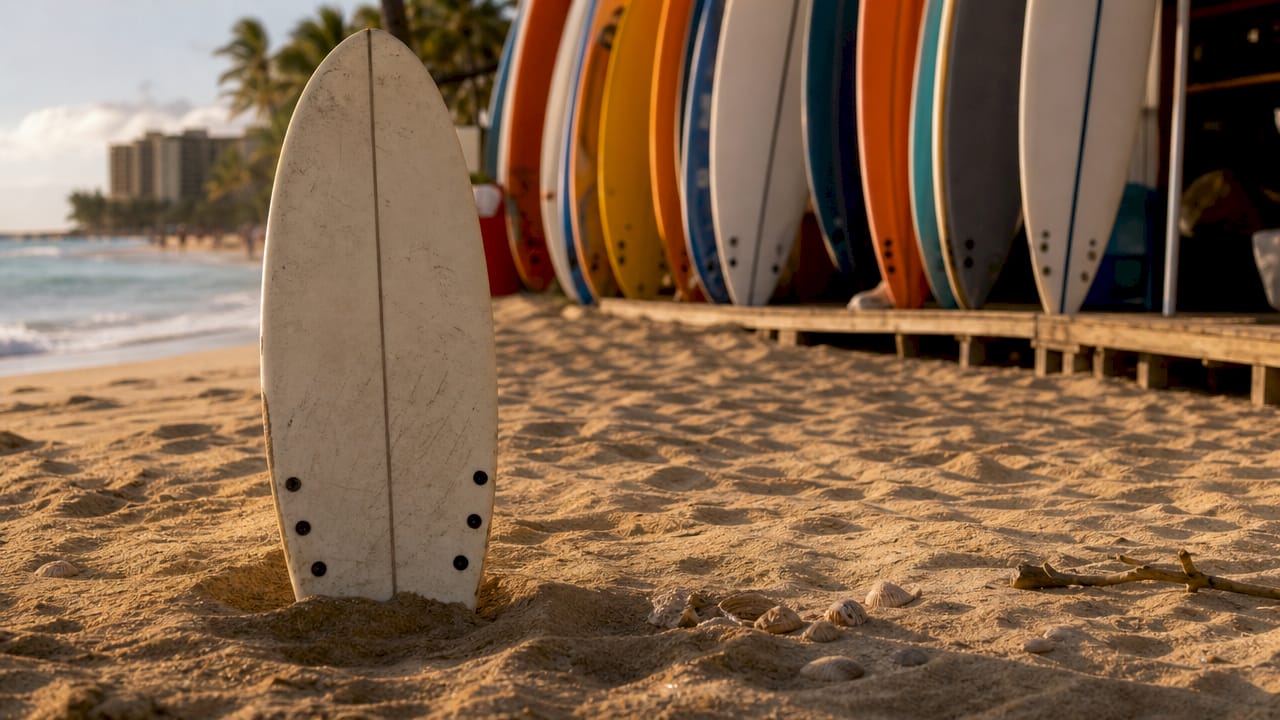
Equipment condition varies widely between shops. Reputable rental shops provide well-maintained soft-top boards and share local wave knowledge that directly improves your session safety. Choosing a shop based on reputation rather than the lowest price protects you from damaged gear and bad advice.
Hourly rentals feel convenient but often backfire. Surfing demands more physical stamina than most beginners expect. Hourly sessions push you to rush, which leads to fatigue and slower learning. Half-day and full-day rentals give your body time to recover between waves and let you build a real feel for the board.
Here is what to check before you take any rental board into the water:
- Leash condition: Look for fraying, cracks, or weak velcro. A broken leash sends your board flying toward other surfers.
- Board surface: Press along the deck for soft spots. Water damage inside the foam weakens the board and affects buoyancy.
- Fins: Tug each fin firmly. Loose fins change how the board tracks and can detach mid-ride.
- Nose and tail: Check for deep dings or cracks that could worsen in the water.
- Wax coverage: Thin or old wax means your feet will slip. Ask the shop to re-wax if needed.
Pro Tip: Book your rental online before peak season. Advance reservations lock in better board selection and often earn you perks like free fin swaps or board upgrades from the shop.
Why surf lessons are recommended for beginners
Surf lessons are not just about standing up on a board. They teach you how to read waves, position yourself in the lineup, and move safely in the ocean. That combination of skills is what separates a beginner who progresses quickly from one who spins their wheels for months.
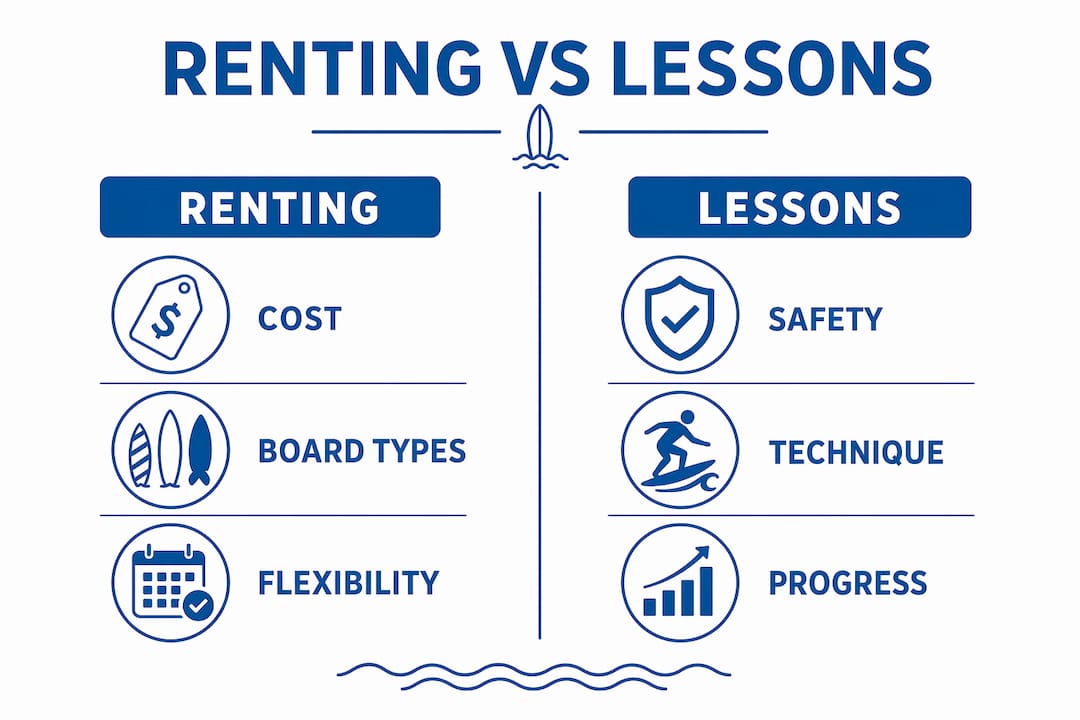
Lessons reduce injury risk and prevent bad habits by teaching ocean safety, proper stance, and surfing etiquette from the start. Bad habits formed early are hard to unlearn. A coach catches them immediately and corrects your form before they become automatic.
Most beginner lessons follow a clear structure:
- Land-based warm-up and pop-up practice: You rehearse the motion of standing up on the board before you ever touch the water. This builds muscle memory.
- Ocean safety briefing: Instructors cover rip currents, right-of-way rules, and how to fall safely to avoid injury.
- Wave reading basics: You learn to identify which waves are catchable and how to time your paddle.
- In-water coaching: An instructor stands in the water beside you, pushes you into waves, and calls out corrections in real time.
- Surfing etiquette: You learn the unwritten rules of the lineup, including who has priority on a wave and how to avoid collisions.
Lesson formats vary by budget and learning style. Group lessons cost between $50 and $190 per person for 90–120 minute sessions. Private lessons run $80 to $225 per session and give you one-on-one attention for faster correction. Many schools bundle the board rental into the lesson price, which removes the hassle of sourcing gear separately.
The fastest learners combine structured instruction with immediate water time. Hhsurf, the Hans Hedemann Surf School in Waikiki, is built around exactly this model. Students get hands-on coaching from professional surfers and routinely stand up on their boards within their first Waikiki surf lesson. That success rate reflects a teaching method designed to cut the learning curve, not extend it.
How combining rentals with lessons speeds up your progress
The most effective approach for beginners is to take a lesson first and then rent a board to practice what you learned. Lessons give you a foundation. Rentals give you the repetition needed to lock that foundation in place.
After a coached session, you know your starting position, your pop-up timing, and which wave size suits your current skill level. That knowledge makes every rental session more productive. Without it, renting a board without guidance leads to longer learning curves, crowded lineup mistakes, and reinforced bad habits.
The table below shows how the two options compare across the factors that matter most to beginners and travelers:
| Factor | Rental only | Lesson plus rental |
|---|---|---|
| Skill development speed | Slow without coaching | Fast with immediate feedback |
| Safety knowledge | Self-taught, higher risk | Structured ocean safety training |
| Equipment guidance | Choose on your own | Instructor recommends right board |
| Cost for one day | $15–$50 | $65–$240 bundled |
| Best for | Experienced surfers revisiting | True beginners and travelers |
Bundled packages that combine a lesson with a discounted rental are the best value for first-timers. You pay slightly more upfront but save time, reduce injury risk, and leave the water with skills you can actually build on.
Pro Tip: After your lesson, ask your instructor which board size to rent for your next solo session. Instructors know your weight, height, and current skill level. Their recommendation beats any generic size chart.
How do you choose between renting, lessons, or both?
The right choice depends on four personal factors: your current skill level, how often you plan to surf, your budget, and how long you are traveling.
If you have never surfed before, start with a lesson. The ocean safety knowledge and technique training from even one session will make every future rental session safer and more enjoyable. Skipping lessons to save money often costs more in wasted sessions and avoidable mistakes.
If you have surfed before and just need a board for a few days, a rental makes complete sense. You already know the basics. A quality rental shop with good local knowledge fills the gap.
Use these questions to guide your decision:
- Have you ever stood up on a surfboard before? If no, book a lesson.
- Are you traveling for more than three days? If yes, a multi-day rental adds real value.
- Do you want to improve your technique, not just have fun? If yes, a private lesson is worth the cost.
- Are you traveling with children or complete beginners? Structured lessons with safety coaching are the right call.
- Is your budget tight? Group lessons offer coached instruction at the lowest per-person price.
Travelers should prioritize rental shop reputation over the cheapest daily rate. A shop that knows the local breaks, maintains its boards well, and gives honest advice about conditions is worth a few extra dollars per day.
Common mistakes beginners make when renting or taking lessons
Most beginner mistakes come down to rushing. Rushing into the water without checking gear, rushing through a lesson without asking questions, and rushing to rent by the hour instead of by the half day.
- Skipping the equipment check: Always inspect the leash, fins, and board surface before paddling out. Poorly maintained rental gear causes accidents that a two-minute inspection prevents.
- Booking hourly rentals: Hourly sessions create pressure to maximize water time. That pressure leads to fatigue and sloppy technique. Half-day and full-day rentals let you rest and surf better.
- Waiting to book in peak season: Popular breaks run low on quality boards fast. Booking rentals online in advance secures better equipment and builds goodwill with the shop.
- Ignoring surfing etiquette: Cutting off other surfers in the lineup causes collisions and creates tension. Learn the right-of-way rules before your first session. Hhsurf covers surfing etiquette as a core part of every beginner lesson.
- Treating a lesson as optional: Renting a board feels like the cheaper shortcut. The real cost shows up later in slow progress and reinforced bad habits.
“The biggest mistake I see is beginners renting a board and paddling straight into a crowded lineup with no idea of the rules. One lesson changes everything.”
Key Takeaways
Beginners who combine a surf lesson with follow-up rentals learn faster, stay safer, and build confidence that makes every session after that more enjoyable.
| Point | Details |
|---|---|
| Lessons first, rentals second | Take at least one coached lesson before renting solo to build safe technique. |
| Rental costs are manageable | Daily rentals run $15–$50; multi-day discounts make longer trips more affordable. |
| Lesson formats fit every budget | Group lessons start at $50; private sessions go up to $225 with faster skill gains. |
| Always inspect rental gear | Check leash, fins, and board surface before every session to prevent accidents. |
| Book ahead in peak season | Advance online reservations secure better boards and often earn free upgrades. |
What I’ve learned watching beginners choose between renting and lessons
The most common pattern I see is a traveler who rents a board on day one, struggles for two hours, and then books a lesson on day two. The lesson fixes everything they were doing wrong. The remaining rental days become genuinely fun instead of frustrating. That sequence works, but it wastes a day and costs more overall than booking the lesson first.
Rentals alone are not a bad choice. They are just the wrong starting point for someone who has never surfed. The ocean does not care how confident you feel on land. Rip currents, right-of-way rules, and wave timing are not things you figure out by trial and error. They are things you learn from someone who has spent years in the water.
The travelers who get the most out of their surfing time are the ones who invest in one good lesson, ask their instructor which board to rent next, and then spend the rest of their trip putting that coaching into practice. That combination is not expensive. It is efficient. And efficiency in surfing means more waves caught, fewer wipeouts, and a lot more fun.
If you are deciding between renting and lessons, the surf school vs self-teaching comparison is worth reading before you commit to either path.
— Johann
Hhsurf lessons and rentals in Waikiki for beginners
Hhsurf, the Hans Hedemann Surf School in Waikiki, offers beginner-friendly surf lessons in Waikiki that include board use, safety coaching, and hands-on instruction from professional surfers. Students regularly stand up on their first wave during their first session.
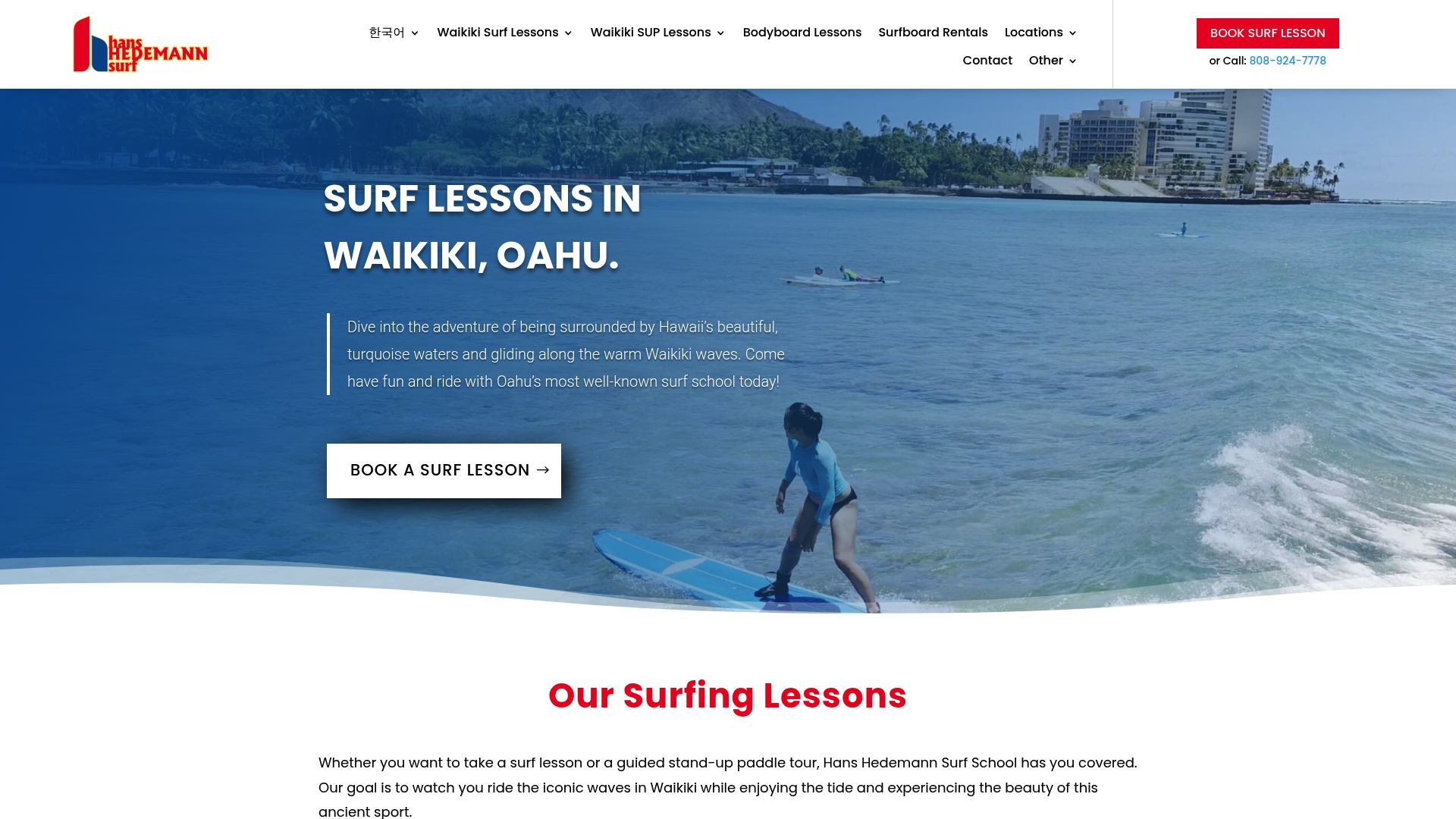
Hhsurf also offers surfboard rentals in Waikiki with well-maintained soft-top boards suited to every skill level. Whether you want a bundled lesson and rental package or a standalone rental for a follow-up session, Hhsurf provides the equipment, the local knowledge, and the coaching to make your time in the water count. Book your lesson or rental directly through Hhsurf and start your first session with the right foundation.
FAQ
Is it better to rent a surfboard or take a lesson first?
Taking a lesson first is the better choice for true beginners. Lessons teach ocean safety, wave reading, and proper technique that make every rental session after that more productive and safer.
How much does a surfboard rental cost per day?
Daily surfboard rentals typically cost between $15 and $50. Multi-day rentals offer significant discounts, with a week’s rental often priced at roughly three single-day rates.
What type of board should a beginner rent?
Beginners should rent a soft-top longboard. These boards are wider and more stable than shortboards, making it easier to balance and catch waves while learning.
Can I combine a surf lesson with a rental on the same day?
Yes, and this is the most effective approach. Many schools, including Hhsurf, offer bundled packages that include the lesson and board use together, removing the need to arrange gear separately.
How do I know if a rental shop is reputable?
Look for shops that maintain their boards well, offer soft-top options for beginners, and give honest advice about local wave conditions. Advance online booking is also a good sign of a professional operation.
0 Comments