
Our Blog
Tips & Helpful Guide to Become A Better Surfer and Swimmer
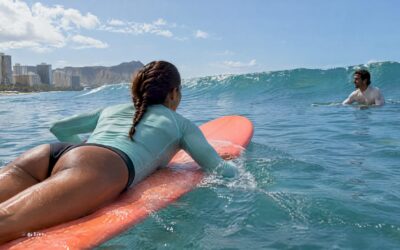
How to Catch Small Waves: Position, Paddle, Pop Up
Small waves are the best classroom in surfing. Learn how to read them, pick the right board, paddle with power and time your takeoff so you catch more.
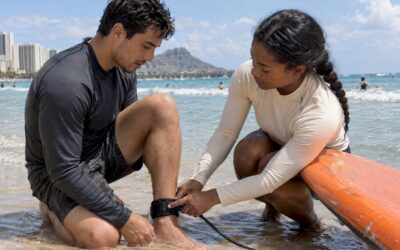
How to Prevent Surfing Injuries: A Beginner’s Safety Guide
Practical ways to prevent surfing injuries: warm-ups, the right board and leash, reading the beach, etiquette, surf rash and what to do if you get in trouble.

How to Carry a Surfboard: Beach, Car and Plane
Learn how to carry a surfboard without dings or accidents: the under-arm carry, the hip carry, wind tricks, beach etiquette, roof racks and flying with boards.
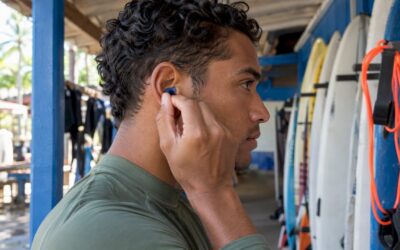
Surfer’s Ear Prevention: Earplugs, Hoods and Drying Habits
How to prevent surfer’s ear: when to wear surf earplugs, what to look for in a pair, how a hood helps, and how to dry your ears after a session.
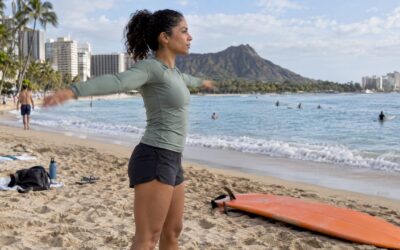
Surf Warm-Up Routine: 10 Minutes Before You Paddle Out
A 10-minute surf warm-up routine you can do on the beach: heart-rate raisers, shoulder, spine and hip drills, and what to skip, for beginners.

Offshore vs Onshore Wind: What It Means for Surfing
Offshore wind grooms waves, onshore wind crumbles them. Learn how to read wind direction, what it means for beginners, and a quick note on wind energy.

Breath Training for Surfing: What Works and What’s Risky
Breath training for surfing, done safely: why paddling cuts your breath-hold, which drills help, which ones to skip, and how beginners can prepare.
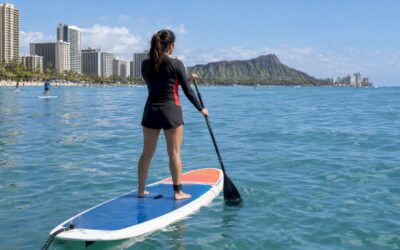
Paddle Board Stance: Where to Put Your Feet and Stay Up
Learn the paddle board stance that keeps beginners stable: foot position, knee bend, where to look, how to stand up, and fixes for wobbles.
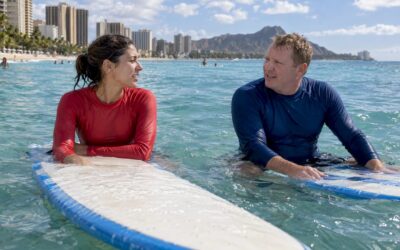
Surf Therapy Benefits: What the Research Shows
What surf therapy can do for anxiety, depression, PTSD and mindfulness, where the evidence is still thin, and how to try a first lesson in Waikiki.
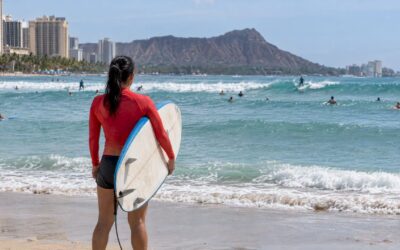
Reading Waves for Beginners: What to Look For Before You Paddle Out
Learn to read waves as a beginner: spot the peak and shoulder, time the sets, judge size and period, and avoid rip currents, with Waikiki examples.