
A surf forecast is a prediction of swell, wind, tide, and wave conditions at a specific location and time. Understanding surf forecasts as a tourist is the single most effective way to stop guessing and start choosing surf sessions that match your skill level, your safety, and your available vacation days. The core metrics, swell period, swell direction, wind direction, and tide, each tell a different part of the story. Miss one, and you can show up to flat, choppy, or dangerously powerful surf. Get them right, and you spend your trip riding waves instead of watching them from the beach.
What does understanding surf forecasts mean for tourists?
Surf forecasting is the industry term for predicting ocean wave conditions using atmospheric and oceanographic data. For tourists, reading surf reports means translating numbers on a screen into a real decision: paddle out or stay on the sand.
The five core metrics every tourist needs to know are swell height, swell period, swell direction, wind direction and speed, and tide. Each one affects wave quality differently, and experienced surfers prioritize period first, then swell direction, wind, tide, and finally wave height. That order matters because a 6-foot swell with a 7-second period produces weak, choppy surf, while a 4-foot swell with a 14-second period can generate powerful, well-shaped waves.
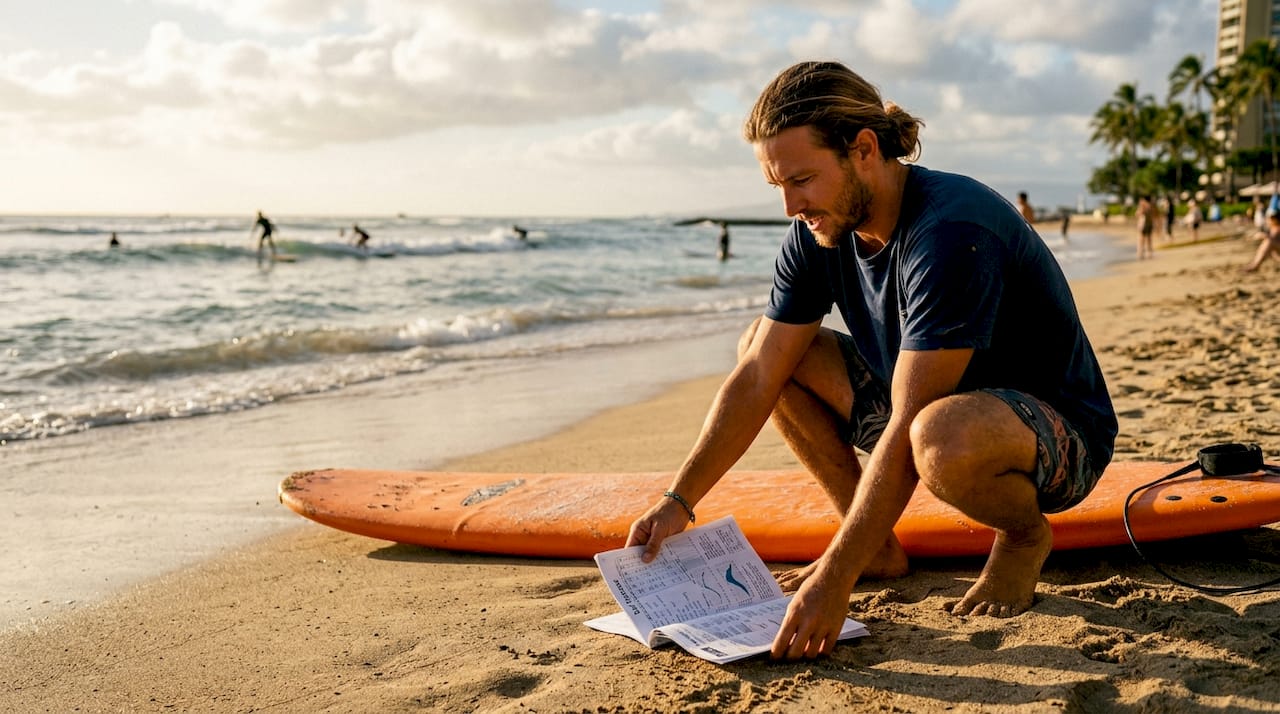
Most free forecast platforms pull data from NOAA, the National Oceanic and Atmospheric Administration, along with CDIP and NDBC buoy networks. Free surf forecasts built on NOAA data give tourists access to the same swell, wind, and tide predictions professionals use, without a subscription. Knowing how to read that data is the skill that separates a great surf trip from a frustrating one.
Swell period: the most misunderstood metric
Swell period is the time in seconds between two successive waves passing a fixed point. A swell period of 12 seconds or more signals high-quality groundswell, organized and powerful. Periods below 8 seconds indicate wind swell, which is messy and weak. Periods between 8 and 12 seconds are transitional. Most beginners fixate on wave height and ignore period entirely. That is the single biggest forecasting mistake tourists make.
Wind direction: offshore vs. onshore
Offshore wind blows from land to sea and holds wave faces up, creating clean, defined waves. Onshore wind blows from sea to land and creates choppy, disorganized surf. Even a modest 3-foot swell with offshore wind can produce better waves than a 6-foot swell with onshore wind. Check wind direction before wave height every time.
Tide and its effect on wave shape
Tide affects wave break quality in ways that depend entirely on the bottom type beneath the break. At beach breaks, mid-tide is usually the best window for beginners because the waves are consistent and forgiving. Low tide exposes reef hazards and creates hollow, fast-breaking waves that punish errors. High tide often softens waves to the point where they barely break at all.
- Swell height: The size of waves at the break, not in open ocean. Always lower than raw forecast numbers suggest.
- Swell period: Seconds between waves. Higher is better. 12+ seconds means quality groundswell.
- Swell direction: The compass bearing the swell travels from. Must align with your beach’s exposure.
- Wind direction: Offshore is clean. Onshore is choppy. Cross-shore is variable.
- Tide: Affects depth over the bottom. Match tide window to your break type.
Pro Tip: Read the swell period before anything else. If it’s under 8 seconds, the surf will likely disappoint regardless of wave height.
How does local beach knowledge improve forecast reading?
A forecast number means nothing without knowing how your specific beach responds to that swell. Local bathymetry, the underwater topography beneath a break, dramatically alters how a swell translates into rideable waves. Two beaches a mile apart can produce completely different surf from the same forecast.
Beach breaks, where waves break over a sandy bottom, shift and change with the seasons. They are forgiving for beginners and produce waves across a wide stretch of shoreline. Reef breaks, where waves break over coral or rock, produce more consistent and powerful waves but carry a much higher injury risk. Point breaks wrap around a headland and can produce long, predictable rides, but they require specific swell directions to work properly.
Beach orientation is equally important. A beach facing directly into the swell direction will receive the full force of that swell. A beach angled away from the swell direction may receive only a fraction of the forecast energy. Swell height can vary widely depending on how a beach is oriented relative to the incoming swell. Tourists who ignore this end up at a sheltered beach wondering where the waves went.
- Check local surf webcams the morning of your session to verify what the forecast is actually producing.
- Read local surf reports written by people who surf that specific break regularly.
- Ask your surf instructor or a local shop about seasonal wind patterns for that destination.
- Note that wind patterns shift throughout the day. Many spots are best in the early morning before onshore sea breezes develop.
Pro Tip: Pair any forecast app with a live surf webcam for your specific beach. The camera tells you what the forecast cannot: whether the waves are actually clean and rideable right now.
How do you read a surf forecast step by step?
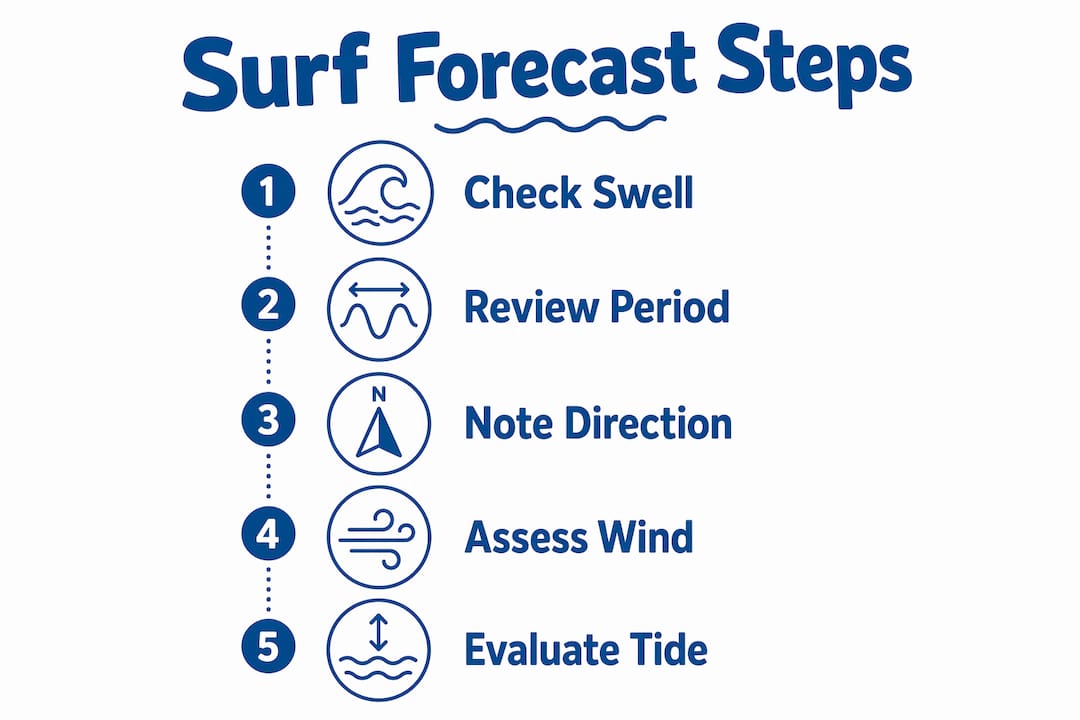
Reading a surf report effectively follows a specific order. Skipping steps or reading metrics in isolation leads to poor decisions. Cross-referencing swell period, direction, wind, tide, and height in that exact sequence gives you the clearest picture of wave quality before you ever leave your hotel.
- Check swell period first. Anything above 12 seconds is worth investigating further. Below 8 seconds, lower your expectations significantly.
- Assess swell direction vs. your beach’s exposure. A north swell hitting a south-facing beach produces nothing. Confirm your beach faces the incoming swell.
- Evaluate wind direction and speed. Offshore winds under 15 knots are ideal. Onshore winds above 10 knots typically ruin wave quality.
- Check tide times and identify the optimal window. For beach breaks, target mid-tide. For reef breaks, confirm the tide is high enough to cover hazards.
- Finally, assess wave height in context. A 2-foot wave with a 14-second period and offshore wind beats a 5-foot wave with a 7-second period and onshore wind every time.
| Forecast metric | Poor conditions | Good conditions |
|---|---|---|
| Swell period | Under 8 seconds | 12 seconds or more |
| Wind direction | Onshore, 10+ knots | Offshore, under 15 knots |
| Swell direction | Blocked by beach angle | Directly facing beach |
| Tide (beach break) | Very high or very low | Mid-tide |
| Wave height | Exceeds skill level | Matches ability and period |
Free platforms powered by NOAA data display all five metrics in one dashboard. You do not need a paid subscription to access accurate swell, wind, and tide data for most popular surf destinations.
Pro Tip: Screenshot the forecast the night before and compare it to actual conditions when you arrive. Over a week of sessions, you will start to see how your specific beach interprets the numbers.
What mistakes do tourists make when reading surf forecasts?
The most common tourist error is treating wave height as the primary indicator of surf quality. The best surf conditions are not necessarily the biggest waves but the ones that match your ability and the local setup. A tourist who sees “6 feet” and paddles out without checking period, wind, or tide is making a decision based on incomplete information.
“Forecast optimism is real. Tourists see a promising swell height and mentally picture perfect waves. Then they arrive to find onshore wind, a sheltered beach, and waist-high mush. Reading the full forecast, not just the headline number, is what separates a good session from a wasted morning.”
- Ignoring wind direction: Onshore wind destroys wave quality regardless of swell size. Always check it.
- Skipping tide research: Low tide at a reef break exposes coral. Arriving at the wrong tide is a safety issue, not just a quality issue.
- Assuming nearby beaches are identical: Local bathymetry means two beaches a mile apart can behave completely differently from the same swell.
- Overestimating ability based on forecast alone: A forecast shows potential. Your skill level determines whether that potential is fun or dangerous.
- Skipping the arrival observation: Always watch the lineup for 10 to 15 minutes before paddling out. Observe where waves break, how powerful they are, and how other surfers are managing.
Pro Tip: Keep a simple surf journal during your trip. Note the forecast numbers alongside what you actually found at the beach. After five or six sessions, patterns emerge that no app can teach you.
How should tourists adapt surf plans using forecasts?
Adapting your surf plans around forecasts is a skill that pays off immediately on a surf trip. Beginners should stick to sand-bottom beach breaks and avoid reef breaks entirely until they have consistent experience reading conditions and controlling their boards. The risk of injury at reef breaks is significantly higher, and no forecast number changes that reality.
Board selection matters as much as location. Renting surfboards locally is preferable to bringing your own gear. Local rental shops stock boards suited to the conditions at that destination, and staff can recommend the right size for the forecasted swell. A wider, longer foam board suits small, clean waves. A shorter board in bigger surf is a recipe for frustration and falls. You can read more about this decision in Hhsurf’s board rental guide.
- Check forecasts every morning and stay flexible. A session planned for Tuesday may be better on Wednesday if a new swell arrives.
- In destinations like Bali, the dry season (april through october) brings consistent offshore winds and cleaner surf. The wet season brings onshore winds and messier conditions.
- Respect local surf etiquette. Crowded lineups require patience and awareness. Surfing etiquette is not optional. Dropping in on another surfer’s wave creates conflict and danger.
- Book a lesson with a local instructor on your first day. Instructors read local conditions daily and can translate the forecast into specific advice for that break.
- Manage expectations honestly. A surf trip is not ruined by a flat day. Use it to study the forecast, watch experienced surfers, and rest.
Pro Tip: On your first day at any new destination, take a surf lesson on vacation rather than paddling out alone. Local instructors know which breaks work on which forecasts, and that knowledge is worth more than any app.
Key Takeaways
Reading a surf forecast correctly requires checking swell period, direction, wind, tide, and wave height in that exact order, because period and wind determine quality while height alone tells you almost nothing.
| Point | Details |
|---|---|
| Prioritize swell period | A period of 12+ seconds signals clean groundswell; below 8 seconds means weak, messy surf. |
| Wind direction decides quality | Offshore wind creates clean waves; onshore wind ruins surf regardless of swell size. |
| Match tide to your break type | Mid tide suits beach breaks for beginners; low tide at reef breaks exposes hazards. |
| Local knowledge filters forecasts | Bathymetry and beach orientation determine how a swell actually arrives at your specific beach. |
| Rent boards locally | Local rental boards are matched to daily conditions and remove the cost and hassle of travel gear. |
What I’ve learned watching tourists read forecasts wrong
I have watched a lot of tourists make the same mistake: they open a forecast app, see a big number, and head straight to the beach. They skip period, ignore wind, and never check the tide. Then they stand at the shoreline looking confused at waist-high mush or, worse, they paddle into conditions that are well beyond their ability.
The tourists who have the best surf trips are the ones who treat the forecast as a conversation, not a verdict. They check the numbers the night before, watch the webcam in the morning, and then spend 15 minutes on the beach observing before they ever touch the water. That habit alone separates a confident surfer from a frustrated one.
The other thing I have seen consistently: tourists who take a lesson on day one always surf better by day three. A good instructor does not just teach you to pop up on a board. They explain why today’s conditions are what they are, which break to use, and what the tide is doing. That context sticks. It changes how you read every forecast for the rest of your trip.
Patience and observation are the two skills no forecast app can give you. The ocean rewards both.
— Johann
Surf smarter in Waikiki with Hhsurf
Knowing how to read a surf forecast is one thing. Knowing how that forecast applies to a specific break, on a specific day, with your specific skill level, is where local expertise makes all the difference.
Hhsurf, the Hans Hedemann Surf School in Waikiki, offers surf lessons in Waikiki for all skill levels, from first-timers to intermediate surfers looking to read conditions more confidently. Instructors teach you to surf and explain what the ocean is doing and why, so you leave with knowledge that improves every future session. Whether you want a group lesson, a private surf lesson in Waikiki, or a program for the whole family, Hhsurf connects forecast knowledge to real water experience in one of the world’s most iconic surf destinations.
FAQ
What is the most important metric in a surf forecast?
Swell period is the most important metric. A period of 12 seconds or more indicates powerful, clean groundswell, while anything below 8 seconds typically produces weak, disorganized surf.
How do I check a surf forecast without paying for a subscription?
Free surf forecast platforms use public data from NOAA, CDIP, and NDBC buoys to provide swell, wind, and tide predictions. No subscription is required to access accurate forecasts for most surf destinations.
Why do two nearby beaches have different surf on the same day?
Local bathymetry and beach orientation cause neighboring beaches to respond differently to the same swell. Underwater topography shapes how wave energy arrives at the surface, producing very different conditions from identical forecast data.
Is it safe for beginners to surf at reef breaks?
Beginners should avoid reef breaks. Sand-bottom beach breaks carry significantly less injury risk and produce more forgiving waves suited to learning and building confidence.
How early should I check a surf forecast before a session?
Check the forecast the night before to plan your session, then verify with a live webcam on the morning of your surf. Conditions can shift overnight as wind and tide change, so both checks together give you the most accurate picture.
0 Comments