
Professional surf coaching gets beginners standing and riding waves far sooner than trial and error ever will, while cutting injury risk and building real water confidence. Three reasons drive that outcome:
- Certified safety training. Instructors with BLS, CPR, and lifeguard credentials know how to respond if something goes wrong in the water, not just how to teach a pop-up.
- A proven on-sand-to-in-water teaching sequence. Dry drills on the beach lock in muscle memory before you ever touch a wave, so your first attempts in the water feel surprisingly natural.
- Real-time, hands-on corrections. A coach watching you paddle and pop up catches bad habits within the first five minutes, not after six months of solo practice.
Hans Hedemann Surf School in Waikīkī delivers all three, with certified instructors, small groups, and a methodology built around getting beginners to their feet in a single session.
Key Takeaways
Professional surf coaching reliably gets beginners standing and riding waves faster while reducing injury risk, with certified instructors, small group ratios, and structured on-sand drills making the biggest difference.
| Point | Details |
|---|---|
| Faster progression | Coached beginners progress roughly 3–6x faster than self-taught surfers, with 2–5 lessons building a solid foundation. |
| Safety certifications matter | Instructors with BLS training and 15+ years of experience more actively teach drowning prevention habits during lessons. |
| Waikīkī pricing range | Group lessons run $85–$130; semi-private $110–$150; private lessons start near $125. |
| First lesson outcomes | Most beginners stand at least once in their first session after on-sand drills and assisted wave starts. |
| Hhsurf for beginners | Hans Hedemann Surf School combines certified instructors, small ratios, and a proven on-sand-to-in-water sequence at Waikīkī and North Shore. |
Table of Contents
- Why professional coaching matters for beginner surfers
- Which safety qualifications actually matter when booking a lesson
- What your first surf lesson in Waikīkī or North Shore looks like
- How professional coaching shortens the learning curve
- How to choose the right beginner surf lesson in Waikīkī or North Shore
- Common beginner mistakes coaching prevents
- A teacher’s perspective: why safety and rapid progress go together
- Hhsurf gives Waikīkī and North Shore beginners a real head start
- Sources
Why professional coaching matters for beginner surfers
The gap between watching surfing on YouTube and actually riding a wave is enormous. Professional coaching closes that gap faster than almost anything else.
Structured lessons compress the learning curve significantly. Editorial analysis suggests that coached beginners progress roughly 3–6 times faster than self-taught surfers, with most building a solid foundation in just 2–5 lessons. What takes months of solo paddling and frustration can happen in a week of guided sessions.
Beyond speed, the benefits stack up quickly:
- Faster skill acquisition. Instructors correct your paddle stroke, pop-up timing, and foot position immediately, so you build good mechanics from the start.
- Fewer injuries. Knowing how to fall safely, read waves, and avoid other surfers prevents the most common beginner accidents.
- Better wave selection. Coaches teach you which waves to catch and which to let pass, a skill that takes self-taught surfers months to develop.
- Gear guidance. A good instructor matches you to the right board size and shape for your body and skill level, not just whatever’s available.
- Mental support. The ocean is unpredictable. Having someone in the water with you reduces anxiety and helps you push past the hesitation that stops most beginners cold.
Stat to know: Structured surf lessons are estimated to produce 3–6x faster progress compared to self-teaching, with 2–5 lessons typically enough to build a functional foundation.
Pro Tip: If your lesson includes on-water photo or video, use the footage after class. Watching your own pop-up and paddle technique is one of the fastest ways to lock in corrections your instructor gave you in real time.
Which safety qualifications actually matter when booking a lesson
Not every surf school is equal on safety. Before you book, here’s what to look for and what to avoid.
Certifications to ask about:
- BLS (Basic Life Support) or CPR certification
- Lifeguard certification or equivalent water rescue training
- First-aid certification
- Demonstrated local ocean knowledge (rip currents, reef zones, seasonal swell patterns)
- Years of teaching experience, particularly with beginners
A 2022 survey of surfing instructors found that instructors with BLS training reported higher self-perceived competence in responding to drowning events, and that instructors with more than 15 years of experience more often teach prevention habits to beginners. That’s a meaningful signal: experience and formal safety training together produce instructors who prepare students, not just teach them.
Safety callout: Instructors with BLS certification and 15+ years of experience are more likely to actively teach drowning prevention habits during lessons, according to the De Oliveira et al. (2022) survey.
Red flags to watch for:
- Student-to-instructor ratios above 6:1 in a group lesson
- No on-sand briefing before entering the water
- Instructors who skip wave-reading or rip-current awareness
- No visible safety gear or documented rescue protocol
- Vague answers when you ask about certifications
When booking, it’s completely reasonable to ask: “Are your instructors BLS or CPR certified?” and “What’s your student-to-instructor ratio?” A school confident in its safety record will answer without hesitation.
What your first surf lesson in Waikīkī or North Shore looks like
Knowing what to expect removes a lot of pre-lesson nerves. Here’s a realistic timeline for a typical beginner session:
- Beach meet and safety briefing (10–20 minutes). Your instructor covers ocean awareness, rip currents, how to fall safely, and basic surf etiquette before anyone touches the water.
- Dry pop-up practice on the sand. You rehearse the pop-up movement on a stationary board until it feels automatic. This is where most of the real learning happens.
- Short paddle to the whitewater zone. Waikīkī’s gentle, long-rolling waves and warm water temperatures make this stretch ideal for first-time surfers. North Shore requires more careful timing and local knowledge, especially outside summer months.
- Assisted wave starts. Your instructor pushes you into waves and calls out when to paddle and pop up. You focus entirely on execution.
- Repeated attempts and real-time feedback. Most of the session is spent catching waves, with your instructor correcting technique between each one.
- Debrief and next-step advice. A good instructor ends with specific notes on what you did well and what to work on next.
What’s typically included:
- Surfboard (usually a large foam longboard, ideal for beginners)
- Rashguard or wetsuit top
- Leash
- Instructor time in the water with you
- Basic safety briefing and dry-land practice
Realistic outcomes for a first lesson:
- Many beginners stand on their board at least once during their first session
- 2–5 lessons generally build a functional foundation for independent surfing
- You’ll leave with a clear sense of what to practice and what to book next
For a detailed walk-through of the full lesson timeline, see what to expect step by step.
How professional coaching shortens the learning curve
The teaching methods used in professional surf lessons aren’t arbitrary. They’re built around how motor skills actually develop.
Core techniques that produce faster gains:
- On-sand pop-up drills. Repeating the movement on stable ground builds muscle memory before the chaos of moving water adds complexity.
- Guided wave selection. Instructors read the ocean and point you to waves you can actually catch, eliminating the guesswork that wastes most of a self-taught surfer’s session.
- Assisted wave starts (pushes). Getting the timing right on your own takes weeks. An instructor push lets you focus entirely on the pop-up and stance.
- Incremental skill scaffolding. Coaches break surfing into small, sequenced steps rather than throwing everything at you at once.
- Immediate feedback loops. When you grab the rails instead of placing palms flat, your instructor corrects it on the next wave, not after you’ve repeated the mistake fifty times.
Real-time corrections matter because motor habits form fast. Coaching research consistently shows that immediate technique correction prevents the kind of ingrained errors that plateau self-taught surfers for months. A coach also adjusts drills to your body type and fitness level, something no YouTube tutorial can do.
Pro Tip: A short core workout routine two or three times a week before your trip makes a real difference. Pop-up strength and balance both draw heavily on core stability, and even 15 minutes of targeted work speeds up how quickly you progress in the water.
How to choose the right beginner surf lesson in Waikīkī or North Shore
With multiple options available, here’s what to prioritize:
Decision checklist:
- Student-to-instructor ratio (aim for 4:1 or lower for group lessons)
- Visible safety certifications (BLS, CPR, lifeguard)
- Lesson length (90 minutes to 2 hours is standard for a meaningful session)
- Gear included (board, rashguard, leash)
- Instructor’s local knowledge of the specific break
- Teaching method (on-sand drills before water entry)
- Photo or video options
Questions to ask when booking:
- Are your instructors BLS or CPR certified?
- What’s the student-to-instructor ratio in group lessons?
- Where exactly do we meet, and which beach zone do you use?
- What’s your cancellation and reschedule policy?
- What gear is included, and do I need to bring anything?
Pricing guidance for Waikīkī: Group lessons run roughly $85–$130, semi-private lessons $110–$150, and private lessons start near $125. Private instruction compresses learning faster because feedback is continuous and undivided. For a first-time visitor with limited days, private surf lessons often deliver the best return on a short trip. For families, kids surf lessons pair age-appropriate instruction with the same safety standards.
For a deeper look at what separates good instructors from great ones, these nine instructor traits are worth reviewing before you book.
Common beginner mistakes coaching prevents
Most beginner errors are predictable, and a good instructor catches them before they become habits.
- Grabbing the rails on the pop-up. Fix: palms flat on the board, shoulder-width apart. An instructor cues this correction in real time.
- Paddling with bent elbows. Fix: full arm extension, fingers together, pulling through the water cleanly. Inefficient paddling exhausts beginners before they catch a single wave.
- Standing too far forward or back on the board. Fix: instructor marks foot position during dry drills so you know exactly where to land.
- Poor wave selection. Fix: coaches call out which waves to go for and which to let pass, teaching the judgment that takes self-taught surfers months to develop.
- Paddling into rip currents. Fix: on-sand briefings cover rip identification and escape routes before you enter the water.
- Crowding the lineup. Fix: surf etiquette and safety rules are taught explicitly, protecting both the beginner and other surfers.
Pro Tip: Small technique fixes in your first lesson prevent months of re-learning later. The pop-up especially: one ingrained bad habit there, like a knee-drop instead of a clean jump, can take longer to unlearn than it took to learn surfing in the first place.
A teacher’s perspective: why safety and rapid progress go together
The instinct most beginners have is to get in the water as fast as possible. The instinct every experienced instructor has is to slow that down just enough to make the water entry count.
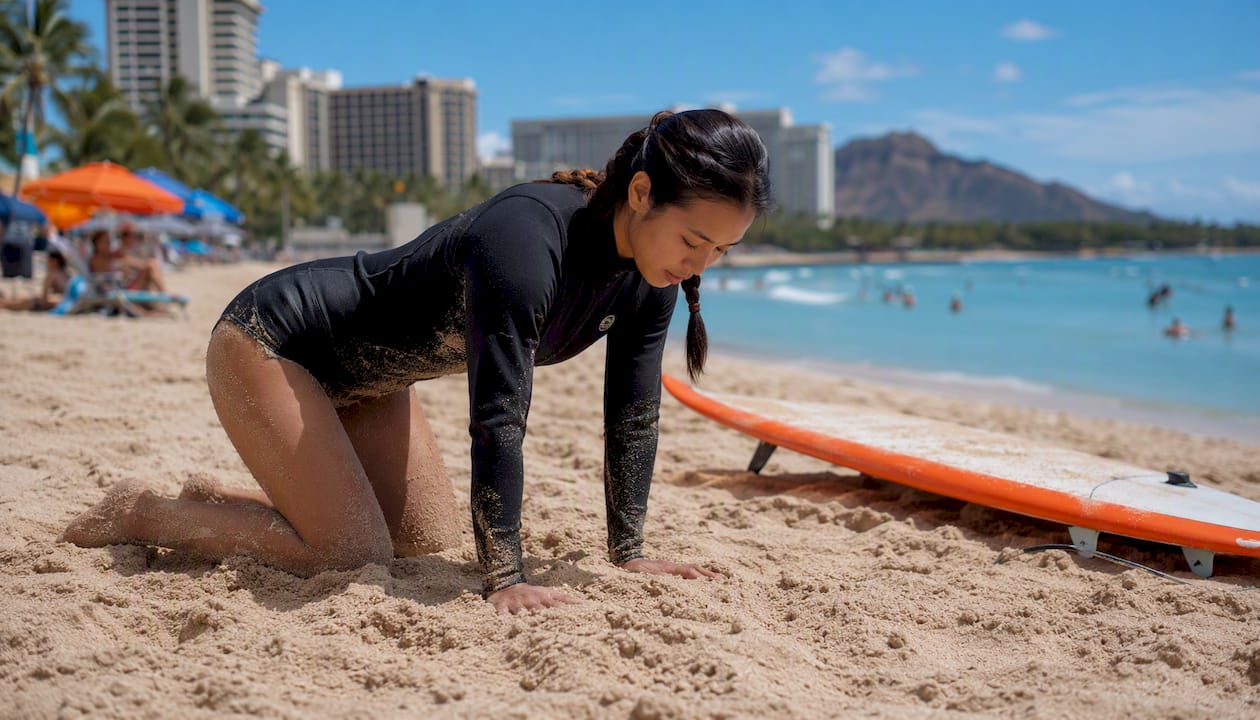
Safety and speed aren’t opposites in surf instruction. They’re the same goal. When a student understands how to fall, how to read a wave, and how to protect their head from the board, they surf more aggressively and confidently because fear isn’t running the decision-making. The on-sand sequence at Hhsurf exists precisely for this reason: by the time a student paddles out, the mechanics are already in their body. The water becomes the place to confirm what they already know, not the place to figure it out from scratch.
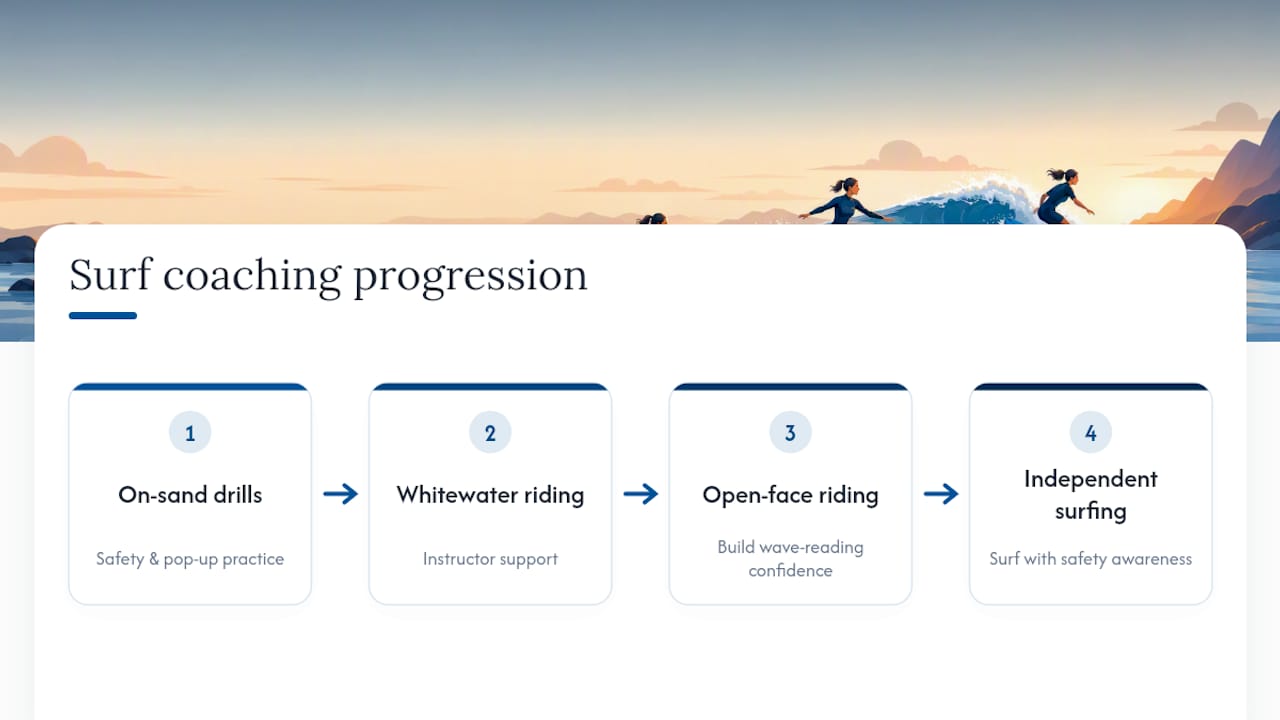
Hans Hedemann Surf School’s methodology is built on that principle. Certified instructors, small groups, and a structured progression from dry drills to whitewater to open-face riding aren’t just marketing language. They’re the difference between a student who stands up once and forgets it and one who walks away with a real foundation.
Hhsurf gives Waikīkī and North Shore beginners a real head start
The fastest path from “never surfed” to “actually riding waves” runs through a certified instructor who knows Waikīkī’s breaks and has a structured plan for your first session.
Hhsurf delivers exactly that. Hans Hedemann Surf School offers beginner lessons at both Waikīkī and North Shore with certified instructors, small student-to-instructor ratios, boards and rashguards included, and the proven on-sand-to-in-water teaching sequence described throughout this article. Optional photo and video packages let you review your technique after the session and share the moment. Group, semi-private, and private formats are available, so you can match the lesson to your schedule and budget.
Book your surf lesson today and get in the water with an instructor who’s focused on getting you to your feet.
What to bring:
- Swimsuit or board shorts
- Sunscreen (reef-safe preferred)
- Water bottle
- Shoes or sandals for beach entry
- A change of clothes for after
Sources
- Are Surf Lessons Worth It? (2026) | SurfSpotGuide
- Surf Lessons in Waikīkī: Prices, Tips, and What to Expect (2026)
- Should I get a surf lesson | The Wipeout Weekly
- Is it worth it to take a surf lesson? – Pacific Surf Co
0 Comments