
For a Waikiki surf lesson, wear a secure one-piece swimsuit or snug bikini top with boardshorts or fitted trunks, apply reef-safe mineral sunscreen 20 to 30 minutes before you arrive and bring a rashguard, towel, and water. Skip loose cover-ups and jewelry. Most Waikiki schools, including Hhsurf, supply the board, leash, and often a rashguard, so your job is mostly sun protection and a suit that won’t shift when a wave rolls you.
TL;DR:
- Wear a snug one-piece or tied bikini top with boardshorts to prevent shifting during waves, especially for women, to avoid wardrobe malfunctions.
- Use mineral-based reef-safe sunscreen, applying it 20 to 30 minutes before entering the water to ensure proper absorption and reef protection.
- Bring water shoes only if walking across reef patches; once on the board, barefoot balance is essential and water shoes can hinder stability.
- A rashguard is recommended for sun and board rash protection, especially if the instructor does not provide one, to fit better and reduce chafing.
- Confirm what gear your surf school supplies, such as boards and rashguards, to avoid overpacking and focus only on essentials like swimsuit, sunscreen, and towel.
Table of Contents
- Surf Lesson Attire Waikiki: A Two-Minute Packing Checklist
- Getting Your Swimwear and Rashguard Right
- Does Hawaii’s Sunscreen Law Affect What You Pack?
- Do You Need Water Shoes for a Waikiki Surf Lesson?
- Do You Need a Wetsuit for Surfing in Waikiki?
- What Else to Bring and How to Protect Your Valuables
- Small Habits That Save You Real Time in the Water
- Packing for Kids: What Changes for Family Lessons
- Why What Your School Provides Changes Your Packing List
- Why the Standard Surf Gear List Doesn’t Fit Waikiki
- Book a Waikiki Surf Lesson and Skip the Guesswork
- Local Rules and Conditions Worth Bookmarking
- Sources
Surf Lesson Attire Waikiki: A Two-Minute Packing Checklist
Pack light. Waikiki’s beginner breaks are close to shore, the water is warm, and most gear beyond your swimsuit gets handled by the school. Here’s what to have ready before you leave your hotel:
- Swimsuit worn under your clothes (one-piece or snug tie-back top; boardshorts or fitted trunks)
- Rashguard, either your own or confirmed as school-provided
- Reef-safe mineral sunscreen, applied 20 to 30 minutes before you head to the beach
- Quick-dry towel and a refillable water bottle
- Waterproof pouch or dry bag for your phone and room key
- Jewelry and watches left in the hotel safe or room
Most lesson packages already include the surfboard, leash, and sometimes a rashguard, so double-check what’s covered when you book. A quick email or phone call before your session saves you from lugging gear you’ll never use.
Getting Your Swimwear and Rashguard Right
Loose clothing is the number one wardrobe mistake first-time surfers make in Waikiki. Board shorts that ride low, bikini tops without a secure tie, or baggy rash tees can shift, ride up, or come completely undone the moment a wave knocks you off balance, and that’s an unwelcome surprise in front of a crowded lineup.
Women generally do best in a one-piece suit or a bikini top with a snug tie-back, paired with bottoms that won’t slide during a wipeout. Men should look for boardshorts with a working drawstring or trunks cut close enough that they stay put through a tumble. The goal is simple: nothing you have to readjust every time you paddle back out.
A rashguard adds a second layer of protection against sun and board rub, particularly across the chest and stomach where you’ll be lying down for most of the lesson. Bringing your own means a better fit and no sharing with the last renter’s gear. Many schools hand out rashguards as part of the lesson package, which works fine in a pinch, but your own tends to fit closer and chafe less over a two-hour session.
Does Hawaii’s Sunscreen Law Affect What You Pack?
Yes, and it changes your sunscreen choice more than most visitors expect. Hawaii law bans the sale of sunscreens containing oxybenzone and octinoxate, chemicals linked to coral reef damage, under the reef-safe sunscreen legislation (HB102). That means you’ll want a mineral-based formula built on zinc oxide or titanium dioxide, not the chemical sunscreens common on the mainland.
Timing matters as much as the formula. Apply your sunscreen 20 to 30 minutes before you get in the water so it actually absorbs into your skin instead of rinsing straight off into the reef, a point the same legislation and reef advocates like Surfrider Foundation both stress. Look for water-resistant sunscreen with appropriate sun protection factor, and plan to reapply once your lesson wraps up. Waikiki sun at midday is intense even on overcast days, and a surfboard doubles as a reflector.
Do You Need Water Shoes for a Waikiki Surf Lesson?
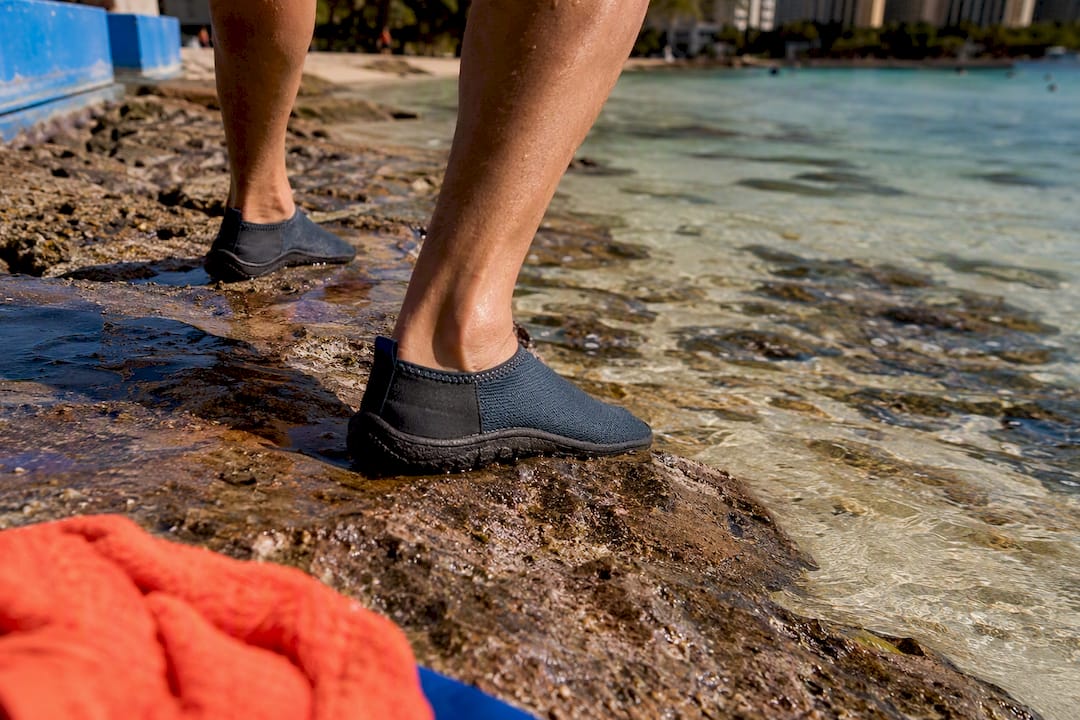
You won’t wear anything on your feet once you’re actually surfing. Footwear only matters for the walk from the sand to the water, and whether you need it depends on the entry point.
Some stretches of Waikiki beach have patches of exposed reef or rock, especially near the breaks favored for lessons. If your instructor walks you across one of these, thin-soled water shoes or reef walkers with decent grip protect your feet from scrapes and sea urchins. On pure sand entries, flip-flops get you to the water’s edge fine, and you can just leave them with your towel. Either way, once your feet hit the board, they stay bare. That’s not a style choice; boots and booties kill your balance and feel for the wax.
Do You Need a Wetsuit for Surfing in Waikiki?
Almost certainly not. Waikiki’s water sits warm enough year-round that a rashguard alone covers most visitors comfortably, and the vast majority of lesson-goers never touch a wetsuit here.
The exception is personal cold tolerance. If you run cold, book an early morning session, or you’re used to warmer swimming conditions elsewhere, a thin 1mm or 2mm spring suit can take the edge off. Checking the local forecast from the National Weather Service the morning of your lesson tells you what the water and wind actually look like that day, not just the seasonal average. Reputable schools track these conditions daily and can point you toward a suit if the day calls for one, so ask your instructor rather than guessing on your own.
What Else to Bring and How to Protect Your Valuables
Beyond your swimsuit and sunscreen, a short list of extras makes the whole morning smoother. Bring a quick-dry towel, a full water bottle, a light snack for after the lesson, and a dry change of clothes if you’re heading somewhere else afterward. A small waterproof pouch keeps your phone, room key, and cash dry and sandy-free while you’re in the water.
Leave anything you’d hate to lose back at the hotel. Jewelry, watches, and anything valuable have no business on a beach towel while you’re 100 yards offshore learning to pop up. If you must bring a phone or wallet, a waterproof bag stashed with your instructor or in a locked car beats leaving it in plain sight on the sand. When you book, ask what the school already provides. Doubling up on gear you don’t need just means more stuff to carry.
Small Habits That Save You Real Time in the Water
Show up already wearing your swimsuit under your street clothes. Instructors routinely tell students this single habit saves the most time at check-in, since you skip the changing-room shuffle and get straight into the pre-lesson briefing.
Tie long hair back before you arrive; nothing derails a pop-up attempt like hair whipping across your face at the exact wrong moment. If you wear glasses, use a retention strap or leave them secured on shore with a friend, since prescription lenses and saltwater don’t mix well. Drink water beforehand and skip the heavy breakfast. A full stomach and paddling don’t pair nicely. One more thing worth knowing before you book: Waikiki’s beginner breaks are shallow enough to stand in most of the time, but you should still be comfortable swimming a moderate distance, just in case a wipeout carries you and the board a short distance from where you started.
Packing for Kids: What Changes for Family Lessons
Fit matters even more for kids than adults. A rashguard or swimsuit that’s too loose bunches up and irritates skin over a full lesson, so size up carefully or bring a rashguard you already know fits well. Snug boardshorts or a one-piece suit keep things simple for younger surfers who don’t want to think about wardrobe malfunctions mid-wave.
Pack extra sunscreen for reapplication, a full change of clothes, snacks, and more water than you think you’ll need. Kids run through sun protection and hydration faster than adults realize. Age limits and flotation policies vary by school, so confirm those details when you book a family or kids surf lesson rather than assuming every program handles young beginners the same way.
Why What Your School Provides Changes Your Packing List
The single biggest variable in any Waikiki surf attire checklist is what your school hands you at check-in. Most beginner lesson packages, Hhsurf included, provide a soft-top longboard, a leash, and often a rashguard, which means your personal packing list shrinks down to swimsuit, sunscreen, and a towel.
That matters beyond convenience. Instructors design their teaching progression around students being comfortable and unencumbered in the water, and gear that fits properly and doesn’t need constant adjustment lets a beginner focus entirely on balance and timing instead of fighting with a loose strap or a slipping waistband. A soft-top board and a snug-fitting rashguard reduce the friction between “standing on the beach” and “standing on the board,” which is the entire point of a first lesson.
Before you book, confirm exactly what’s included. A quick check on a private surf lesson page or a call to the school tells you whether rashguards are provided that day, since availability can shift with group size and season.
Why the Standard Surf Gear List Doesn’t Fit Waikiki
Most generic “surf packing lists” online are written for cold-water breaks in California or Oregon, where a wetsuit is assumed and reef safety never comes up. That advice gets recycled into articles targeting Hawaii without anyone checking whether it actually applies, and it leads visitors to overpack wetsuits they’ll never wear and buy chemical sunscreens that are illegal to sell here in the first place.
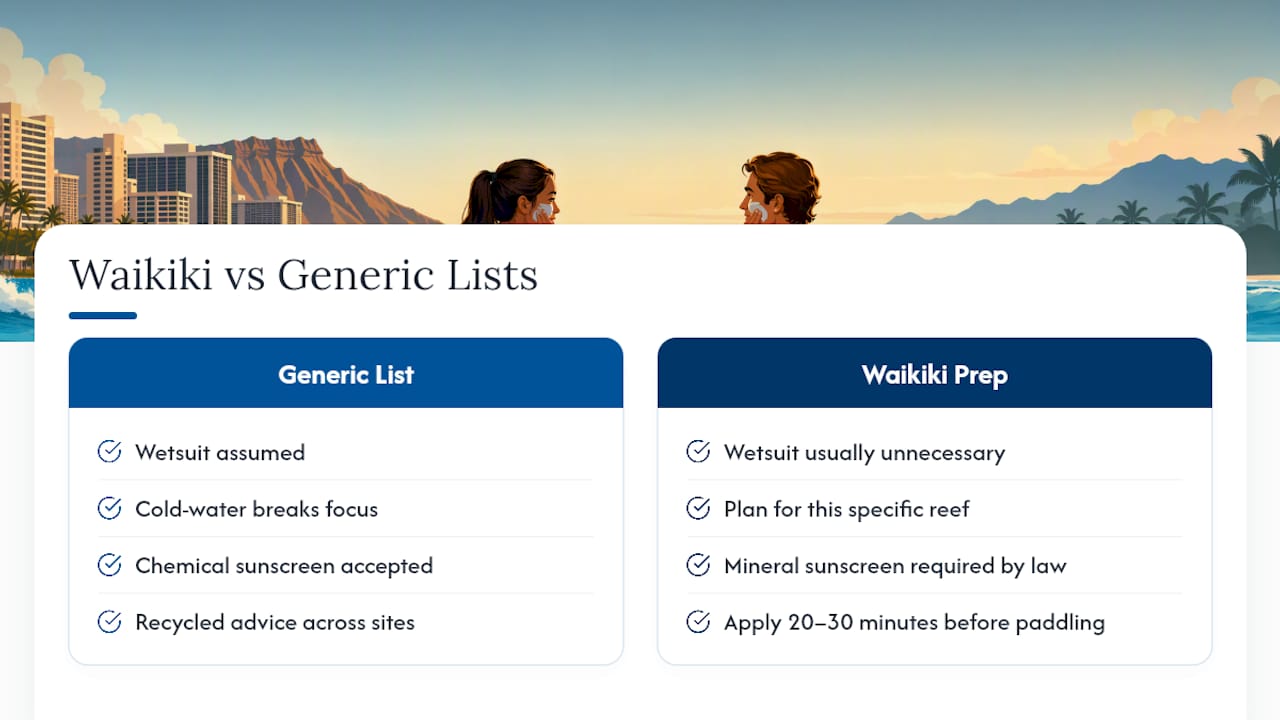
The conventional wisdom also underrates how much the reef itself should shape your choices, not just the water temperature. Hawaii’s mineral sunscreen requirement isn’t a suggestion tucked into fine print; it’s law, and the timing of when you apply it matters as much as the formula you pick. Skip that step and you’re either rinsing chemical sunscreen straight into a living reef or reapplying mineral sunscreen mid-lesson because you put it on five minutes before paddling out instead of thirty.
If there’s one thing worth fixing about how people prepare for a Waikiki lesson, it’s this: stop planning your attire around generic surf culture and start planning it around this specific beach, this specific reef, and this specific sun. Everything else, the swimsuit fit, the rashguard, the water shoes, is secondary to getting those two things right.
— Johann
Book a Waikiki Surf Lesson and Skip the Guesswork
Hhsurf is the Waikiki surf school that hands you the board, the leash, and often the rashguard, so the only real decision you’re making is what swimsuit to wear under your clothes on the drive over. Group lessons, private instruction, and dedicated kids surf lessons all include gear built for beginners, taught by instructors who’ve watched thousands of first-timers stand up on their first wave.
Private lessons get you one-on-one coaching if you want faster progress or extra attention for a nervous swimmer in the family. Group lessons work well for friends or couples who want to learn together at a shared pace, and every format is built around Waikiki’s gentle, reef-protected breaks that make this beach one of the best places in the country to learn. Check available times and book your Waikiki surf lesson directly, and bring nothing but a swimsuit, sunscreen, and a towel.
Local Rules and Conditions Worth Bookmarking
A few official sources are worth checking before your lesson, not just reading once. The Hawai’i reef-safe sunscreen law spells out exactly which ingredients are banned. NOAA and the National Weather Service give same-day water and wind conditions. The Hawaii Department of Land and Natural Resources covers beach safety and reef protection rules, while Surfrider Foundation offers practical reef stewardship tips worth a quick read before your trip.
Sources
- Hawai‘i reef-safe sunscreen legislation (HB102)
- National Weather Service (local forecast)
- NOAA
- Hawaii Department of Land and Natural Resources
- Surfrider Foundation
0 Comments