
Yes, seniors can learn to surf, and plenty do it well into their 60s and 70s. What actually decides your success isn’t your birth certificate. It’s baseline fitness, a qualified instructor, the right beginner board, and starting in supervised whitewater instead of open swells. Book a lesson, show up ready to work, and the ocean will teach you the rest.
TL;DR:
- Proper equipment and patient coaching enable seniors to learn surfing regardless of age, with many standing up on whitewater during their first lesson.
- A four-week physical training routine focusing on shoulder endurance and core strength can significantly improve paddling and pop-up success for older beginners.
- Private or small-group lessons are recommended to tailor the pace and prevent rushing into larger waves before mastering whitewater basics.
- Safety checks, including swimming competence and medical clearance if necessary, are essential to ensure a safe and enjoyable surfing experience for seniors.
- Using high-volume, soft-top boards and renting equipment initially helps beginners build confidence while minimizing injury risk and the need for extensive investment.
Table of Contents
- Why Age Alone Isn’t the Limiting Factor
- Safety and Medical Checks Before You Start
- A Short Physical-Prep Program for Seniors
- Choosing Lessons and Instructors for Older Beginners
- Beginner Equipment: What to Use and What to Avoid
- Realistic Timeline and Progression Milestones
- How a Proven Beginner Teaching Method Speeds Learning
- Fitting Surfing Into Your Life: Options and Realistic Approaches
- Ready to Try It Yourself?
- Sources
- FAQ
Why Age Alone Isn’t the Limiting Factor
Skill in the water comes from balance, timing, and judgment, not raw athleticism. Many adult beginners in their 40s, 50s, and 60s stand up on whitewater during their first lesson when they use beginner-friendly boards and get proper coaching. That’s not luck. It’s technique doing the heavy lifting instead of youth.
Older learners often bring advantages twenty-somethings don’t have yet:
- Patience with a slow learning curve, since most have failed at something before and kept going
- Sharper ocean awareness from decades of reading rooms, traffic, or weather
- Better decision-making about which waves to take and which to let pass
- A realistic sense of their own physical limits, which prevents overreaching
Beginner-focused schools consistently report that proper equipment and patient coaching, not age, determine who progresses quickly. Some schools even run adult-only sessions built specifically around these strengths.
Safety and Medical Checks Before You Start
Surfing is physically demanding but manageable for most healthy adults. A few checks beforehand make the difference between a great first session and a scary one.
- Confirm swim competence. You should be comfortable treading water and swimming 50 yards without panic, since you’ll fall off the board repeatedly.
- Talk to a doctor about red flags. Heart conditions, recent surgeries, seizure history, or joint replacements all deserve a conversation before you paddle out.
- Check your blood pressure and medications. Some prescriptions affect balance or heat tolerance, both of which matter in the sun and surf.
- Ask about the day’s conditions. Skip sessions with waves over waist-high or strong currents until you’ve built experience.
Structured lessons reduce risk substantially because instructors use soft boards, keep you in shallow whitewater, and stay within arm’s reach during your early attempts, a mitigation strategy recommended across teaching guides.
Pro Tip: Bring your doctor’s clearance letter to your first lesson if you have any cardiac history. Good instructors will ask, and having it ready speeds things up.
A Short Physical-Prep Program for Seniors
Paddling relies on shoulder endurance, popping up depends on core strength, and staying upright on the board depends on balance. Neglect any one of the three and you’ll tire out before you catch your first real wave.
Try this four-week routine, three sessions a week:
- Week 1: Resistance band rows, bird dogs, and single-leg balance holds (20 seconds per side).
- Week 2: Add modified push-ups (knees down is fine) and increase balance holds to 30 seconds.
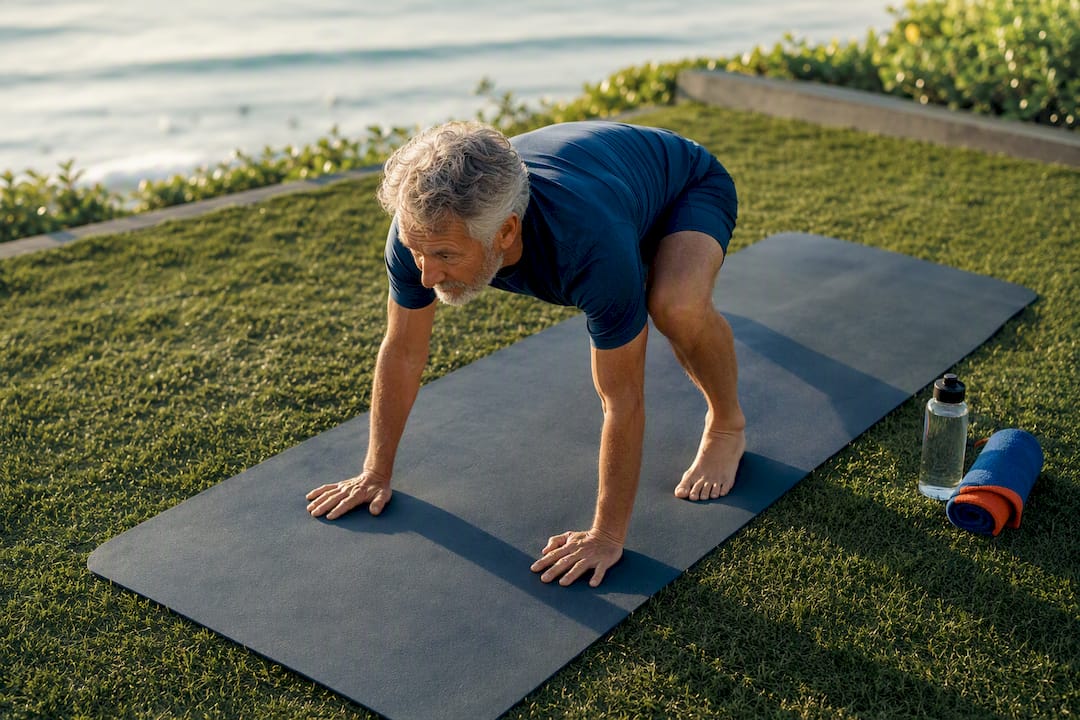
- Week 3: Introduce plank holds and practice pop-ups on the floor or a yoga mat.
- Week 4: Combine all movements into one circuit, resting as needed, and time your floor pop-up for speed.
A targeted regimen focused on shoulder mobility and core strength genuinely reduces post-lesson soreness and improves paddling endurance for adult beginners. Pace yourself. Two rest days between sessions in week one is smarter than pushing through soreness and getting hurt before you ever touch the water.
Pro Tip: Practice your pop-up on dry land for five minutes a day. Every second saved standing up is a second you’re actually surfing instead of scrambling.
Choosing Lessons and Instructors for Older Beginners
Not every lesson format suits every learner, and the wrong fit can turn a promising start into a frustrating one.
Private lessons give you undivided attention and let the instructor adjust pace to your recovery needs between attempts. Small-group lessons cost less and add a social element, which some seniors find motivating. Multi-day packages work well if you’re traveling and want steady, staged progression over several sessions rather than a single afternoon.
Before booking, ask these questions:
- Have you taught adults over 50 before, and how did they do?
- What’s your student-to-instructor ratio in group lessons?
- What safety drills happen before we enter the water?
- Is all equipment, including wetsuits, provided?
A lesson built for you will start with land-based practice, keep group sizes small, and let you set the pace. A red flag: an instructor who rushes you toward bigger waves before you’ve mastered whitewater pop-ups. Adult learners generally do better with private or very small groups that cut down wait time between coached attempts, which matters more as recovery time between tries grows with age.
Beginner Equipment: What to Use and What to Avoid
Your board choice matters more than almost any other decision you’ll make as a beginner. Soft-top, high-volume boards float better, catch waves earlier, and forgive mistakes that would sink a sleek shortboard attempt. Beginners’ guides consistently point to larger-volume boards as the single biggest factor in early pop-up success.
A few practical notes:
- Use a leash rated for the board’s length, and check it before every session.
- Soft, rounded fins reduce injury risk if the board hits you, which it will eventually.
- A rash guard or thin wetsuit prevents chafing from the board and sun exposure during long paddling stretches.
- Rent before you buy. A rental period lets you test board sizes without committing to gear you might outgrow within a season.
Realistic Timeline and Progression Milestones
Most first-time students, regardless of age, stand up in whitewater during their opening lesson when they’re on the right board with close coaching. That’s the first milestone, and it happens fast.
- Lesson one: Standing up in whitewater, often more than once.
- First weekend: Consistent whitewater pop-ups without needing a push from the instructor.
- First season: Attempting unbroken, green waves, which requires reading timing and paddle strength that only builds with repeated sessions.
Frequency beats intensity here. Progress for older beginners tends to be more about consistency than about pushing hard in occasional long sessions. Set a personal goal, like ten clean pop-ups in a month, and track it instead of comparing yourself to a 20-year-old on the next board over.
How a Proven Beginner Teaching Method Speeds Learning
Some schools have refined their beginner process to the point where the first wave isn’t a maybe, it’s the expectation. Hans Hedemann Surf School built its Waikiki program around exactly that idea: individual attention, soft-top boards, and a staged progression that most students can start riding within their first lesson.
The gap between schools that produce confident first-timers and schools that produce frustrated ones almost always comes down to two things: how much individual attention you get, and whether the board under your feet is forgiving enough to let you fail safely while you learn.
That staged approach, land drills before water time, whitewater before green waves, close supervision throughout, mirrors what teaching guides broadly recommend as the most reliable path for mature learners. Professional instructors who work with beginners daily know how to read fatigue, adjust pacing, and keep older students safe without slowing their progress unnecessarily.
Fitting Surfing Into Your Life: Options and Realistic Approaches
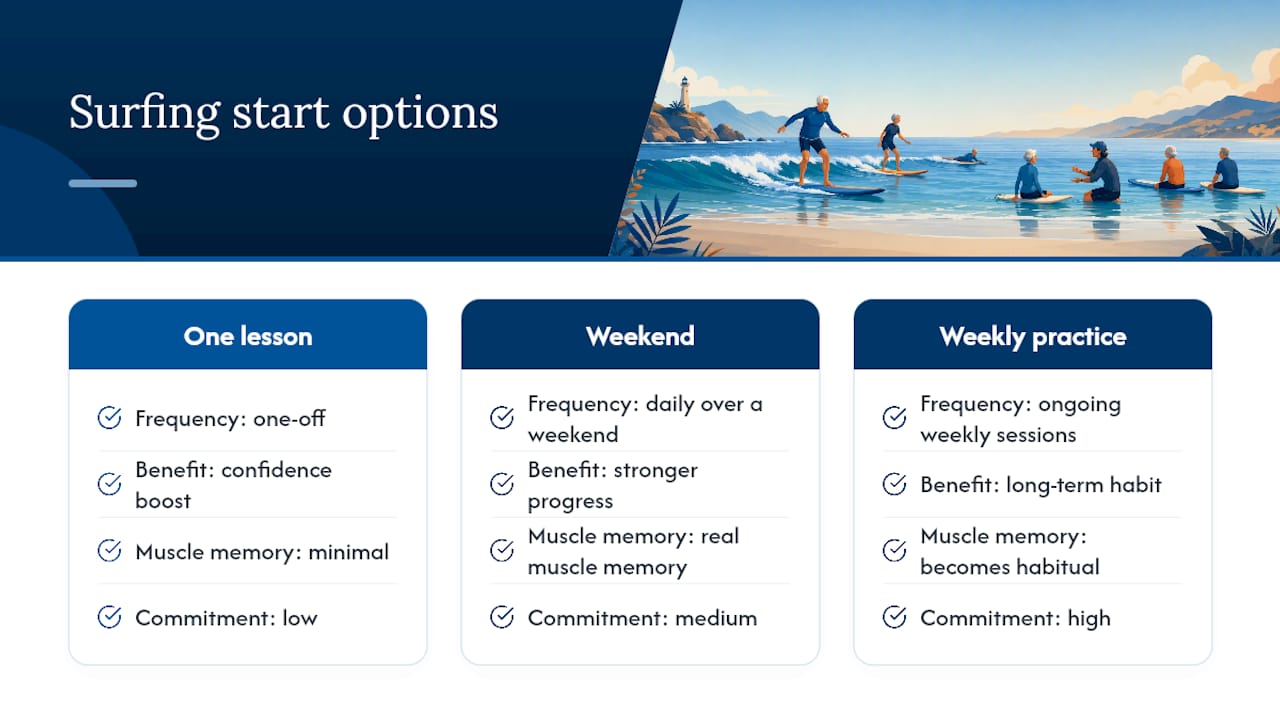
There’s no single right way to take this up. A single vacation lesson gives you the story and the confidence boost. A weekend of daily sessions builds real muscle memory. Ongoing weekly practice, if you live near water, turns surfing into something closer to a habit than a bucket-list item.
Measure success by how you feel afterward, not just by wave count. Improved balance, a good laugh with strangers in the lineup, and better sleep that night all count. Try one supervised lesson before deciding which commitment level fits you. It costs less than you think to find out.
Ready to Try It Yourself?
Reading about surfing only gets you so far. At some point you have to paddle out, and doing that with someone who has taught hundreds of first-timers is worth far more than another how-to article. Hhsurf’s Group Lessons, Semi Private Lessons, and Private Lessons in Waikiki are built around getting beginners standing up fast, with all equipment included and instruction from professional surfers who’ve spent decades doing exactly this.
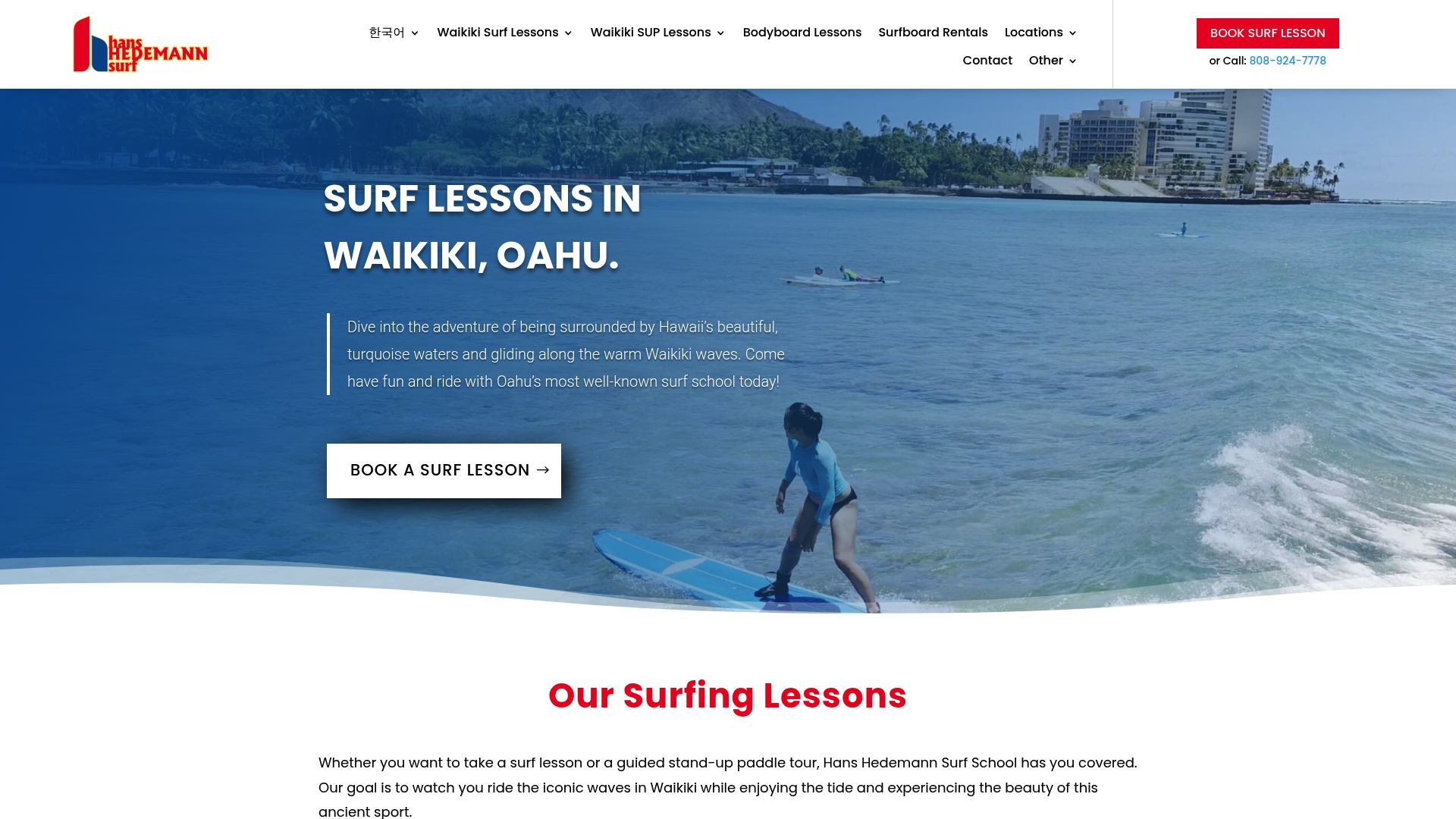
If you want more one-on-one pacing for an older body that needs a bit more recovery time between attempts, a private lesson lets the instructor adjust entirely around you instead of a group schedule. Prefer the North Shore instead? Group and private lessons are available there too, starting at $95 per person. Book a lesson, tell the instructor this is your first time in the water in years, and let them handle the rest.
Sources
- Can I Learn to Surf at 40? (Yes, and Here’s Everything You Need to Know) – Women + Waves
- Is 40 too old to learn to surf? – Rise Up Surf Retreats
- Learning to Surf After 40: What Nobody Tells You | Eternal Surfer
FAQ
Can a 70-year-old learn to surf?
Yes. Balance, core strength, and a willingness to fall repeatedly matter more than age. A 70-year-old in reasonable health who trains shoulder and core strength beforehand and takes lessons on a soft-top board can realistically stand up on whitewater in their first session.
What is the 12-second rule in surfing?
This isn’t a standardized safety rule taught across the sport. If an instructor mentions a specific timing rule during your lesson, ask them to explain it in context. It likely refers to wave interval timing rather than a universal beginner guideline.
Is it possible to start surfing at 60 years old?
Absolutely. Many adult beginners in their 50s and 60s stand up during their first lesson when they use the right board and get patient coaching. A basic fitness check with a doctor beforehand is a smart step if you have any cardiac or joint history.
Are surfers usually tall or short?
Height doesn’t determine surfing success. Board volume and shape matter far more than a surfer’s height, and beginner boards are sized to match a person’s weight and skill level rather than their height alone. Shorter and taller surfers both progress at similar rates on properly sized equipment.
How much do beginner surf lessons cost?
Group lessons at Hhsurf start at $100 per person, while private lessons run $180 per person for learners who want one-on-one pacing. Multi-day packages for deeper progression are also available on the same booking page.
0 Comments