
Book a family SUP lesson on a lifeguarded Waikiki beach with a provider that supplies properly fitted, USCG-approved life jackets and keeps a small instructor-to-family ratio. A provider like Hans Hedemann Surf School fits this profile: staged teaching, experienced instructors, and equipment sized for kids. Confirm current conditions and PFD sizing before you book, then reserve directly.
TL;DR:
- Properly fitted USCG-approved life jackets are essential for children, and providers should confirm gear sizes before booking.
- Choose a lesson from an experienced provider that keeps instructor-to-family ratios small to ensure individualized supervision during practice.
- Morning lessons are preferable due to calmer waters and lower wind, reducing the risk and making balance easier for kids.
- Confirm the lesson is designed around your least confident swimmer, especially for young children or beginners, to ensure safety and enjoyment.
- Always verify active lifeguard coverage, current ocean conditions, and cancellation policies on the lesson day for maximum safety.
Table of Contents
- What Should You Check Before Booking a Family SUP Lesson in Waikiki?
- What Does a Family SUP Lesson in Waikiki Actually Include?
- How Do You Choose the Right SUP Lesson for a Mixed-Age Family?
- What Should You Bring on Lesson Day?
- How Hans Hedemann Surf School Lines Up With This Checklist
- Why the “Just Book Any Lesson” Advice Falls Short
- Ready to Book Your Family’s SUP Lesson?
- Sources
- FAQ
What Should You Check Before Booking a Family SUP Lesson in Waikiki?
Before any family sup lesson waikiki gets booked, run through a short list of checks. These aren’t bureaucratic hoops. Ocean conditions in Hawaii shift fast, and a lesson that looked perfect online can turn into a bad afternoon if nobody checked the basics first.
- Lifeguard coverage. Confirm the beach has active lifeguards on your lesson day. Waikiki’s main lifeguarded beaches, Dukes, Kuhio, Queens, Kapiolani Park, and Sans Souci, typically run coverage from around 8:00 a.m. to 6:30 p.m., but hours shift with season and staffing, so verify for your specific date.
- PFD policy. Ask the operator directly whether they provide USCG-approved life jackets sized for each child, not just adult-sized gear handed down.
- Hawaii’s youth rule. State regulation requires children age 12 and under to wear a PFD while aboard a vessel operating or anchored offshore, and SUP boards generally fall under that same safety logic.
- Swimming ability. Ask what minimum comfort level in water the instructors expect, and whether they adjust supervision for weaker swimmers.
- Live conditions. Check HawaiiBeachSafety.com the morning of your lesson. Wind, swell, and shorebreak can change a “calm” forecast into something rougher within hours.
Pro Tip: Call the day before and ask, “What’s your PFD size range for a 4 year old?” A provider that answers specifically, rather than vaguely, is one that fits gear correctly rather than guessing.
Hawaii Ocean Safety is blunt about one point families often miss: “family-friendly” doesn’t mean risk-free. Ocean water behaves nothing like a pool, and kids can get into trouble even in water that looks shallow and calm.
What Does a Family SUP Lesson in Waikiki Actually Include?
Most family paddleboarding lessons in Waikiki typically last around an hour and a half and follow a similar arc: a shore demonstration first, then shallow-water practice, then short guided paddles once everyone looks steady on their feet. Group SUP training Waikiki-style usually keeps ratios tight so instructors can watch each participant, not just the group as a whole.
Here’s what a typical booking includes:
- Boards sized to rider weight and skill, not one-size-fits-all
- USCG-approved PFDs fitted to each family member, kids included
- Paddles, leashes, and a safety briefing before anyone touches water
- An instructor who stays in the water or paddles alongside during early attempts
- Optional photo or video add-ons that capture the moment a kid stands up for the first time
Pro Tip: Ask if the lesson can split time between paddling and a shore-based “practice pop-up” drill. Kids often do better standing up after a few dry-land tries than jumping straight into balancing on moving water.
For families with a toddler or a nervous first-timer, a group SUP lesson built around family pacing beats a generic tourist group where everyone’s skill level is a guess. If someone in your group would rather stay closer to shore and try bodyboarding instead, bodyboard lessons are a solid lower-commitment alternative for younger kids.

How Do You Choose the Right SUP Lesson for a Mixed-Age Family?
Picking a lesson isn’t about finding the most advanced option. It’s about matching the lesson to your least confident person, usually the youngest kid or the family member who’s never been in open water before.
-
Start with the weakest swimmer, not the strongest. Hawaii Ocean Safety’s own guidance is clear that matching activity to the least-confident participant cuts risk substantially. If your 6 year old can’t yet swim independently, that fact should drive the whole booking decision, not your teenager’s surf ambitions.
-
Look for family-specific formats over generic group slots. A lesson built for four unrelated adults handles differently than one built for a parent and two kids. Ask whether the operator runs true family sessions or just drops families into standard group classes.
-
Confirm tandem options for very young children. Some providers allow a parent and toddler on one board together during early practice. Others require every rider on their own board past a certain age. Ask before you show up expecting one and getting the other.
-
Ask specifically about infant and toddler PFDs. Standard youth life jackets don’t fit properly on very small kids. Infant PFDs need head support and a crotch strap design, and not every rental fleet stocks them. This is worth a phone call, not a guess.
-
Check the weather and cancellation policy. Waikiki’s ocean can turn choppy with little warning. A provider that reschedules for safety rather than pushing through marginal conditions is one worth choosing. Ask what their process looks like if swell picks up mid-morning.
Beginner paddleboarding Waikiki bookings work best when parents are upfront about ages, weights, and swim comfort levels rather than rounding everyone up to “intermediate” to skip the beginner class.
What Should You Bring on Lesson Day?
Arrive 30 to 45 minutes before your scheduled start. That window covers waiver paperwork, PFD fitting for each family member, and a quick safety briefing before anyone heads to the water.
- Reef-safe sunscreen, applied before you arrive since instructors won’t wait for it to dry
- Swimsuits under clothing you can shed quickly, plus rash guards for extended sun exposure
- A small dry bag for phones, keys, and sunglasses
- Water shoes or reef-safe sandals if the beach entry has coral or rock
- Plenty of water to drink before and after, since Hawaii sun dehydrates faster than most visitors expect
Flag any medical conditions, medications, or recent injuries when you check in. If a family member is feeling seasick-prone, has an ear infection, or is recovering from a recent illness, it’s worth postponing rather than pushing through. Most lesson providers include boards, PFDs, and paddles in the price, but if you’d rather rent gear separately for extra practice time on your own, surfboard rentals in Waikiki run as a standalone option.
Pro Tip: Book your lesson for morning hours when possible. Wind tends to pick up by early afternoon on many Waikiki days, and calmer morning water makes early balance attempts far less frustrating for kids.
How Hans Hedemann Surf School Lines Up With This Checklist
Hans Hedemann Surf School positions its family lessons, kids lessons, and SUP lessons around a methodology built to get beginners standing up fast, a claim the school makes directly about its own teaching approach. That kind of individual attention matters most for families juggling different skill levels under one booking.
The school’s instructors are described as experienced local and professional surfers, which lines up with the supervision standard this guide has laid out: close, hands-on attention rather than a lifeguard-from-a-distance approach. When you call to book, ask specifically what PFD sizes they stock for your kids’ ages and weights, and confirm their instructor-to-family ratio for your group size. A provider confident in its safety setup will answer both questions without hesitation.
Why the “Just Book Any Lesson” Advice Falls Short
Most vacation guides treat SUP lessons as interchangeable, listing five providers and letting price decide. That advice skips the one variable that actually determines whether your family has a good day: whether the lesson was built around your weakest swimmer, not your most athletic one.

The safety data backs this up plainly. Hawaii’s own beach safety guidance treats supervision and skill matching as the two levers that matter most, not equipment quality or instructor certifications alone. Parents who show up assuming instructors will “handle it” are missing the point. You stay engaged, you ask about PFD sizing before you arrive, and you pick a format built for families rather than a generic tourist slot.
If there’s one thing to prioritize first, it’s this: call ahead and ask pointed questions about ratios and gear sizing. A provider that answers specifically is one that’s actually thought this through.
— Johann
Ready to Book Your Family’s SUP Lesson?
Hhsurf runs family SUP lessons in Waikiki with instructors who fit gear to each rider and keep groups small enough to actually watch every swimmer, not just the group as a whole.
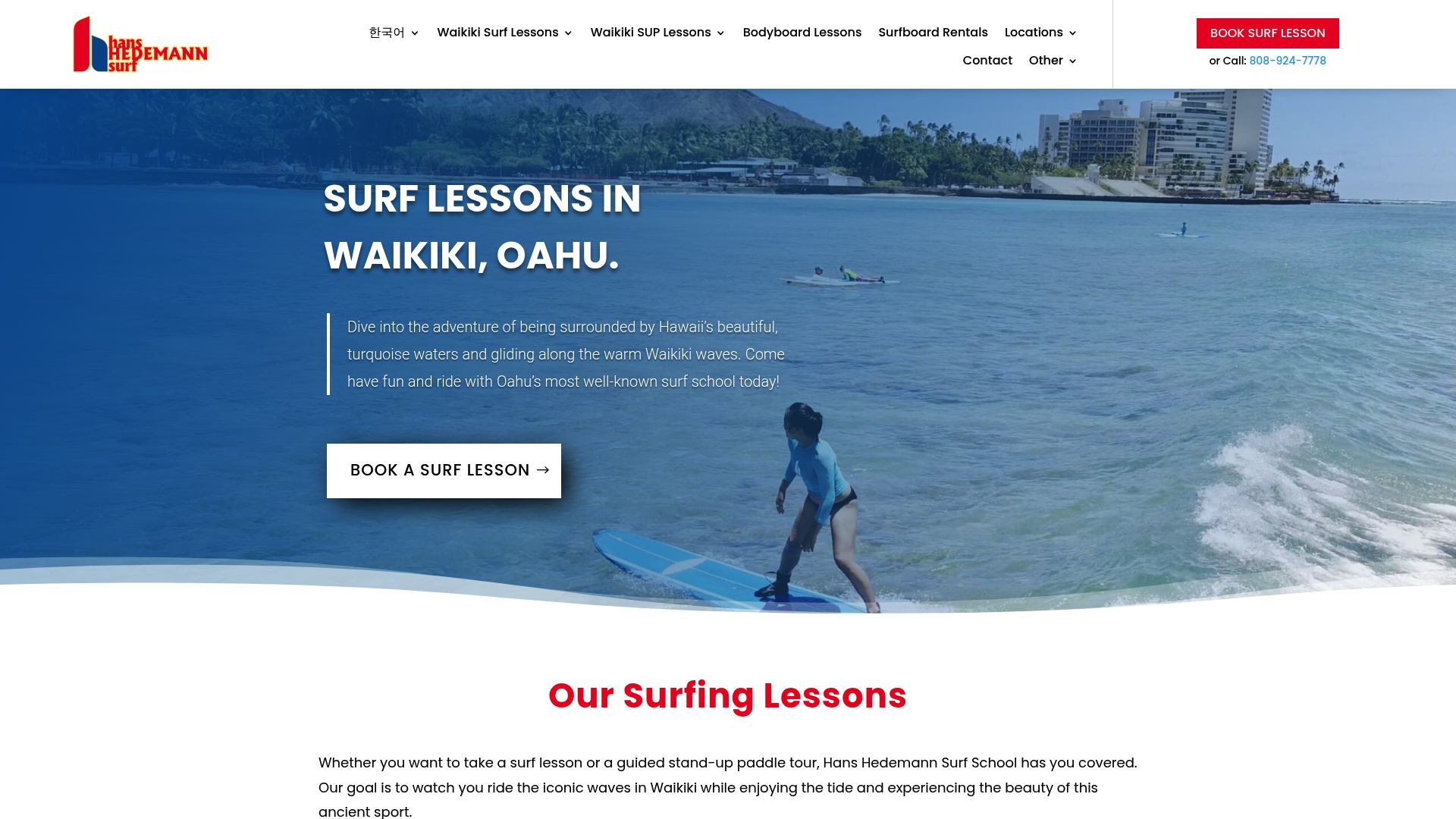
Group stand-up paddling lessons start at $100 per person, with private stand-up paddling lessons available for families who want one-on-one pacing for a nervous kid or a mixed-skill group. Before you reserve, have your family’s ages and approximate weights ready so the school can pull the right PFD sizes, and confirm the instructor-to-family ratio for your group when you call. If your family also wants to try surfing or bodyboarding during the same trip, multi-day packages bundle several sessions at a set price. Check availability now and lock in a morning slot, since calmer water earlier in the day tends to make the first few balance attempts far less frustrating for kids.
Sources
- Beach safety for families | Hawaii Ocean Safety
- Life jacket wear guidance | U.S. Coast Guard Boating Safety
- Life Vest For Kids – Division of Boating and Ocean Recreation
- List of lifeguarded beaches in Hawaii | Hawaii Ocean Safety
FAQ
What Age Can Kids Start SUP Lessons in Waikiki?
There’s no single fixed minimum age across all providers, but most family lessons accommodate kids from around age 5 or 6 who can follow instructions and have basic water comfort. Younger children often join in a tandem setup with a parent rather than paddling solo, so ask the operator directly about age policies for your kids’ ages.
Do Kids Need Life Jackets for SUP Lessons in Hawaii?
Yes. Hawaii state rule requires children 12 and under to wear a PFD while on a vessel operating offshore, and reputable SUP operators apply that same standard to paddleboard lessons. Confirm the PFDs are USCG-approved and correctly sized before your child gets on the water.
How Much Does a Family SUP Lesson Cost in Waikiki?
Group SUP lessons run $100 per person, with private instruction available for families wanting closer one-on-one attention. Exact family package pricing depends on group size and ages, so check current rates directly with the school before booking.
What’s the Best Time of Day for a Family SUP Lesson?
Morning lessons generally offer calmer water since wind tends to build by early afternoon on many Waikiki days. Booking a morning slot also gives you buffer time if you need to reschedule due to changing conditions.
Which Waikiki Beaches Are Safest for Family SUP Lessons?
Stick to lifeguarded beaches like Dukes, Kuhio, Queens, Kapiolani Park, and Sans Souci, which typically have daily lifeguard coverage from 8:00 a.m. to 6:30 p.m… Always verify hours and current conditions on your specific lesson day, since schedules and surf can shift.
0 Comments