
Expect to pay roughly $10 to $20 for a one or two hour surfboard rental in Waikiki, $25 to $35 for a half-day, and $50 to $80 for a full day or 24 hours, with weekly rates often landing between $100 and $200 depending on the board. Tax and a card deposit usually get added at checkout, so book directly through a beach shop or lesson provider to confirm the final number.
TL;DR:
- Booking full-day or 24-hour rentals reduces the hourly cost to around $3.33 to $7.50, offering better value than multiple shorter sessions.
- Most shops charge an additional 4.7% sales tax and hold a refundable deposit, which can significantly increase the final rental price.
- Soft-top beginner boards are typically the cheapest option, while shortboards and epoxy models have higher daily rates and are suited for experienced surfers.
- Renting through a lesson provider ensures a properly matched board and professional guidance, which can help beginners stand up faster and improve their experience.
- Multi-day and weekly rentals are recommended for those staying four or more days, but require advance booking during peak seasons due to high demand.
Table of Contents
- How Much Does Surfboard Rental Cost in Waikiki?
- How Long Should You Rent a Surfboard For?
- Does Board Type Change the Rental Price?
- What’s Included in a Rental, and What Costs Extra?
- Where Do You Store a Rented Surfboard Overnight?
- Why Renting Through a Lesson Provider Often Beats a Beachfront Shop
- Is a Cheap Rental Actually the Best Deal?
- Ready to Book Your Waikiki Surf Session?
- Sources
How Much Does Surfboard Rental Cost in Waikiki?
Real prices from Waikiki rental shops show a wider spread than most travel blogs admit. Star Beachboys charges around $15 for two hours and $25 for a half-day session that runs five hours. Sparky’s Surf School prices things a little differently: $10 for one hour, $15 for two hours, $20 for three hours, $50 for a full day, and $80 for a full 24-hour rental. Moku Hawaii lists surfboards starting near $15 plus tax for one to two hours, climbing to $20 plus tax for three to four hours, with SUP boards running about $25 plus tax for a short session.
Do the math on a per-hour basis and the pattern becomes obvious. A two-hour rental at $15 works out to $7.50 an hour. Stretch that same board into Sparky’s 24-hour option at $80, and the hourly rate drops to roughly $3.33, assuming you actually use the board across most of that window. Full-day rentals typically beat hourly rentals by 40 to 60 percent on a per-hour basis, which is the whole reason longer blocks exist.
| Rental Duration | Typical Price Range | Approx. Per-Hour Rate |
|---|---|---|
| 1 hour | $10 to $15 | $10 to $15 |
| 2 hours | $15 to $20 | $7.50 to $10 |
| Half-day (4 to 5 hrs) | $25 to $35 | $5 to $7 |
| Full day (6 to 12 hrs) | $50 to $80 | $3.33 to $7.50 |
| 24 hours | $80 to $100 | $3.33 to $3.75 |
| Weekly | $100 to $200 | Varies by board |
These numbers come straight from local shop pricing roundups and each shop’s own booking system, but they shift with season and board availability. Most Waikiki operators run their live pricing through FareHarbor booking embeds, and that’s the number that actually charges your card, not whatever a blog post says. State sales tax adds roughly 4.7 percent on top of every quote, and a lot of shops also hold a refundable deposit that doesn’t show up in the advertised price at all.
How Long Should You Rent a Surfboard For?
Picking the right window matters almost as much as picking the right shop, since a mismatched rental either wastes money or cuts your session short right when you’re finally getting the hang of it.
- 1 to 2 hours fits first-timers testing the water, tourists squeezing surfing between other plans, or anyone unsure they’ll like it enough to commit longer.
- Half-day (4 to 5 hours) works for practice sessions, family outings where people rotate on and off the board, or a morning session that leaves the afternoon free.
- Full day (6 to 12 hours) or 24-hour rentals suit visitors who want to catch both a morning glass-off and an evening session without renting twice.
- Multi-day or weekly rentals make sense for anyone staying four or more days who wants the board waiting at the hotel or shop every morning.
Longer rentals almost always cost less per hour, but that math only pays off if you’ll genuinely use the extra time. During peak winter travel weeks, book multi-day rentals a few days ahead. Popular sizes and soft-top beginner boards run out fast at the busiest beachfront shops.
Does Board Type Change the Rental Price?
Board type shifts the price more than duration does in some cases, and it’s the detail most first-time renters overlook until they’re standing at the counter.
- Soft-top boards are the standard beginner rental and usually anchor the lowest price tier at any given shop, since they’re forgiving, buoyant, and cheap to replace.
- Longboards often run a few dollars higher per session. Their length and stability make them a smart pick for small, mellow Waikiki waves and learners who want a steadier ride than a shortboard offers.
- Shortboards, epoxy boards, and performance models carry the highest daily rates in most shops, reflecting both their fragility and the fact that they’re aimed at intermediate and advanced surfers who can actually use their responsiveness.
Pro Tip: Tell the shop staff your height, weight, and how many times you’ve surfed before you pick a board. A board that’s too small for your skill level is genuinely harder to paddle and stand on, and no rental discount is worth an afternoon spent fighting the water instead of riding it. Beginners are generally steered toward soft-tops for exactly this reason, while epoxy boards get reserved for surfers who’ve already logged real time standing up.
What’s Included in a Rental, and What Costs Extra?
Most Waikiki rentals include a leash and a bar of wax at no extra charge, and some shops throw in fins if they’re not already installed on the board. Many providers also let you leave the board at the shop for free while you’re actually out in the water between sessions, according to pricing details published by Nā Papa Surf.
What isn’t always included is where surprises show up. Watch for these three costs before you hand over a credit card:
- Tax and deposit. Hawaii’s roughly 4.7 percent sales tax applies on top of the quoted rate, and many shops hold a refundable card deposit or cash deposit against damage.
- Late-return fees. Bringing a board back after the shop’s posted return time can trigger an hourly or full extra-day charge.
- Delivery or pickup fees. A handful of shops will drop a board at your hotel for an added flat fee, which can be worth it for weekly rentals.
Before booking, ask directly: what’s the deposit amount, is tax included in the quoted price, and what happens if you’re 20 minutes late returning the board?
Where Do You Store a Rented Surfboard Overnight?
Storage is the detail that trips up more visitors than pricing does. Many Waikiki hotels simply don’t allow surfboards in guest rooms, and secure storage near the beach is limited even at properties that try to accommodate surfers.
- Confirm your hotel’s surfboard policy before booking anything longer than a single session.
- Ask the rental shop whether they offer overnight storage or a locker system for multi-day renters instead of handing the board back and forth daily.
- Rideshare drivers can be inconsistent about carrying boards. A soft-top usually fits in a trunk or hatchback, but a longer board may need a roof rack or a dedicated surf shuttle.
- If you’re flying in with your own board, budget for airline checked-board fees and a padded bag. Airlines routinely charge $50 to $150 each way for oversized sports equipment.
Why Renting Through a Lesson Provider Often Beats a Beachfront Shop
A straight rental gets you a board and a leash. A lesson-linked rental gets you a board that’s actually matched to your size, skill, and the day’s wave conditions, plus someone in the water making sure you’re set up on waves you can actually catch.
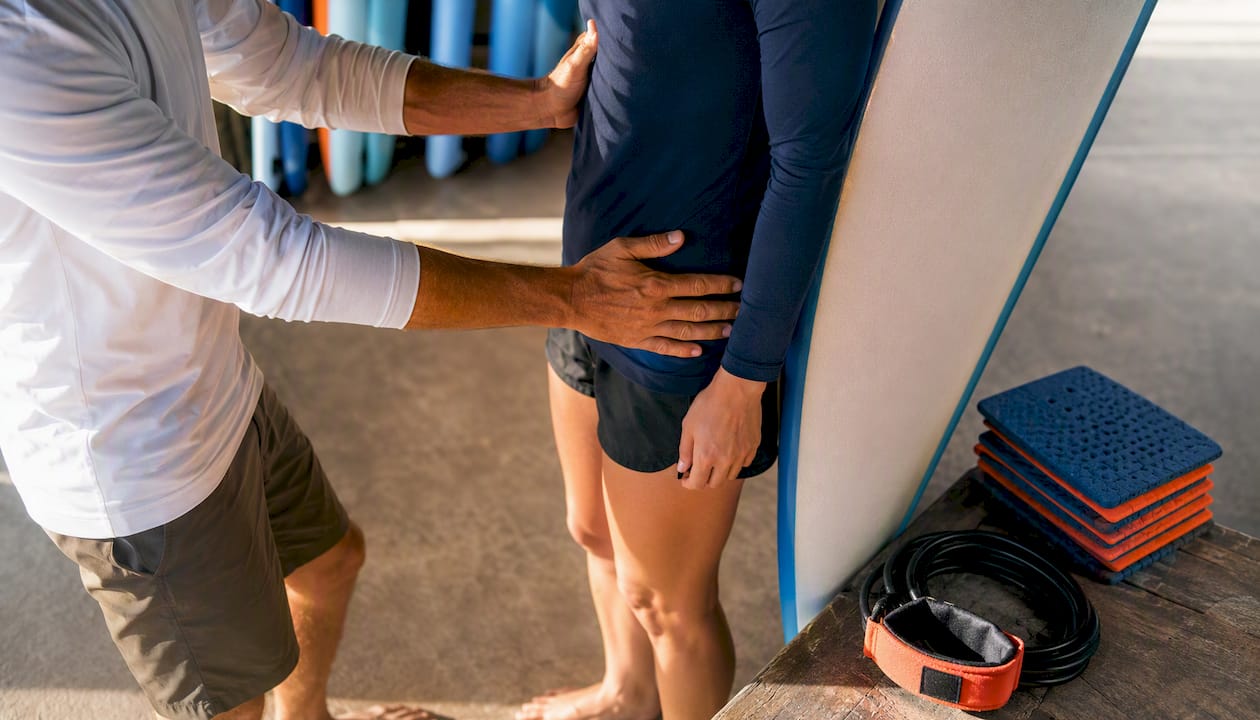
Hans Hedemann Surf School built its teaching approach around getting beginners standing up during their first lesson, which only works if the equipment fits the student from the start. Individual attention from a professional surfer cuts down the trial-and-error that eats up half of a self-guided rental session. You’re not guessing whether you grabbed a board that’s too small. You’re not wasting your first 30 minutes figuring out where the sandbar breaks are. The difference between renting solo and renting through a lesson usually shows up fastest for someone who’s never stood on a board before.
Is a Cheap Rental Actually the Best Deal?
The lowest hourly rate on the beach isn’t automatically the best deal, and that’s the piece most rental comparisons miss entirely. A $10 one-hour rental sounds great until you factor in the 15 minutes you’ll spend picking a board and adjusting a leash you’ve never used, time a shop clerk isn’t going to refund.
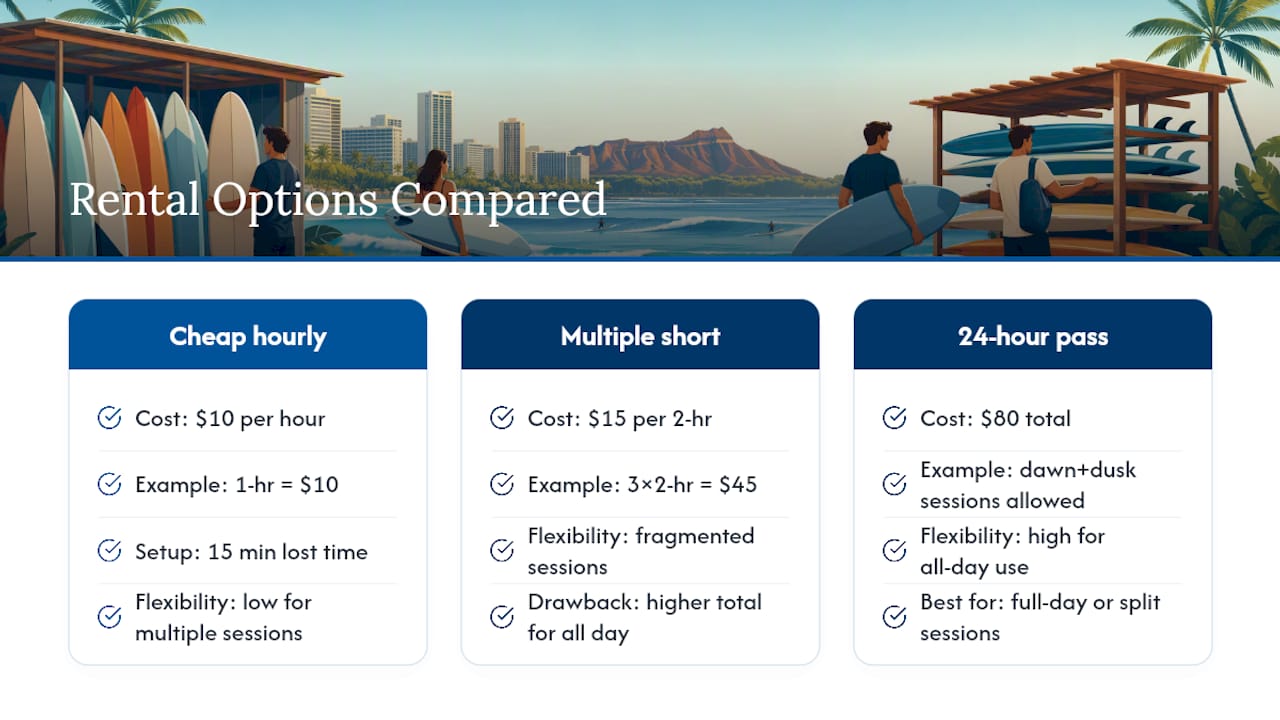
Conventional advice treats surfboard rental shopping like comparing gas prices: find the lowest number, book it, done. That ignores the fact that per-hour rate and value delivered are two different things. A 24-hour rental at $80 that lets you surf dawn and dusk sessions is a better use of money than three separate two-hour rentals at $15 each, even though the sticker price looks bigger. Duration flexibility matters more than the headline number for most visitors.
What the research actually supports is this: match the rental structure to how you’ll realistically use it, confirm storage and deposit terms before you commit to multiple days, and if you’re new to surfing, weigh whether a lesson-linked rental gets you standing up faster than a solo one ever will. The board itself is rarely the bottleneck. Time in the water with the right guidance usually is.
— Johann
Ready to Book Your Waikiki Surf Session?
A surf lesson gets you past the guesswork that comes with a solo rental, matching your board to your size and skill level before you ever paddle out, with an instructor beside you making sure your first waves count. That’s the real advantage over grabbing a board at a beachfront counter and figuring it out alone: someone experienced is reading the surf for you.
A typical group or private surf lesson includes the board, leash, and hands-on coaching for the full session, so there’s no separate rental fee to track down and no deposit math to double-check. Meeting points are set near Waikiki Beach, and instructors will tell you exactly what to bring (sunscreen, water, a swimsuit) when you book. If you’re staying a few days and want more one-on-one time in the water, the private lesson option lets you set your own pace. Check available dates and book your session directly through Hans Hedemann Surf School to lock in equipment and instruction in one step.
0 Comments