
Surfing accelerates friendship and family bonding faster than almost any other shared activity, because it combines three things most experiences lack: genuine physical challenge, total presence away from screens, and built-in moments of communal celebration. Families who surf together report stronger communication and deeper emotional connection. The “hype squad” dynamic that emerges naturally in two-person surf lessons — where friends cheer each other through every wipeout and first ride — is one of the clearest examples of why surfing as a bonding activity works so reliably. The mechanisms behind it are specific: shared vulnerability lowers social defenses, mutual support builds trust, rituals create lasting memories, and the physical high of riding a wave makes everyone more open and generous with each other.
Table of Contents
- Why shared challenge makes surfing such a powerful bonding activity
- Buddies in the water keep each other safer and closer
- How learning together creates the “hype squad” effect
- Rituals and “stoke” are what make surf days unforgettable
- Surfing works for all ages, which is what makes it a family activity
- Physical and mental benefits that make bonding easier
- How to plan a group surf session that actually bonds people
- How Hhsurf structures lessons to create shared success fast
- Key Takeaways
- What most people underestimate about surfing as a social experience
- Ready to experience this with your group? Book with Hhsurf
- Further reading and sources
Why shared challenge makes surfing such a powerful bonding activity
The ocean is the great equalizer. No amount of professional status, social confidence, or gym fitness prepares you for your first wave. That forced equality is exactly what strips away social performance and creates the conditions for real connection.
When two people face the same unpredictable challenge side by side, social roles dissolve. A parent and teenager become two people trying not to fall off a board. Colleagues become teammates reading the same set. Shared wipeouts followed by laughter are among the highest-value bonding moments in any group activity, because they humanize everyone instantly. Research on surf-school dynamics confirms that shared vulnerability reduces social distance faster than most structured team-building exercises.
Surfing also enforces presence. Phones stay on the beach. There are no notifications, no half-attention conversations. That screen-free immersion extends naturally into the post-session period, when people are still in that relaxed, distraction-free state and conversations go longer and deeper than they would over dinner with devices on the table.
Key mechanisms at work:
- Equalizer effect: The ocean treats everyone the same, removing hierarchy and social performance.
- Shared vulnerability: Learning and wiping out together reduces defensiveness and speeds trust.
- Forced presence: No screens means longer, more authentic interactions before and after sessions.
- Emotional resonance: Surviving a challenging set together creates a shared reference point that groups return to for years.
“Surfing strips away social hierarchy because the waves treat everyone the same — this forced equality creates honest, low-performance social interactions that deepen trust faster than many structured activities.” — Rise Up Surf Retreats
Buddies in the water keep each other safer and closer
A surf buddy is not just good company. Having a friend in the lineup is one of the most practical safety decisions you can make, and the behaviors that keep you safe also happen to build trust in a way that’s hard to manufacture elsewhere.
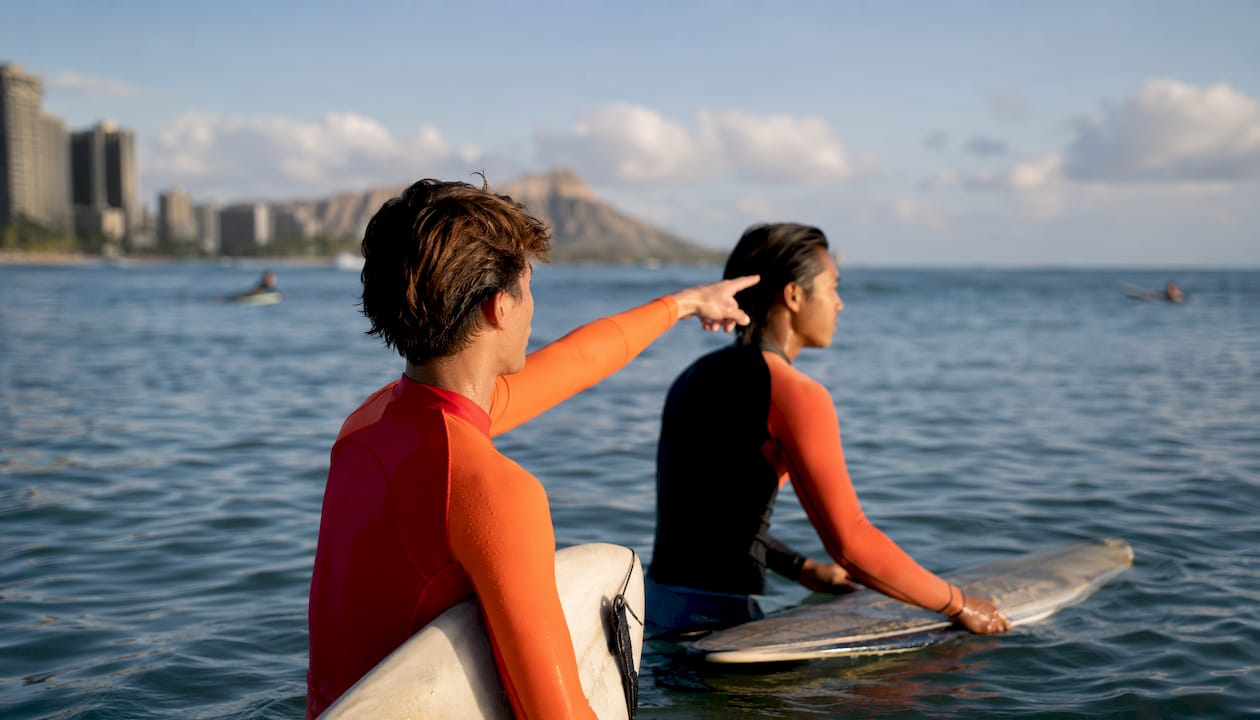
Buddy behaviors that matter: watching incoming sets and calling them out, signaling when someone’s board drifts, paddling over after a wipeout to check in, and holding position so neither person gets caught inside alone. These are small acts, but being looked after in a physically vulnerable environment creates a specific kind of gratitude. Understanding the full scope of what a surf buddy relationship means — safety, accountability, and mutual encouragement — makes the dynamic clearer for anyone new to group sessions.
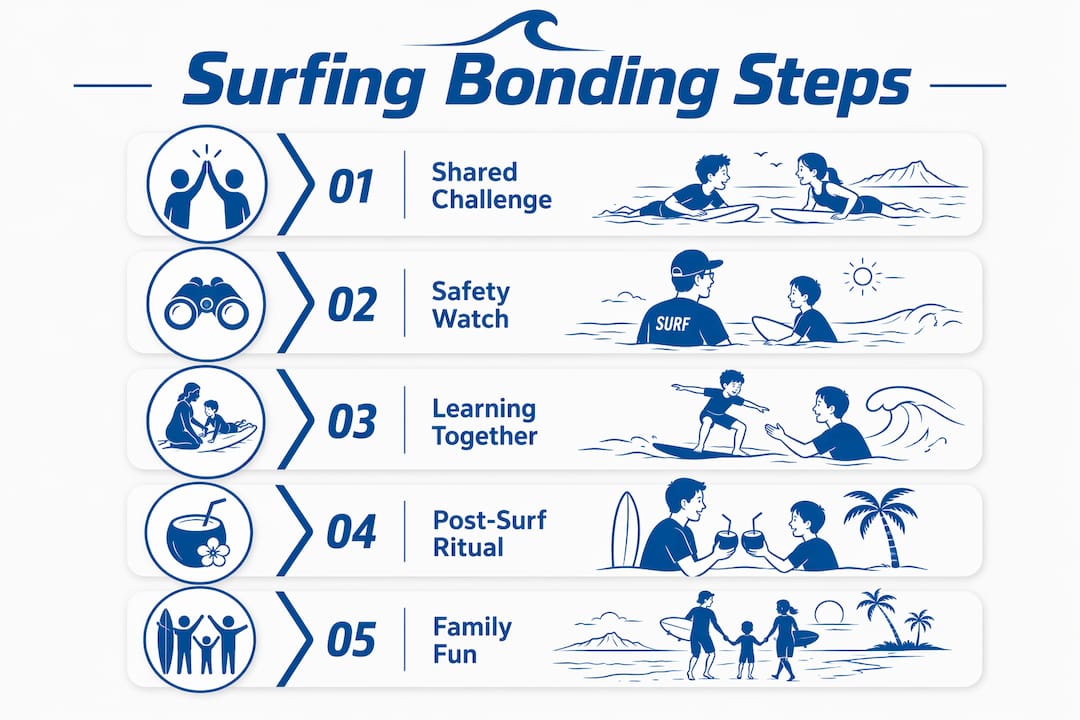
Pro Tip: When surfing with a group, designate one person at a time to watch the horizon for incoming sets while others paddle. Rotate that role every 15–20 minutes. It keeps everyone alert without crowding the lineup, and the person watching naturally becomes the group’s anchor for that stretch.
Being assisted after a fall, or helping someone else recover their board in choppy water, builds a kind of reliance that most land-based activities never produce. That reliance is the foundation of lasting trust.
How learning together creates the “hype squad” effect
Shared learning produces repeatable moments to celebrate, and those micro-victories compound into something much bigger than the sum of their parts.
Here is what a typical beginner progression looks like when friends learn together:
- Beach orientation: Instructors walk through paddling technique, pop-up mechanics, and ocean awareness on dry sand.
- Paddling out together: The first paddle is disorienting for everyone, which immediately levels the group.
- Reading waves: Friends spot sets for each other, calling out timing cues from the water.
- The pop-up attempt: The moment of standing up, or trying to, is where the hype squad kicks in.
- First ride: One person catches a wave and the group erupts. That reaction reinforces the behavior and motivates everyone else.
- Debrief in the water: Between sets, friends swap tips, laugh at falls, and encourage the next attempt.
| Milestone | Typical Timeline |
|---|---|
| First successful pop-up on sand | Day 1, lesson 1 |
| Standing on a wave (briefly) | Day 1–2 with instruction |
| Riding a wave to shore | Day 2–3 with targeted coaching |
| Reading and selecting waves | Day 3–5 |
Instructor reporting and surf-school data consistently show that most beginners stand up within the first day when instruction is hands-on and focused. When friends witness that moment for each other, the shared joy — what surfers call “stoke” — becomes the social currency that keeps groups coming back. Two-person lesson formats are specifically designed to balance expert coaching with that social interaction, making them the strongest format for friends learning together.
Rituals and “stoke” are what make surf days unforgettable
Surfing has a built-in ritual structure that most activities lack, and those rituals are exactly what turn a good day into a story that gets told for years.
Common rituals that build group identity:
- Pre-session: Watching the horizon together, reading the break, deciding who paddles where.
- In the water: Cheering every ride, calling sets, the unspoken rotation of who goes next.
- Post-session: Swapping wipeout stories on the beach, the post-surf meal, the bonfire recap.
Pro Tip: Make the post-surf debrief a habit. Even 20 minutes sitting on the beach reviewing the session, laughing at the worst falls and replaying the best rides, turns a single day into a shared story. Groups that do this consistently develop inside jokes and traditions that outlast the trip.
Group celebrations of first rides build inside jokes and continuing plans to surf again. Small wins compound. The friend who finally stood up after six attempts becomes a legend in the group’s internal mythology. That’s how surf days become the stories people tell at every gathering for the next decade.

Surfing works for all ages, which is what makes it a family activity
Surfing scales to skill and age in a way that most adventure sports do not. A seven-year-old and a sixty-year-old can be in the water at the same time, learning the same fundamentals, and neither one is waiting for the other to catch up.
What makes it accessible for mixed-age groups:
- Soft-top boards are stable, forgiving, and safe for kids and adults learning together.
- Supervised lesson formats let instructors manage mixed-ability groups without anyone feeling left behind.
- Shallow, gentle breaks at beginner spots mean younger or less confident participants can progress without fear.
- Family surf lessons are structured specifically for multigenerational groups, with equipment and pacing adjusted for everyone.
Family-oriented surf operators observe that shared vulnerability in the water actually levels parenting hierarchies. A parent struggling to stand up while their kid rides a wave is a moment of genuine equality, and kids remember it. That collaborative dynamic, where adults and children are genuinely peers in the challenge, is rare and valuable.
Physical and mental benefits that make bonding easier
Exercise, nature exposure, and rhythmic movement raise mood and reduce anxiety, which makes people more open, patient, and generous with each other. Surfing delivers all three simultaneously.
The outdoor physical benefits of group activity in natural settings extend well beyond fitness, directly supporting the social outcomes that make surfing so effective for bonding:
- Endorphin release from paddling and riding reduces defensiveness and makes people more receptive to connection.
- Shared physical fatigue after a session creates a relaxed, low-guard state where real conversations happen naturally.
- Stress reduction from ocean immersion and rhythmic wave exposure lowers cortisol, which reduces irritability and social friction.
- Increased empathy follows from shared effort, particularly when group members see each other struggle and succeed.
The “supportive bubble” that forms during a surf session, where everyone is fully present and focused on the same environment, often leads to sustained conversations and stronger post-session relationships that carry well beyond the beach.
How to plan a group surf session that actually bonds people
The difference between a surf day that brings people closer and one that just gets everyone wet is almost entirely in the planning.
- Match conditions to skill level. Beginners need small, slow waves. Choosing a break that’s too advanced creates anxiety, not bonding.
- Decide: lesson or self-session. For groups with mixed experience, a guided lesson keeps everyone on the same page and removes the frustration of self-teaching.
- Book two-person or small-group lessons. This format maximizes social interaction while keeping instruction effective.
- Agree on a shared goal. “We all want to stand up today” is a better group motivator than “let’s just see what happens.”
- Brief the group on signals. Agree on simple hand signals for “I’m okay,” “come here,” and “watch out” before entering the water.
- Plan the post-surf ritual. Decide in advance where you’re eating or gathering afterward. The anticipation is part of the experience.
Pro Tip: For a surf trip with friends, book a two-person lesson for each pair rather than one large group lesson. Pairs create a natural accountability structure and produce more hype-squad moments than larger groups where attention gets diluted.
Lineup etiquette matters when groups surf together. Don’t cluster in one spot. Spread out, take turns, and avoid dropping in on each other’s waves. Respecting the lineup keeps the mood positive and prevents the kind of friction that can sour a session fast.
- Bring reef-safe sunscreen, water, and a light snack for between sessions.
- Check the surf trip packing essentials for active travel days.
- Arrive early enough to watch the break for 10–15 minutes before paddling out.
How Hhsurf structures lessons to create shared success fast
Hhsurf, the Hans Hedemann Surf School in Waikiki, uses a hands-on teaching approach that gets beginners riding waves quickly, which means the bonding moments arrive sooner and more reliably than in a typical lesson format.
The methodology in practice:
- Individualized attention within group settings, so no one gets left behind or bored waiting.
- Soft-top board progressions that reduce fear and let students focus on the social experience rather than survival.
- Paired and small-group lesson formats that create natural hype-squad dynamics from the first session.
- Safety and encouragement as core values, not afterthoughts, which builds the trust that makes bonding possible.
“The Hhsurf teaching approach emphasizes confidence-building and rapid early progress, creating the shared success moments that turn a surf lesson into a lasting memory for groups and families.”
[Insert Johann’s surfing teaching credentials.]
[Insert Johann’s personal surfing experience.]
[Insert proprietary student success rate data.]
The equalizer effect, the hype-squad dynamic, and the post-session ritual all happen naturally within the Hhsurf lesson structure because the format is built around shared experience, not individual performance.
Key Takeaways
Surfing bonds people faster than most activities because it combines shared challenge, forced presence, and built-in rituals that create lasting memories.
| Point | Details |
|---|---|
| Shared challenge builds trust fast | The ocean’s unpredictability strips social roles and creates genuine vulnerability that accelerates bonding. |
| Buddy safety creates reliance | Watching out for each other in the water builds a specific kind of gratitude that carries into the friendship. |
| Two-person lessons maximize the effect | Small-group formats balance expert coaching with the hype-squad dynamic that makes learning together memorable. |
| Rituals turn sessions into stories | Post-surf debriefs, shared meals, and wipeout recaps compound into inside jokes and group identity over time. |
| Hhsurf gets beginners riding fast | Hans Hedemann Surf School’s hands-on method creates shared success moments in the first lesson, which is when bonding starts. |
What most people underestimate about surfing as a social experience
The conventional wisdom treats surfing as a sport you happen to do with friends. The reality is almost the opposite: surfing is a social experience that happens to involve a board.
What makes it different from other group activities is the combination of genuine risk, genuine reward, and the absence of any way to fake competence. You either stand up or you don’t. That honesty is rare in adult social life, where most shared activities allow people to perform confidence they don’t actually feel. In the water, that performance collapses immediately, and what’s left is the real person. That’s why the friendships formed through surfing tend to be unusually durable.
The other thing people underestimate is the role of the post-surf period. The hour after a session, when everyone is tired, salty, and slightly euphoric, is when the real conversations happen. The shared fatigue lowers every social guard. Groups that build a consistent post-surf ritual, whether it’s a meal, a bonfire, or just sitting on the beach, are essentially scheduling a weekly window for authentic connection. Most people don’t have that in their lives. Surfing gives it to them automatically.
Ready to experience this with your group? Book with Hhsurf
The fastest way to get the bonding benefits of surfing is to skip the guesswork and start with a lesson format designed for it. Hhsurf’s Waikiki surf lessons offer two-person lessons, family sessions, and private instruction, all delivered by professional surfers who know how to create the shared success moments that make a session memorable rather than just educational.
First-timers get everything they need: equipment, safety briefing, and the kind of hands-on instruction that gets most students standing on a wave within their first lesson. Families with kids can book kids surf lessons alongside adult sessions, so the whole group progresses together. For friends who want the full hype-squad experience, the two-person format is the clearest path to the kind of day you’ll still be talking about next year.
Check availability and book your group lesson directly on the Hhsurf site.
Further reading and sources
- Why two-person surf lessons are the best experience for friends — Big Easy Magazine: Research on how paired lesson formats optimize social interaction and learning for friends.
- Why Surfing Together Strengthens Bonds — Rise Up Surf Retreats: Covers the equalizer effect, stoke as social currency, and how group sessions build lasting connection.
- Understanding Family Surfing Benefits for All Ages — Ika Ika Surf School Tenerife: Research-backed overview of how family surfing improves communication and emotional bonds.
- How surfing builds family bonds — Kalon Surf: Operator perspective on multi-day surf programs and how shared routines deepen family ties.
- Why surfing is the perfect family activity — PB Surf Shop: Explains the screen-free, presence-focused benefits of surfing for families.
- How to Surf — Hhsurf: Teaching methodology and instructional overview from Hans Hedemann Surf School.
- Surf Lessons in Waikiki — Hhsurf: Lesson formats, safety approach, and booking details for group and family sessions.
- Costa Rica couples trip: why learn to surf together — Iguana Surf: First-hand account of how shared vulnerability and wipeouts accelerate trust between partners and friends.
0 Comments