
Pick your format and build from there: a half-day itinerary (4 to 5 hours) suits friends who want one big activity plus lounging, a full-day itinerary (8 to 9 hours) fits families and reunions that need structure and recovery time, and a sunset itinerary (late afternoon into night) works best for adults chasing photos, a bonfire, and fewer logistics. Each one below is copy-paste ready.
- Half-day: Arrive, claim shade, one 90-minute activity block, lunch, second short activity, wrap by mid-afternoon.
- Full-day: Morning lesson, midday rest and food, afternoon tournament block, optional late swim.
- Sunset: Arrive 2 to 3 hours before dusk, one activity, dinner setup, bonfire or photos after dark.
Budget roughly 1 liter of water per guest and enough shade for everyone at once. Skimping on either is the fastest way to end a good day early.
Key Takeaways
A well-planned group beach day succeeds when the itinerary alternates activity with rest, shade and water are budgeted per guest, and a guided lesson anchors the schedule.
| Point | Details |
|---|---|
| Pick your format early | Choose half-day, full-day, or sunset based on group size and energy level, then build blocks around it. |
| Budget shade and water per guest | Plan a 10 by 10 canopy for groups under 30 and 1 liter of water per person minimum. |
| Book permits and lessons early | Start permit checks about four weeks out and confirm any guided lesson at least two weeks ahead. |
| Anchor the day with one shared activity | A guided surf or SUP lesson gives mixed-ability groups a single memorable win. |
Table of Contents
- Beach Day Itinerary Ideas for Groups: Three Ready-Made Schedules
- Water, Sand, and Low-Impact Activities for Every Fitness Level
- Permits, Shade, and the Two-Week Planning Checklist
- Food, Drinks, and Budget Tiers That Survive Sand and Heat
- How to Adjust Your Schedule When Plans Change
- Why a Guided Surf Lesson Anchors a Group Beach Day
- Safety Checks Before You Lock In the Date
- Helpful Links for Permits, Planning, and Booking
- What Most Beach Day Guides Get Wrong
- Sources
Beach Day Itinerary Ideas for Groups: Three Ready-Made Schedules
Each of these hour-by-hour plans is built to survive real conditions: shifting tides, sunburned patience, and at least one guest who forgot sunscreen. Copy the structure, swap the activity names, and send it as your event invite.
1. Half-day itinerary (4 to 5 hours, best for 8 to 20 friends)
- 10:00 AM: Arrive, set up canopy and cooler zone
- 10:30 AM: Group activity block (surf lesson, volleyball, or SUP)
- 12:00 PM: Lunch and downtime
- 1:00 PM: Second activity or free swim
- 2:30 PM: Pack out
2. Full-day itinerary (8 to 9 hours, best for families and reunions)
- 9:00 AM: Arrive, set up base camp, sunscreen check
- 9:30 AM: Morning lesson block, since calmer water in the morning favors surf or SUP instruction
- 11:30 AM: Rest, shade rotation, snacks
- 12:30 PM: Lunch
- 1:30 PM: Afternoon tournament (volleyball, cornhole, spikeball)
- 3:30 PM: Free swim or low-impact games
- 5:00 PM: Wind down, pack out
3. Sunset itinerary (late afternoon to night, best for adults and photo-focused groups)
- 4:30 PM: Arrive 2 to 3 hours before dusk and stake out a spot
- 5:00 PM: One activity block (giant SUP, paddle games, or a walk to a photo point)
- 6:30 PM: Dinner setup
- 7:30 PM: Bonfire or string lights, group photos as the light drops
Scale headcount by adding a second canopy per 15 to 20 people and one extra cooler per 10 guests. For groups over 25, treat every block above as a floor, not a ceiling. Add a 30-minute buffer between activities so stragglers don’t stall the whole schedule.
Water, Sand, and Low-Impact Activities for Every Fitness Level
The best beach day schedule mixes at least one water activity, one sand activity, and one low-impact option so nobody sits out the whole afternoon.
Water-based
- Guided surf or SUP lesson (booked ahead): 60 to 90 minutes, needs a stretch of open water and a certified instructor.
- Giant SUP or group paddleboard: 45 minutes, best for calm bays, fits 6 to 8 people per board.
- Snorkeling: 30 to 60 minutes, requires clear water and basic gear for each swimmer.
- Boogie boards: flexible timing, low skill floor, works in almost any surf.
Sand-based
- Volleyball: 45 to 60 minutes, needs a net and roughly 30 by 30 feet of clear sand.
- Cornhole or spikeball: 20 to 30 minutes per round, minimal gear, works for mixed ages.
- Sandcastle contest: 30 to 45 minutes, zero equipment beyond buckets and shovels.
- Scavenger hunt: 30 minutes, scales to any group size with a printed or app-based list.
Low-impact and inclusive
- Beach yoga: 20 to 30 minutes, just towels and a calm patch of sand.
- Photo scavenger hunt: self-paced, works well for guests who’d rather not get sandy.
- Trivia or bocce: 20 to 30 minutes, seated or standing, easy for all mobility levels.
Building in low-impact options isn’t a consolation prize. Mixed-ability groups do better when the day includes activities that don’t reward athleticism alone.
Permits, Shade, and the Two-Week Planning Checklist
Two weeks out, confirm your beach allows the group size and setup you’re planning. Many public beaches require a permit for groups over roughly 25 people, plus tents or amplified sound, so start that paperwork early rather than the week of.
Two weeks before
- Confirm headcount and check permit rules for your beach
- Book any guided lessons or equipment rentals
- Assign roles: food lead, activities lead, water watcher, transport lead
Day before
- Pack coolers, confirm carpool groups, charge speakers and cameras
- Check the tide chart for your event window
Day of
- Arrive early to claim a shaded, flat zone
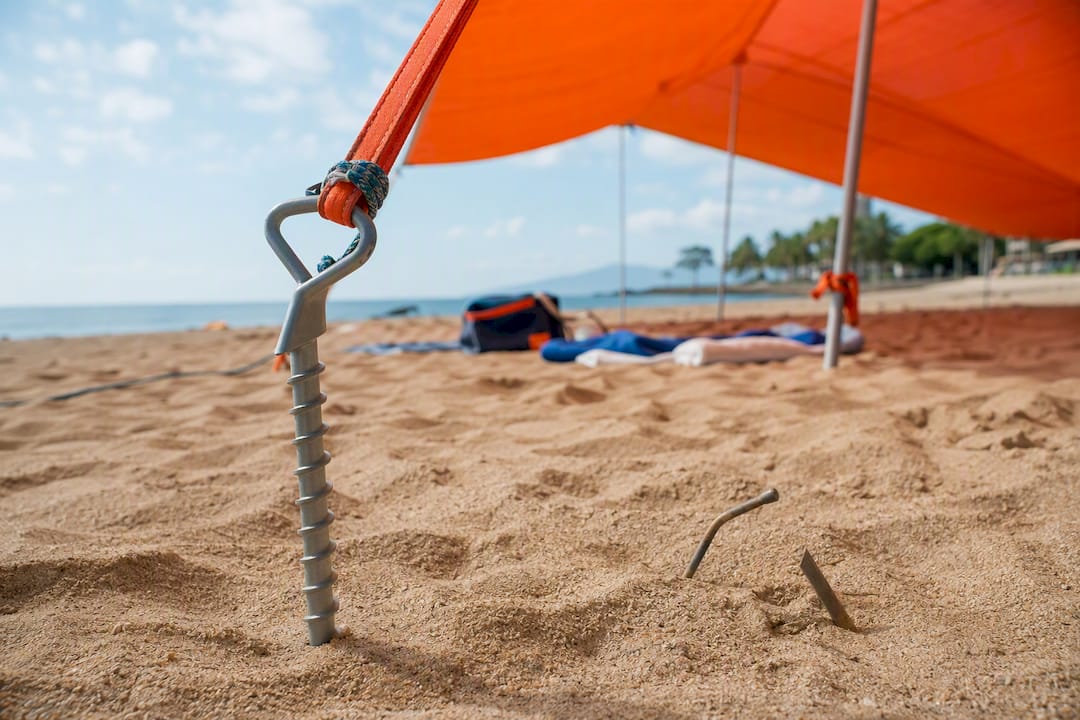
- Set up canopy with sand anchors, not standard stakes
- Distribute sunscreen, water, and trash bags to each sub-group
For groups under 30, a 10 by 10 foot canopy is the minimum shade footprint you want on site. Pack roughly 1 liter of water and 1.5 pounds of ice per guest, along with trash bags, sunscreen, and a basic first-aid kit.
Pro Tip: Standard tent stakes pull right out of loose sand. Bring sand-specific screw anchors for your canopy, or your shade structure becomes a kite by noon.
Food, Drinks, and Budget Tiers That Survive Sand and Heat
Your menu only has one real job: stay edible after four hours in a cooler and a little sand. Match your tier to your group’s expectations and wallet.
- DIY tier ($5 to $10 per person): Sandwiches, chips, fruit, and a cooler of drinks everyone helps pack.
- Mid-range tier ($15 to $25 per person): Build-your-own taco or wrap station, pre-portioned snacks, canned drinks.
- Catered tier ($30-plus per person): Delivered boxed lunches or a local caterer who drops off sealed containers.
Whichever tier you pick, sealed finger foods and pre-portioned servings hold up far better than anything requiring plates. Plan on at least 1 liter of water per guest for hydration, and keep food and drinks in separate coolers so the ice for sandwiches doesn’t run out before the soda does.
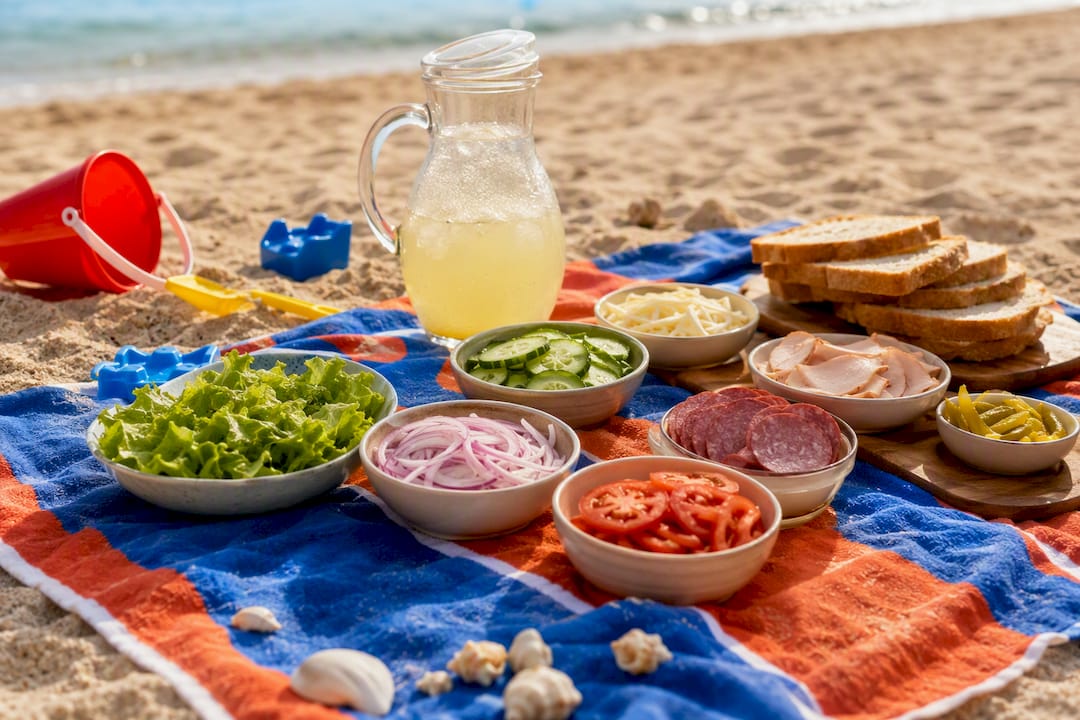
For dietary needs, a build-your-own station (tacos, sandwiches, salad bowls) solves most allergy and preference issues without a separate menu. Label the obvious allergens (nuts, dairy, gluten) with a sticky note on each dish and you’ve covered 90 percent of your guests’ concerns without extra cooking.
How to Adjust Your Schedule When Plans Change
Every itinerary above is a starting point, not a contract. Build it in 1 to 2 hour blocks so you can compress or stretch without redoing the whole day.
- Shorten a block if the group arrives late or the weather turns. Drop the second activity before you drop lunch.
- Schedule lessons in the morning. Water tends to be calmer and instructors have more flexibility earlier in the day.
- Save tournaments for afternoon. Energy is higher after food and a warm sun, and more guests will have arrived by then.
- Watch your weather and tide triggers. High wind cancels SUP before it cancels volleyball; a rising tide can swallow your sand court. Keep a backup zone (a picnic pavilion or grassy area nearby) in mind before you need it.
Why a Guided Surf Lesson Anchors a Group Beach Day
A professional-led lesson does something no beach game can: it gives a mixed-ability group one shared challenge everyone can succeed at, regardless of who’s athletic and who isn’t. An instructor manages the safety calls, reads the conditions, and adjusts coaching per skill level, which takes that entire burden off whoever organized the day.
- Group sizes typically run small enough for real individual coaching, not a lecture from the beach.
- Sessions usually run 60 to 90 minutes, fitting cleanly into a half-day or full-day block.
- Organizers still need to handle transport, sunscreen, and towels. The instructor handles the water.
Hans Hedemann Surf School structures its group and private lessons around fast individual progress, with a track record of getting first-time students standing up and riding waves in their very first session.
Booking a group lesson in Waikiki turns “we should try surfing sometime” into the one thing everyone talks about on the drive home.
Safety Checks Before You Lock In the Date
Before you send the final invite, run through the checks that actually prevent a ruined day rather than just a chaotic one.
- Pull up the tide chart for your date and place coolers, bags, and gear above the high-tide line.
- If your beach requires a permit for tents or amplified sound, start that process about four weeks ahead, not two.
- Reapply sunscreen roughly every 90 minutes and rotate guests through shade on hot days.
- Assign one person as the water watcher any time swimmers are in the water, separate from whoever’s running activities.
Zoning your site into food, activity, and shade areas ahead of time also lets guests self-sort into whatever pace they want, instead of everyone crowding one cooler.
Helpful Links for Permits, Planning, and Booking
- Beach party planning checklist: two-week timeline and permit guidance.
- Group beach trip organizing tips: shared docs, roles, and cost-splitting tools.
- Local surf spot conditions guide: helpful when scouting a beach for your group.
- Book a group surf lesson: reserve the anchor activity for your day.
What Most Beach Day Guides Get Wrong
Most planning guides treat the itinerary as the whole job. It isn’t. The schedule matters less than the shade plan, the ice count, and who’s watching the water while everyone else plays cornhole. I’d rather see an organizer nail the boring logistics and wing the activity order than build a gorgeous hour-by-hour plan that collapses the moment the canopy blows over.
The other blind spot: treating “activities” as interchangeable. A group of twelve friends with mixed swimming ability doesn’t need a volleyball tournament. It needs one thing everyone can attempt together, which is exactly what a guided lesson provides. It’s the rare beach activity where a total beginner and a former athlete can stand next to each other and both walk away with a story.
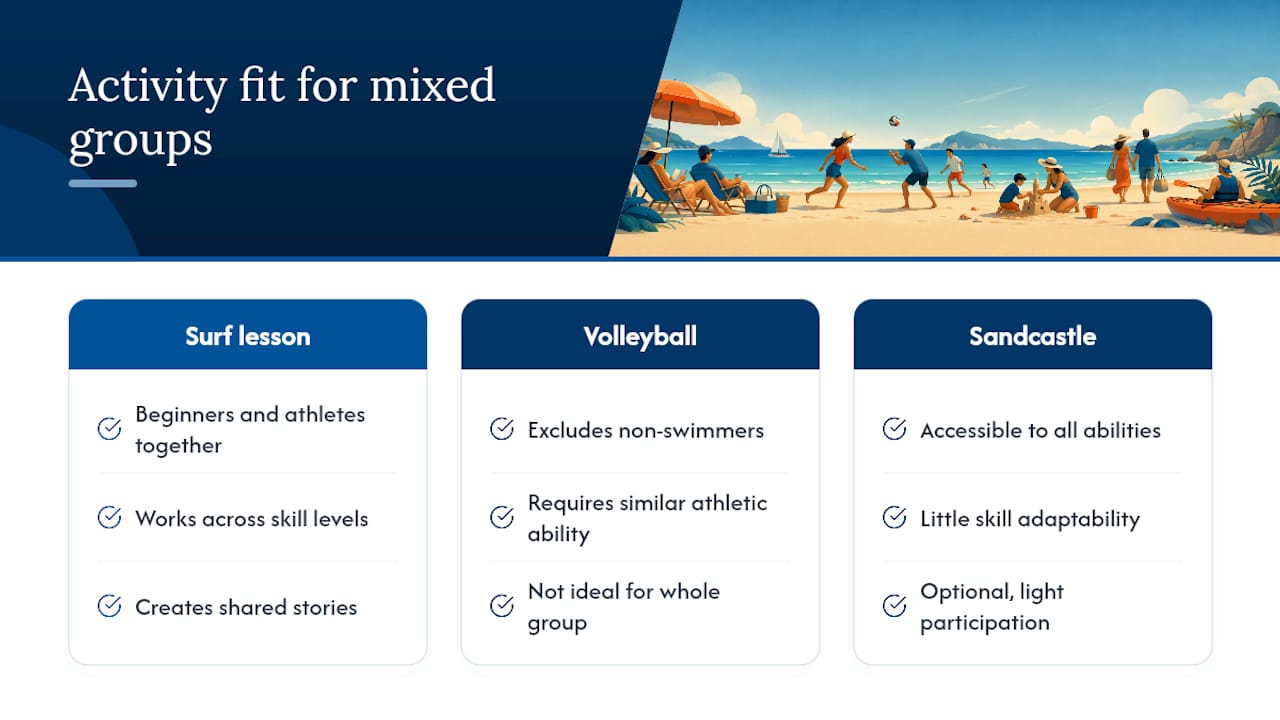
Start with the anchor activity, then build logistics around it. Everything else, including the sandcastle contest, is optional filler.
Sources
- Beach day group planning — Tahoe Adventure Company
- Beach birthday party ideas for adults — Paperless Post
- Beach party planning — Dream Event
- 7 ideas for organizing group beach trips — Swimmer Living
- Beach party ideas — Mixily Blog
0 Comments