
Book a morning lesson during the south-shore season, which is generally from spring through fall, and confirm conditions with your school 48 to 72 hours out. Lessons run year-round in Waikiki, but wave size and wind shift by month and by hour. Reserve your spot now, then let forecast updates and your instructor’s read of the water decide the final details.
TL;DR:
- Booking a lesson one to two weeks in advance is recommended, especially during peak summer and holiday periods to secure preferred times and private slots.
- Morning lessons are preferable because they typically benefit from lighter winds and smoother waves, which are better suited for beginners.
- Checking the PacIOOS wave and current models around 1:30 p.m. the day before helps confirm safe conditions, but instructor judgment remains the final authority on water safety.
- South-shore season from April to October usually provides more predictable and gentle waves, but weather variability means forecasts should be checked close to the lesson date.
- A school with extensive local experience can quickly adapt to changing conditions and prioritize safety by rescheduling when necessary, making flexibility more valuable than booking far in advance.
Table of Contents
- When are the best months for beginner-friendly waves in Waikiki?
- What time of day gives you the calmest water?
- How far ahead should you book your lesson?
- Which forecasts should you check, and who makes the final call?
- What should you pack and confirm before you arrive?
- Why a proven local school changes your timing decisions
- What the timing advice gets wrong
- Ready to book your Waikiki lesson
- Forecasts worth checking before your lesson
- Sources
- FAQ
When are the best months for beginner-friendly waves in Waikiki?
Waikiki’s south-facing beaches get their gentlest, most consistent surf during the south-shore season, which typically runs from spring into fall. Winter shifts the region’s biggest swells to Oahu’s north side, which is why the North Shore becomes famous for its powerful waves in the winter months.
Waikiki does not disappear in winter. It often stays calm on many days, but the variability goes up, and a south swell wrapping around the island can still show up on the wrong afternoon. If you are picking travel dates specifically to learn surfing, lean toward the warmer months for better odds. If your trip dates are fixed, treat seasonality as a probability, not a guarantee, and plan to check conditions close to your lesson date.
- South-shore season (spring through fall) tends to bring smaller, more predictable waves suited to learners.
- Winter months push larger surf to the North Shore, leaving Waikiki more variable day to day.
- Either season can work for a first lesson, but south-shore months improve your odds without extra planning.
What time of day gives you the calmest water?
Morning sessions are the safer bet for first-timers. Winds in Waikiki tend to stay lighter before midmorning, which keeps the water surface smoother and the waves easier to read and ride. As the trade winds pick up later in the day, the surface gets choppier and less forgiving for someone still learning to balance.
Afternoon slots have one appeal: better light for photos if you want that golden-hour shot from the water. That tradeoff is worth weighing if photography matters to you, but for the lesson itself, mornings win on consistency.
- Morning lessons usually mean lighter wind and cleaner wave faces.
- Afternoon sessions can turn choppier as trade winds build.
- Tide matters too. Some beginner breaks work better on certain tides, so ask your school which tide suits your scheduled time.
Pro Tip: If you can only pick one variable to optimize, pick morning over afternoon. Wind affects your lesson more than almost anything else you can control.
How far ahead should you book your lesson?
For a standard group lesson outside peak travel weeks, booking a few days to a week ahead is usually enough. During summer break and major holiday stretches, Waikiki’s beaches and surf schools get busier, so reserving further out gives you more flexibility on time slots.

Private and semi-private lessons fill faster than group sessions because there are fewer available slots per instructor. If you need a specific date, a specific time, or a private setting, book that further in advance than you would a group class.
Pricing varies by lesson type and group size, with group lessons generally priced lower per person and private instruction costing more for one-on-one attention. Always confirm the exact price, cancellation terms, and reschedule policy on the school’s booking page before you pay, since weather-driven changes are common in this sport.
- Book weeks ahead for peak season, holiday weeks, or any private lesson.
- A few days’ notice is often fine for group lessons in shoulder season.
- Confirm cancellation and reschedule terms at booking, since conditions can force a change.
Which forecasts should you check, and who makes the final call?
Two tools do most of the work for Waikiki timing. The PacIOOS Oahu wave model runs a high-resolution, 5-day hourly forecast that captures nearshore wave behavior, the kind of detail that matters right off Waikiki’s beaches. The PacIOOS Waikiki currents model covers a 3-day hourly forecast of nearshore currents, a separate safety concern from wave height since calm-looking water can still carry a strong pull.
PacIOOS updates its wave and current models around 1:30 p.m. HST each day, which is why a 48 to 72 hour confirmation window before your lesson lines up well with real, current data rather than an outdated forecast.
- Check the PacIOOS wave model for expected wave size and nearshore behavior.
- Check the PacIOOS currents model for nearshore current strength near your beach.
- Cross-reference the National Weather Service Hawaii surf forecast for broader advisories.
- Discuss the numbers with your school, since your instructor makes the final go or no-go call based on local, on-the-ground conditions.
The NWS notes that rip current risk rises as surf size increases, and that actual conditions can run larger than forecast. That is precisely why instructor judgment, not just a forecast app, decides where you enter the water. A reputable school will steer you toward a lifeguarded beach and reschedule rather than send you out when conditions exceed safe limits for beginners.
What should you pack and confirm before you arrive?
Show up ready and the whole lesson runs smoother. Pack light, but don’t skip the basics.
- Swimsuit, towel, and reef-safe sunscreen, since regular sunscreen can harm coral reefs.
- Water and any medication you need, plus your ID and booking confirmation.
- Arrive early enough to check in, sign waivers, and confirm your group size and instructor ratio before paddling out.
Most schools provide the board and rash guard as part of the lesson, so ask ahead if you need a wetsuit top, a specific board size, or gear for a child. Families booking for kids should confirm minimum age and any weight or swimming-ability requirements before the day of the lesson.
Why a proven local school changes your timing decisions
A school with a long track record does more than teach paddling technique. A local surf school in Waikiki may have a long history and a methodology aimed at getting many students riding waves in their first lesson, with individual attention and a safety-first approach. That kind of experience matters most when conditions are borderline, because an instructor who reads Waikiki’s breaks daily can judge whether a spot is safe faster than a forecast alone can tell you.
- A school with decades of local experience can match your skill level to the right beach and wave size on a given day.
- Instructors trained to prioritize safety will recommend a reschedule rather than push a lesson in unsafe conditions.
- Ask about instructor-to-student ratio, any guarantees offered, and whether photo or video packages are available when you book.
Signs of a good beginner instructor are worth reviewing before you choose a school, since the instructor’s judgment is the last safety check standing between you and the water.
What the timing advice gets wrong
Most guides treat “best time to surf” as a calendar problem: pick the right month, and you’re set. That misses the bigger variable, which is that Waikiki’s conditions can change within a single day, not just across a season. A perfect south-shore month can still hand you a windy, choppy Tuesday morning.

The advice I’d push back on is booking far ahead and assuming the date alone locks in good conditions. It doesn’t. What matters more is building a habit of checking the forecast close to your lesson time and trusting the instructor’s on-the-spot read over any app, including PacIOOS or the NWS forecast. Those tools tell you what’s likely. The instructor standing on the beach that morning tells you what’s actually happening.
If you take one thing from this, prioritize booking with a school that will reschedule you for free when conditions are bad, over squeezing out the theoretically “best” calendar month. A flexible reschedule policy protects your trip far better than a perfect seasonal guess.
— Johann
Ready to book your Waikiki lesson
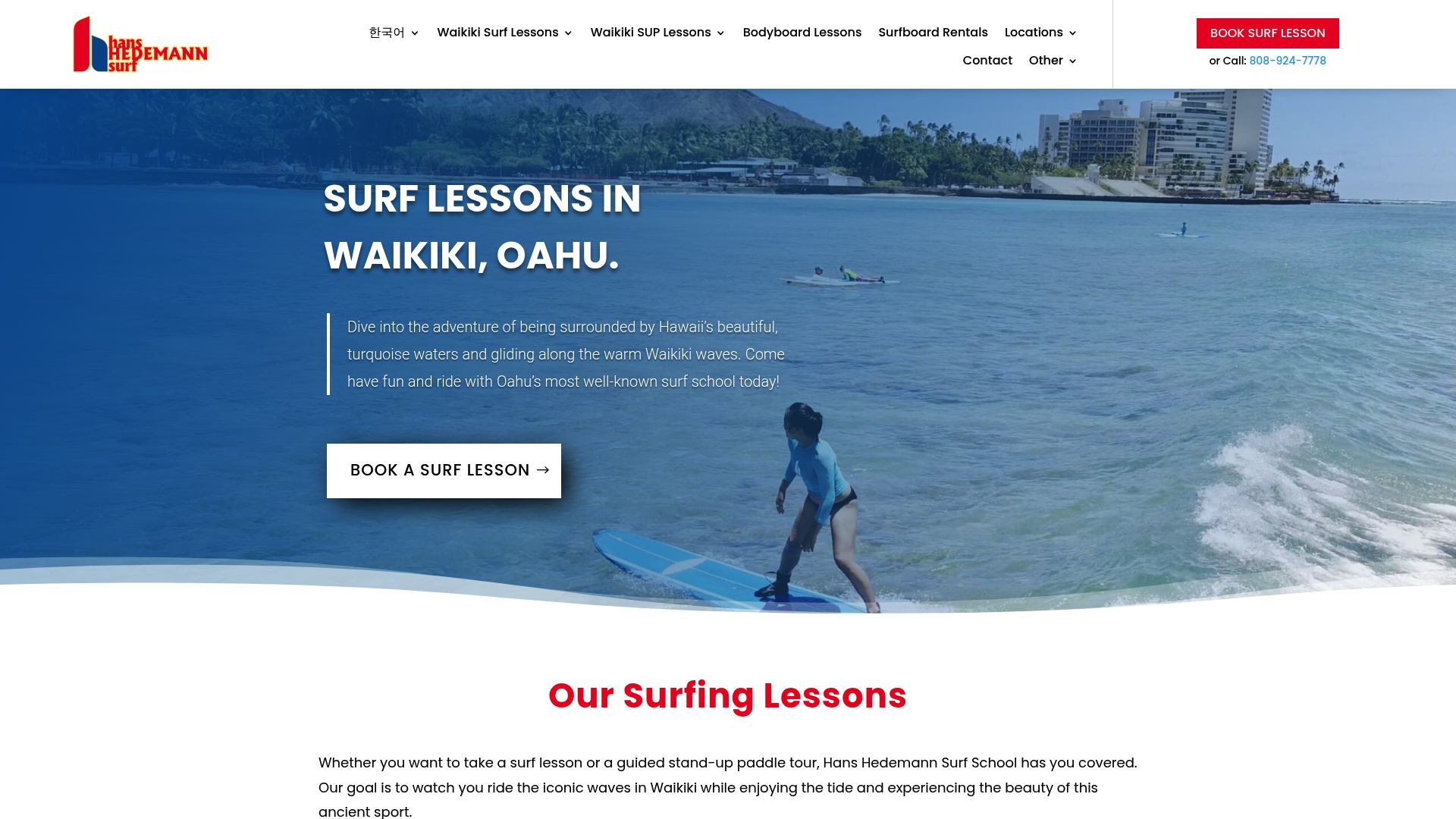
Hans Hedemann Surf School offers group, semi-private, and private lessons, along with multi-day packages for travelers who want more than one session. Group lessons suit first-timers on a budget, semi-private and private slots work best if you want more one-on-one coaching or a specific time, and multi-day packages fit anyone staying long enough to build real progress across several sessions.
Book a morning slot where possible, and confirm conditions with the school 48 to 72 hours ahead using the same forecasts covered above. From there, the instructor’s assessment on the day decides your exact beach and starts time.
- Group, semi-private, and private lessons are all bookable through the surf lessons page.
- Multi-day packages are listed on the Waikiki multi-day packages page for extended instruction.
- Prefer to rent and practice on your own afterward? Check surfboard rentals in Waikiki.
| Lesson type | Best fit | Starting price |
|---|---|---|
| Group Lessons | Budget-friendly first-timers | $100 per person |
| Semi Private Lessons | Small group wanting more attention | $150 per person |
| Private Lessons | One-on-one coaching, flexible timing | $180 per person |
| Surf with a Pro | Faster progress with a pro instructor | $400 per person |
Forecasts worth checking before your lesson
Three sources cover most of what you need. The PacIOOS Oahu wave model gives a 5-day hourly wave forecast updated around 1:30 p.m. HST. The PacIOOS Waikiki currents model covers a 3-day hourly current forecast on the same update schedule. The NWS Hawaii surf forecast adds broader advisories across the islands.
- PacIOOS wave model: nearshore wave size and behavior, 5-day hourly.
- PacIOOS currents model: nearshore current strength near Waikiki, 3-day hourly.
- NWS surf forecast: regional advisories and rip current warnings.
Check these, then confirm final timing with your school.
Sources
FAQ
How much does a surf lesson cost in Waikiki?
Prices vary by lesson type: Group Lessons run $100 per person, Semi Private Lessons run $150 per person, and Private Lessons run $180 per person. Surf with a Pro is priced higher at $400 per person for dedicated one-on-one coaching.
What is the 12 second rule in surfing?
Wave sets often arrive in groups separated by lulls, and some surfers use a rough count between waves to judge timing and spacing in a set. Definitions of the exact interval vary by region and break, so ask your instructor how it applies to the specific beach you’re learning at.
Why do locals avoid Waikiki at night?
Waikiki’s beaches lose lifeguard coverage and visibility after dark, which raises the risk of not spotting hazards like currents or submerged rocks in time. Sticking to daylight hours with lifeguards present is the safer choice for anyone unfamiliar with the break.
Which month is the best to surf in Waikiki?
South-shore months, roughly April through October, generally offer the calmest and most consistent conditions for beginner lessons. Even within that window, checking forecasts a few days before your lesson gives you a more reliable answer than picking a month alone.
0 Comments