
Age requirements for children’s surf lessons typically start at 4 to 5 years old for private lessons and 8 years old for group lessons. These thresholds exist because young children need a baseline of water comfort, coordination, and attention span before they can safely learn in the ocean. Knowing the right age range helps parents avoid frustrating first experiences and sets kids up to actually stand on a board. This guide covers the typical age cutoffs, how to read your child’s readiness, the safest lesson formats, and what to expect from a quality youth surf program.
1. Age requirements for children’s surf lessons: what the numbers say
Most surf schools set the minimum age for private lessons at 4 to 5 years old, while group lessons typically require children to be at least 8 years old. The gap between those two numbers is not arbitrary. Younger children need one-on-one attention to stay safe and engaged, while group settings demand a longer attention span and the ability to follow shared instructions.
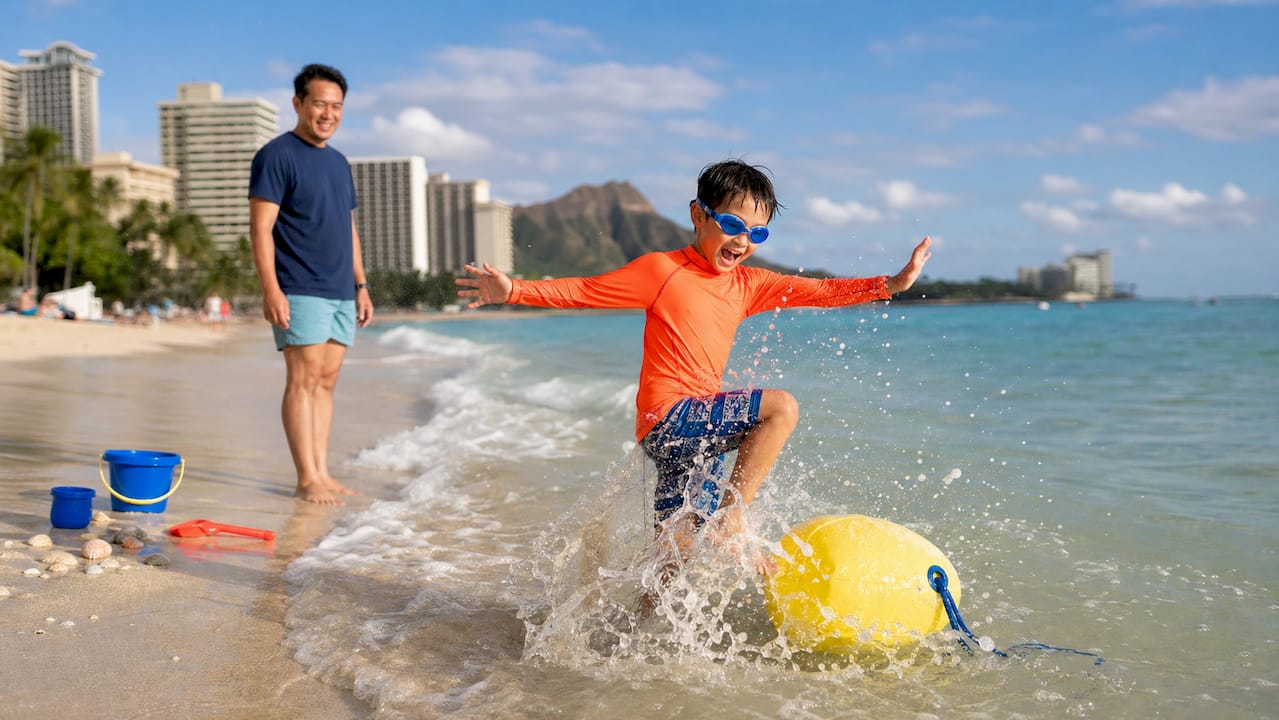
Lesson duration also shifts with age. Sessions for ages 5 to 7 are typically capped at around one hour, with safety and confidence as the primary goals rather than technical skill. Older children in group programs can handle 90-minute sessions with more structured skill-building.
Progression matters as much as age. Children generally need 6 to 7 lessons before they are ready to surf independently in the ocean. That means parents should think in terms of a lesson series, not a single vacation session.
- Private lessons: Minimum age 4 to 5 years, one-on-one instruction, shorter sessions
- Group lessons: Minimum age 8 years, shared instruction, 60 to 90 minutes
- Surf camps: Best for ages 8 to 14, multi-day format, social and skill-building focus
- Introductory programs: Ages 5 to 7, adapted session lengths, confidence-first approach
Pro Tip: Book a private lesson for your first-timer regardless of age. The individual attention removes the pressure of keeping up with a group and makes the first wave far more likely to be a success.
2. How to assess your child’s readiness beyond age
Age is a starting point, not the full picture. A 7-year-old who swims confidently and loves the ocean will likely outperform a nervous 9-year-old in a first surf lesson. Parents should evaluate three areas: swimming ability, emotional readiness, and physical stamina.
Swimming ability for surf lessons means comfortable floating and managing oneself in waist-to-chest deep water. Competitive swimming skills are not required. What matters is that your child does not panic when a wave knocks them off the board.
Emotional readiness includes a few specific traits:
- Fearlessness near waves: Your child should be curious about the ocean, not terrified of it
- Attention span: They need to follow a short sequence of instructions from an instructor
- Coordination and listening skills: Both are critical for safe lesson success at ages 5 to 7
- Willingness to fall: Surfing involves repeated wipeouts; kids who laugh it off progress faster
Physical stamina is the most overlooked factor. A 45-minute lesson in the ocean is genuinely tiring for a small child. If your child gets cranky after 20 minutes of physical play, a shorter private session is the right call. Understanding why kids learn surfing faster often comes down to these readiness factors more than raw age.
3. Safety guidelines every parent should know
Safety in youth surf lessons comes down to session length, water conditions, and instructor quality. Getting any one of these wrong turns a fun experience into a frightening one.
- Limit session time for young children. Sessions for young kids should be capped at 45 to 60 minutes in colder water to prevent fatigue and chills. Even in warm water like Waikiki, an hour is a reasonable ceiling for children under 8.
- Check water temperature and use a wetsuit. Cold water drains energy fast. A well-fitted wetsuit keeps kids warm and extends their comfort in the water.
- Choose instructors who specialize in children. Not every surf instructor has the patience or training to work with young kids. Look for schools with dedicated youth programs and clear student-to-instructor ratios.
- Verify ocean conditions before the lesson. Small, slow-breaking waves are ideal for beginners. Choppy or fast surf is not appropriate for children under 10, regardless of skill level.
- Start with boogie boarding if your child is under 6. Many young children begin with boogie boarding in small waves before advancing to a surfboard. This builds ocean confidence without the balance demands of standing surfing.
Parents who carefully manage session duration and conditions give their children the best chance of associating surfing with fun rather than fear. A child who ends a lesson cold, tired, and frustrated is unlikely to ask to go back.
Pro Tip: Always end the session while your child still wants more. Stopping at the high point of excitement builds anticipation for the next lesson rather than dread.
4. Surf lesson formats: private, group, and camps
The right lesson format depends on your child’s age, personality, and comfort level. Each format has a distinct structure and a different ideal age range.
Private lessons work best for children aged 4 to 7. The instructor focuses entirely on one child, adjusting pace and communication style in real time. This format is also ideal for anxious children who would shut down in a group setting. Private surf lessons in Waikiki offer this kind of focused attention in warm, beginner-friendly water.
Group lessons suit children aged 8 and older who are socially confident and can follow shared instructions. A typical group maintains a student-to-instructor ratio of around 3:1, which keeps safety manageable while allowing kids to learn from watching each other. The social dynamic also boosts motivation.
Surf camps are the best format for children aged 8 to 14. Group surf camps deliver significant social and confidence-building benefits alongside skill development. Multi-day camps allow children to build on each session, which accelerates progress compared to scattered single lessons.
| Format | Best age range | Key benefit | Watch out for |
|---|---|---|---|
| Private lesson | 4 to 7 years | Full instructor attention | Higher cost per session |
| Group lesson | 8 years and up | Social motivation | Less individual feedback |
| Surf camp | 8 to 14 years | Rapid skill progression | Fatigue over multiple days |
| Intro program | 5 to 7 years | Confidence building | Limited technical depth |
Choosing the right format also means reading your child’s personality. An introverted 9-year-old may thrive in a private lesson even though group lessons are technically age-appropriate. A bold 6-year-old might surprise you in a small group setting. Use the age guidelines as a floor, not a ceiling.
5. What to expect from a quality youth surf program
A quality youth surf program does more than put a child on a board. It builds a positive relationship with the ocean that lasts well beyond the vacation. The best programs share a few consistent features.
Instructors in strong youth programs communicate at a child’s level. They use simple language, demonstrate movements physically, and celebrate small wins loudly. Children respond to enthusiasm, and a skilled instructor uses that to push through the inevitable frustrating moments.
Lesson structure in a good program follows a clear arc: beach warm-up and safety briefing, shallow water practice on the board, then wave riding in controlled conditions. This sequence gives children a mental map of what to expect, which reduces anxiety. Choosing the right kids surf instructor is one of the most important decisions a parent makes before booking.
Progression tracking matters for multi-lesson programs. Since 6 to 7 lessons are typically needed before independent surfing, parents should ask whether the school tracks each child’s progress across sessions. Schools that do this produce faster, more confident young surfers.
Key takeaways
The minimum age for children’s surf lessons is 4 to 5 years for private instruction and 8 years for group lessons, but readiness in swimming ability and emotional confidence matters as much as age.
| Point | Details |
|---|---|
| Minimum age by format | Private lessons start at age 4 to 5; group lessons require age 8 or older. |
| Lessons needed before independence | Children typically need 6 to 7 lessons before surfing solo in the ocean. |
| Session length for young kids | Cap sessions at 45 to 60 minutes for children under 8 to prevent fatigue. |
| Swimming readiness standard | Comfortable self-management in waist-to-chest deep water is the baseline, not competitive swimming. |
| Best intro activity under age 6 | Boogie boarding in small waves builds ocean confidence before surfboard lessons begin. |
What I’ve learned watching kids hit the water for the first time
The most common mistake I see parents make is treating age as the only variable. A parent books a group lesson for their 8-year-old because the school says 8 is the minimum, but the child has never been comfortable in the ocean. The lesson becomes a rescue operation rather than a surf session.
The children who progress fastest are not always the oldest or the most athletic. They are the ones who have spent time in the water before the lesson, even if that just means playing in the shallows or riding a boogie board. That unstructured ocean time builds the instinctive comfort that no instructor can manufacture in 45 minutes.
I also think the surf industry undersells the value of ending a lesson early. Parents feel like they are wasting money if the session does not run the full time. But a child who walks off the beach grinning after 35 minutes will beg to come back. A child who is dragged out of the water exhausted and cold after 90 minutes may never want to try again. Fatigue management is a skill, and the best instructors know when to call it.
The goal of a first surf lesson is not to produce a surfer. The goal is to produce a child who wants to come back for the second lesson. Everything else follows from that.
— Johann
Hhsurf’s kids surf lessons: built for young surfers
Hhsurf, the Hans Hedemann Surf School in Waikiki, offers kids surf lessons for children starting at age 4. Every lesson is taught by professional surfers with real experience working with young beginners in warm, gentle Waikiki waves.
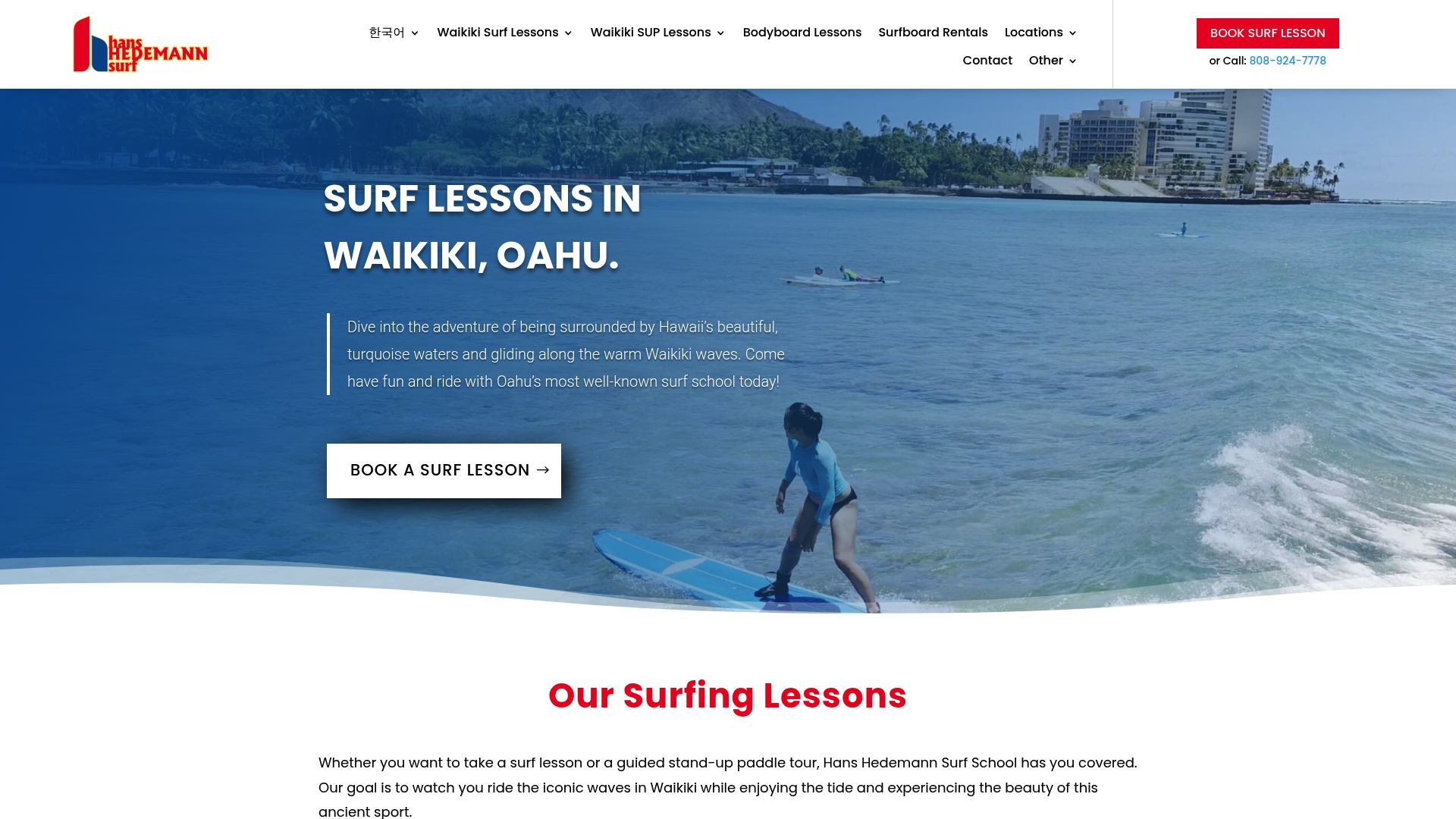
Hhsurf’s approach prioritizes getting children standing on a board within their first session, using individual attention and a proven teaching method that cuts the learning curve significantly. The warm water and small, consistent waves at Waikiki make it one of the best environments in the world for a child’s first surf experience. Parents can browse all surf lesson options to find the right format for their child’s age and comfort level.
FAQ
What is the minimum age for kids’ surf lessons?
Most surf schools set the minimum age at 4 to 5 years old for private lessons and 8 years old for group lessons. Private instruction is the safer choice for younger children because it provides one-on-one attention.
Can toddlers take surf lessons?
Children under 4 are generally too young for structured surf lessons. A better starting point for toddlers is supervised ocean play or boogie boarding in shallow water to build comfort and confidence before formal instruction begins.
How many surf lessons does a child need before surfing alone?
Children typically need 6 to 7 lessons before they are ready to surf independently. Consistency across those lessons matters more than the child’s age at the time of starting.
Does my child need to know how to swim before surf lessons?
Yes, but not at a competitive level. Swimming readiness for surfing means your child can float and manage themselves in waist-to-chest deep water without panicking. Full swimming proficiency is not required for beginner lessons.
How long should a surf lesson be for a young child?
Sessions for children under 8 should run 45 to 60 minutes. Longer sessions increase the risk of fatigue and cold, which can create a negative association with surfing that is hard to reverse.
0 Comments