
The Aloha Spirit is defined as a Hawaiian cultural philosophy requiring the coordination of mind and heart to extend good feelings toward others, and it sits at the very core of surfing culture in Hawaii. This is not a casual greeting or a tourism slogan. The word “aloha” itself comes from “alo” (presence or face) and “hā” (breath of life), making every exchange a conscious recognition of another person’s existence. What is aloha spirit surfing, then? It is the practice of bringing that same depth of respect, patience, and humility into the water. Hawaii is the only U.S. state with a law codifying aloha as a guiding philosophy, and that legal weight tells you everything about how seriously Hawaiian culture takes it.
What is aloha spirit surfing and where does it come from?
Surfing in Hawaii was never just a sport. The ancient Hawaiian practice of he’e nalu (wave sliding) was deeply tied to spirituality and social structure. Board types reflected a surfer’s rank in society. Sacred surf spots were governed by kapu, a system of spiritual rules and restrictions. Riding waves was an act of reverence for the ocean, not a recreational hobby. That foundation is why the Aloha Spirit and surfing became inseparable.
No figure did more to carry that connection to the world than Duke Kahanamoku. His surf exhibitions starting in 1915 introduced surfing to audiences in Australia, the United States mainland, and beyond. Duke did not just teach people to stand on a board. He modeled a way of being in the water: generous, gracious, and genuinely joyful. His attitude toward wave sharing became a guiding principle: “Let the other guys go; catch another one.” That single phrase captures the aloha spirit surfing philosophy better than any formal definition.
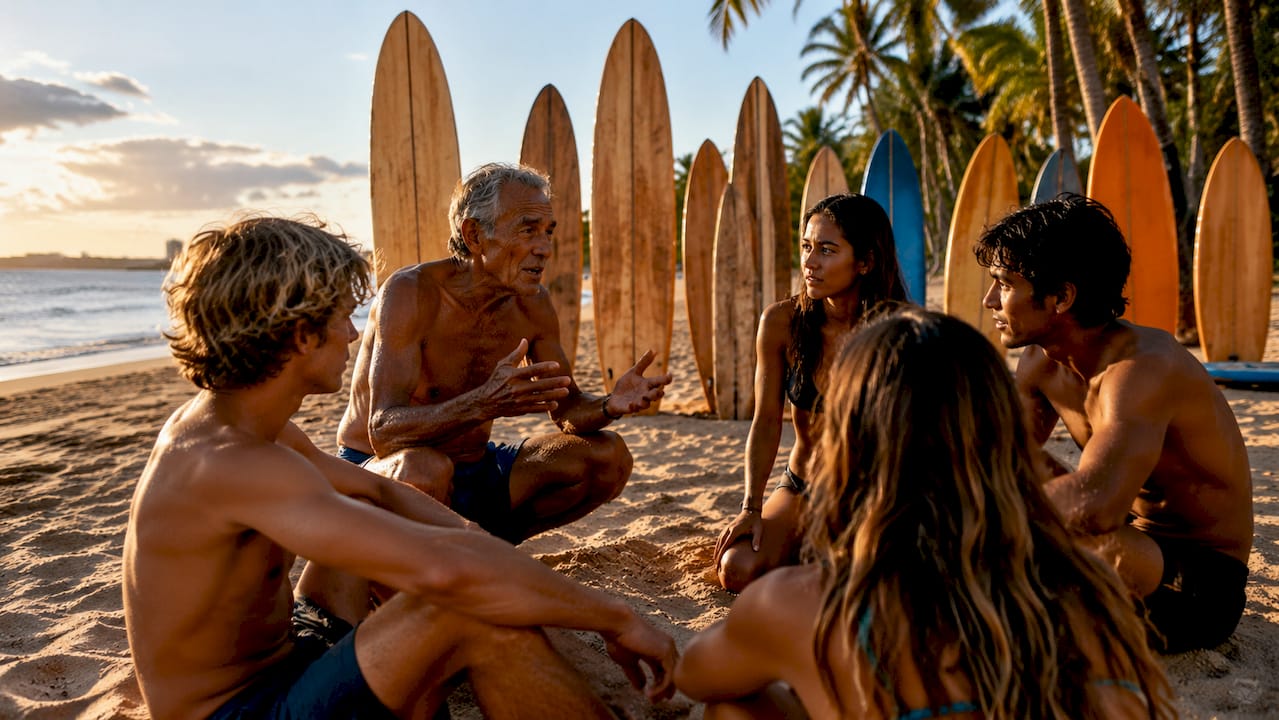
Duke’s legacy created a standard that every surfer in Hawaii is measured against. The Kahanamoku ideal is the ongoing challenge for modern surf culture, especially as breaks grow more crowded and competitive. Surfing and aloha culture have always been linked, but maintaining that link takes active effort.
The role of he’e nalu in Hawaiian identity
He’e nalu was communal by design. Entire communities gathered at the shore to surf together, celebrate good waves, and settle disputes through friendly competition. The ocean was shared, not owned. That communal ethic is the direct ancestor of modern surf etiquette rooted in aloha values. When you understand that history, dropping in on someone’s wave stops being a minor annoyance and starts looking like a violation of something much older and more meaningful.
Pro Tip: Before paddling out at any Hawaiian break, spend a few minutes watching the lineup. Observe who has priority, how locals interact, and what the rhythm of the session looks like. That pause is itself an act of aloha.
What are the five core principles of the Aloha Spirit in surfing?
The Aloha Spirit Law, codified in Hawaii Revised Statutes §5-7.5, names five specific Hawaiian values. Each one has a direct application in the surf lineup.
- Akahai (kindness): Greet other surfers. Congratulate someone on a good ride. Offer a hand when a beginner wipes out. Small acts of kindness set the tone for the entire session.
- Lōkahi (unity): The lineup is a shared space. Lōkahi means recognizing that every surfer out there has as much right to the ocean as you do. Territorial behavior is the direct opposite of this value.
- ʻOluʻolu (agreeableness): Conflicts happen. Someone drops in, someone snakes a wave. ʻOluʻolu means choosing a calm response over aggression. A nod and a reset beats a shouting match every time.
- Haʻahaʻa (humility): No surfer owns a break. Humility means acknowledging that the ocean is bigger than your skill level, your reputation, and your ego. It also means respecting the cultural knowledge of those who have surfed a spot for generations.
- Ahonui (patience): Waiting for the right wave, waiting your turn in the lineup, waiting for a set to pass. Patience is not passive. It is an active discipline that keeps the water peaceful for everyone.
These five values do not just describe good manners. They describe a complete approach to being in community with other people. The contrast with common surf conflicts is sharp.
| Aloha behavior | Territorial behavior |
|---|---|
| Waiting your turn in the lineup | Snaking waves from other surfers |
| Welcoming beginners with encouragement | Intimidating newcomers to protect a break |
| Resolving disputes calmly and directly | Escalating tension through aggression |
| Sharing local knowledge generously | Gatekeeping information to maintain dominance |
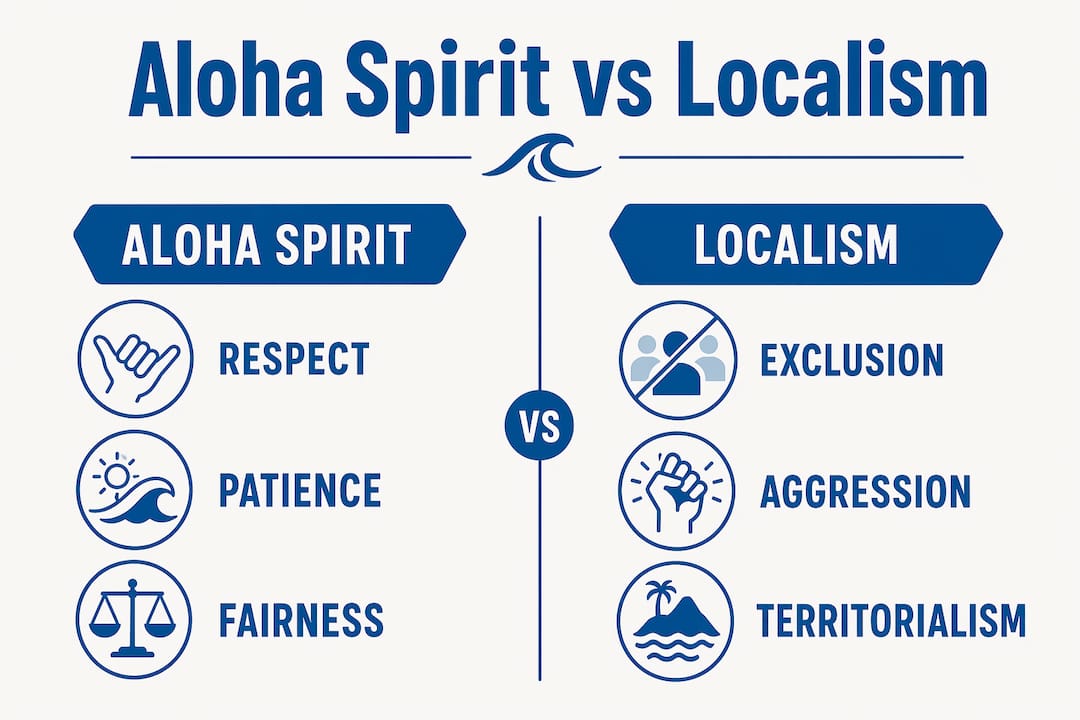
Surf etiquette grounded in the Aloha Spirit is not about letting everyone catch every wave. It is a practiced fairness. Priority rules still apply. The difference is that aloha surfers follow those rules out of genuine respect, not fear of confrontation.
How do surfers practice aloha in the modern lineup?
The lineup is the most honest test of whether you actually live the aloha spirit surfing philosophy or just talk about it. Crowded breaks at spots like Waikiki, Pipeline, and Sunset Beach put every one of those five values under pressure. Patience runs thin when a set rolls through and ten surfers all want the same wave.
Understanding the history of groups like Da Hui (Hui O Heʻe Nalu) helps visitors put local protectiveness in context. Da Hui formed to protect Native Hawaiian surf spots from commercialization and outside takeover. That history is not aggression for its own sake. It is a community defending something sacred. Visitors who recognize that context surf with a completely different attitude, and locals notice.
Practical aloha in the lineup looks like this:
- Introduce yourself to the surfers around you. A simple “Hey, I’m visiting from the mainland” goes a long way.
- Follow wave priority without being told. If someone is deeper and paddling, pull back.
- Cheer for good rides, including rides by people you do not know.
- If you cause a collision or drop in accidentally, apologize immediately and mean it.
- Learn the surf history of Oahu before you paddle out at a spot with cultural significance.
Pro Tip: Aloha in the water starts on the beach. How you carry your board, how you talk to other surfers, and how you treat the sand all signal whether you are there to take or to participate.
How to embody the Aloha Spirit beyond the water
The aloha spirit meaning extends well past the shoreline. Surf enthusiasts visiting Hawaii carry a responsibility to engage with the culture honestly, not just perform it for social media.
- Slow down. Hawaii runs on a different pace. Rushing through interactions, cutting lines, or treating locals as service providers rather than people contradicts everything aloha stands for.
- Tip generously. The cost of living in Hawaii is significantly higher than on the mainland. Service workers feel that gap every day. Tipping well is a concrete act of aloha.
- Learn basic Hawaiian words. Saying “mahalo” (thank you) or “aloha” with genuine intention signals respect for the language and the people who kept it alive.
- Respect sacred sites. Stay on marked trails. Do not climb on heiau (ancient temples) or remove rocks and sand. The land is not a backdrop for your vacation photos.
- Practice non-transactional kindness. Visitors practicing aloha prioritize community well-being over personal convenience. That means holding doors, offering directions, and engaging with locals as equals.
Understanding aloha as a way of living, not a brand identity, is what separates cultural explorers from tourists. The difference shows up in every small interaction, and it shapes how Hawaii experiences the people who visit it.
Key Takeaways
The Aloha Spirit is a legally codified Hawaiian philosophy that defines how surfers and visitors should engage with each other, the ocean, and the land.
| Point | Details |
|---|---|
| Legal foundation | Hawaii Revised Statutes §5-7.5 codifies aloha as five specific values: kindness, unity, agreeableness, humility, and patience. |
| Historical roots | Duke Kahanamoku carried aloha spirit surfing to the world through exhibitions starting in 1915, setting a standard still referenced today. |
| Lineup application | Aloha in the surf means active fairness and respect for wave priority, not passive permissiveness. |
| Cultural context | Groups like Da Hui reflect legitimate cultural protectionism; understanding that history is part of practicing aloha as a visitor. |
| Beyond surfing | Embodying aloha off the water means slowing down, tipping generously, respecting sacred sites, and engaging with locals as equals. |
What I have learned from watching aloha work and fail in the water
The hardest part of the aloha spirit surfing philosophy is that it demands consistency. Anyone can be gracious on a perfect, uncrowded morning. The real test is a packed Saturday at a popular break when the waves are firing and everyone wants the same set.
I have watched surfers who clearly understood the five values completely lose them the moment someone dropped in. And I have watched complete beginners, who had never heard the word “aloha” in a cultural context, paddle out and naturally embody every one of those principles because they were genuinely grateful to be in the water. That tells me aloha is not just a Hawaiian concept. It is a human one. Hawaii named it, codified it, and built a surf culture around it. But the capacity for it exists in every person who paddles out.
The mistake most visitors make is treating aloha as a performance. They say the right words, make the right gestures, and then get frustrated when a local does not immediately warm to them. Real aloha does not seek a return. It is an energy exchange, as the word’s etymology suggests: a giving of your breath and presence without expectation. The surfers who get this right are the ones who leave Hawaii changed, not just tanned.
If you want to understand Hawaiian surf culture at a deeper level, start with the history before you touch the water. The context makes everything else make sense.
— Johann
Learn to surf in Waikiki with aloha at the center
Hhsurf, the Hans Hedemann Surf School in Waikiki, teaches surfing the way it was meant to be taught: with patience, encouragement, and genuine respect for Hawaiian culture. Professional instructors guide surfers of every level through their first waves while building the confidence and cultural awareness that make the experience meaningful.
Most students at Hhsurf stand up on their board within their first lesson. That success rate reflects a teaching philosophy that mirrors aloha values directly: individual attention, honest feedback, and a commitment to every student’s progress. Whether you are a first-timer or looking to sharpen your technique, Waikiki surf lessons with Hhsurf give you the skills and the cultural grounding to surf Hawaii the right way. You can also explore surf lessons in Waikiki across multiple formats to find the option that fits your schedule and experience level.
FAQ
What is the Aloha Spirit in simple terms?
The Aloha Spirit is a Hawaiian philosophy of kindness, unity, humility, patience, and agreeableness. It is legally defined in Hawaii Revised Statutes §5-7.5 as the coordination of mind and heart to extend good feelings toward others.
How does the Aloha Spirit apply to surfing?
The Aloha Spirit shapes surf etiquette by encouraging active fairness, respect for wave priority, and genuine kindness toward other surfers in the lineup. It is the cultural foundation behind rules like yielding waves and welcoming beginners.
Who brought the Aloha Spirit into global surf culture?
Duke Kahanamoku introduced surfing and its aloha values to international audiences through exhibitions starting in 1915. His approach to wave sharing and community in the water became the defining model for aloha spirit surfing worldwide.
Is aloha the same as surf localism?
Aloha and localism are opposite concepts. Aloha calls for welcoming others and sharing the ocean, while localism uses intimidation to exclude outsiders. Understanding groups like Da Hui requires recognizing their cultural protection role, which is distinct from simple territorial aggression.
How can a visitor practice the Aloha Spirit in Hawaii?
Visitors can practice aloha by slowing down, tipping generously, learning basic Hawaiian words, respecting sacred sites, and engaging with locals as equals rather than as part of a service experience.
0 Comments