
The beginner surf zone is the near-shore area where waves have already broken, creating foamy whitewater that is gentler, slower, and far safer than the open ocean beyond it. This is where every new surfer starts. Understanding what does beginner surf zone mean is the difference between a productive first lesson and a dangerous one. The zone is defined by broken waves, reduced energy, and shallow water close to shore. Spots like Baby Padang in Bali and the inner breaks at Waikiki are classic examples of beginner zones used by surf schools worldwide.
What does beginner surf zone mean for new surfers?
The beginner surf zone is the near-shore, lower-energy portion of the ocean where waves have already broken and lost most of their power. That broken water, called whitewater or “soup,” is the foam you see rushing toward the beach after a wave collapses. It is the safest place to learn because the wave has already done its most violent work before it reaches you.
Instructors place beginners here because the whitewater moves in one direction: toward shore. You do not need to time an unbroken wave or paddle hard against a current. You simply position your board, feel the push of the foam, and practice standing up. That simplicity is the whole point.

The beginner surf zone is not a formally marked area with buoys or signs. It is a practical designation based on wave behavior, water depth, and distance from shore. Every surf school and every experienced coach uses the term to describe the same thing: the inside section where conditions favor learning over survival.
What is the general surf zone and how is it different?
The surf zone is defined as the nearshore area where waves break and the water between the breaking point and the shore. That definition covers a wide range of conditions, from the gentle whitewater near the sand to the powerful, unbroken green waves farther out. The general surf zone includes rip currents, shifting sandbars, and wave energy that can knock an experienced surfer off balance.
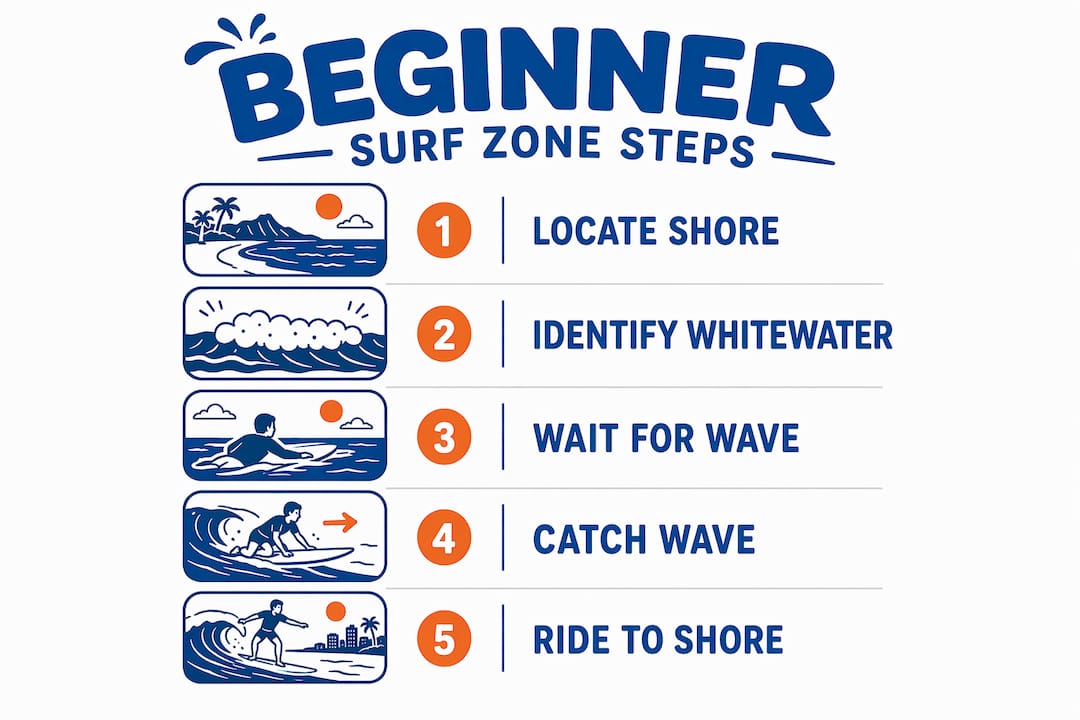
Confusing the surf zone with the beginner surf zone can push new surfers into genuinely hazardous water. The outer surf zone is where waves peak and break with full force. Rip currents form along channels in this area and can pull swimmers and surfers away from shore quickly. Beginners have no business being out there until they have built real water reading skills.
The beginner surf zone is a safer subset of the general surf zone. Think of it as the shallow end of a pool compared to the deep end. Both are part of the same body of water, but one is designed for learning and the other demands experience.
Key hazards present in the general surf zone but reduced in the beginner zone:
- Rip currents: Strong channels of water pulling away from shore, rare in the shallow inside section
- Unbroken wave impact: Green waves hit with full force; broken whitewater has already released most energy
- Depth: The outer zone is deeper, making falls more disorienting and recovery harder
- Crowd pressure: Advanced surfers in the outside lineup follow priority rules beginners have not yet learned
Pro Tip: Always ask your instructor to point out where the beginner zone ends at your specific beach. The boundary shifts with tide and swell size.
What makes the beginner surf zone ideal for learning?
The physical characteristics of the beginner surf zone are what make it work for new surfers. Whitewater areas enable learning with minimal paddling and less danger from falls. Wave heights in beginner zones typically run 1–3 feet. That is enough push to ride a board but not enough force to cause serious injury.
Here is what the beginner zone delivers that the outside cannot:
- Reduced wave energy. Broken waves have already spent their power. The foam that reaches you is moving at a fraction of the speed of an unbroken wave.
- Shallow water. You can stand up if you fall. That one fact removes most of the fear that stops beginners from committing to a wave.
- Consistent push. Whitewater moves steadily toward shore, giving you a reliable force to practice timing and balance.
- Forgiving wipeouts. Falls in the inside section are low-consequence. The water is shallow, the current is mild, and you are close to shore.
- Sandbar support. Inner sandbars create pockets of smaller waves that shift with tide and swell, but they generally keep the inside section calmer than the outer break.
Tide matters more than most beginners realize. At low tide, sandbars can become very shallow and create hazards of their own. At high tide, the inside section deepens and the whitewater can become less defined. Mid-tide is usually the most consistent window for beginner zone conditions.
Pro Tip: Check the tide chart before your session. A rising mid-tide at a beach break usually produces the cleanest, most forgiving whitewater for beginners.
How do real surf spots designate beginner zones?
Real surf breaks divide naturally into beginner and advanced areas based on geography, bathymetry, and wave behavior. Baby Padang at Padang Padang in Bali is one of the clearest examples. The main break at Padang Padang is a powerful reef break used by experienced surfers. Baby Padang sits inside the bay, where the bottom is sand and the waves are slower, smaller, and far more forgiving. Surf schools use it for 100% of beginner lessons at that location.
Waikiki in Honolulu follows the same logic. The inner breaks near the beach produce long, rolling waves with gentle shoulders. The outer breaks like Canoes and Queens are for intermediate and advanced surfers. Beginners learning how to surf in Waikiki stay in the inside section until their instructors decide they are ready to move out.
| Feature | Beginner surf zone | Advanced surf zone |
|---|---|---|
| Wave type | Broken whitewater | Unbroken green waves |
| Wave height | 1–3 feet | 3 feet and above |
| Bottom | Sand or soft sandbar | Reef or deep sand |
| Current risk | Low | Moderate to high |
| Skill required | None | Intermediate to advanced |
| Instructor presence | Always | Rare |
Geography creates beginner pockets at many famous breaks. Bays naturally shelter the inside from swell energy. Headlands block wind chop. Sandbars dissipate wave power before it reaches the shore. Instructors at schools like Hhsurf read these features every morning and position students where conditions are safest for that specific day.
- Swell direction affects which side of a bay stays calm
- Wind direction changes how clean the whitewater is
- Tide height shifts where the waves break and how powerful they are
- Crowd levels in the outside lineup can push beginners into unsafe positions if they drift
How can beginners safely navigate and progress in the surf zone?
Staying in the beginner zone is not just a rule. It is a skill. New surfers need to actively manage their position in the water, read the conditions, and know when to move and when to stay put.
Experienced coaches identify sweet spots inside beginner zones where waves break gently and consistently. Positioning yourself even 10 feet outside that sweet spot can mean the difference between a clean ride and getting caught by a bigger set. Local knowledge matters enormously here, which is why your first sessions should always be with an instructor.
Reading wave types is the first practical skill to develop. Whitewater is your friend as a beginner. Green waves, the unbroken walls of water moving toward shore, are for later. Progressing from whitewater to green waves is the natural learning arc, and it should happen gradually over multiple sessions, not in a single day.
Practical tips for staying safe and making progress:
- Stay inside the foam line. If you can see unbroken green waves ahead of you, you are too far out.
- Watch for rip currents. Even in the beginner zone, channels can form. If the water around you looks darker and calmer than the breaking waves nearby, paddle sideways, not against the current.
- Keep your board between you and the ocean. When a wave comes and you cannot ride it, push your board toward shore and dive under.
- Check in with your instructor after every few waves. Conditions shift, and your position in the water should shift with them.
- Do not rush the progression. Riding whitewater well is a real skill. Master it before chasing green waves.
Pro Tip: If you feel yourself drifting sideways during a session, look at a fixed point on the beach. Lateral drift is the first sign of a current forming near your position.
Key Takeaways
The beginner surf zone is the broken-wave, near-shore section of the ocean where new surfers learn safely before progressing to unbroken green waves outside.
| Point | Details |
|---|---|
| Beginner zone definition | The near-shore area of broken whitewater where wave energy is low and falls are safe. |
| Surf zone vs. beginner zone | The general surf zone includes hazards like rip currents; the beginner zone is its safer inside subset. |
| Ideal wave conditions | Wave heights of 1–3 feet over sandy bottoms give beginners the best learning environment. |
| Real-world examples | Baby Padang in Bali and inner Waikiki breaks are designated beginner zones used by surf schools. |
| Progression path | Beginners master whitewater first, then move to unbroken green waves as skills develop. |
What I have learned from watching beginners find their zone
The single biggest mistake I see new surfers make is not staying too far out. It is not reading the zone at all. They paddle to wherever the other surfers are, assume that is the right place, and end up in conditions they are not ready for. The beginner surf zone is not a consolation prize. It is the place where real surfing skills are built.
I have watched students at spots like Waikiki go from standing up on whitewater on day one to catching their first green wave by day three. That progression only works because they spent real time in the inside section, not rushing past it. The whitewater teaches you balance, timing, and board feel in a way that no amount of green wave chasing can replicate.
The subtle thing most articles miss is that even within the beginner zone, position matters. Two surfers standing 15 feet apart can have completely different experiences based on where a sandbar sits that day. The best instructors walk the beach before a lesson, read the water, and pick the exact spot where conditions are most consistent. That local knowledge is worth more than any amount of theory.
Respect for the zone also means respecting the surfers outside it. When you are ready to move out, learn the right-of-way rules before you paddle past the foam line. The outside lineup has its own etiquette, and arriving there without knowing it creates problems for everyone.
— Johann
Learn the beginner surf zone with Hhsurf in Waikiki
Hhsurf, the Hans Hedemann Surf School in Waikiki, places every beginner in the right section of the ocean from the first moment of their first lesson. Instructors read the conditions each morning and choose the exact spot in the inside break where whitewater is cleanest and most consistent.

Students in Waikiki surf lessons with Hhsurf stand up on their boards within the first session. That result comes directly from knowing where to position beginners and how to use the beginner zone effectively. Hhsurf also offers private surf lessons in Waikiki for one-on-one coaching, which accelerates progress through the whitewater phase and into green waves faster than group instruction. If you are bringing kids, kids surf lessons follow the same beginner zone methodology with age-appropriate coaching.
FAQ
What is the beginner surf zone in simple terms?
The beginner surf zone is the near-shore area where waves have already broken into foamy whitewater. It is the safest and most forgiving part of the ocean for new surfers to practice.
How is the beginner surf zone different from the regular surf zone?
The general surf zone covers all water where waves break, including powerful outer sections with rip currents. The beginner surf zone is the calmer, inside portion of that area where wave energy is low and conditions are manageable for new surfers.
What wave height is best for the beginner surf zone?
Wave heights of 1–3 feet in the broken whitewater section are ideal for beginners. These waves provide enough push to ride a board without the force that causes injury or fear.
When should a beginner move from whitewater to green waves?
A beginner is ready to move outside when they can consistently stand up, steer the board, and fall safely in the whitewater zone. Most instructors recommend multiple sessions in the beginner zone before attempting unbroken green waves.
Do all surf spots have a designated beginner zone?
Most beach breaks and bay breaks have a natural beginner zone created by sandbars and geography. Famous examples include Baby Padang in Bali and the inner breaks at Waikiki in Hawaii. Reef breaks and point breaks are less likely to have safe beginner zones.
0 Comments