
Hawaii is one of the best places on earth to learn to surf. Start at Waikiki’s Canoes break on Oahu, book a morning lesson with a local school, and you have a realistic shot at standing up on your first day. Here is exactly what to do before you hit the water:
- Pick your island and spot. Oahu’s Waikiki (Canoes, Queens) is the easiest starting point for most visitors. Big Island? Head to Kahalu’u Beach Park. Maui? Kihei Cove.
- Book a morning session. South-shore conditions are most consistent April through September, and mornings before 11:00 AM give you glassy water and lighter winds.
- Decide on a lesson format. Group lessons are the most affordable entry point; private lessons are worth the extra cost if you are nervous or traveling with young kids.
- Pack light but smart. Reef-safe sunscreen, a rash guard, water, and a towel. Most schools provide the board and leash.
Key Takeaways
Hawaii’s south shores, especially Waikiki’s Canoes and Queens breaks, are among the most beginner-friendly surf environments in the world, and a morning lesson with a structured local school gives most first-timers a realistic chance of standing up on day one.
| Point | Details |
|---|---|
| Best spots for beginners | Canoes and Queens (Waikiki), Kahalu’u (Big Island), and Kihei Cove (Maui) offer the most forgiving conditions. |
| Optimal timing | Book a morning session before 11:00 AM, April through September on south shores, for the calmest water. |
| Lesson format to choose | Group lessons suit most beginners; private lessons are worth the cost for nervous adults or young children. |
| What to bring | Reef-safe sunscreen, rash guard, water, and swimwear that stays put; boards and leashes are typically included. |
| Hhsurf for Waikiki | Hhsurf’s structured pop-up method and on-water instructor support at Canoes/Queens gives beginners the fastest path to standing up. |
Table of Contents
- Best beginner surf spots in Hawaii, island by island
- When to go: seasons and daily timing for new surfers
- What to expect in your first surf lesson
- How to choose a surf school in Hawaii
- Safety rules, rip currents, and surf etiquette
- Why a proven local methodology speeds up your progress
- What most beginners get wrong before their first wave
- Ready to book your first Waikiki surf lesson?
- Sources
Best beginner surf spots in Hawaii, island by island
Choosing the right break matters more than most first-timers realize. Waikiki functions as a system of distinct micro-breaks, and picking the wrong one for your skill level can turn a fun morning into a frustrating one. Here is a spot-by-spot breakdown of the breaks that consistently work for beginners.
Oahu
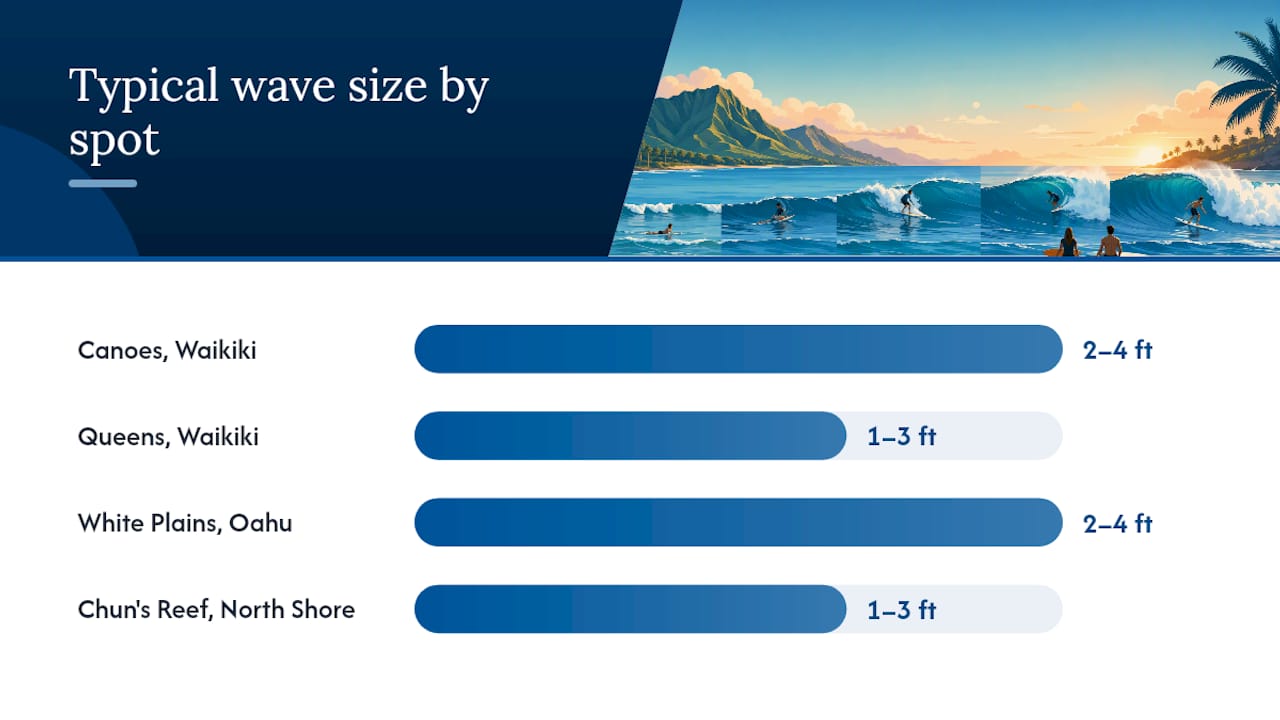
Canoes (Waikiki) is the gold standard for first-timers. The waves here run 2–4 feet, break slowly, and give you plenty of time to pop up. The sandy bottom reduces injury risk, and the break is surfable nearly year-round. The catch: it is one of the busiest beginner lineups in the state. Arrive at sunrise if you want elbow room.
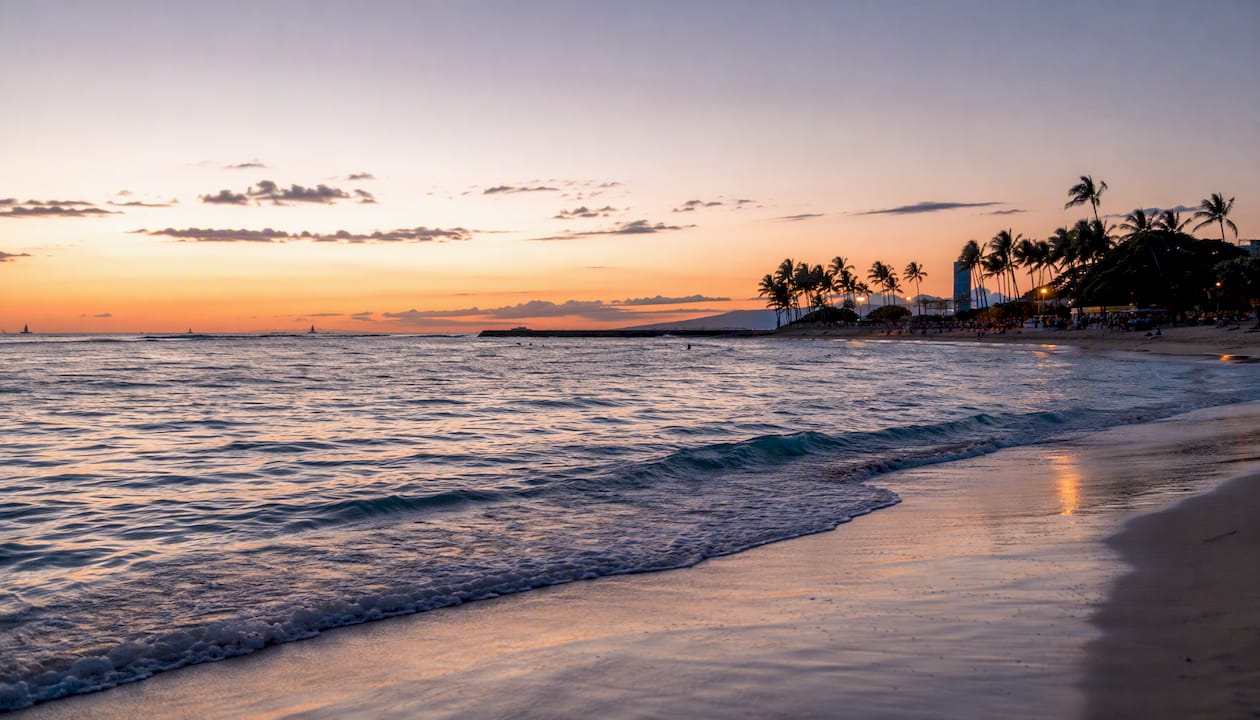
Queens sits just inside Canoes and breaks even more gently. It is the spot most schools use for absolute beginners and young children because the waves are slower and the water is shallower on the inside. Parking is available along Kalakaua Avenue, and restrooms are steps away.
White Plains Beach (Ewa Beach, west Oahu) is a former military beach that opened to the public and remains far less crowded than Waikiki. Waves are consistent, the bottom is mostly sand, and the vibe is relaxed. No surf schools operate on-site, so you would need to arrange a lesson separately or come with some prior experience.
Chun’s Reef (North Shore) is beginner-friendly only in summer, when the North Shore drops to 1–3 foot swells. In winter, the same reef produces waves that are well beyond beginner territory. If you visit between May and August, Chun’s offers a mellow left-hand wave over a shallow reef, so water shoes are a smart call.
Big Island
Kahalu’u Beach Park (Kona side) is the Big Island’s most recommended beginner spot. The bay is partially protected by a natural lava shelf, which keeps the surf manageable. The reef is shallow in spots, so reef shoes help, and the marine life is spectacular. Several local instructors operate lessons here, and the park has good parking and facilities.
Maui
Kihei Cove offers calm, protected water on Maui’s south shore and is a solid option when conditions cooperate. It is among the spots recommended across islands for beginners who want a quieter alternative to Waikiki’s crowds.
| Spot | Best for | Typical wave size | Hazards | Lesson availability | Best season |
|---|---|---|---|---|---|
| Canoes, Waikiki | Absolute beginners, all ages | 2–4 ft, slow, long | Crowds, occasional jellyfish | High — many schools on-site | Year-round; peak April–Sept |
| Queens, Waikiki | First lesson, young kids | 1–3 ft, very gentle | Crowds | High — school-preferred spot | Year-round |
| White Plains, Oahu | Beginners with some experience | 2–4 ft, consistent | Minimal | Low — self-guided | Year-round |
| Chun’s Reef, North Shore | Summer beginners only | 1–3 ft (summer) | Shallow reef | Low | May–August only |
| Kahalu’u, Big Island | All beginners, snorkelers | 1–3 ft, protected | Shallow reef, sea urchins | Moderate — local instructors | Year-round; calmer in summer |
| Kihei Cove, Maui | Beginners, calm-water learners | 1–2 ft, very calm | Minimal | Moderate | Year-round |
Pro Tip: If you are visiting Waikiki for the first time, ask your instructor whether the lesson will be at Canoes or Queens. The two breaks feel different, and knowing which one you are heading to helps you set the right expectations.
When to go: seasons and daily timing for new surfers
Timing your session correctly can be the difference between a fun morning and a frustrating one.
Season: The south shores of Oahu, Maui, and the Big Island are calmest and most consistent from April through September. Waikiki’s Canoes and Queens are surfable year-round, but summer swells tend to be smaller and more forgiving. The North Shore of Oahu flips the script entirely: winter (November through February) brings massive swells that are dangerous for beginners, while summer brings the mellow conditions that make spots like Chun’s Reef accessible.
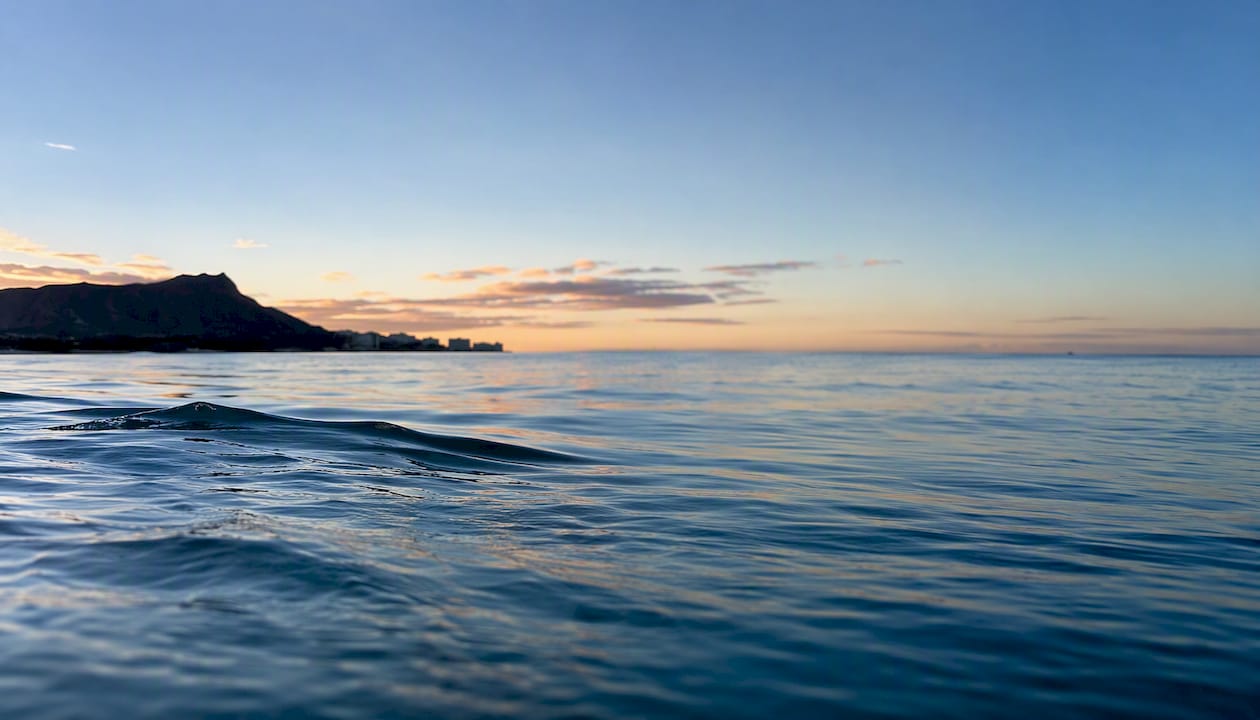
Time of day: Mornings win, consistently. Trade winds typically pick up between 10:00 AM and noon, which chops up the water surface and makes wave reading harder. Before 11:00 AM, the water is often glassy, the crowds are thinner, and the waves are easier to judge. Most surf schools schedule their first lessons at 7:00 or 8:00 AM for exactly this reason.
| Island / Shore | Best season | Preferred time of day | Notes |
|---|---|---|---|
| Oahu south shore (Waikiki) | April–September | Before 11:00 AM | Year-round surfable; summer is calmest |
| Oahu North Shore | May–August (beginners only) | Early morning | Winter swells are expert-only |
| Big Island (Kona side) | Year-round; calmer in summer | Before 10:30 AM | Kahalu’u protected by lava shelf |
| Maui south shore (Kihei) | Year-round; spring/summer best | Before 11:00 AM | Wind picks up early afternoon |
Statistic callout: Go Hawaii notes that south-shore beginner windows are most consistent April through September, with mornings before 11:00 AM offering the clearest conditions for first-timers.
Call your lesson operator the morning of your session. Local instructors check conditions daily and will tell you whether to move your time slot or switch spots. That five-minute call is worth more than any forecast app.
What to expect in your first surf lesson
Most people are surprised by how structured a good first lesson actually is. It is not just “here is a board, good luck.” A well-run lesson follows a clear sequence, and that structure is exactly why so many beginners stand up on their first try.
The typical lesson flow
- Dry-land pop-up practice (10–20 minutes). Your instructor walks you through the pop-up on the sand: hands flat on the board, push up, back foot plants first, front foot follows, knees bent. You will do this ten or fifteen times before you touch the water.
- Paddle-out to the break (5–10 minutes). The instructor guides you to a gentle whitewater section, usually inside the main break.
- Instructor-timed pushes (30–45 minutes). The instructor positions you on the board, reads the wave, and pushes you at the right moment. Your job is to pop up when you feel the wave take the board.
- Feedback and repeat. After each wave, you paddle back and go again. A good instructor adjusts your foot position or timing between runs.
Most first lessons run 1–2 hours and include a soft-top longboard, leash, and rash guard. On-sand pop-up coaching followed by instructor-timed pushes dramatically increases the chance a student stands in their first lesson, which is why the structure matters.
Lesson formats and typical costs
- Group lessons (4–8 students per instructor): roughly $85–$130 per person. Best for solo travelers or anyone on a budget.
- Semi-private lessons (2–3 students): roughly $110–$150 per person. Good balance of attention and cost for couples or small friend groups.
- Private lessons: starting near $125 and climbing to $200+ depending on the instructor and package. Worth it for nervous beginners, young children, or anyone who wants to progress faster.
What to pack
- Reef-safe sunscreen (required at most Hawaii beaches)
- Rash guard (most schools provide one, but bring your own if you prefer)
- Water bottle
- Towel
- Swimwear that stays put in the water
- Optional: water shoes if your spot has reef
Pro Tip: Beginners should always start on a soft-top longboard, roughly 9–11 feet long. The extra volume makes it far easier to catch waves and stay balanced. Resist the urge to rent a shortboard on day one.
How to choose a surf school in Hawaii
Not every school is equal. Here is what to look for before you hand over your credit card.
Questions to ask before booking:
- What is the student-to-instructor ratio? (Aim for 4:1 or better for group lessons.)
- Is equipment included, or is it extra?
- What is the cancellation policy if conditions are bad?
- Do instructors have water safety or lifeguard training?
- Where exactly does the lesson meet, and how do I find you on the beach?
Trust signals worth seeking:
- Local instructors with years of experience at the specific break
- On-water coaching (not just a push from the shore)
- Clear, upfront pricing with no hidden fees
- Positive, specific reviews mentioning instructor names
- A structured lesson plan, not just free time with a board
Red flags to avoid:
- Groups larger than 8 students with one instructor
- No mention of safety protocols or emergency procedures
- Vague cancellation terms
- Walk-up-only booking with no confirmed time slot
Book 24–72 hours ahead during peak season (June through August). Morning slots fill fast. Online booking is generally more reliable than walk-up, and it gives you a written confirmation of your meeting point.
For a Waikiki-based lesson with a documented methodology, Hhsurf’s Waikiki lesson page outlines what is included and how to reserve your spot. Families traveling with children should check the kids surf lessons page for age-specific programs and safety policies.
Pro Tip: Ask whether the school offers on-water photography. A photo package adds a small cost but gives you a record of your first wave, and the images are usually taken by someone already in the water with you.
Safety rules, rip currents, and surf etiquette
Rip current response
Rip currents are the most common hazard at Hawaii beaches, and the instinct to fight them head-on is wrong. Here is what to do:
- Stay calm. A rip current will not pull you under; it pulls you away from shore.
- Do not paddle straight back to the beach. You will exhaust yourself.
- Paddle parallel to the shore until you are out of the current’s pull, then angle back in.
- If you are tired, float and signal for help. Wave one arm and stay calm.
Reef and marine life hazards
- Shallow reef can cause cuts if you fall in the wrong spot. Water shoes help at spots like Kahalu’u and Chun’s Reef.
- Sea urchins hide in reef crevices. Do not put your hands or feet on the reef.
- Stingrays rest on sandy bottoms near shore. Shuffle your feet when wading in shallow water.
- Jellyfish appear seasonally. Check local beach reports before your session.
Surf etiquette basics
Learning to surf in Hawaii carries cultural weight. The lineup has rules, and locals notice when visitors ignore them.
- Right of way: the surfer closest to the peak of the breaking wave has priority. Do not paddle for a wave someone else is already riding.
- Do not drop in. Cutting in front of a surfer already on a wave is the fastest way to cause a collision and earn hostility.
- Stay in the beginner zone. As a first-timer, stay in the whitewater inside the main break. Do not paddle out to the main lineup until you can control your board.
- Hold your board. A loose board is a hazard to everyone around you.
Pre-session safety checklist:
- Check the beach’s posted flag or conditions report
- Identify the lifeguard station before entering the water
- Tell someone on shore where you are going and when you expect to return
- Know the rip current escape procedure before you paddle out
- Apply reef-safe sunscreen 15 minutes before entering the water
Why a proven local methodology speeds up your progress
The gap between standing up on your first wave and spending an hour flailing in the water usually comes down to one thing: whether your instructor times the push correctly. That sounds simple, but it requires reading the wave, reading your body position, and pushing at exactly the right moment. It is a skill that takes years to develop, and it is the core reason a structured school outperforms a friend with a spare board.
Hhsurf’s approach is built around three pillars: sand-based pop-up repetition before you ever touch the water, on-water instructor positioning and timing, and beginner-appropriate longboards that maximize stability. The school operates in Waikiki, which means students learn at Canoes and Queens, the two breaks most consistently suited to first-timers on the island.
What sets a structured lesson apart: “The instructor’s job is to put you in the right position at the right moment. The wave does the rest. Most beginners who struggle are simply paddling too early or too late, and a good instructor fixes that in the first twenty minutes.”
What Hhsurf includes in a standard lesson:
- Soft-top longboard, leash, and rash guard
- On-sand pop-up coaching before entering the water
- On-water instructor support throughout the session
- Optional photo and video packages so you have a record of your first wave
- Group, semi-private, private, and kids-specific formats
- North Shore lesson options for students who want to progress beyond Waikiki
The school’s step-by-step lesson guide walks through exactly what happens from arrival to the last wave, which is worth reading the night before your session.
What most beginners get wrong before their first wave
Most people who struggle in their first surf lesson are not unfit or uncoordinated; cross-training exercises like those in the Dance N’ Tone BYOW program can improve strength, balance, and cardio to boost your surfing readiness. They are nervous, and nervousness makes them rush the pop-up. They push up before the wave has fully taken the board, their weight shifts forward, and the nose dives. It happens on almost every first session, and it is completely fixable.
The honest truth about beginner surfing in Hawaii is that the conditions are as good as they get anywhere in the world. Canoes and Queens are genuinely forgiving breaks. The water is warm. The instructors at established schools have seen every body type, every age, and every skill level come through. What they have not seen is someone who could not improve with the right coaching.
If you are nervous, book a private lesson. The one-on-one attention removes the social pressure of a group, and the instructor can adjust the session entirely around your pace. Parents with kids under eight should look at kids-specific programs or consider bodyboard lessons as a gentler first step. And if you are traveling with a group that includes mixed skill levels, a family surf lesson format keeps everyone in the water together.
Choose a morning session. Not because the afternoon is dangerous, but because the morning is genuinely better: glassy water, lighter crowds, and an instructor who is fresh and focused. That combination gives you the best possible shot at standing up on day one.
Ready to book your first Waikiki surf lesson?
Hhsurf gives first-timers something most beach-walk schools do not: a documented, repeatable lesson method built around the specific conditions at Canoes and Queens. The difference shows up in the first session. Students spend less time flailing and more time actually riding waves, because the pop-up coaching on sand translates directly to what happens in the water.
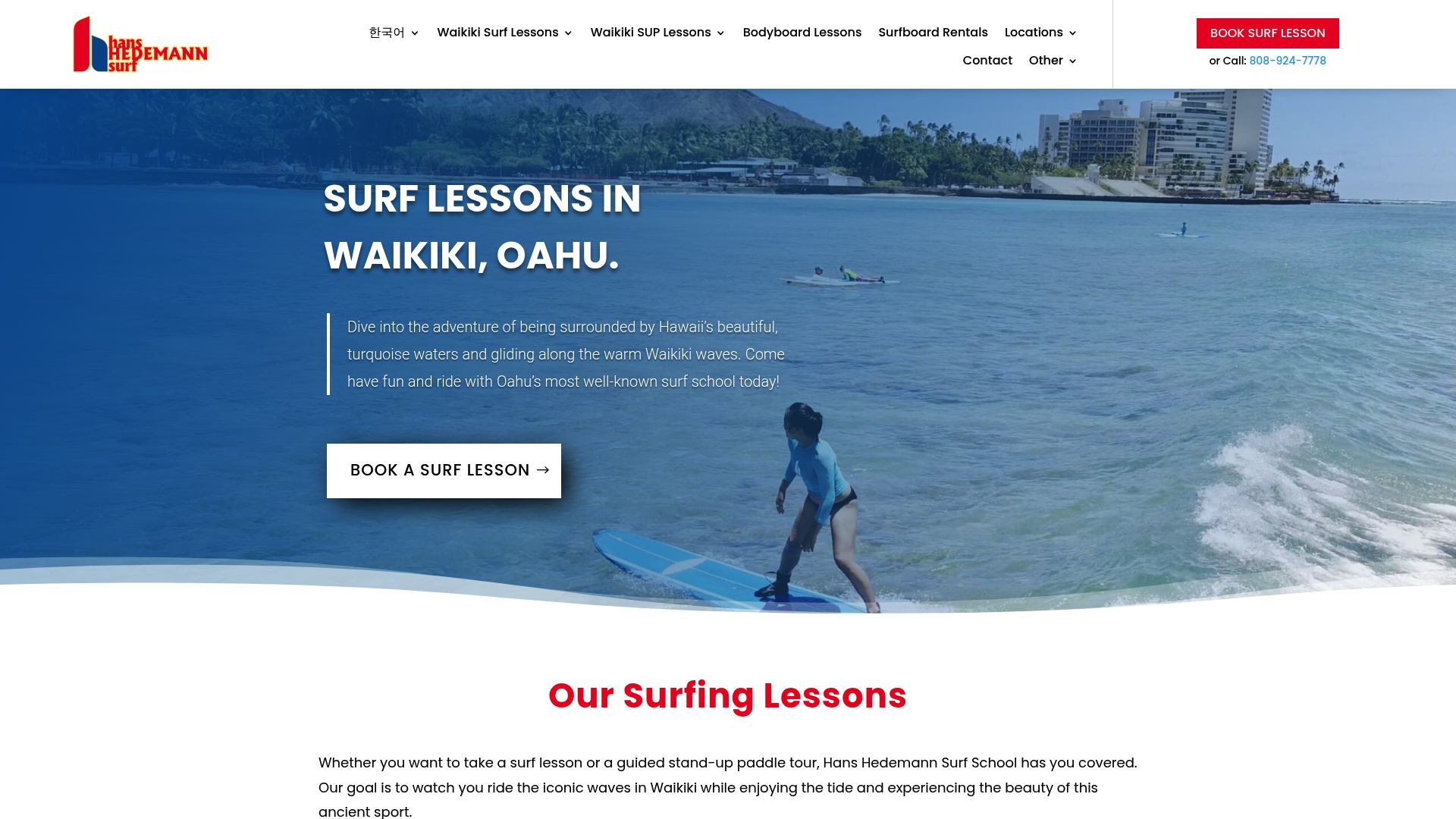
Lesson formats cover every situation: group sessions for solo travelers and budget-conscious visitors, semi-private for couples or small groups, and private lessons in Waikiki for anyone who wants full instructor attention. Families can book kids surf lessons with age-specific safety protocols, and there are North Shore options for students who want to push beyond Waikiki once they have the basics. Optional photo packages mean you leave with more than a memory.
Other qualified instructors operate across the islands, and the checklist in the school-selection section above applies to all of them. For a Waikiki session with a proven track record, book your surf lesson with Hhsurf and confirm your morning time slot before the peak-season slots fill.
Sources
The sources below were used in this guide and are worth bookmarking for your trip planning:
- Surfing in Hawaii | Go Hawaii
- Surf Lessons in Waikīkī: Prices, Tips, and What to Expect (2026)
- Canoe Surf Spot Oahu | Hawaiian South Shore
- Best surf spots in Waikiki (site guide)
For live conditions: Check Surfline or Windy the morning of your lesson for real-time swell and wind data. Then call your instructor. Local knowledge beats any app.
0 Comments