
The best time to surf is whenever swell period, tide, and wind line up, and for most breaks that window falls at sunrise or in the two hours before sunset. Morning and evening sessions tend to be cleaner because the wind hasn’t picked up yet or has already died down. That said, the “right” tide is spot-specific, swell period matters more than wave height, and daily wind patterns can shift the golden window by hours. Tools like BreakFinder, NOAA tide charts, and a Hhsurf instructor’s eye all help narrow it down.
- Mornings and evenings usually win, but not always
- Tide preference depends entirely on the break
- Swell period (not height) predicts wave quality
- Wind direction can override every other factor
Key Takeaways
The best time to surf is whenever swell period, tide phase, and wind direction align, which most often happens at sunrise or in the two hours before sunset.
| Point | Details |
|---|---|
| Time of day | Sunrise and the pre-sunset hours usually offer the lightest wind and thinnest crowds. |
| Tide is spot specific | Beach breaks often favor low to mid incoming tide, reefs often prefer mid to high. |
| Period beats height | A swell period of 12 seconds or longer usually signals more powerful, better organized waves. |
| Wind sets the ceiling | Light offshore wind cleans up waves, while onshore wind above roughly 15 to 20 knots ruins a session. |
| Book with Hhsurf | Hhsurf instructors schedule group and private lessons around the day’s actual tide and wind window. |
Reliable Tools for a Daily Check
- Forecast and condition-scoring tools like BreakFinder
- NOAA or local tide charts
- Regional swell bulletins from sources like Surfline
- Live cams to confirm before you drive
Table of Contents
- Why Morning and Evening Sessions Usually Win
- How Does Tide Affect Which Waves Break Best?
- What Swell Period Actually Tells You
- How Wind Direction Changes Everything
- Do Surf Seasons Differ by Coast and Hemisphere?
- What’s the Best Time for Beginners to Surf?
- How Do You Read a Surf Forecast Correctly?
- Is Dawn or Dusk Surfing Safe?
- What Do Instructors Notice That Forecasts Miss?
- How Hhsurf Instructors Time a Lesson
- Book a Lesson Timed to the Best Conditions
- Frequently Asked Questions
- Sources
Why Morning and Evening Sessions Usually Win
Land and sea breezes follow a predictable daily cycle. Overnight, the land cools faster than the ocean, so air drains offshore and grooms the surf into clean, glassy lines. Once the sun heats the land through the morning, that pattern reverses, and onshore wind builds through midday, chopping up the water. This is why dawn patrol sessions have such a devoted following.
Mid-morning brings tradeoffs. Wind is often still manageable through 9 or 10 AM, water and air have warmed up, and lifeguards are typically on duty, which is why it’s often the best window for beginners. Evening can bring a second glass-off as the sea breeze fades, but fading light and thinning lifeguard coverage cut that window short.
- Dawn: glassiest wind, but dark, cold, and unsupervised
- Mid-morning: warmer, safer, slightly more texture on the water
- Evening: possible glass-off, but shrinking visibility
Pro Tip: If offshore wind is still holding two hours after sunrise, don’t rush your session. That’s usually the best stretch of the entire day.
How Does Tide Affect Which Waves Break Best?
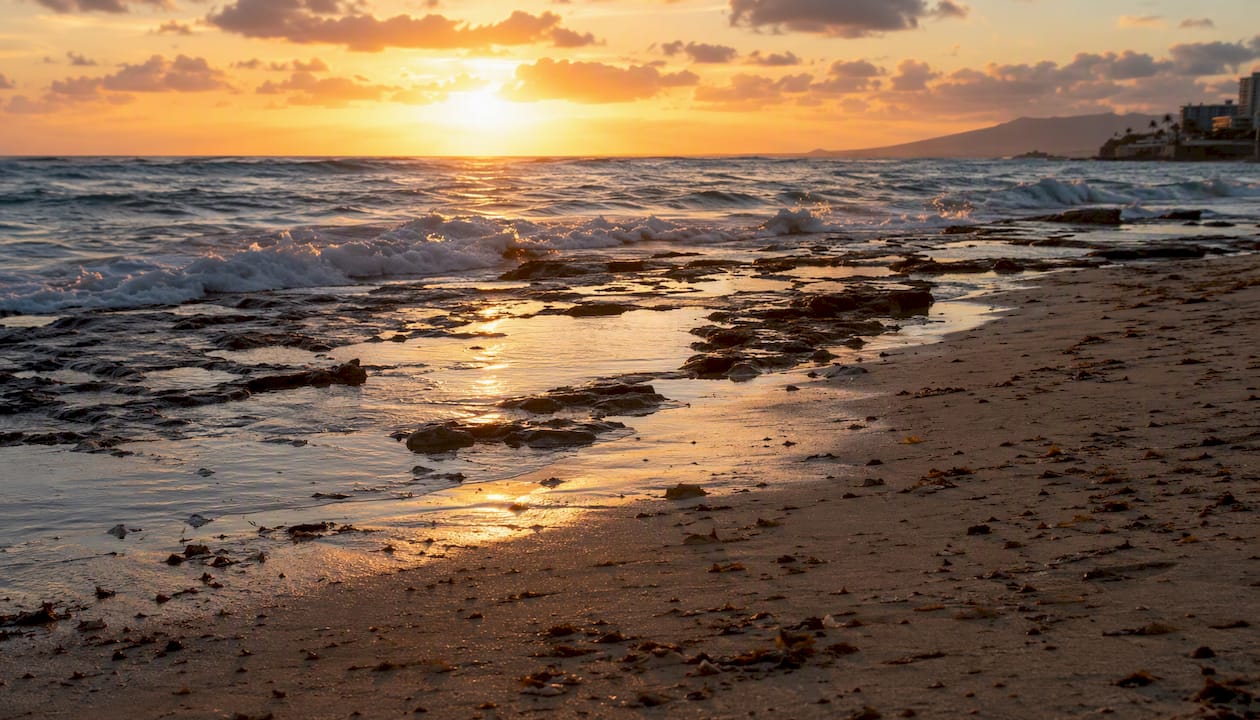
Tide reshapes the ocean floor’s effective depth, and that changes how a wave breaks. Beach breaks, with their shifting sandbars, often surf best on a low-to-mid incoming tide, when there’s enough water to keep waves from closing out but not so much that they turn mushy. Reef breaks generally need more water over the reef, so mid-to-high tide is often the sweet spot. Point breaks vary; some hold shape across nearly the entire tide cycle, while others only work in a narrow window.
Rising (incoming) tide typically adds power and shape as it pushes swell energy toward shore. Falling (outgoing) tide can drain a break fast, turning fun peaks into shallow, closing-out mush within an hour. Waves genuinely need that push or pull from a moving tide to form well, which is why dead-flat high or low tide often produces the worst conditions of the day.
- Beach breaks: low to mid, incoming
- Reef breaks: mid to high
- Points: check the spot, tide tolerance varies widely
Pro Tip: Keep a simple log of what tide height worked at your home break each session. Six entries usually reveal a pattern faster than any generic tide chart.
What Swell Period Actually Tells You
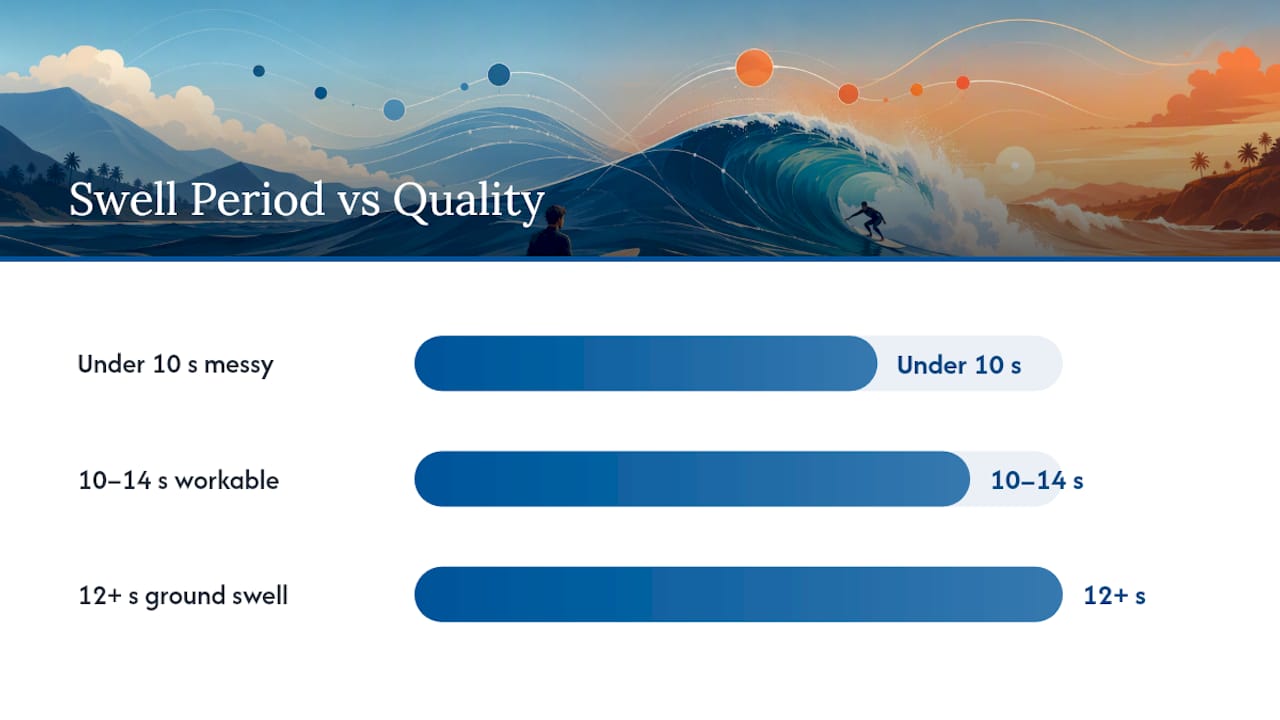
Swell period, the number of seconds between wave crests, matters more than wave height for predicting quality. A longer period means the swell traveled farther and carries more organized energy, producing waves with more push and cleaner faces. Short-period wind swell, by contrast, tends to be choppy and disorganized even at the same reported height.
A useful field guideline: 10 to 14 seconds is generally surfable at most breaks, and 12 seconds or longer often marks a real ground swell, the kind that produces noticeably more powerful, better-shaped waves. Direction matters just as much as period. A swell with a great 14-second period can still miss your local break entirely if the angle doesn’t align with the coastline or if a headland blocks it.
- Under 10 seconds: weak, wind-driven, usually messy
- 10 to 14 seconds: workable at most spots
- 12+ seconds: often the ground swell that makes a session worth planning around
How Wind Direction Changes Everything
Wind is the fastest way to make or break a session that looked perfect on paper. Offshore wind blows from land to sea, holding wave faces up and grooming them into clean lines. Onshore wind does the opposite, crumbling waves and adding chop before they can even form properly.
Rough thresholds worth knowing: light offshore wind under roughly 10 to 15 knots usually improves quality, while onshore wind above 15 to 20 knots tends to wreck a session outright. Checking an hourly wind forecast, not just the daily summary, is how you catch the exact moment the sea breeze kicks in and decide whether to paddle out now or wait.
- Light offshore (under ~10 to 15 knots): cleaner, better-shaped waves
- Strong onshore (over ~15 to 20 knots): choppy, disorganized surf
- Hourly forecasts beat daily averages for timing a session
Do Surf Seasons Differ by Coast and Hemisphere?
Yes, and the difference is large enough to plan a trip around. Coasts facing the Southern Hemisphere often pick up their biggest, most consistent groundswells in the Northern Hemisphere’s summer, and vice versa. Late winter and shoulder seasons frequently deliver the most reliable swell trains for many exposed coastlines, while tropical systems and late-summer activity in the Eastern Pacific can shift the pattern entirely for other regions.
None of this is universal. Local microclimates, reef shape, and prevailing wind direction mean one coast’s “best season” can be another’s flattest months. Following regional swell bulletins and a spot’s own historical pattern beats assuming a single calendar rule applies everywhere.
- Southern swells often peak in the Northern Hemisphere’s summer months
- Tropical and late-summer systems drive activity in other regions
- Local terrain can override the general seasonal rule entirely
What’s the Best Time for Beginners to Surf?
Mid-morning on weekdays is often the best window for beginners, as the water and air have usually warmed up, lifeguards are on duty, wind can be manageable, and crowds tend to be lighter than on weekends.
Look for small, waist-to-head-high waves at a sheltered beach break, ideally on a gentle incoming tide if that’s what the spot prefers. Before paddling out solo, confirm three things: lifeguard presence, whether a supervised lesson is available, and current conditions from a recent report.
- Time: weekday, 9 to 11 AM
- Waves: small, sheltered, beginner-friendly break
- Safety: lifeguards present, supervision available
Pro Tip: If you’re brand new, book a supervised session instead of guessing. An instructor already knows which tide and hour your specific beach fishes best on.
How Do You Read a Surf Forecast Correctly?
A forecast score combines swell, period, tide, and wind into a single window, not a single number. Tools like the BreakFinder condition calculator weight all three factors and often point to a golden rule: the first two hours after low tide on a rising swell with offshore wind.
Forecasts are probability guides, not guarantees. They’re built on models, and models miss local quirks, so always verify with a live cam or recent report before committing to a drive. A simple workflow: check swell and period, check the tide window, check wind timing, then confirm with a live look.
- Check swell height and period first
- Match that against the tide window for your spot
- Confirm wind timing, then verify with a live cam or forecast tool
Pro Tip: Never trust a forecast blind for a trip you’re driving an hour for. A five-minute live cam check has saved more sessions than any algorithm.
Is Dawn or Dusk Surfing Safe?
Lower visibility is the main tradeoff at both ends of the day. Lifeguard towers are often unstaffed before opening hours and after closing, and low light makes it harder to spot other surfers, rocks, or marine life.
Lower sun angles do reduce direct glare, but UV exposure is still real any time you’re on the water, so rashguards and reef-safe sunscreen belong in your bag regardless of the hour. Before a dawn or dusk session, check current local conditions, tell someone your plan, and lean toward a supervised session if you’re still building experience or bringing kids.
- Dawn and dusk: reduced visibility, less lifeguard coverage
- Sun protection matters at every hour, not just midday
- Tell someone your plan before a low-light session
Pro Tip: If you’re surfing alone at dawn, stick to a spot with cell coverage and a known exit point. It’s not worth the risk to explore new terrain in the dark.
What Do Instructors Notice That Forecasts Miss?
The most common mistake is fixating on wave height and ignoring period and wind entirely, a two-foot wave at 14 seconds can outperform a four-foot wave at 8 seconds. The second mistake is ignoring a spot’s tide preference and paddling out at dead low or dead high, right when the break usually goes flat or closes out.
The fix is simple: keep a spot habit log, lean on a condition-scoring tool for the initial read, and learn your break’s tide sweet spot through repetition rather than guesswork.
- Height alone is a poor predictor, period and wind matter more
- Track your spot’s tide preference over multiple sessions
- Use a scoring tool for a starting point, then verify locally
Pro Tip: When a spot looks marginal, instructors often shift 10 minutes down the coast to a more sheltered break rather than fighting bad wind at the original spot.
How Hhsurf Instructors Time a Lesson
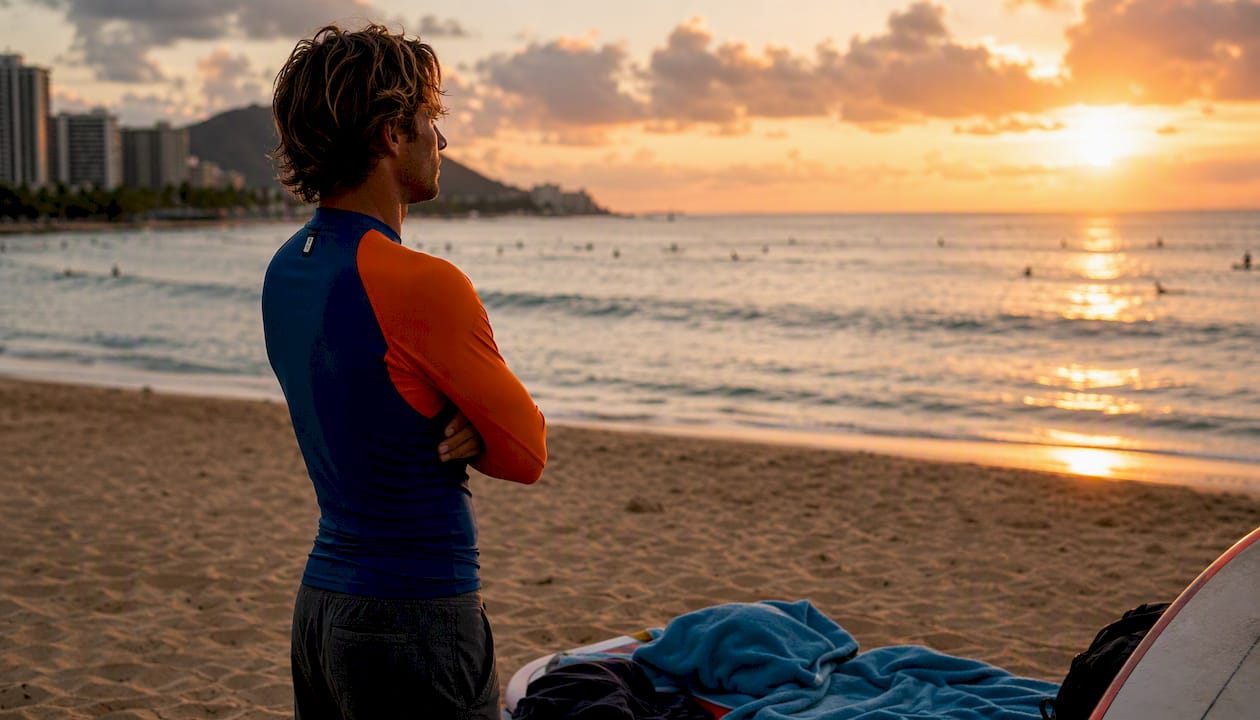
Student safety comes first, then wave quality, then whether the light will make for good photos. For group lessons, we schedule around the most reliably calm and warm window of the day. Private lessons allow more flexibility, since we can shift the start time to chase a better tide or a lighter wind forecast for a single student or family.
Book a Lesson Timed to the Best Conditions
Reading tide charts, swell period, and hourly wind forecasts takes practice, and getting the timing wrong usually means paddling out into chop instead of clean waves. Hhsurf removes that guesswork: our instructors check swell, tide, and wind before every session and schedule lessons around the window that actually works that day, not a generic time slot.
Group lessons run during the steadiest part of the morning, while private lessons can shift by an hour or two to chase a better tide or calmer wind for you specifically. If you’re new to the water, a supervised session with an instructor who already knows Waikiki’s tide patterns beats trying to time it yourself. Check available dates and book a surf lesson for a window our instructors have already picked for conditions, not convenience.
Frequently Asked Questions
Is early morning always the best time to surf?
Not always. Morning is usually the safest bet because wind hasn’t built yet, but if the tide is wrong for your spot or the swell hasn’t filled in overnight, a mid-morning or afternoon session can outperform dawn.
What swell period is considered good for surfing?
Ten to 14 seconds is workable at most breaks, and 12 seconds or longer typically marks a genuine ground swell with more power and cleaner shape than short-period wind swell.
How do I know which tide is best for my local break?
Check whether it’s a beach break, reef, or point, since each favors a different tide range, then confirm with a tide chart and track results over several sessions to find your spot’s specific sweet spot.
What wind conditions ruin a surf session?
Onshore wind above roughly 15 to 20 knots typically turns clean waves choppy and disorganized, while light offshore wind under 10 to 15 knots usually keeps conditions groomed.
What’s the best time for a beginner to book a surf lesson?
Weekday mid-morning, around 9 to 11 AM, when the water has warmed up, lifeguards are on duty, and wind is usually still light, making it the easiest window to learn in.
Sources
- Surfline
- Best Time to Surf Today: Find Your Golden Window | BreakFinder
- The top 5 surf forecast websites | SurfHolidays
- What are the Best Tides & Times to Go Surfing? | Nixon
0 Comments