
If you’re a first-timer trying to choose a surf school in Waikiki, book a private or small-group beginner lesson with Hans Hedemann Surf School. Lower instructor ratios mean more hands-on correction, which is the single biggest factor in whether you stand up on your first try. The school’s beginner-focused method is built around getting new surfers up and riding whitewater within one session, not three.
Book at least a few days ahead during peak travel months, ask about the cancellation window before you pay, and aim for a morning slot when the wind and crowds are lightest. That one decision, private attention over a crowded group, solves most of what makes people nervous about learning to surf on vacation.
Key Takeaways
A small-group or private beginner lesson with strong instructor ratios is the single biggest factor in standing up on your first day of surfing in Waikiki.
| Point | Details |
|---|---|
| Pick lesson format by goal | Choose private for speed, semi-private for couples, group for budget travel with friends. |
| Book mornings in advance | Calmer wind and smaller crowds make morning slots the better window for beginners. |
| Ask before you pay | Confirm instructor certification, group size limits, and cancellation terms up front. |
| Expect whitewater, not a full ride | Standing up briefly on a small wave is a realistic and successful first-lesson outcome. |
| Hans Hedemann Surf School fits beginners | Its private and small-group lessons, kids and family programs, and clear booking policies match what most first-time surfers in Waikiki need. |
Table of Contents
- Private vs. Group Surf Lessons: Who Should Pick Which
- Which Lesson Type Fits Your Skill Level and Group
- What Happens During Your First Surf Lesson
- How to Choose the Right Surf School in Waikiki
- What Surf Lessons Cost in Waikiki and How to Book Smart
- Why Hans Hedemann Surf School Works for Waikiki Beginners
- Book Your Waikiki Surf Lesson the Easy Way
- Sources
Private vs. Group Surf Lessons: Who Should Pick Which
The real trade-off isn’t cost. It’s how much correction you get per wave.
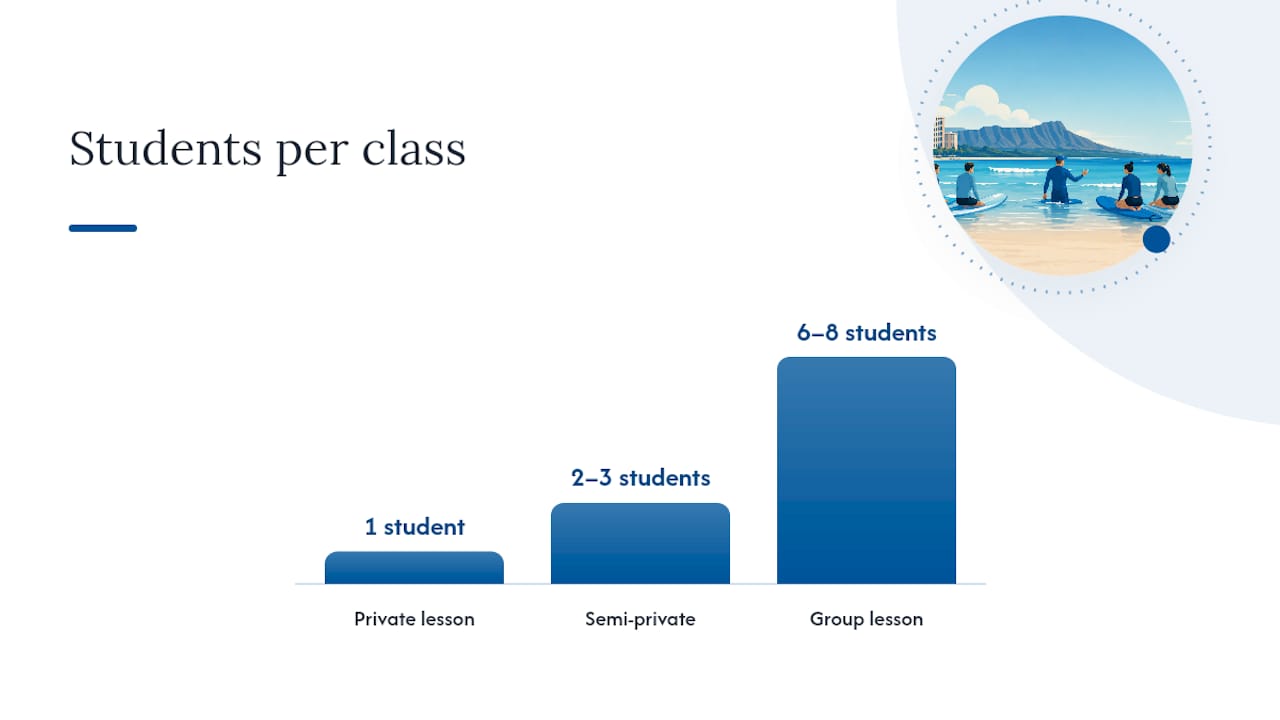
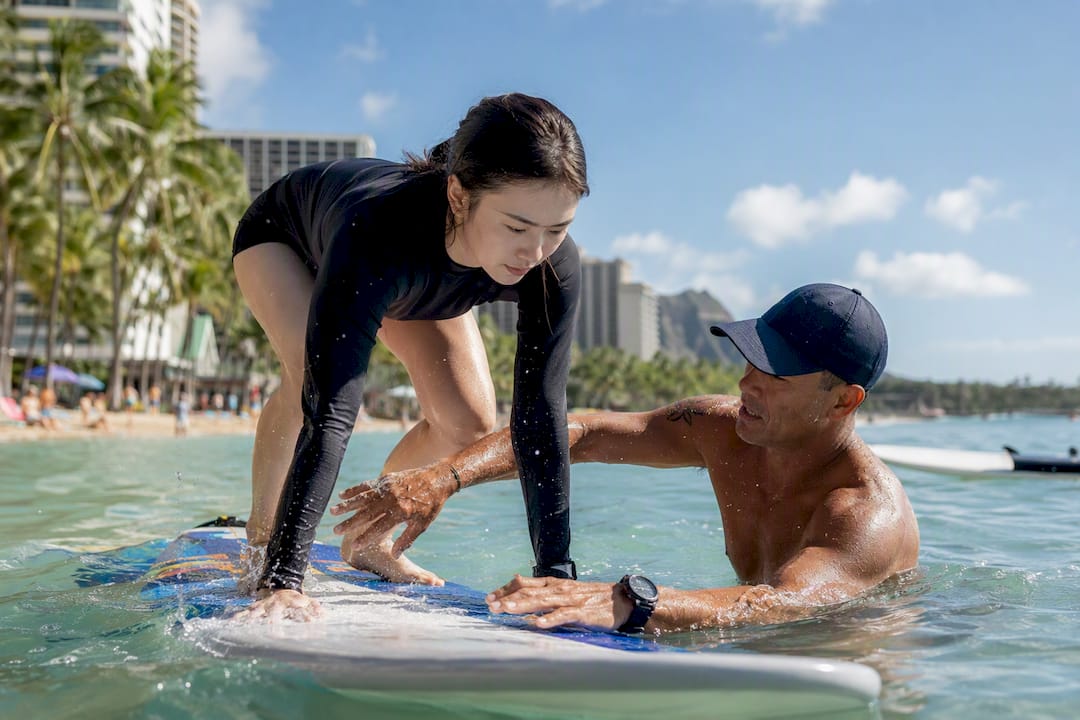
A private lesson puts one instructor on you and only you. You’ll catch more waves per hour, get technique fixes in real time, and move at your own pace if you’re nervous, older, or recovering from an injury. The downside is obvious: it costs more per person, though not always more per couple if you’re comparing it against two group slots.
Semi-private lessons split that instructor between two or three people, usually a couple or a parent and kid. You lose a little individual attention but keep most of the speed advantage, and the price drops noticeably.
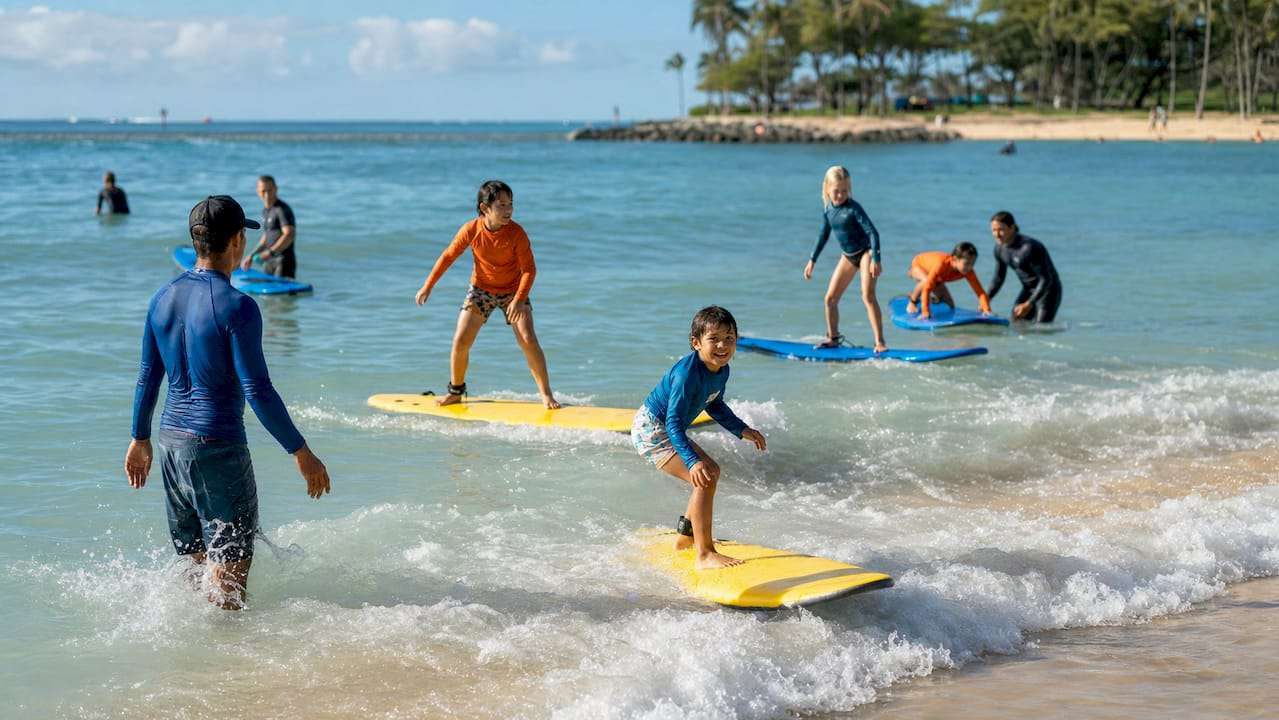
Group lessons put six to eight students with one or two instructors. You’ll spend more time waiting for your turn and watching others get corrected instead of yourself. But group sessions are the cheapest way to try surfing, and Waikiki’s gentle inside break means even a crowded group class is a safe place for a first attempt, according to guidance on Waikiki’s beginner surf zones.
Here’s how to match the format to your situation:
- Families with young kids: semi-private or a dedicated family lesson so an adult can help manage nerves without competing for instructor time.
- Solo travelers who want to progress fast: private lesson, hands down. You’re paying for reps, not company.
- Budget-conscious groups of friends: a group lesson works fine as long as everyone is roughly the same skill level.
- Couples on a honeymoon or anniversary trip: semi-private gives you a shared experience without splitting attention three or four ways.
Pro Tip: Book one private lesson first, even if you plan to do group sessions after. The private hour gets your pop-up and balance fundamentals locked in, so the group class becomes practice instead of a crash course.
Which Lesson Type Fits Your Skill Level and Group
Waikiki schools generally offer the same menu: private, semi-private, group, kids, family, stand-up paddle (SUP), and bodyboard lessons, each with a board, rash guard, and a safety briefing included, and most offering an on-water photo or video package as an add-on.
Private and semi-private lessons run one instructor to one or two students and suit absolute beginners, anyone nervous in the water, or surfers with a physical limitation. Group lessons run closer to one instructor per four students and work well for confident adults or teens comfortable following instructions in a crowd. Kids lessons typically start around age five and use smaller, softer boards with instructors trained specifically for children. Family lessons bundle mixed ages into one session so parents and kids ride together instead of splitting into separate classes.
SUP lessons suit travelers who want a calmer, lower-fall introduction to being on the water, while bodyboard lessons are the fastest way for young kids or cautious beginners to feel a wave without standing up at all.
What Happens During Your First Surf Lesson
Your first lesson follows a predictable rhythm, and knowing it ahead of time takes most of the anxiety out of the morning.
- Meet on the beach. Your instructor checks skill level, swimming comfort, and any injuries before anything else.
- Land briefing. You’ll practice the pop-up motion on dry sand, going over stance, paddling technique, and hand signals your instructor will use once you’re out in the water.
- Paddle out to the beginner zone. Waikiki’s inside reef break keeps the water shallow and calm compared to outer breaks, which is exactly why it works for first-timers.
- Guided wave attempts. Your instructor positions the board, times the wave, and pushes you in, calling out when to stand.
- Wrap-up and feedback. A quick debrief on what worked, plus your photo or video package if you booked one.
A full breakdown of this timeline is worth reading the night before. Lifeguards stay posted along Waikiki’s beaches, and instructors keep lessons inside marked safe zones, a practice consistent with Hawaii’s water-safety guidance on staying within designated areas and following posted signals. Success on lesson one usually means standing up on a small whitewater wave for a few seconds, not carving a full ride. That’s normal, and it’s still a win.
How to Choose the Right Surf School in Waikiki
Run through this checklist before you hand over a card number:
- Does the instructor have certified lifeguard or water-safety training, not just “years of experience surfing”?
- What’s the instructor-to-student ratio, and does it change for a group lesson versus private?
- Is there a land-based safety briefing before anyone touches the water?
- What’s included: board, rash guard, photo package, and is basic liability coverage part of the price?
- What’s the cancellation and weather-reschedule policy?
Ask these questions directly:
- “What certification does my instructor hold, and how long have they been teaching?”
- “What’s the maximum group size for this lesson, and is there a minimum age?”
- “If it rains or the surf is too rough, what’s your refund or reschedule policy?”
- “Where exactly on the beach does the lesson launch from?”
Walk away if a school can’t answer the certification question specifically, if the “safety briefing” is a thirty-second afterthought, or if the cancellation terms are vague when you ask twice.
A school that trains you on land before you touch the water, keeps ratios small, and states its cancellation policy in plain language before you book is telling you it has done this a thousand times. That’s the signal worth trusting more than any star rating.
Look for schools with a transparent, published price on their booking page, real customer testimonials with specifics (not just five stars and no comment), and a clear online reservation flow. If you can read exactly what a beginner lesson looks like before you pay, that’s a good sign the school has nothing to hide.
What Surf Lessons Cost in Waikiki and How to Book Smart
Private lessons cost more per person than group lessons, but a semi-private split between two people often lands close to what two separate group slots would run once you add up photo packages and rentals. Group lessons are the entry point for budget travelers, and prices climb from there based on instructor ratio, lesson length, and whether a photo or video package is bundled in.
Demand spikes during winter holidays and summer break, so book several days out if you want a specific morning window. Morning sessions tend to have calmer wind and smaller crowds in the water, which matters more for a beginner than almost anything else on this list. If a school offers a multi-lesson or family bundle, that’s usually the better value over booking single sessions one at a time. When you’re deciding what’s worth the extra dollars, a smaller instructor ratio and a flexible cancellation policy beat a cheaper price with a rigid one.
Why Hans Hedemann Surf School Works for Waikiki Beginners
The school’s teaching approach centers on getting students standing up in their first session rather than spending an entire lesson on land drills. That’s a direct function of low instructor ratios and a structured private-lesson progression built specifically around first-timers.
The lesson menu covers what most beginners in Waikiki actually need:
- Private and semi-private sessions for fast, individualized progress
- Group lessons for budget-minded travelers
- Kids and family programs with age-appropriate instruction
- SUP and bodyboard lessons for a lower-intensity introduction to the water
- Optional on-water photo and video packages to capture the first stand-up
Instructors are working surfers who teach the pop-up, paddle timing, and wave reading in a way that’s built to compress the learning curve, not stretch it out over a week of lessons.
Clear booking terms and a published cancellation policy round out what makes the school a low-friction choice for someone who’s never surfed and doesn’t want to gamble a vacation morning on an unknown.
An Instructor’s Take
Watching someone stand up for the first time never gets old, that split second where fear turns into a grin is the whole job. Book the lesson format that gets you the most attention you can afford, then get in the water and have fun with it.
Book Your Waikiki Surf Lesson the Easy Way
There’s no substitute for water time with someone watching your feet and your timing on every single wave. That’s what Hhsurf builds every lesson around: fewer students per instructor than a typical beach walk-up class, so you spend your vacation morning actually catching waves instead of waiting in line for a turn.
Head to the Waikiki surf lessons page to see what’s included and pick your format. If you’re traveling with a partner or want maximum correction on your first attempt, book a private lesson directly. Traveling with kids? The kids lesson booking page has age-specific details. Grab a morning slot, confirm the cancellation window when you book, and add the photo package if you want proof of the moment you stood up. Reserve your spot on the surf lessons booking page before your preferred morning fills up.
Sources
- DLNR Boating in Hawaii: Regulations and Safety Guide – Safe Boating America
0 Comments