
A qualified kids surf instructor is defined as a professional holding both surf teaching accreditation and current lifeguard or CPR certification. Choosing kids surf instructor tips that actually protect your child go beyond checking a school’s website photos. The right instructor combines technical coaching with emotional support, keeps student-to-instructor ratios low, and operates in conditions matched to a beginner’s ability. Get these factors right, and your child stands on a board with a grin. Get them wrong, and one bad session can create a fear of the ocean that lasts years.
What qualifications should you look for in a kids surf instructor?
Certified surf instructors hold specific credentials that water assistants do not. Certified instructors train in teaching pedagogy, ocean safety, and technique correction. A water assistant may help carry boards and steady a child in shallow water, but that person cannot replace a trained coach when something goes wrong.
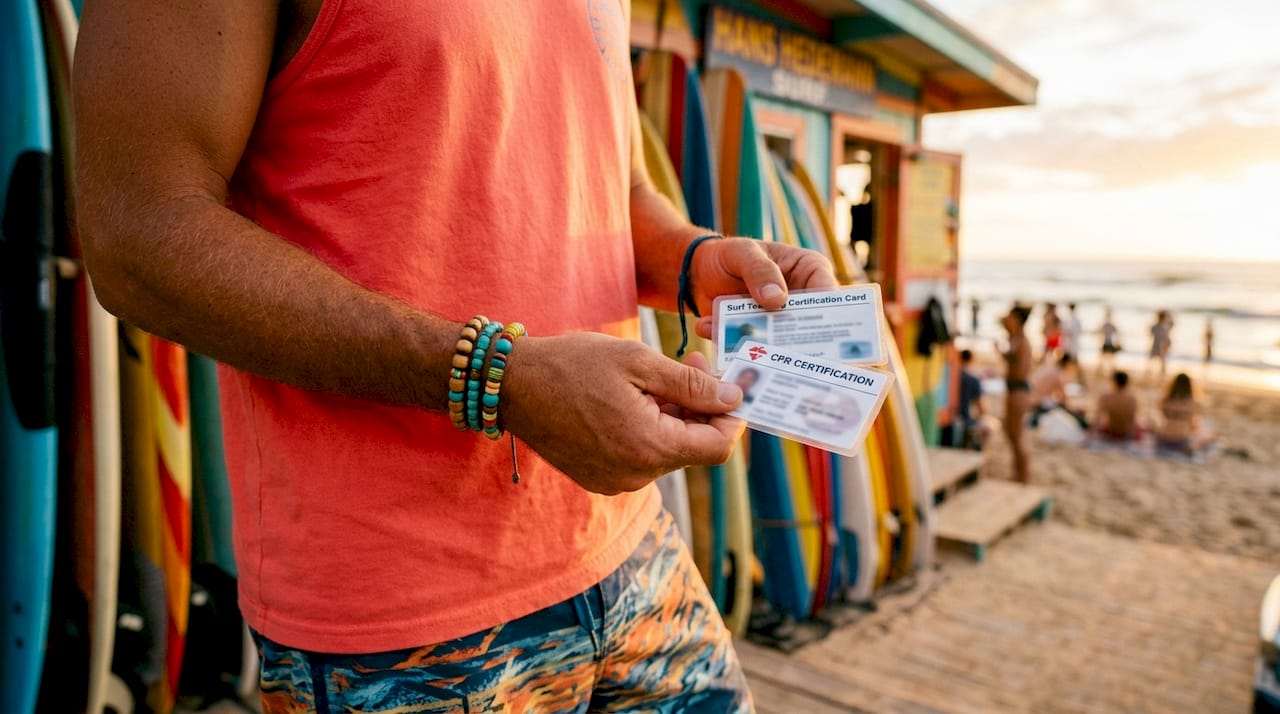
The two most recognized surf teaching bodies are the International Surfing Association (ISA) and the Australian Surf Instructors Association (ASI). Both set curriculum standards, require practical assessments, and mandate ongoing renewal. Ask any school you consider which accreditation their instructors hold, and ask to see the certificates.
Surf teaching certification and water safety certification are separate credentials. Parents often assume that a surf instructor automatically holds lifeguard or First Aid training. That assumption is wrong. Reputable surf schools in 2026 require dual certification: surf accreditation plus current lifeguard and CPR/First Aid training. Confirm both before you book.
Safeguarding policies matter just as much as water safety. Professional surf schools implement policies that prevent unsupervised one-on-one contact with minors, ban unauthorized electronic communication, and require written parental consent for travel or media use. Ask for these policies in writing. A school that hesitates to share them is a school worth avoiding.
- Confirm ISA or ASI surf teaching accreditation
- Verify current lifeguard, CPR, and First Aid certification separately
- Ask how the school distinguishes certified instructors from water assistants
- Request written safeguarding policies before signing up
Pro Tip: Ask the school directly: “Can I see your instructor’s current CPR card?” A confident, professional school will produce it without hesitation.
How do private lessons compare to group lessons for kids?
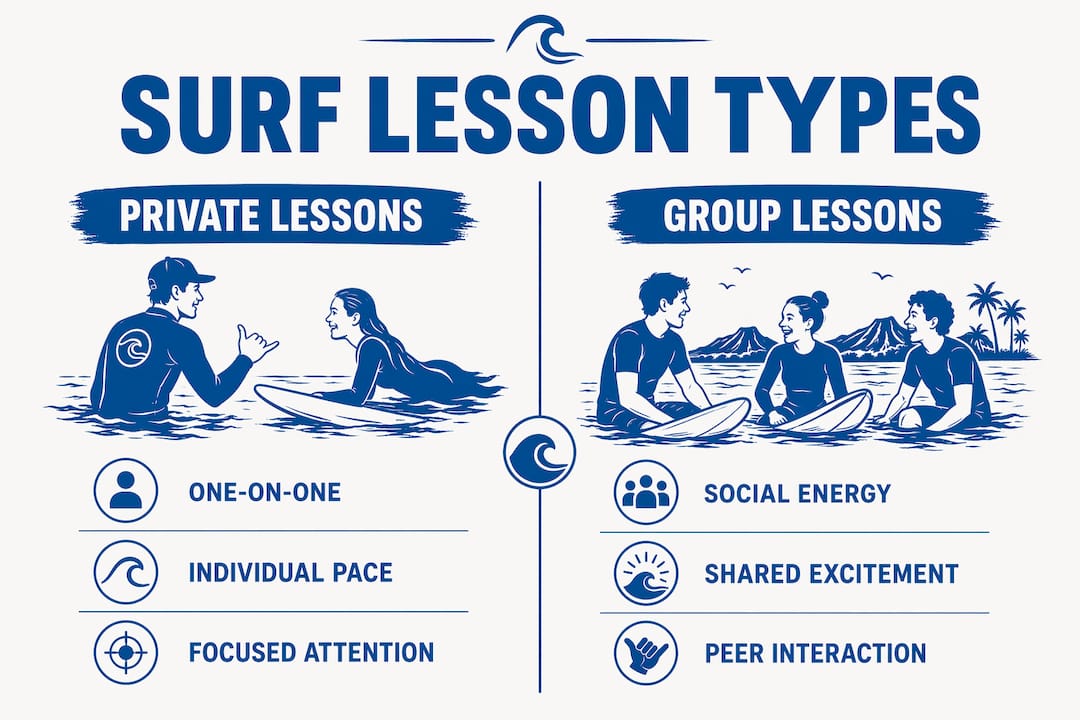
The lesson format you choose shapes your child’s first experience in the water. Private lessons provide focused one-on-one guidance that accelerates confidence and allows the instructor to pace the session entirely around your child’s comfort level. For beginners, shy kids, or children with anxiety around water, private instruction is the stronger starting point.
Group lessons offer social energy and shared excitement, which some children thrive on. The challenge is that group formats spread an instructor’s attention across multiple students. Small group ratios of 6–8 students per instructor are standard for safety, but even that means your child receives a fraction of the feedback a private session delivers.
| Format | Best for | Key benefit | Watch out for |
|---|---|---|---|
| Private lesson | First-timers, nervous kids | Tailored pacing and full attention | Higher cost per session |
| Group lesson | Social kids with some confidence | Peer motivation and shared fun | Less individual feedback |
| Family lesson | Mixed ages and abilities | Shared experience, cost-effective | Pace set by group average |
A practical approach: start with two or three private lessons to build basic skills and water confidence, then transition to group classes for the social element. Children who enter group lessons already knowing how to pop up and paddle feel far less overwhelmed than those who arrive with zero experience.
- Private lessons suit beginners and nervous children
- Group lessons work best once a child has basic skills
- Instructor-to-student ratio directly affects safety and learning speed
- Family surf lessons can bridge individual and group formats for mixed-age families
What environmental and equipment factors keep young surfers safe?
The beach itself is part of the safety equation. Beginner-friendly conditions include whitewash zones, gentle sandy slopes, and waves under 1 meter (3 feet). Waves at that height are far less intimidating for children and give instructors time to react if a child falls. A school that takes beginners into overhead surf is cutting corners on safety.
Equipment choice matters as much as wave size. Soft-top surfboards, sometimes called foamies, absorb impact and reduce injury risk when a child falls onto the board. Child-sized boards also provide more stability than adult-length boards, which are too long for small bodies to control. A good instructor selects the board, not the parent and not the child.
A structured land lesson before entering the water is a hallmark of professional instruction. Pre-water land lessons cover basic technique, warm-up movements, and ocean safety rules. This prepares children emotionally and physically before they face the unpredictability of the ocean. Schools that skip the land component and walk straight to the water are skipping a critical safety step.
| Safety factor | What to look for |
|---|---|
| Wave height | Under 1 meter (3 feet) for beginners |
| Board type | Soft-top, child-sized surfboard |
| Beach slope | Gentle, sandy, no rocks or reef |
| Lesson structure | Land warm-up before water entry |
| Tidal awareness | Instructor adjusts location based on tide |
Qualified instructors also read tidal and weather conditions before every session. They move the lesson spot when conditions shift. If a school runs lessons in the same spot regardless of tide or wind, that is a red flag worth taking seriously.
Pro Tip: Visit the beach before booking. If the waves look powerful or the shore is rocky, ask the school specifically where beginner kids’ lessons take place. The answer tells you a lot.
What is the role of parents during their child’s surf lessons?
Parents play a supporting role, not a directing one. A calm, encouraging presence from the shoreline gives children confidence without creating pressure. Standing at the water’s edge shouting instructions or corrections undermines the instructor and adds anxiety to an already stimulating environment.
Trust the instructor’s pacing. A child who refuses to stand up in the first lesson is not failing. Fear management and emotional calm are critical for long-term surfing success in kids. Pushing a child past their comfort zone in early lessons creates negative associations that take much longer to undo than the time saved by rushing.
Celebrate small wins that have nothing to do with technique. Your child paddled out without crying. Your child laughed when a wave knocked them over. Your child asked to go back in. These moments matter more than whether they stood up on the board. The emotional benefits of surf lessons compound over time when children associate the ocean with fun rather than pressure.
- Stay on the shore and cheer, not coach
- Avoid comparing your child’s progress to other kids in the group
- Let the instructor decide when your child is ready to try something new
- Ask the instructor for a brief update after the session, not during it
- Resist the urge to book extra lessons before your child asks for them
Step-by-step guide to selecting the best kids surf school
Choosing the right school takes about 30 minutes of research and a few direct questions. Follow this sequence and you will avoid the most common mistakes parents make.
-
Search for schools with verifiable reviews. Look for Google reviews, TripAdvisor listings, or parent forums that mention specific instructors by name. Generic five-star reviews with no detail are less useful than a review that says “our instructor kept the ratio to four kids and adjusted the lesson when my daughter got nervous.”
-
Confirm instructor certifications before anything else. Ask directly: “Do your kids’ instructors hold ISA or ASI certification, and do they carry current CPR and First Aid credentials?” A school that cannot answer clearly has not prioritized this.
-
Ask about student-to-instructor ratios. The industry standard sits at 6–8 students per instructor for group lessons. For kids under eight, smaller is better. If a school runs ten children with one instructor, walk away.
-
Request safeguarding policies in writing. Any school working with minors should have a documented policy covering supervision rules, communication consent, and media use. This is not paranoia. It is standard practice.
-
Call or visit the school before booking. A phone call reveals a lot. Is the person who answers knowledgeable? Do they ask about your child’s age, experience, and comfort level? Or do they just quote prices? Schools that ask questions about your child before you ask questions about them are the ones worth trusting.
-
Book private lessons for first-timers. Once your child has two or three sessions under their belt, consider transitioning to a group surf lesson for the social experience. Starting private removes the pressure of performing in front of peers.
- Check if the school adapts lessons to weather and tide conditions
- Confirm that soft-top boards are available in child-appropriate sizes
- Ask whether a land warm-up is part of every session
- Verify that the school has a clear emergency response plan on the beach
Key Takeaways
Choosing a certified, child-focused surf instructor with dual safety credentials and a low student-to-instructor ratio is the single most important decision parents make before their child’s first lesson.
| Point | Details |
|---|---|
| Dual certification is non-negotiable | Instructors must hold surf accreditation plus current CPR and First Aid credentials separately. |
| Private lessons first | First-timers and nervous children learn faster and safer with one-on-one instruction before joining groups. |
| Environment shapes safety | Beginner lessons belong in whitewash zones with waves under 1 meter and soft-top boards. |
| Parental role is support, not coaching | Calm encouragement from the shore builds confidence; interference from the water’s edge creates anxiety. |
| Safeguarding policies protect your child | Ask for written policies on supervision, communication, and media consent before booking any school. |
What I’ve learned watching parents choose the wrong instructor
Most parents focus on price and location. Those are the last two things that should drive this decision. I have watched children leave the water shaking because an instructor pushed them into a wave they were not ready for. I have also watched a shy seven-year-old walk out of her first lesson beaming because her instructor spent the entire session in knee-deep water, never once pressuring her to stand.
The difference between those two outcomes was not the beach, the board, or the wave. It was the instructor’s understanding that emotional safety comes before technique. The best instructors monitor a child’s mental state as closely as their physical position on the board. That skill does not come from enthusiasm. It comes from specific training and experience with children.
The uncomfortable truth is that many surf schools hire enthusiastic surfers who are great in the water but have no background in child development or teaching. Certification from ISA or ASI does not guarantee a great instructor, but it does set a floor. Below that floor, you are taking a risk with your child’s relationship with the ocean. That relationship, once damaged by a bad experience, takes real time to rebuild.
My advice: visit the school in person if you can. Watch how instructors interact with children who are not their students. Do they crouch down to eye level? Do they smile and explain rather than demonstrate and expect? Those small behaviors reveal whether a person understands how children learn. No review site captures that. Your own eyes will.
— Johann
Hhsurf’s approach to certified kids surf instruction
Hhsurf, the Hans Hedemann Surf School in Waikiki, pairs children with certified instructors who hold lifeguard and CPR training alongside their surf teaching credentials. Every session begins with a land warm-up covering technique and safety before any child enters the water.
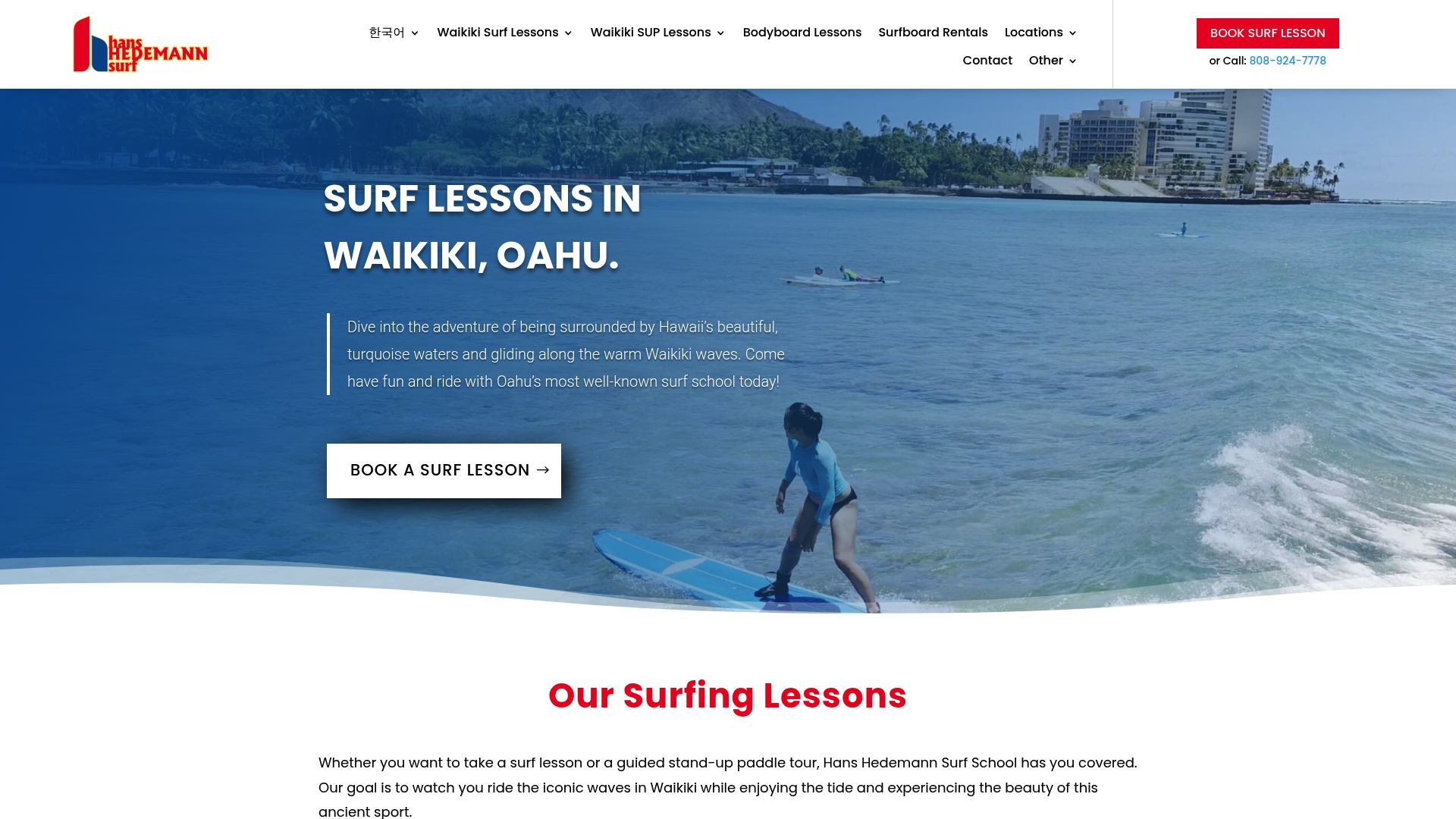
Parents can choose between private kids surf lessons for first-timers who need one-on-one attention and group formats for children ready to share the experience with peers. Hhsurf’s kids surf lessons are built around low student-to-instructor ratios, child-sized soft-top boards, and Waikiki’s gentle whitewash conditions. The school’s track record of getting children standing on their boards within a single lesson reflects a teaching method that prioritizes confidence as much as technique.
FAQ
What certifications should a kids surf instructor hold?
A qualified kids surf instructor holds surf teaching accreditation from ISA or ASI plus separate current CPR, First Aid, and lifeguard certification. These are distinct credentials, and parents should confirm both before booking.
Are private surf lessons better than group lessons for children?
Private lessons are the better starting point for beginners and nervous children because they offer one-on-one pacing and emotional reassurance. Group lessons work well once a child has basic skills and water confidence.
What wave conditions are safe for kids learning to surf?
Beginner kids’ surf lessons should take place in whitewash zones with waves under 1 meter (3 feet) and a gentle sandy slope. These conditions give instructors time to respond and reduce the physical and emotional impact of falls.
How should parents behave during their child’s surf lesson?
Parents should stay on the shore, cheer without coaching, and trust the instructor’s pacing. Over-involvement from the water’s edge creates anxiety and undermines the instructor’s authority.
What safeguarding policies should a surf school have for children?
A child-safe surf school maintains written policies covering no unsupervised one-on-one contact with minors, no unauthorized electronic communication, and parental consent for travel or media use. Ask for these policies in writing before enrolling your child.
0 Comments