
Budget roughly US$90 to US$190 per person for a Waikiki family surf lesson, with private or family-style bookings at the higher end and group classes at the lower end. Families with kids under 8 or nervous first timers should book a private or family lesson so an instructor can work tandem with each child. Older kids who can already swim confidently do fine in a group lesson, which stretches the vacation budget further. Either way, book a family lesson a few days ahead once you land in Honolulu.
TL;DR:
- Private and family lessons cost $150 to $190 per person, but flat-rate family packages may be cheaper for groups of three or more.
- Group lessons range from $90 to $140 per person, suitable for confident teenagers and adults, but less ideal for nervous children under 8.
- Booking in the morning during peak seasons ensures calmer water, better light, and increased chances for children to stand up.
- Smaller classes and tandem starts are recommended for very young children or hesitant swimmers to maximize safety and confidence-building.
- Ensuring the instructor-to-student ratio is 1:1 or 1:2 improves safety and learning effectiveness, especially for kids under 8.
Table of Contents
- How Much Does a Family Surf Lesson Cost in Waikiki?
- What’s Actually Included in a Waikiki Surf Lesson?
- How Do You Pick the Right Lesson Format for Your Kids?
- Are Waikiki Surf Lessons Safe for Young Kids?
- When Should You Book to Save Money?
- What Instructors Notice About Kids Learning to Surf
- What Families Get Wrong About Surf Lesson Pricing
- Book a Family Lesson That Fits Your Kids, Not Just Your Budget
- Sources
How Much Does a Family Surf Lesson Cost in Waikiki?
Prices swing based on how much individual attention your family needs, and the gap between options is bigger than most first-time visitors expect.
Group lessons typically cost roughly US$90 to US$140 per person. You share an instructor with several other students, which keeps the price down but means less hands-on coaching for a nervous 6-year-old. These work best for teenagers and adults who are reasonably comfortable in the water.
Small-group or semi-private lessons typically range from about US$120 to US$170 per person. You get a smaller class, usually three or four students per instructor instead of six or eight, which translates into more wave time and faster correction on technique. Families with one confident swimmer and one hesitant one often land here as a compromise.
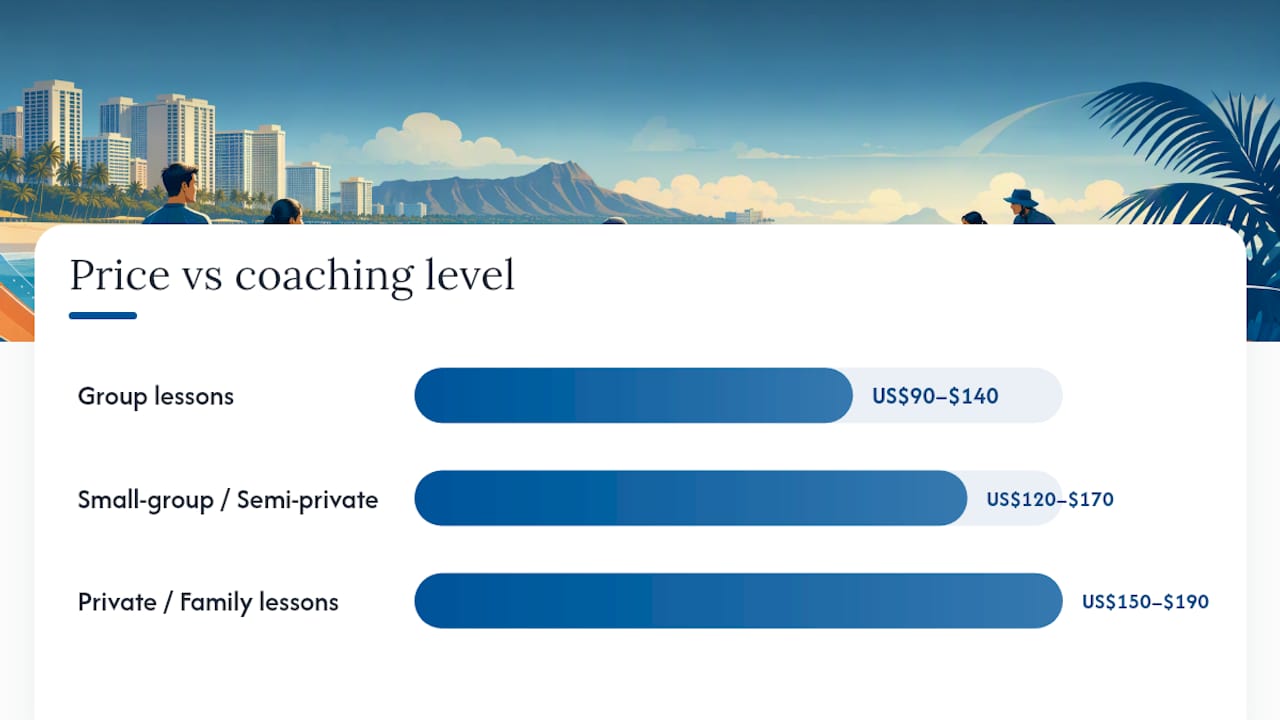
Private and family lessons typically run $150 to $190 or more per person, though several Waikiki operators structure family bookings as a flat rate instead. One well-known example: a 1-hour family lesson priced around $110 total and a 2-hour version around $145 total, regardless of how many family members join. That flat structure can make private instruction cheaper per person than a standard group class once you have three or four people in your party.
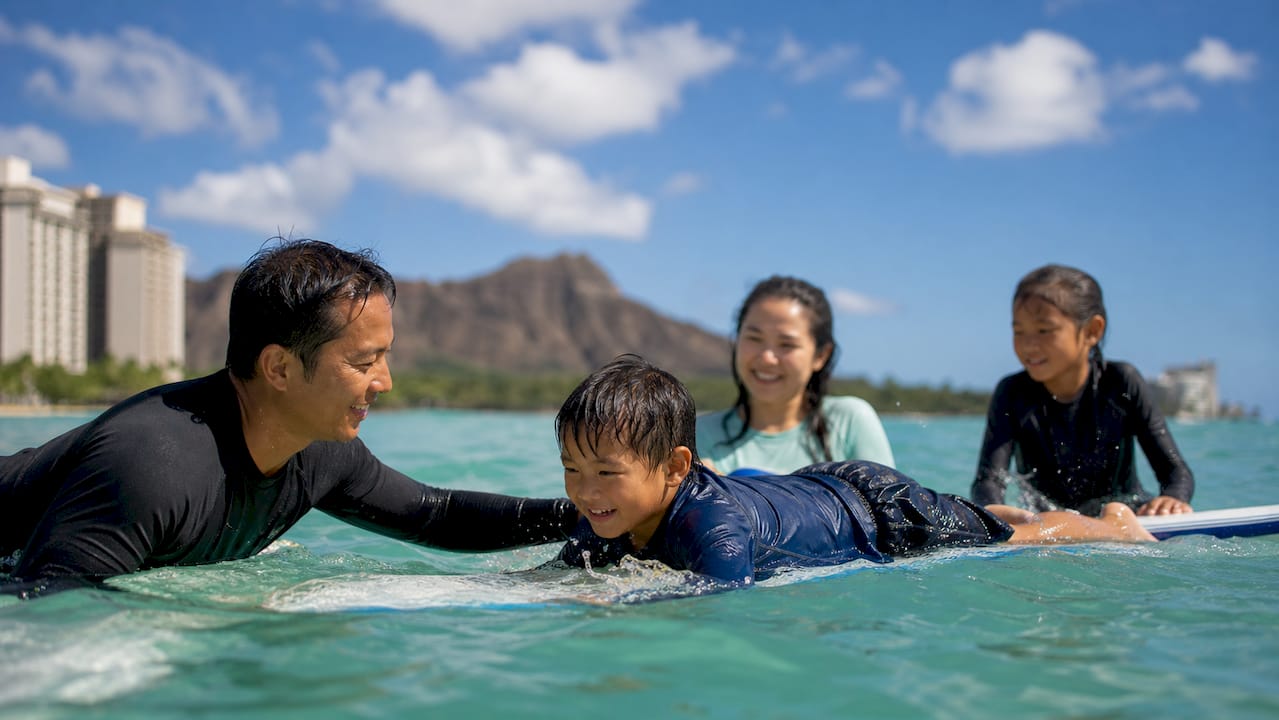
Multi-day packages typically start from roughly US$250 and up, suitable if your family wants to progress from standing up once to riding waves independently by trip’s end.
What pushes a price up or down:
- Instructor-to-student ratio (lower ratio, higher price)
- Lesson length (most run 1.5 to 2 hours)
- Hotel pickup and drop-off
- Professional photo or video add-ons
- Season, with summer and holiday weeks commanding premium rates
What’s Actually Included in a Waikiki Surf Lesson?
A standard lesson follows a predictable sequence, and knowing the flow helps you judge whether a quoted price is fair.
- Land demonstration. Your instructor walks through paddling position, the pop-up motion, and basic balance before anyone touches water.
- Sand practice. Kids rehearse the pop-up on dry sand until the movement feels automatic, which cuts down on wipeouts once you’re actually in the whitewash.
- In-water coaching. The instructor pushes each student into small, breaking waves and calls out timing cues from alongside or behind the board.
- Wrap-up and feedback. A short debrief on what worked, plus tips for continuing to practice if you rent a board afterward.
Most Waikiki schools include a soft-top beginner board, a leash, and sometimes a rash guard in the base price, since soft-tops and basic gear are standard inclusions rather than upsells. A wetsuit top for kids who get cold easily is sometimes offered as an extra. Beyond the lesson itself, common add-ons include professional photo or video packages (parents often find these worth the cost since it frees them up to actually watch, rather than fumble with a phone from the beach) and extended board rentals for unsupervised practice, which typically run $20 to $40 for a couple of hours.
How Do You Pick the Right Lesson Format for Your Kids?
The right format depends less on your budget and more on your kids’ age, swimming ability, and what you actually want out of the day.
- Age 4 to 7: Go private or family style. Many schools use tandem starts for very young children, meaning the instructor rides the board with the child on the first few waves, and group lessons often set a minimum age around 13 for exactly this reason.
- Age 8 to 12 with decent swimming skills: A small-group or semi-private lesson usually works, giving enough individual coaching without paying full private rates.
- Teens and confident swimmers: Standard group lessons are fine and the most economical option for the whole family.
- Mixed-ability families: A private or family lesson lets the instructor split attention across skill levels within one booking rather than scattering your group across different classes.
Before you book, ask the school directly about their instructor ratio, whether tandem starts are offered for young kids, their minimum age policy, and their cancellation terms for rough surf days. Private lessons are worth the extra cost specifically when a child is anxious about open water, since one-on-one reassurance in the first ten minutes often determines whether the rest of the lesson goes well.
Pro Tip: If your family has one confident surfer and one total beginner, ask about splitting into a semi-private lesson instead of booking two separate classes. It’s often the same total cost with better coaching for the beginner.
Are Waikiki Surf Lessons Safe for Young Kids?
Waikiki is genuinely one of the more forgiving places in the world to learn, mostly because of its geography rather than any one school’s policy. The reef sits far offshore, waves break gently and consistently, the bottom is mostly sand, and lifeguard towers dot the beach.
That said, structure matters as much as location. Look for:
- A stated instructor-to-student ratio, ideally 1:1 or 1:2 for kids under 8
- Tandem-start options for children who aren’t confident swimmers
- Age minimums that match your child’s actual water comfort, not just their birthday
- Reef-safe sunscreen, since regular sunscreen is restricted in Hawaii’s coastal waters
- Swimwear that stays put during wipeouts (rash guards help beyond sun protection)
- Water and shade for younger siblings waiting on the beach
Families managing a trip with young kids often find it worth reviewing travel insurance options that cover activity-related mishaps, especially if this is the first time everyone’s getting in the water together.
When Should You Book to Save Money?
- Book morning slots. Waikiki’s wind picks up in the afternoon, so morning lessons mean calmer water and better conditions for beginners, plus better light if you’re adding photos.
- Reserve ahead in peak season. Summer break and major holidays fill instructor calendars fast, and last-minute bookings often mean a worse time slot or a sold-out school.
- Compare per-person quotes against flat family rates. A flat-rate family lesson can beat per-person group pricing once you have three or more people.
- Ask directly about family package pricing rather than assuming the listed per-person rate is your only option.
- Decide on photo or video add-ons before you book, since bundling them upfront is often cheaper than adding them the day of your lesson.
- Read the cancellation and weather policy before paying. Wind and surf conditions change fast, and a school with a flexible reschedule policy saves you from losing a nonrefundable deposit.
What Instructors Notice About Kids Learning to Surf
shapes how lessons get structured for keiki at Hans Hedemann Surf School, where the emphasis stays on short tandem starts, steady confidence-building, and safe progression rather than rushing kids into bigger waves before they’re ready.
Most families see a real shift within a single 1 to 2 hour lesson: a nervous 6-year-old who wouldn’t paddle out alone in the first ten minutes is often standing, even briefly, by the end. That’s not magic. It comes from breaking the pop-up into small, repeatable steps on sand before ever pushing a kid into whitewash, which is the backbone of the teaching approach here.
What Families Get Wrong About Surf Lesson Pricing
Most advice about Waikiki surf lessons treats price like the only variable that matters, and that’s backwards. The bigger risk isn’t overpaying. It’s underpaying for a big group class when your kid needed one-on-one tandem support, then watching the whole family’s morning turn into a frustrated 7-year-old refusing to get back in the water.
The conventional wisdom says “shop around for the cheapest group rate.” Better advice: match the lesson format to your specific kid first, then compare prices within that format. A private lesson at $170 that gets a scared 5-year-old standing on a wave is worth more than a $95 group class where that same kid spends the hour clinging to the instructor’s leg.
If I’m prioritizing anything for a first-time surf family, it’s the instructor ratio and tandem policy, not the sticker price. Ask about both before you ask about cost. The families who leave happiest are the ones who picked the right format, not the cheapest one.
— Johann
Book a Family Lesson That Fits Your Kids, Not Just Your Budget
Hans Hedemann Surf School built its family lessons around one goal: getting every kid, even the nervous ones, standing on a wave in their first session, using a proven teaching method refined over years of working with beginners of every age. Instructors keep ratios tight and use tandem starts for younger children, so parents aren’t gambling on a crowded group class when their kid needs real one-on-one attention.
Beyond the standard family lesson, you can add professional photo or video coverage so you’re not stuck filming from the sand, book a private lesson for an especially cautious child, or check the kids-specific program for age-tailored pacing. Before booking, confirm your child’s age against the school’s tandem and minimum-age policy, and ask about the cancellation window in case surf or weather shifts your plans.
Ready to lock in a date? Reserve your family surf lesson now, ideally a few days before your trip, so you get first choice of morning time slots when the water’s calmest and the light’s best for photos.
Sources
- Waikiki Surf Lessons (2026): Best Schools, Prices, And What To Expect – Waikiki Beach
- Waikiki Surf Lessons | Tailored for All Ages & Abilities
- Surf Lessons in Waikīkī: Prices, Tips, and What to Expect (2026)
0 Comments