
A family surf lesson is a professionally guided session where parents and children learn to surf together, using age-appropriate instruction, proper equipment, and hands-on coaching from certified instructors. Unlike a solo lesson, it is built around group dynamics, safety protocols, and the shared goal of getting every family member standing on a board. Schools like Hhsurf in Waikiki have refined this format to work for complete beginners, including kids as young as five and parents who have never touched a surfboard. The result is a structured, safe, and genuinely fun experience that doubles as one of the most memorable activities a family can share on vacation.
What does a family surf lesson actually look like?
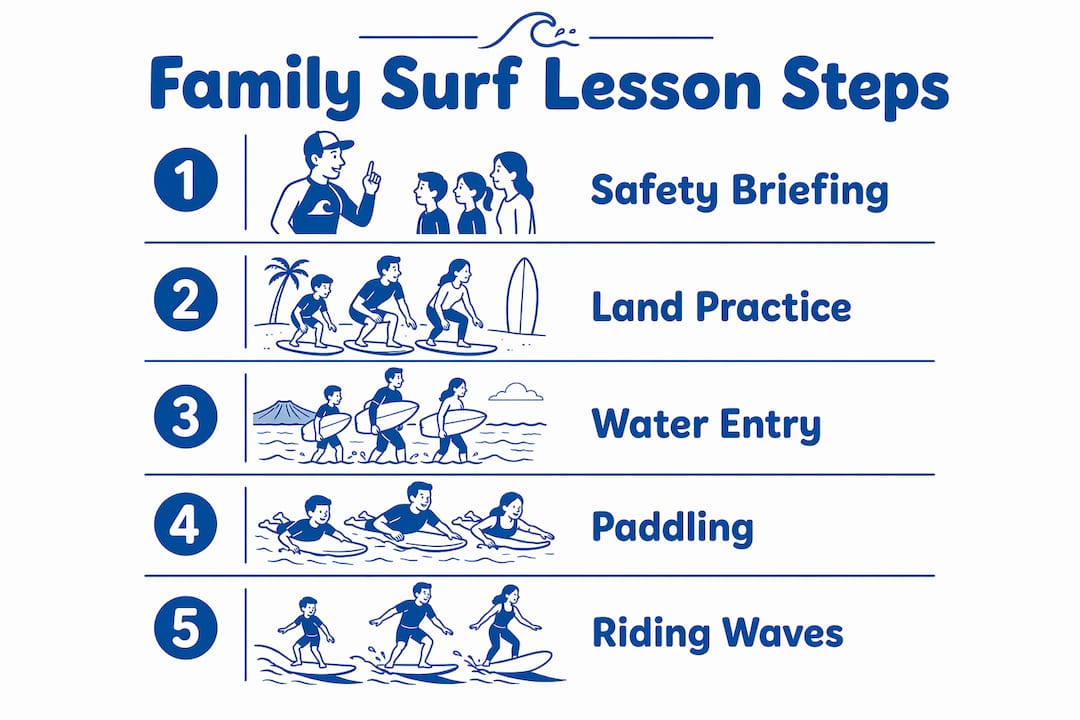
A family surf lesson follows a clear progression: safety briefing, land practice, water entry, paddling, and finally riding small waves. That structure is not accidental. It mirrors how professional surf schools worldwide teach beginners, and it works because each step builds on the last.
The session typically runs between 60 and 120 minutes, with many schools recommending the shorter end of that range for younger children to keep energy and attention high. Fatigue is the enemy of progress in the water, so pacing matters as much as technique.
The land phase: where real learning starts
The lesson almost always begins on the sand, not in the ocean. Instructors walk families through the “pop-up” movement, which is the motion of going from lying flat on the board to standing in one fluid push. Land-based pop-up drills prepare beginners physically and mentally, greatly increasing the chance of a successful first wave ride. Ten to fifteen minutes of this practice on stable ground removes the panic of trying to figure out the movement while a wave is already moving under you.
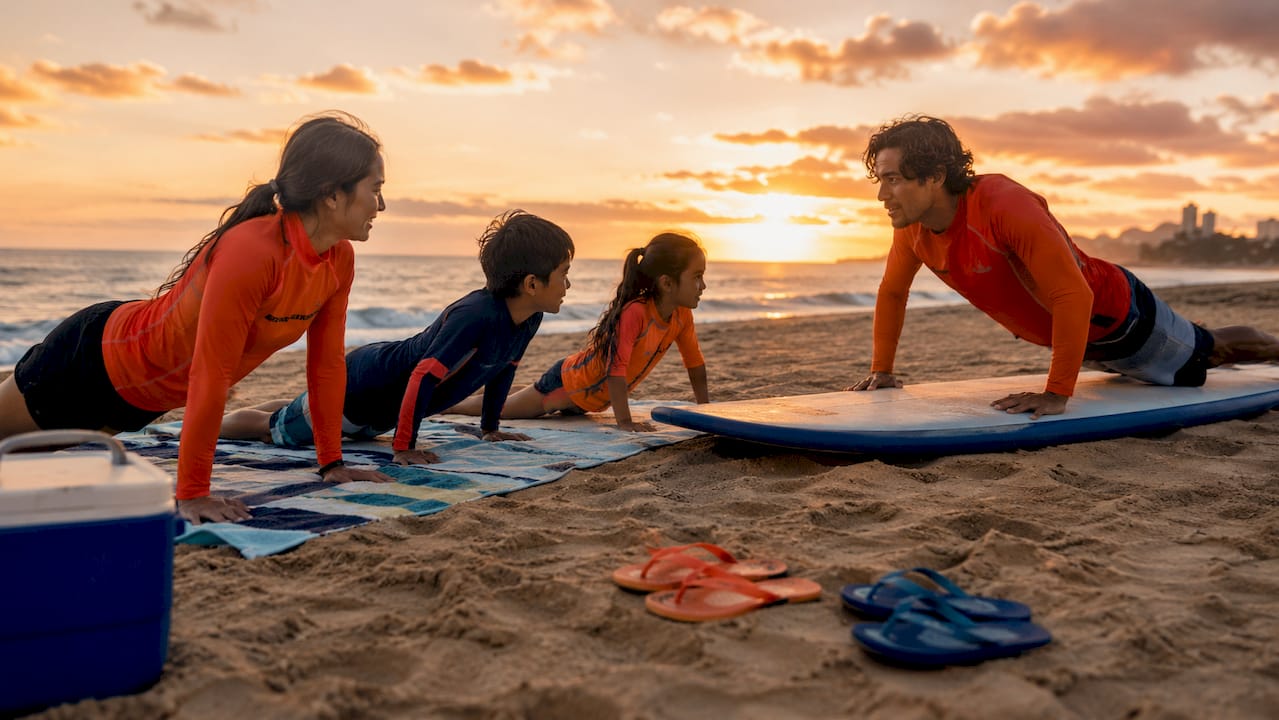
Pro Tip: Practice the pop-up at home the night before your lesson. Lay a towel on the floor, lie face down, and practice jumping to your feet in one motion. Kids love it, and it gives everyone a head start.
Group vs. private lessons for families
The choice between a group lesson and a private session shapes the entire experience. Group lessons give kids the social energy of learning alongside other beginners, which reduces self-consciousness and adds a competitive spark. Private lessons give instructors the flexibility to slow down for a nervous six-year-old or push a confident teenager further in the same session. Families with a wide age range, say a seven-year-old and a fourteen-year-old, often get more from a private format because the instructor can split attention without losing anyone.
- Safety briefing covers ocean awareness, wave reading, and how to fall safely.
- Equipment introduction matches each family member to the right board and gear.
- Pop-up practice on the sand builds muscle memory before water entry.
- Paddling and positioning in shallow water teaches balance and board control.
- Wave riding starts with instructors pushing beginners into small, gentle waves.
How do you prepare your family for a surf lesson?
Preparation separates a great lesson from a frustrating one. The single most important prerequisite is swimming competence. Children can start surfing between ages 5 and 7 if they are comfortable in the water and can swim independently. That threshold exists for safety, not gatekeeping. A child who panics in water will not learn to surf; they will spend the lesson being rescued.
Beyond swimming ability, a few practical steps make the day go smoothly:
- Choose the right beach. Sandy bottom beaches with lifeguards and gentle, predictable waves are the correct choice for beginner families. Rocky bottoms and strong currents belong to experienced surfers.
- Establish hand signals before entering the water. Visual boundaries and agreed-upon hand signals improve safety because shouting is ineffective in a noisy ocean environment. A raised fist can mean “stop,” a wave of the hand can mean “come in.” Decide these with your kids before the lesson starts.
- Dress for the water, not the beach. Rash guards are standard in most professional lessons and protect against sunburn and board friction. Wetsuits depend on water temperature.
- Limit sun exposure before the lesson. Kids who arrive already tired or sunburned will struggle to focus. Arrive fresh, hydrated, and with sunscreen already applied.
- Share accurate measurements with your instructor. Providing your child’s age, height, and weight lets instructors select the right board volume. Incorrect board volume is one of the main reasons beginners fail to catch waves, leading to fatigue and frustration within the first twenty minutes.
Pro Tip: Call or email your surf school the day before and confirm the lesson location, parking, and what to bring. Conditions can shift, and a quick check prevents showing up at the wrong beach.
What equipment do families need for surf lessons?
Equipment is almost always included in a professional family surf lesson booking, but knowing what you are getting and why it matters helps you make better decisions.
| Equipment | Why it matters for families | Ideal spec for beginners |
|---|---|---|
| Soft-top surfboard | Foam construction reduces injury risk on falls | Longer and wider for more stability |
| Rash guard | Prevents sunburn and friction from the board | Long sleeve for kids, short sleeve for adults |
| Wetsuit | Warmth in cooler water; optional in Hawaii | 2mm–3mm thickness for most conditions |
| Leash | Keeps the board attached after a wipeout | Matched to board length |
Soft-top surfboards and rash guards are standard in professional family surf lessons for exactly the right reasons. Foam boards are forgiving when a child falls and lands on the board, and their extra volume makes it easier to paddle and balance. Schools like Hhsurf include all of this equipment in their lesson packages, so families do not need to rent or buy anything separately.
Board size is not one-size-fits-all. A seven-year-old weighing 55 pounds needs a very different board than a 180-pound adult. Matching board volume to the user’s profile is the difference between catching waves easily and paddling exhausted for an hour without standing up once. Always share exact measurements when booking.
How do surf lessons create lasting family memories?
The emotional payoff of a family surf lesson goes well beyond the physical skill. Family surf lessons foster resilient memories by providing shared challenges that differ completely from everyday routines. That difference is what makes the memory stick. A child who watches their parent fall off a board and laugh about it learns something that no classroom can teach.
“Shared learning challenges result in permanent, emotionally rich memories. The experience models resilience to children in a way that everyday routines simply cannot replicate.” — Family Travel and Childhood Memories
The concept here is sometimes called “script-breaking.” When families step outside their normal roles, the parent who always has the answers is suddenly a beginner too, and something shifts. Kids see their parents try, fail, and keep going. That models resilience more powerfully than any conversation about it.
Parents actively learning alongside kids creates a positive dynamic and normalizes trying and failing as part of growth. The best family surf experiences remove pressure to perfect the skill. They focus on individual progress in a supportive setting. Hhsurf instructors are trained to read the room, slow down for nervous beginners, and celebrate small wins loudly. That atmosphere turns a two-hour lesson into a story families tell for years.
Key Takeaways
A family surf lesson works best when every member arrives prepared, matched to the right equipment, and focused on fun over perfection.
| Point | Details |
|---|---|
| Lesson structure matters | Sessions follow a clear arc: safety briefing, land drills, water entry, and wave riding. |
| Age and swimming ability | Children as young as 5 can participate if they are competent, confident swimmers. |
| Equipment is included | Professional schools provide soft-top boards and rash guards; share exact measurements when booking. |
| Beach selection is critical | Choose sandy bottom beaches with lifeguards and small, predictable waves for beginner safety. |
| Memory over mastery | The shared challenge of learning together builds resilience and creates lasting family bonds. |
Why I think most families get surf lessons wrong
Most families treat a surf lesson like a theme park ride. They show up, expect to be entertained, and measure success by whether the kids stood up on the board. That mindset misses the point entirely.
The real value of a family surf lesson is what happens between the waves. It is the moment a parent wipes out and their eight-year-old laughs so hard they fall off their own board. It is the quiet pride on a kid’s face when they paddle out further than they thought they could. Those moments do not happen if you are standing on the beach watching.
Get in the water. Take the lesson with your kids, not for them. I have seen parents sit out because they were embarrassed to be beginners, and they always regret it. The instructors at schools like Hhsurf are professionals who have taught thousands of first-timers. They will not judge you. They will get you standing on a board faster than you think possible.
The other mistake families make is chasing perfect conditions or the “right” age. The right age is when your child can swim. The right conditions are whatever the school recommends for that day. Trust the instructors. They know the water, the waves, and how to read a nervous beginner. Your job is to show up, follow directions, and let yourself be a student for two hours. That is harder than it sounds for most adults, and it is exactly what makes the experience worth it.
— Johann
Book your family surf lesson with Hhsurf in Waikiki
Hhsurf offers both private and group family surf lessons in Waikiki, taught by certified professional surfers with a track record of getting complete beginners standing on their first lesson. Every booking includes soft-top surfboards and rash guards, so you arrive and surf. No gear shopping required.
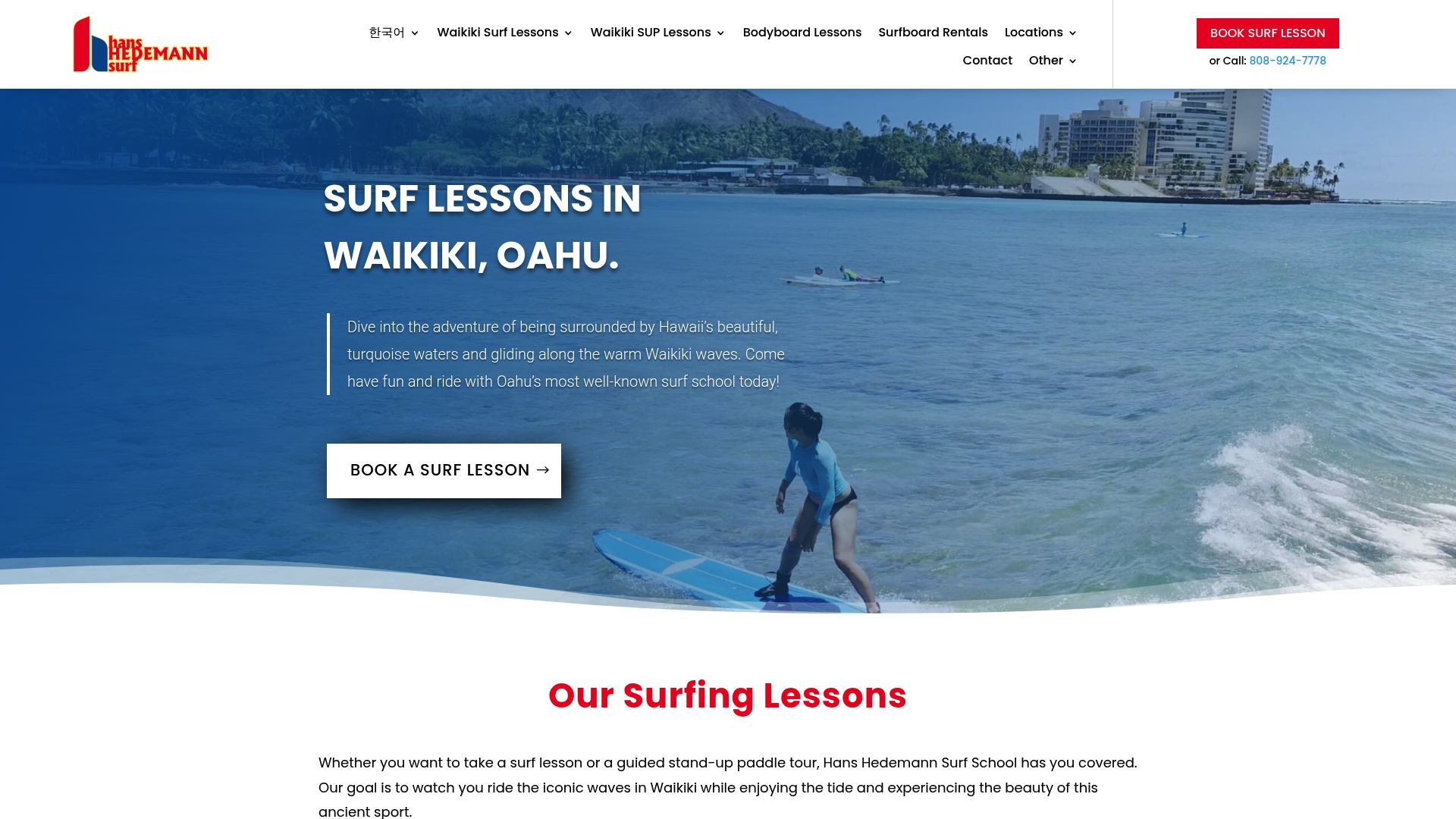
Hhsurf’s instructors are trained in beach safety, ocean reading, and age-appropriate coaching. Whether your family has a five-year-old taking their first lesson or teenagers ready to push further, the school has a format that fits. Waikiki’s warm, clear water and gentle waves make it one of the best places in the world to learn. Book your kids’ lesson or a full family session directly on the Hhsurf website and lock in your spot before your vacation dates fill up.
FAQ
What age can kids start taking surf lessons?
Children can typically start surfing lessons between ages 5 and 7, provided they are competent swimmers and comfortable in the ocean. Swimming ability matters more than age alone.
How long does a family surf lesson last?
Most family surf lessons run between 60 and 120 minutes. Shorter sessions of 60–90 minutes are recommended for younger children to prevent fatigue and keep engagement high.
Do families need to bring their own surfboards and gear?
No. Professional surf schools include soft-top surfboards and rash guards in their lesson packages. Wetsuits may be available depending on water temperature and location.
What kind of beach is safest for a beginner family surf lesson?
Sandy bottom beaches with lifeguards on duty and small, gentle waves are the safest choice for families with beginners. Avoid rocky shorelines and beaches with strong currents.
Can parents and kids take the same surf lesson together?
Yes. Family surf lessons are specifically designed for mixed ages and skill levels. Local-certified instructors who know the specific beach adapt coaching to each person, making it possible for a parent and a seven-year-old to learn side by side in the same session.
0 Comments