
A fast track surf lesson is a one-on-one coaching session designed to accelerate surfing skill by eliminating the downtime and divided attention that slow progress in group classes. Private instruction lets students catch twice as many waves per hour compared to group formats, because there are no wave rotations and no shared instruction time. Surfing is about 70% muscle memory and 30% ocean awareness, which means the more repetitions you get in a session, the faster your body learns. Hhsurf, based in Waikiki, builds its entire teaching method around this principle, getting beginners to stand up and ride waves within their very first lesson.
What is a fast track surf lesson, and how does it differ from group lessons?
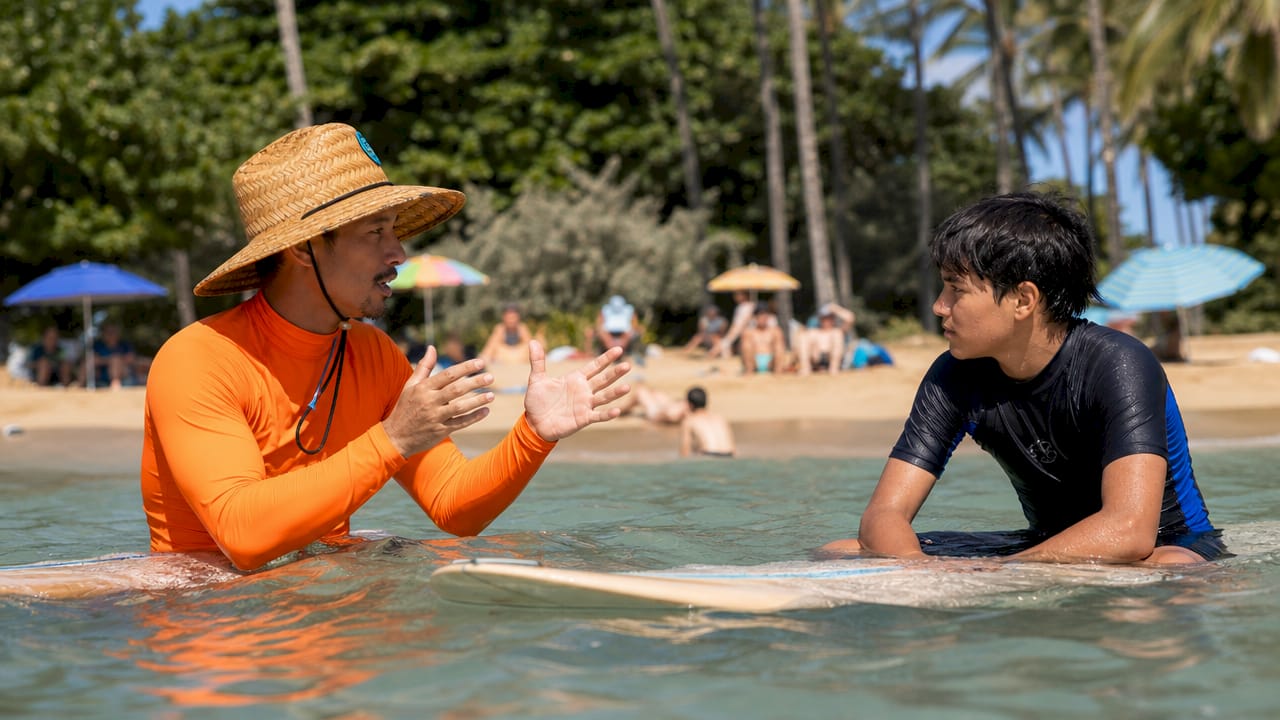
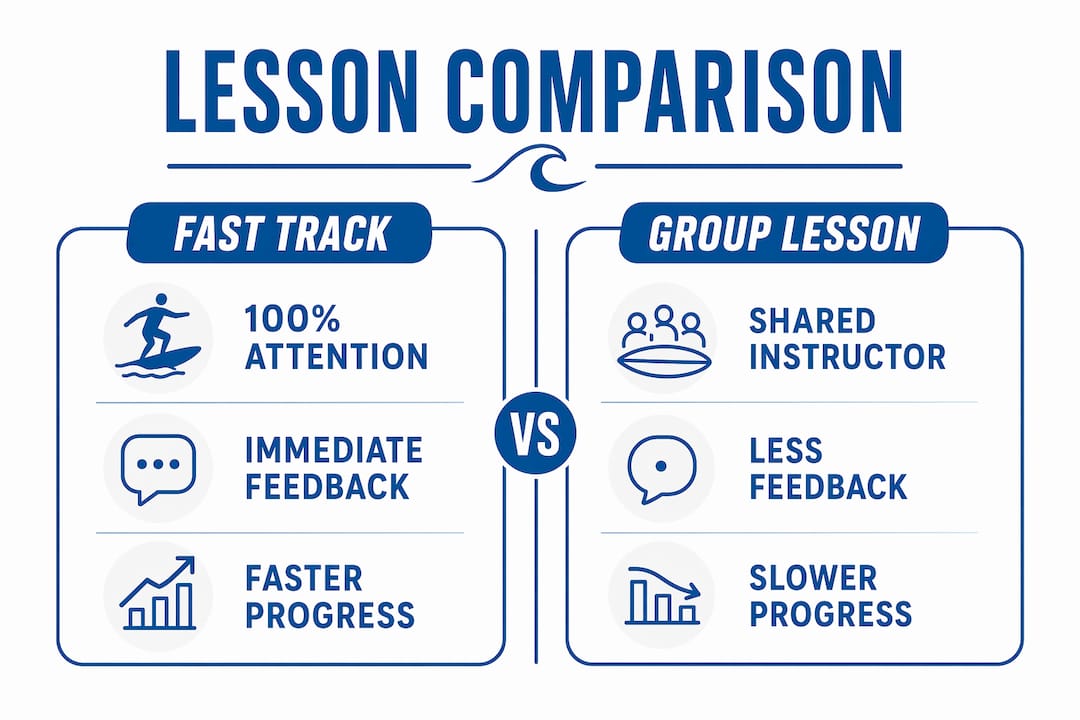
Group surf lessons split one instructor across 6 to 8 students. That structure means 80 to 90% of your time is spent waiting, watching, or treading water while the instructor helps someone else. A fast track lesson removes that bottleneck entirely.
Private coaching focuses 100% of the instructor’s attention on you. Every wave you catch gets an immediate correction. Every mistake gets fixed before it becomes a habit. That feedback loop is what drives the 3 to 5 times faster learning rate that private sessions consistently produce.
Here is a direct comparison of the two formats:
| Feature | Fast track (private) lesson | Standard group lesson |
|---|---|---|
| Instructor attention | 100% on you | Shared across 6–8 students |
| Waves caught per hour | Significantly more | Limited by rotation |
| Feedback timing | Immediate, wave by wave | Delayed or general |
| Skill progression speed | 3–5x faster | Standard pace |
| Best for | Beginners, shy learners, busy schedules | Social learners, budget-conscious |
The cost difference is real, but so is the value gap. A beginner who books three private sessions often reaches the same skill level as someone who attends eight or more group classes. That math changes the conversation about which format is actually more efficient.
Pro Tip: Book your first lesson as a private session even if you plan to join group classes later. The foundation you build in one focused hour will make every group session more productive.
The other hidden cost of group lessons is confidence. Beginners who struggle in front of strangers often hold back, take fewer risks, and learn slower as a result. Private lessons remove that social pressure entirely.
What happens during a fast track surf lesson?
A well-structured accelerated lesson follows a clear sequence. Each phase builds directly on the one before it.
-
Warm-up and ocean safety briefing. The session starts on the beach with a quick physical warm-up and a safety overview covering rip currents, board control, and wave etiquette. This takes roughly 10 minutes and sets the tone for the water work ahead.
-
Land-based pop-up drills. The instructor runs you through high-repetition pop-up drills on the sand for 10 to 15 minutes. These drills build the neural pathways your body needs to pop up automatically in the water, without thinking. Doing this on dry land reduces fatigue and panic when real waves arrive.
-
In-water coaching with live feedback. You paddle out with your instructor, who positions you correctly on the board, selects the right waves for your skill level, and gives real-time corrections after every ride. Foot placement, gaze direction, and paddling technique all get addressed on the spot.
-
Wave-by-wave adjustments. Unlike group lessons where feedback comes in batches, your instructor adjusts your technique after each attempt. This is the core of what makes the format work. Small corrections compound quickly over a one-hour session.
-
Cool-down and debrief. The session ends with a short debrief on what you did well and what to focus on next. This sets up your next lesson with clear goals rather than vague impressions.
Pro Tip: Wear sunscreen before you arrive and bring a water bottle. Dehydration and sunburn are the two most common reasons beginners feel worn out after their first session, not the surfing itself.
Video analysis often enters the picture in follow-up sessions. Watching yourself surf from the beach reveals errors that feel invisible from the board, like a dropped shoulder or a late pop-up. That outside perspective accelerates correction in ways that self-perception simply cannot.
Who benefits most from fast track surf lessons?
Not every learner needs a private session, but certain groups gain a clear advantage from the format. Fast track lessons are popular among couples, families, executives, and shy learners who want privacy and faster skill gain.
The format works especially well for:
- Beginners with limited time. Visitors to Oahu or Hawaii who have one or two days to learn get far more from a private session than a group class.
- Shy or anxious learners. The absence of an audience removes a major psychological barrier to trying and failing, which is exactly what learning requires.
- Kids and junior surfers. Younger learners respond strongly to one-on-one attention. Hhsurf’s junior surf programs use private coaching to build technique and water confidence simultaneously.
- Intermediate surfers who have plateaued. Group lessons rarely address the subtle technical errors that stall progress at the intermediate level. Private coaching does.
- Couples and friends. Semi-private lessons for two people still offer far more attention per person than a standard group class.
One lesson is enough to get your first ride. Students typically stand up in their first lesson and catch waves confidently after 3 to 4 private sessions. That first ride builds confidence, but it does not build retention.
Three to five lessons are the recommended minimum for building a solid foundation of skill, ocean awareness, and muscle memory. The gap between lesson one and lesson five is where real surfing ability forms.
How do lessons 2 through 5 accelerate your progress?
The most critical window for skill retention is lessons two through five. This is where video analysis corrects subtle form issues like foot placement and gaze direction that beginners cannot feel on their own.
Lesson one gives you the experience. Lessons two through five give you the skill. The difference is significant. A beginner who stops after one session retains the memory of standing up but loses the muscle pattern within days. A beginner who completes a short series of lessons builds automatic responses that last.
Spacing matters too. Lessons taken two to three days apart allow the body to consolidate what it learned without losing momentum. Longer gaps between sessions reset more of that progress than most beginners expect.
After the initial series, multi-day surf camps offer the next level of structured progression. These programs typically run 4 to 7 days and include two daily surf sessions along with theory workshops and video analysis, with student-to-coach ratios of 2:1 or lower. That intensity produces measurable skill gains in a short period.
Advanced tools that sustain progress after your first lessons
Reaching an intermediate level requires more than repetition. Technical plateaus are real, and they stop many surfers from improving past a certain point.
Video feedback helps intermediate surfers overcome these plateaus by revealing the gap between what they think they are doing and what they are actually doing. That gap is almost always larger than expected. Seeing it on screen creates the motivation and clarity to fix it.
Key tools used in advanced surf progression include:
- Video analysis. Filmed from the beach or water, reviewed with a coach to identify technical errors invisible to the surfer.
- Ocean awareness training. Reading wave sets, understanding break patterns, and choosing the right entry point are skills that only develop with guided practice.
- Mindset coaching. Fear of wipeouts and hesitation on the takeoff are mental barriers that structured coaching addresses directly.
- Tailored progression programs. Top surf skill progression courses on Oahu, including those offered by Hhsurf, build custom session plans based on each student’s current ability and goals.
The intermediate surf techniques guide from Hhsurf covers these tools in depth for surfers ready to move beyond beginner fundamentals. Combining private lessons with structured camp formats is the fastest path from beginner to confident intermediate surfer.
Key Takeaways
A fast track surf lesson is the single most effective format for beginners who want to stand up, ride waves, and build lasting skills in the shortest possible time.
| Point | Details |
|---|---|
| Private coaching accelerates learning | One-on-one instruction produces 3–5x faster skill gains than group lessons. |
| Wave time is the key variable | Private students catch twice as many waves per hour, compounding progress rapidly. |
| One lesson starts you; five build you | A single session delivers your first ride, but lessons 2–5 lock in retention and technique. |
| Video analysis breaks plateaus | Filmed feedback reveals technical errors that feel invisible from the board. |
| Hhsurf specializes in this format | Waikiki-based Hhsurf uses personalized coaching to get beginners riding waves in lesson one. |
What I have learned after watching hundreds of beginners take their first lesson
Most beginners walk into their first surf lesson with the wrong goal. They want to stand up. That is understandable, but it is also the reason so many people leave after one session thinking they have “done surfing.” Standing up is the beginning, not the achievement.
What I have seen work, again and again, is the combination of realistic expectations and a short lesson series. Beginners who commit to three sessions before judging their progress almost always surprise themselves. The ones who judge after one session almost always quit too early.
The other thing most articles do not tell you is that the mental side matters as much as the physical. Hesitation on the takeoff kills more rides than bad technique. Private lessons address this directly because the instructor can read your body language and coach you through the fear in real time. Group lessons cannot do that. There are too many people and not enough eyes.
My honest advice: do not treat your first accelerated lesson as a one-time experience. Treat it as session one of five. Show up to each lesson with one specific thing you want to improve. Write it down before you paddle out. That level of intention, combined with good coaching, is what separates the surfers who progress from the ones who stay stuck in the whitewash.
— Johann
Hhsurf’s private lessons: a proven path to riding waves faster
Hhsurf has been teaching surfing in Waikiki for decades, and its approach to private surf lessons is built around one goal: getting you on a wave as fast as possible, with the technique to stay there.
Every Hhsurf instructor is a professional surfer with hands-on coaching experience. Lessons are structured around your pace, your comfort level, and your goals. Whether you are booking a single session or a multi-day progression program, the format stays personal. Equipment is provided, safety is prioritized, and the Waikiki break is one of the most forgiving learning environments in the world. Visit the Hhsurf surf lesson page to see available formats, session lengths, and booking details.
FAQ
What is a fast track surf lesson?
A fast track surf lesson is a private, one-on-one coaching session that accelerates surfing skill by providing continuous feedback and maximizing wave time. It produces learning gains 3 to 5 times faster than standard group lessons.
How many fast track lessons does a beginner need?
One lesson is enough to catch your first wave, but 3 to 5 sessions are recommended to build lasting muscle memory, ocean awareness, and confident wave selection.
Are fast track surf lessons worth the extra cost?
Private lessons cost more per session but often require fewer total sessions to reach the same skill level as group instruction. For beginners with limited time, the value is clear.
What should I do between fast track surf lessons?
Space lessons two to three days apart to allow muscle memory to consolidate. Watch surf videos, visualize your pop-up, and if possible, practice the pop-up motion on dry land between sessions.
Can kids take fast track surf lessons?
Yes. Younger learners respond especially well to one-on-one coaching because the instructor can adjust pace, tone, and technique in real time. Hhsurf offers dedicated kids surf lessons in Waikiki designed for junior surfers at every level.
0 Comments