
The fastest ways to learn surfing basics combine multi-day coached sessions with frequent practice in beginner-friendly wave conditions. Structured instruction builds the three core skills every new surfer needs: paddling efficiency, pop-up timing, and wave selection. Sporty beginners who commit to repeated sessions can stand on the board within 2 days when conditions and coaching align. Hhsurf’s approach at Waikiki puts all of these elements together in one place, giving beginners the fastest possible path from sand to standing.
1. Why multi-day camps are the fastest ways to learn surfing basics
Single lessons are fun. They rarely produce lasting skills. Multi-day surf camps give your body the repetition it needs to build muscle memory, which is the real engine behind fast progress. Muscle memory does not develop in one session. It develops through dozens of pop-up attempts across multiple days.
Sporty, fit beginners who commit to a structured camp format often stand and ride small waves within their first two days. That timeline shrinks further with personalized coaching because an instructor catches your errors in real time rather than letting bad habits solidify.
- Repeated pop-up drills in whitewater build reliable technique before you ever face a green wave
- Coached feedback after each wave corrects posture, timing, and foot placement immediately
- Group energy in a camp setting keeps motivation high through the inevitable early wipeouts
- Multiple daily sessions compress weeks of solo learning into a few focused days
Pro Tip: Book at least three consecutive days for your first surf camp. The jump from day two to day three is where most beginners feel the first real click of confidence.
2. Choosing the right beach to learn surfing quickly
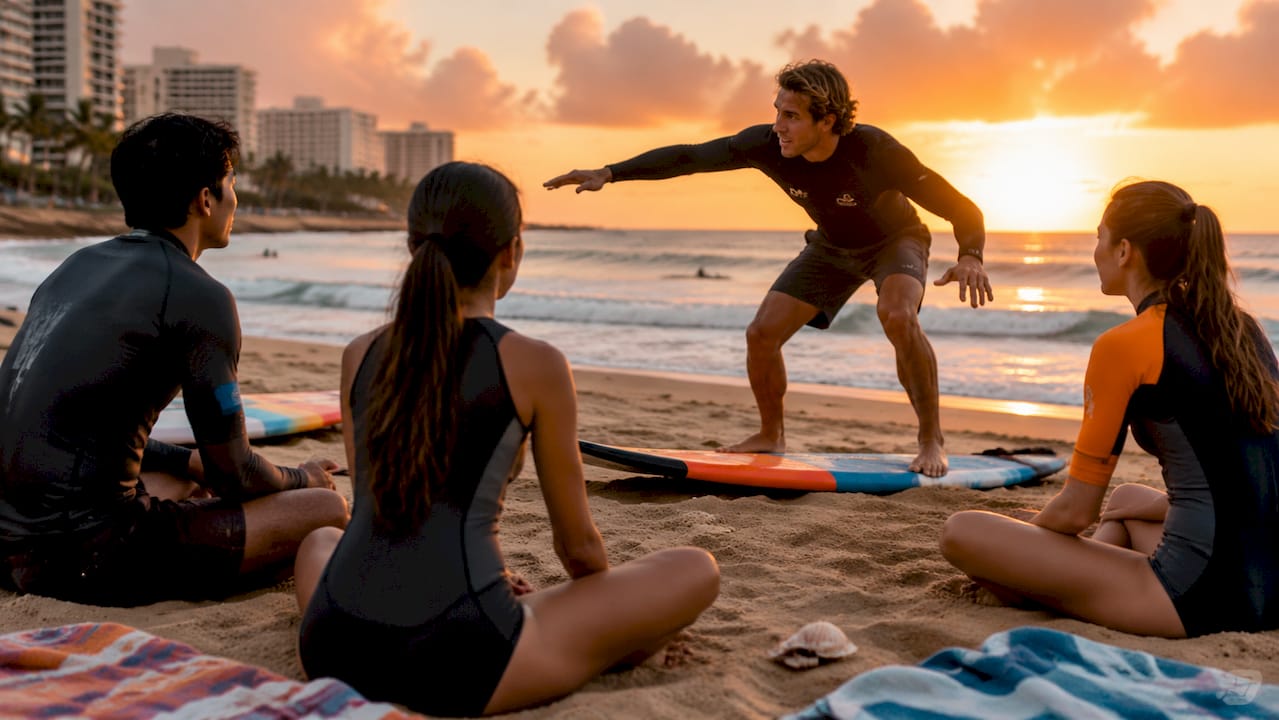
Wave selection is a major performance lever for beginners. Forgiving waves give you time to execute the pop-up and gain confidence safely. A beach with a rocky bottom or strong rip currents removes that safety margin entirely.
The ideal learning environment is a mellow beach break with a sandy bottom, small consistent waves, and no strong currents. These conditions let you focus on technique rather than survival. Waikiki is one of the most famous examples of this kind of beginner-friendly setup, with long, slow-rolling waves that give you plenty of time to stand up.
| Feature | What to look for | What to avoid |
|---|---|---|
| Bottom type | Sandy, flat | Rocky, reef, or coral |
| Wave size | Knee to waist high | Overhead or dumping |
| Current | Minimal or none | Strong rip currents |
| Wave shape | Slow, rolling whitewater | Fast-breaking or hollow |
| Crowd level | Uncrowded or beginner zones | Packed lineups with advanced surfers |
- Check surf forecast tools like Surfline or Magic Seaweed before each session to read tide, swell height, and wind direction
- Incoming tides on sandy beaches typically produce softer, more forgiving waves
- Offshore wind (blowing from land to sea) holds waves up longer, giving you more time to pop up
- Avoid surfing at low tide on shallow sandbars where wipeouts hit the bottom hard
3. Core techniques that speed up beginner surfing progress
Proper paddling is the foundation of everything. Without efficient paddling, you cannot catch waves consistently, and without catching waves, you cannot practice anything else. Keep your body centered on the board, arch your lower back slightly, and pull long strokes that reach past your shoulder.
Pop-up timing in relation to the wave peak is the single most common source of early wipeouts. Too early and the wave has no power. Too late and the lip throws you forward. The correct moment is when you feel the wave lift the tail of your board and push you forward with clear momentum.
- Paddle with your full arm, not just your forearm. Short strokes waste energy and reduce speed.
- Keep your chin up during paddling. Looking forward helps you read the wave and time your pop-up.
- Pop up in one explosive movement. Do not push to your knees first. Go straight from lying flat to both feet.
- Land with feet shoulder-width apart, knees bent, and weight centered over the board.
Projecting your gaze along the wave face during and after the pop-up cues your body to rotate correctly. Your head leads your shoulders, your shoulders lead your hips, and your hips guide the board. This is not a minor detail. It is the neuromuscular link between where you look and where you go.
Pro Tip: Practice the pop-up on dry sand before every session. Ten reps on the beach costs nothing and primes your body for the real thing in the water.
4. How practice frequency builds surfing skills faster
Consistency beats intensity every time in surfing. Surfing 2–3 times per week builds comfort in the ocean, reduces anxiety, and develops technique far faster than one long session per month. Your nervous system needs regular exposure to the movements to lock them in.
Keeping a surf log accelerates this process. After each session, write down the wave conditions, what worked, and what did not. Patterns emerge quickly. You will notice that you pop up cleanly on smaller waves but rush on larger ones, or that your left foot placement is inconsistent. A log turns vague frustration into specific problems you can fix.
- Surf at least twice a week during your learning phase, even if sessions are short
- Log wave height, tide, and wind after every session alongside your personal notes
- Progress from whitewater waves to green waves only after your pop-up feels automatic
- Add cross-training for surfers between sessions: yoga, swimming, and core work all transfer directly to board control
- Rest days matter. Tired muscles produce sloppy technique and increase injury risk.
Pro Tip: Set a specific goal for each session, such as catching five waves cleanly or holding your stance for three seconds. Vague practice produces vague results.
5. Learning in whitewater before paddling out to green waves
Starting in whitewater is not a beginner shortcut. It is the correct sequence for building reliable pop-up muscle memory before the demands of green waves multiply. Whitewater waves are already broken, so they push you consistently without requiring precise timing. That consistency is exactly what early-stage learning needs.
Green waves, by contrast, require you to paddle hard, read the peak, time your entry, and pop up before the wave breaks. That is four separate skills happening simultaneously. Attempting green waves before your pop-up is automatic overloads your attention and leads to repeated failures that erode confidence.
Focusing pop-up drills in whitewater also conserves energy. Paddling out past the break is physically demanding. Every unnecessary paddle-out drains stamina you could spend on ten more pop-up attempts in the shallows. More repetitions per session equals faster skill development.
6. Common beginner mistakes that slow down surfing progress
Skipping coached sessions is the single biggest mistake beginners make. Self-teaching feels independent and free. In practice, it locks in bad habits that take months to unlearn. An instructor watching you from the shore sees errors you cannot feel from inside the wave.
Rushing to bigger, faster waves too early is the second most common trap. The logic feels sound: bigger waves are more exciting, so they must be better practice. The reality is that bigger waves punish technical errors immediately and harshly. Wipeouts on waves beyond your skill level discourage rather than teach.
- Do not skip the beach warm-up. Cold muscles pop up slowly and increase strain injury risk.
- Do not paddle for every wave you see. Poor wave selection wastes energy and builds frustration.
- Do not look down at your feet during the pop-up. Your gaze should be forward and along the wave.
- Do not ignore the ocean. Wind shifts, tide changes, and current patterns affect conditions every hour.
“The fastest progress in surfing comes from structured instruction and repetition rather than shortcuts or skipping coaching.” — Bodhi Surf + Yoga
Rushing to big waves leads to wipeouts and frustration. Steady repetition on appropriate waves leads to confidence and compounding skill gains. The beginners who progress fastest are not the most fearless. They are the most consistent.
Key takeaways
The fastest path to surfing competence is structured, repeated practice in beginner-friendly conditions with professional coaching guiding every session.
| Point | Details |
|---|---|
| Multi-day camps accelerate learning | Repeated coached sessions build muscle memory faster than single lessons or solo attempts. |
| Whitewater first, green waves second | Mastering pop-ups in broken waves before paddling out prevents bad habits and conserves energy. |
| Gaze direction controls board direction | Looking along the wave face during pop-up cues correct balance and turning posture automatically. |
| Consistency beats occasional intensity | Surfing 2–3 times per week with a session log produces faster skill gains than rare long sessions. |
| Wave selection is a skill | Mellow, sandy-bottom beach breaks give beginners the time and safety margin to practice technique. |
What I have learned about learning to surf fast
The most common thing I see hold beginners back is not physical ability. It is impatience dressed up as ambition. A beginner paddles out to the green wave lineup on day two because they watched someone else do it and felt ready. Then they spend an hour getting worked by waves they cannot read, come in exhausted, and wonder why they are not improving.
The truth is that the whitewater zone is where real surfers are made. Every professional spent time there. The pop-up you drill in ankle-deep foam becomes the automatic reflex that saves you on a head-high wave six months later. Skipping that phase does not make you progress faster. It just delays the moment when the skill actually sticks.
Celebrate the small wins loudly. Your first clean pop-up. Your first wave you actually rode for three seconds. Your first session where you caught more waves than you missed. These moments matter more than they seem. They are the evidence your brain needs to believe that surfing is something you can do.
Structured learning environments like Hhsurf’s Waikiki surf lessons exist precisely because the fastest learning happens when someone experienced is watching you, correcting you, and pushing you at exactly the right pace. Solo practice has its place. But in the early weeks, coached repetition is the difference between plateauing and progressing.
— Johann
Hhsurf’s surf lessons: built for fast beginner progress
Hhsurf at Waikiki puts beginners on waves during their very first lesson. That is not a marketing claim. It is the result of a teaching method refined over decades by professional surfers who know exactly which conditions, techniques, and coaching cues produce the fastest results for new riders.
Hhsurf’s structured surf lessons are designed around the same principles covered in this article: whitewater-first progression, personalized coaching, and safe beginner zones with forgiving waves. Private lessons compress the timeline even further by giving you an instructor’s full attention on every single wave. Whether you are visiting Waikiki for a week or planning a longer stay, Hhsurf gives you the fastest, safest, and most confidence-building path to riding your first real wave.
FAQ
How long does it take to learn surfing basics?
Most beginners catch their first wave during a coached lesson if conditions and guidance are right. Success depends on practice frequency, physical ability, and wave conditions, with sporty students often standing within 1–2 days of consistent sessions.
Should beginners take surf lessons or teach themselves?
Beginners should take structured lessons. Skipping coaching delays progress by locking in bad habits that take far longer to correct than learning correctly from the start.
What kind of waves are best for learning to surf?
Small, slow, mellow beach breaks with sandy bottoms are best. These waves give beginners enough time to execute the pop-up and build confidence without the risk of strong currents or hard reef bottoms.
How often should a beginner surf to improve quickly?
Surfing 2–3 times per week is the most effective frequency for beginners. Consistent practice builds ocean comfort and technique far faster than occasional longer sessions.
What is the most important beginner surfing technique?
The pop-up is the most critical skill to master first. Practicing it on dry sand before every session and drilling it repeatedly in whitewater waves builds the automatic reflex that makes everything else in surfing possible.
0 Comments