
Friend surf trip planning is the process of coordinating group travel logistics, destination selection, budgeting, gear preparation, and safety measures so a group of friends can share a quality surfing experience together. The term used in the surf community is “coordinating a group surf trip,” and it covers everything from locking travel dates to assigning in-water safety roles. Done right, it turns a chaotic group chat into a week of clean waves and zero drama. Done wrong, it produces missed flights, budget arguments, and surfers stuck on a beach break they hate.
How do groups lock travel dates and budgets to jumpstart surf trip planning?
Group trips most often fail due to coordination failures like skipping date locking and early budget conversations, not because of poor destination choice. That single insight should reshape how your group starts planning. Lock the dates before you pick the destination. Everything else, flights, lodging, surf camp bookings, follows from a confirmed window on the calendar.
Setting dates as a group
Use a shared poll tool like Doodle or a Google Form to collect availability from every person in the group. Give a two-week deadline for responses. Groups that leave the date question open-ended spend weeks in limbo and lose momentum fast. Once you have a consensus window, book it. Treat it like a flight you cannot miss.
Building a shared budget
Budgeting a week-long surf trip commonly ranges from $800 to $3,000 per person depending on destination and accommodations. That range is wide enough to split a group in half if nobody talks about money upfront. Set a per-person ceiling before you vote on a destination. Ask each friend to name their honest max spend, then plan to the second-lowest number in the group. That approach keeps everyone at the table.
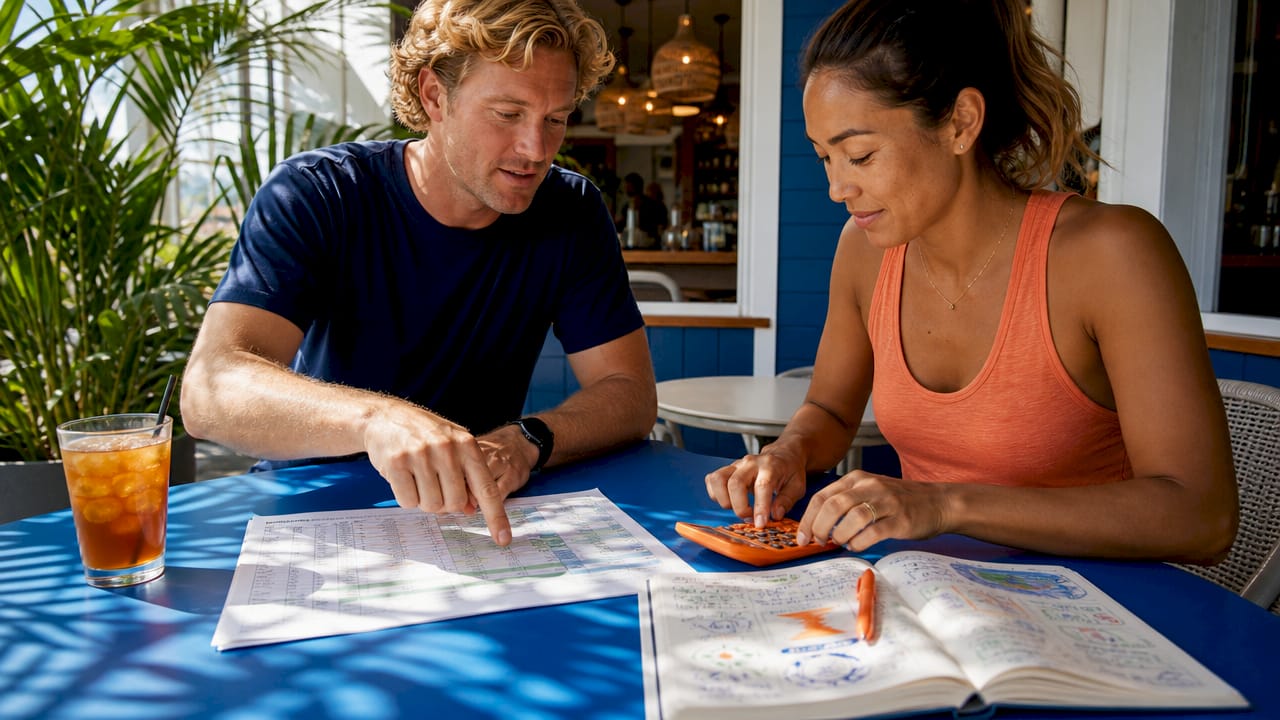
Limiting destination options to three prevents decision fatigue and indecision. Present three realistic choices that fit the agreed budget, then vote. Majority rules. Groups that debate ten destinations rarely book anything.
Pro Tip: Use a shared Google Sheet with tabs for flights, lodging, surf lessons, food, and extras. Assign one person as the budget tracker. Rotating that role weekly during the trip prevents resentment.
- Agree on a travel window using a group poll.
- Set a per-person budget ceiling before researching destinations.
- Narrow destination options to three, then vote.
- Assign a budget tracker before any money changes hands.
- Book flights and lodging within two weeks of the vote to lock in prices.
What criteria should friends consider when choosing surf trip destinations?
Matching the destination to your group’s skill level is the single most important decision in surf trip planning. A reef break in Indonesia that thrills your advanced friends will terrify your beginners. A mellow beach break in Costa Rica might bore your experienced surfers by day three. The right destination serves the whole group, not just the loudest voice in the chat.
Skill level and wave type
Beginner-friendly destinations feature slow, rolling waves on sandy bottoms. Intermediate groups do well at point breaks with predictable shape. Advanced surfers want reef breaks or powerful beach breaks with consistent swell. Surf camps offer built-in community and guidance, making them ideal for mixed-skill groups. DIY road trips give experienced groups more freedom but require significantly more logistics management. For a group with mixed abilities, a surf camp removes the daily planning burden and lets everyone focus on surfing.
Swell seasons and climate
Every surf destination has a peak swell season. Bali peaks from june through september. Hawaii’s North Shore fires from november through february. Costa Rica’s Pacific coast runs from april through october. Traveling outside peak season means smaller, less consistent waves. For a group trip, consistent waves matter more than perfect waves. You need enough surf for everyone to get sessions in every day.
Destination comparison for groups
| Destination type | Best for | Wave type | Logistics difficulty |
|---|---|---|---|
| Surf camp (Bali, Costa Rica) | Mixed skill groups | Mellow to intermediate | Low, all-inclusive |
| DIY road trip (California, Portugal) | Experienced groups | Variable | High, self-managed |
| Resort surf destination (Waikiki, Maldives) | Beginners and families | Gentle, consistent | Low, guided options |
| Remote surf charter | Advanced surfers only | Heavy, powerful | Very high |
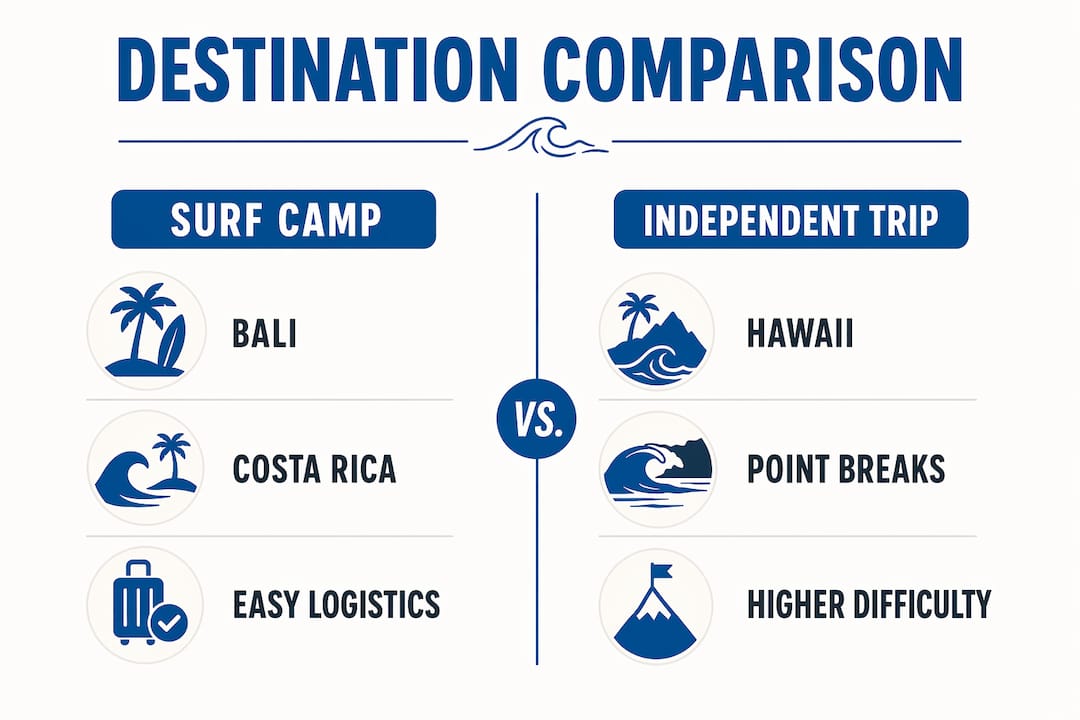
Groups including beginners improve their wave count by structuring lessons and rentals for novices separately from advanced surfers who chase different lineups. Splitting the group by skill level for morning sessions, then reuniting for afternoon activities, keeps everyone satisfied.
How do friends coordinate gear, packing, and daily surf sessions?
Gear coordination is where group surf trips either get efficient or get expensive. The core rule is simple: beginners rent, experienced surfers bring their own boards. Beginner-friendly surf trips typically provide rentals and gear, including wetsuits and boards, so novices need minimal personal equipment. That simplifies packing for the whole group.
What to pack for a group surf trip
Experienced surfers traveling with boards should pack a maximum of two boards: a versatile daily driver and a step-up board for larger swells. More than two boards creates transit headaches and extra fees. Traveling light without compromising essentials keeps the trip moving.
Must-bring items for every surfer in the group:
- Wetsuit suited to the destination’s water temperature
- Fins, fin key, and leash
- Surf wax matched to water temperature
- Board repair kit (ding repair resin and sandpaper)
- Rash guard and UV-protective swimwear
- Reef-safe sunscreen
- Waterproof camera or GoPro mount for friend surf adventure photography
Pro Tip: Assign each person in the group one shared item to pack, like a first aid kit, a portable speaker, or a communal wax supply. This prevents duplication and saves luggage space.
Managing daily sessions
Collaborative trip planning apps let group members co-manage itineraries, budgets, accommodations, and packing lists in real time. Use one app for the whole trip. Switching between WhatsApp, Google Docs, and email threads creates confusion. A daily morning forecast check should be a non-negotiable group ritual. Assign one person to pull the surf report each morning and give a go or no-go call for each break on the list. That role rotates daily so no single person carries the planning burden all week.
What safety protocols should groups follow during surf trips?
Group safety in the water requires a plan, not just good intentions. The most dangerous assumption a group makes is that everyone knows what to do in an emergency. Assign two roles before anyone paddles out: a conditions checker and a buddy spotter.
The conditions checker reviews the surf report, checks for rip current warnings, and assesses the break before the group enters the water. The buddy spotter stays aware of every group member’s position in the water and signals if someone is in trouble. Assigning these roles daily supports real-time hazard awareness and reduces in-water risks significantly.
Rip current survival protocol
Rip currents are the most common hazard at surf breaks worldwide. The National Weather Service guidance for rip currents is clear: stay calm, float, swim parallel to shore, then angle back toward the beach, and signal for help if needed. Most rips are less than 80 feet wide, meaning a few dozen strokes parallel to shore gets you out of the pull. Panicking and swimming directly against the current exhausts swimmers fast.
“Stay calm. Float. Swim parallel to shore. Angle back to the beach. Signal if you need help.”
National Weather Service rip current survival protocol
Group safety rules to set before every session:
- Never surf alone. The buddy system applies even to experienced surfers.
- Agree on a signal for “I need help” before entering the water.
- Know the location of the nearest lifeguard tower or first aid station.
- Set a hard rule: if conditions exceed the skill level of the least experienced surfer, that person stays on the beach and the group adjusts.
- Review adventure sports safety tips relevant to your destination before the trip.
Key takeaways
A successful group surf trip depends on locking dates and budgets first, matching the destination to the group’s skill range, and assigning clear safety roles before anyone enters the water.
| Point | Details |
|---|---|
| Lock dates before destination | Confirm group availability first; everything else follows from a fixed travel window. |
| Budget to the second-lowest | Plan spending to the second-lowest budget in the group to keep everyone included. |
| Match destination to skill level | Surf camps suit mixed-skill groups; DIY trips work best for experienced crews. |
| Beginners rent, experts bring boards | Rental gear simplifies packing and reduces costs for novice surfers in the group. |
| Assign daily safety roles | A conditions checker and buddy spotter reduce in-water risks on every session. |
What I’ve learned from planning surf trips with friends
Planning surf trips with groups of friends has taught me one uncomfortable truth: the trip usually falls apart before anyone buys a plane ticket. The failure point is almost always the same. Someone assumes everyone has the same budget. Nobody wants to be the person who says they cannot afford the nicer resort, so the group books it, and then one friend quietly drops out two weeks before departure.
The fix is not a better spreadsheet. It is an honest conversation in the first week of planning. I have seen groups of eight collapse to four because nobody wanted to talk money early. The groups that thrive are the ones where someone sends a message that says, “Here is my max budget, what is yours?” and everyone answers honestly.
The other lesson I keep relearning is about skill levels. Putting a beginner and an advanced surfer on the same break every day frustrates both of them. The beginner feels intimidated. The advanced surfer feels held back. Splitting morning sessions by skill level, then meeting up for lunch and afternoon activities, is the single best structural decision a group can make. It sounds like it divides the group. It actually saves it.
Collaborative tools like shared itinerary apps genuinely help, but only if the whole group commits to using one platform. The groups that use three different apps for three different things spend more time managing communication than planning the trip. Pick one tool, assign one person to manage it, and stick with it.
— Johann
Hhsurf group lessons: the best prep for your surf trip
Planning a surf trip with friends is one thing. Showing up ready to actually surf is another.
Hhsurf, the Hans Hedemann Surf School in Waikiki, offers group surf lessons designed for mixed-skill groups. Instructors work with beginners and returning surfers at the same time, so no one in your group gets left behind. Hhsurf’s approach gets students standing on their boards within the first lesson, which means your friends arrive at your surf destination with real confidence, not just enthusiasm. For groups that want individual attention alongside group sessions, private surf lessons in Waikiki are also available. Book before your trip and your whole crew paddles out ready.
FAQ
What is the first step in planning a surf trip with friends?
Lock travel dates before choosing a destination. Group trips most often fail due to skipped date-locking and budget conversations, not poor destination choice.
How much does a group surf trip cost per person?
A week-long surf trip typically costs between $800 and $3,000 per person depending on destination and accommodations. Setting a shared budget ceiling before researching destinations prevents financial mismatches.
How should a mixed-skill group handle different surf levels?
Split morning sessions by skill level, with beginners taking lessons or surfing mellow breaks while advanced surfers chase more challenging lineups. Reunite the group for afternoon activities.
What should every surfer pack for a group surf trip?
Core essentials include a wetsuit, fins, leash, surf wax, a board repair kit, reef-safe sunscreen, and a rash guard. Beginners at most destinations can rent boards and wetsuits on-site.
What do you do if caught in a rip current while surfing?
Stay calm, float, and swim parallel to shore rather than against the current. Most rip currents are less than 80 feet wide, so parallel swimming exits the pull quickly. Signal for help if needed.
0 Comments