
Yes, you can get motion sick while surfing, and it’s usually manageable once you know the drill. The moment nausea or dizziness hits, paddle to a stable spot, sit up, and lock your eyes on the horizon. Sip water, don’t force it if your stomach is rolling, and head to shore if symptoms build instead of ease. Below: why it happens, what triggers it most, and the prevention routine surfers actually use.
TL;DR:
- Moving to a stable position and focusing on the horizon can significantly reduce symptoms once nausea starts during surfing.
- Sitting idle on your board for long periods or waiting in choppy, disorganized surf increases the risk of seasickness.
- Proper pre-surf preparation, such as light high-carb snacks and avoiding alcohol or heavy meals, lowers your likelihood of experiencing motion sickness.
- Non-drug remedies like ginger chews or P6 acupressure wristbands are effective, but over-the-counter options can cause drowsiness and should be tested beforehand.
- Guided lessons help beginners by reducing waiting times, spotting early symptoms, and adjusting activities promptly to prevent severe seasickness.
Table of Contents
- What Causes Motion Sickness at Sea, and Why Surfing Triggers It
- Common Triggers and Risk Factors for Surfers
- Symptoms, Timeline, and When to Get Out of the Water
- Pre-Session and On-Water Prevention Steps
- Quick Remedies and What to Know About Medication
- What Surf Instructors Do Differently When a Student Feels Sick
- Why Guided Lessons Cut Seasickness Risk for New Surfers
- Learn to Surf Without the Guesswork
- Sources
What Causes Motion Sickness at Sea, and Why Surfing Triggers It
Seasickness comes down to a mismatch between what your inner ear feels and what your eyes see. Your vestibular system tracks every roll and drop of the ocean beneath you, but if your eyes are locked on a static point (your board, your hands, the water right in front of you), your brain gets two conflicting reports. That conflict is what the NOAA Ocean Service points to as the physiological root of seasickness, and it applies just as much to a surfboard as a boat deck.
Surfing adds its own twist. It’s less common than classic boat sickness, but sitting through repeated small vertical swells while waiting in the lineup can produce the same rocking sensation, minus the horizon fix that comes naturally when you’re actively riding a wave. A few conditions make it worse:
- Sitting stationary on your board for extended periods between sets
- Overcast days featuring a flat, featureless horizon
- Choppy, disorganized swell rather than clean, rhythmic waves
Common Triggers and Risk Factors for Surfers
Some sessions set you up for trouble before you even paddle out. Watch for these patterns:
- Choppy or confused surf with no clear rhythm, which keeps your inner ear guessing
- Long idle time in the lineup waiting for a decent set
- Winding drives to the beach, especially on twisty coastal roads
- Poor sleep or a heavy meal (or alcohol) before paddling out
- Anxiety about the water itself, which can prime the nervous system for nausea
That last point matters more than most surfers realize. Fear of open water, sometimes labeled thalassophobia, can produce physical symptoms like dizziness and nausea on its own, and it stacks directly on top of any motion-based trigger. If you already feel uneasy about deep water or waves you can’t see through, your threshold for getting sick drops.
Symptoms, Timeline, and When to Get Out of the Water
Nausea is usually the first sign, followed by dizziness, cold sweating, and in some cases vomiting. Left unchecked, nausea and vomiting can cause dehydration and impair judgment, increasing risk in open water. Here’s the safe sequence to follow once symptoms start:
- Stop paddling and find a stable position. Sit upright on your board, straddling it, rather than lying prone.
- Fix your eyes on the horizon. A steady visual reference helps resolve the inner ear conflict.
- Sip water slowly. Don’t gulp; a dehydrated, queasy stomach reacts badly to a sudden load.
- Head to shore if symptoms build rather than ease. Continuing to paddle through worsening nausea raises your risk of vomiting and impaired decision-making, according to a NOLS field case study on managing motion sickness during a surf trip.
- Rest and rehydrate on land. Symptoms typically fade once the motion stops. If they linger for hours or you can’t keep fluids down, get medical attention.
Pre-Session and On-Water Prevention Steps
Most motion sickness cases trace back to decisions made before you ever touch the water. Get these right and you cut your risk substantially.
Before you paddle out:
- Eat a light, high-carb snack like toast, a banana, or a granola bar before your session. Skip anything heavy or greasy.
- Hydrate steadily in the hours before surfing, avoiding drinking large amounts immediately prior.
- Avoid alcohol before surfing if you are prone to nausea.
- Get sufficient sleep, since fatigue can reduce tolerance for motion.
- Avoid close-focus activities like reading or phone use during the drive to the beach, which can predispose you to motion sickness that may continue once on the water.
Once you’re in the water:
- Pick calmer, more organized swell over chaotic chop when you have the choice.
- Sit facing the horizon during lulls instead of looking down at your board or the water.
- Limit long lineup waits by breaking them into shorter, timed periods with breaks on shore when necessary.
- Use box breathing or the 4-7-8 technique (inhale 4 seconds, hold 7, exhale 8) if you feel anxiety creeping in alongside the nausea.
- Straddle your board instead of lying flat when resetting, for improved stability and balance recalibration.
Pack a small kit: water, a few crackers, ginger chews, and P6 acupressure wristbands if you’ve used them before. Sunscreen belongs in there too, since sun exposure and dehydration compound nausea risk.
Pro Tip: Practice horizon focus on dry land first. Stand on a wobble board or balance cushion at home and train your eyes to hold on a fixed point while your body shifts. It’s the same skill you’ll use in the lineup, minus the salt water.
Quick Remedies and What to Know About Medication
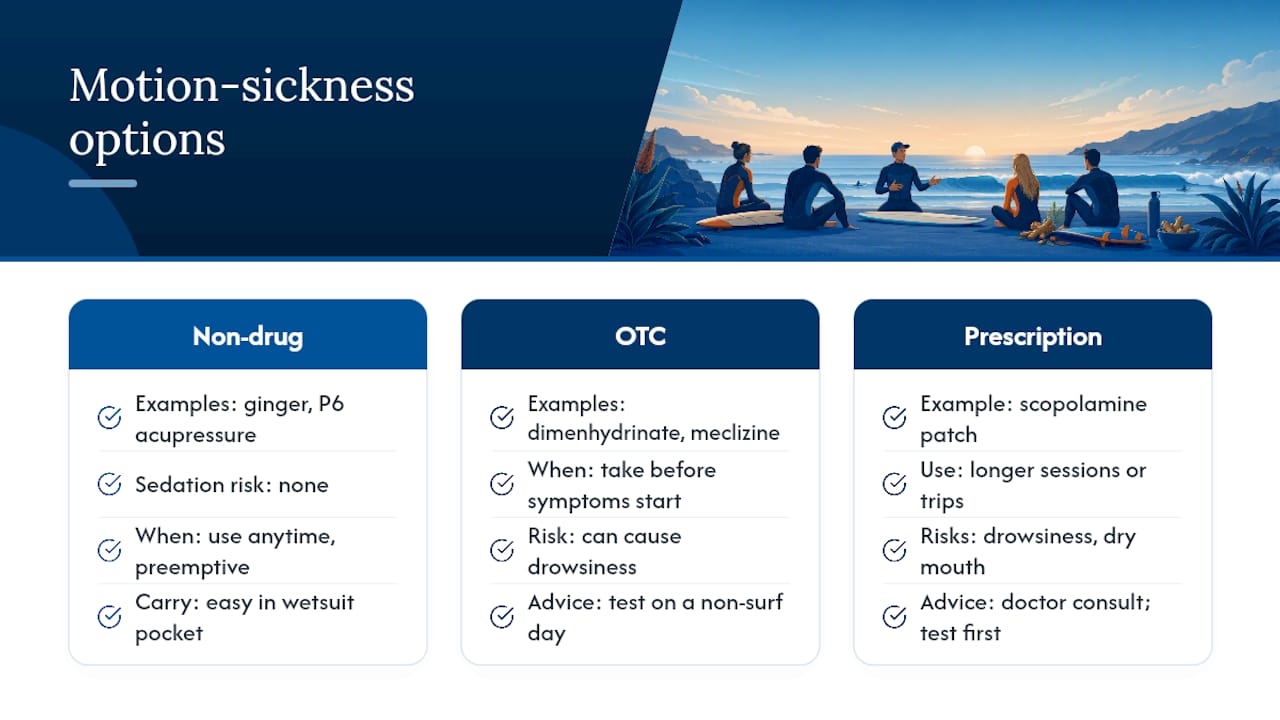
Non-drug options work well for a lot of surfers and carry zero sedation risk. Ginger, whether as chews, tea, or candy, and P6 acupressure stimulation on the inner wrist are the two most commonly cited nonpharmacologic measures, and both are easy to carry in a wetsuit pocket or beach bag.
For over-the-counter options, dimenhydrinate (Dramamine) and meclizine (Bonine) both work best taken before symptoms start, not after. The catch: both can cause drowsiness, which is a real problem in open water where alertness matters. Test either one on a non-surf day first to see how your body reacts.
Some surfers use prescription scopolamine patches for longer sessions or multi-day trips, but should test for side effects before water exposure. They can be effective, but drowsiness and dry mouth are common side effects. Talk to a doctor before trying one, and never surf on a medication you haven’t tested on land first. If it makes you drowsy, skip the water that day entirely.
What Surf Instructors Do Differently When a Student Feels Sick
A NOLS field case from an Oahu surf and dive trip lays out the pattern clearly: motion sickness triggered by a winding drive to the coast, a brief recovery at the dock, then worsening symptoms once back on the water. The response wasn’t to push through. Guides used horizon positioning, ginger, and P6 stimulation on-site, then made the call to modify the day’s activities rather than risk a student’s safety.
Surf schools apply staged exposure methods, including short paddling periods, early exit on symptom onset, and guided breathing and horizon-focusing drills before resuming activity. A common recalibration drill looks like this:
- Paddle 1 to 2 minutes while fixing your eyes on a stationary point on the horizon
- Pause and take four slow, controlled breaths
- Reassess before committing to the next wave attempt
Why Guided Lessons Cut Seasickness Risk for New Surfers
Beginner surfers often experience motion sickness from prolonged inactive time in the lineup rather than wave motion itself. An instructor changes that equation. They control exposure directly, cutting idle float time and pulling a student out the moment symptoms surface, rather than letting nausea build until it’s a real problem.
That’s the practical case for structured lessons over solo trial and error: less guesswork on timing, faster correction when something’s wrong, and coping techniques delivered in the moment they’re needed. Solo surfers often push through symptoms because they don’t have anyone flagging the early signs.
— Johann
Learn to Surf Without the Guesswork
If reading a prevention checklist feels like a lot to manage solo, that’s exactly the gap instructor-led lessons close. Hans Hedemann Surf School runs small-group and private lessons in Waikiki and on the North Shore, and instructors are trained to spot early signs of nausea and adjust a session on the spot, shortening lineup waits, cueing horizon focus, and getting a student to shore before things escalate.

That’s the whole point of learning with a coach standing next to you instead of guessing your way through it. Whether you’re brand new to the water or just want a session where someone else is watching for the warning signs, book a surf lesson in Waikiki and let an instructor manage the pacing while you focus on catching waves.
Sources
For more background, see NOAA’s explainer on seasickness, the NOLS case study, and the Surfrider Foundation.
- What causes seasickness? — NOAA Ocean Service
- Case Study: Motion Sickness on a Surf and Dive Trip in Oahu, Hawaii — NOLS
- What causes seasickness and how to manage it — SurferToday
- Thalassophobia (fear of the ocean) — Verywell Mind
0 Comments