
For most Waikiki visitors who want fast progress without paying private rates, a semi-private surf lesson is the smartest pick. You’ll want private instruction if you’re chasing a specific technique fix, or a group class if budget and social energy matter more than personal coaching. Either way, check live availability before you set your dates.
TL;DR:
- Semi-private lessons usually last 60 to 120 minutes, including land instruction and water practice, with prices typically below private rates and above group lessons.
- They are ideal for beginners who want personalized correction without the high cost of private coaching and are most effective when traveling with peers of similar skill levels.
- Booking is straightforward through online systems, with lessons meeting on Waikiki Beach, requiring a booking deposit, and offering cancellation flexibility within 24 to 48 hours.
- Lessons include surfboard rental, rash guards, and video or photo add-ons, with rates rising during peak seasons and minimum group sizes needing confirmation beforehand.
- To maximize learning and safety, honesty about swimming ability, proper sun protection, understanding wave etiquette, and following instructor guidance are essential.
Table of Contents
- Semi-Private vs. Private vs. Group: Which Waikiki Lesson Fits You?
- What’s Included in a Waikiki Semi-Private Lesson, and What It Costs
- What Happens During Your Semi-Private Lesson, Step by Step
- Who Gets the Most Out of a Semi-Private Lesson?
- Booking, Meeting Points, and Cancellation Basics
- Safety and Etiquette Every Beginner Should Know
- Why Hans Hedemann Surf School Builds Its Program Around Semi-Private Lessons
- Book Your Semi-Private Lesson With Hans Hedemann Surf School
- Where to Verify Prices, Times, and Local Details
- Sources
Semi-Private vs. Private vs. Group: Which Waikiki Lesson Fits You?
A semi-private lesson pairs one instructor with a small group of students, splitting the coach’s attention while keeping the price well below a one-on-one session. You still get corrected on your pop-up, your stance, and your paddle timing almost every single wave. What you give up is the instructor’s undivided focus, which matters less than you’d think for a first or second lesson.
Private lessons make sense when you have a narrow goal: fixing a specific bad habit, prepping for a surf trip elsewhere, or working around a physical limitation that needs constant spotting. A private surf lesson also suits nervous swimmers who want one set of eyes on them at all times, or a parent bringing a very young child who can’t share attention with strangers.
Group lessons work best for families on a budget, bachelorette parties, or anyone who cares more about the shared experience than steady one-on-one correction. A group lesson typically runs several students per instructor, which means longer stretches waiting your turn and less individual feedback per wave.
Here’s a quick way to decide:
- Pick private if you have a specific technique problem, a tight timeline before a bigger trip, or a student who needs constant one-on-one supervision.
- Pick semi-private if you want real coaching without the private price tag and don’t mind sharing waves with one or two other beginners.
- Pick group if cost and social atmosphere matter more than how many waves you personally catch.
- Consider age and fitness together. A semi-private group of similar-skill adults progresses faster than a mixed group of kids and adults at wildly different comfort levels.
The honest trade-off: semi-private lessons cost less than private but move slightly slower per person. For a first Waikiki lesson, that trade almost always favors semi-private.
What’s Included in a Waikiki Semi-Private Lesson, and What It Costs
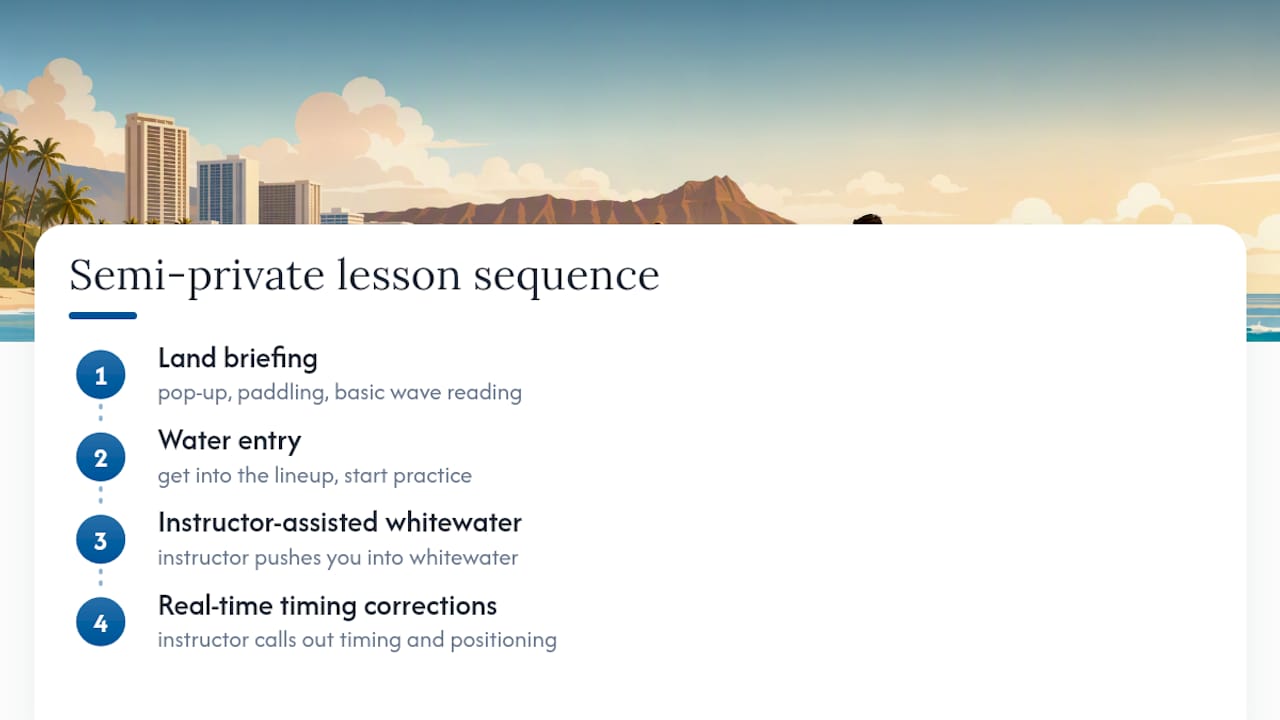
A typical semi-private booking runs somewhere between 60 and 120 minutes, split between a land briefing and actual water time. The land portion covers pop-up mechanics, paddling technique, and basic wave reading. Most of the session, though, happens in the water with the instructor pushing you into whitewater and calling out timing corrections.
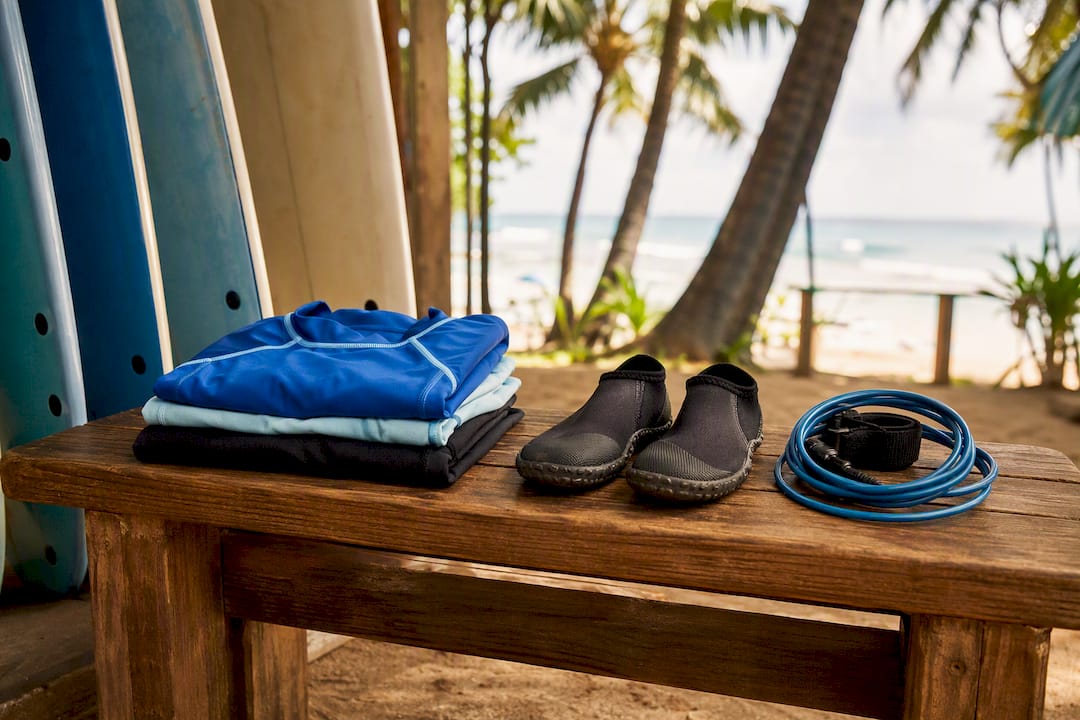
Standard inclusions in typical Waikiki surf lessons often include surfboard rental, rash guard protection, possibly reef shoes, on-land instruction, instructor assistance in the water, and optional photo or video packages at an added cost.
Pricing varies by group size and operator, but semi-private lessons in Waikiki commonly fall in a moderate range per person, well below private rates and somewhat above group pricing. Both Hans Hedemann Surf School and comparable local outfits publish sample per-person rates on their Tripadvisor activity listings, and Faith Surf School lists starting prices for the same lesson tiers, which gives you a reasonable range to benchmark against before you book.
Rates tend to climb during summer break and the winter holiday stretch, when demand for beginner lessons peaks. Before you commit, check the group-size minimum (some operators need at least two people booked to run a semi-private slot), read the cancellation window, and ask directly whether photo or video add-ons are bundled or billed separately.
What Happens During Your Semi-Private Lesson, Step by Step
Knowing the flow ahead of time takes most of the nervousness out of your first session. Here’s roughly how a Waikiki semi-private lesson unfolds:
- Check-in, 15 to 20 minutes before start time. Bring swimwear you’re comfortable moving in, sunscreen (reef-safe if you can find it), a towel, and a way to secure valuables. Arriving late can cut into your water time since most groups start on schedule.
- Land briefing and pop-up practice. Your instructor walks through paddling position, the pop-up motion, and basic stance on boards laid out on the sand. Expect five to ten minutes of dry-land reps before anyone touches the water.
- Paddling out and catching whitewater. The instructor positions each student and pushes boards into breaking whitewater at the right moment, calling out “paddle” and “up” with precise timing. This is where most first-timers stand up for the first time.
- Rotating coaching within the group. In a semi-private setting, the instructor cycles between two or three students, giving each one direct feedback almost every wave rather than watching from a distance.
- Wrap-up and feedback. Sessions typically close with a quick debrief on what went well, what to work on next time, and details on photo or video delivery if you booked that add-on.
Pro Tip: Ask your instructor at check-in to point out one specific thing to focus on for your very first wave, like where your back foot lands. One clear cue beats trying to remember five corrections at once.
Most first-time students stand up on at least one wave within the first portion of the lesson spent in the water. That’s not a guarantee, but it’s a realistic benchmark for what a well-run semi-private lesson delivers.
Who Gets the Most Out of a Semi-Private Lesson?
Semi-private lessons hit a sweet spot for beginners who want real, hands-on correction but do not need (or want to pay for) an instructor’s full, undivided attention. If you’re traveling with a friend, partner, or one other family member at a similar comfort level in the water, this format usually delivers the best return per dollar.
- Kids generally need to be comfortable swimming unassisted and old enough to follow verbal instruction quickly, so check age and swim-ability requirements before booking a kids-specific lesson.
- Parents booking for young children should expect to stay on the beach or in shallow water nearby, not out on the board with them.
- Adults in their 40s, 50s, and beyond routinely learn to surf for the first time in Waikiki. Balance and general mobility matter more than age itself, and Waikiki’s gentle, forgiving whitewater is exactly the kind of wave that makes this possible.
- Experienced instructors handle mixed-ability semi-private groups by adjusting timing and positioning for each student individually, even within the same session.
If your travel companions have noticeably different comfort levels in the water, mention that when booking so the school can pair you appropriately or suggest private instruction instead.
Booking, Meeting Points, and Cancellation Basics
Booking a Waikiki semi-private lesson is usually a straightforward online process. Most local schools use live calendar widgets, commonly FareHarbor, where you pick a date and time and pay a deposit to hold your spot. Faith Surf School runs the same type of booking system, which tells you this is standard practice across Waikiki operators, not a one-off quirk.
A few practical notes before you lock in a date:
- Most lessons meet directly on Waikiki Beach near the operator’s storage location, and confirmation emails usually include exact meeting coordinates and a contact number.
- Expect to sign a liability waiver, either digitally before arrival or on paper at check-in.
- Cancellation policies commonly allow a full or partial refund if you cancel 24 to 48 hours ahead; weather-related cancellations are typically rescheduled rather than refunded outright.
- Morning slots tend to have calmer water and smaller crowds than midday or afternoon bookings, which makes early lessons easier for first-timers.
Confirm cancellation terms and any group-size minimums directly on the booking page before you finalize your Hawaii itinerary, since policies can vary slightly by season and by operator.
Safety and Etiquette Every Beginner Should Know
Waikiki’s reputation as a beginner-friendly break doesn’t mean you can skip basic water safety. A few fundamentals apply no matter which lesson type you book:
- Be honest about your swimming ability when you book. Instructors plan positioning and supervision around what you tell them.
- Wear reef-safe sunscreen and reapply it. Hawaii sun burns faster than most visitors expect, even on cloudy days.
- Listen for your instructor’s timing calls. They’re watching the wave sets, not just your form.
- Learn the basics of shared wave etiquette: the surfer closest to the peak of the wave generally has priority, and cutting off another surfer is both unsafe and against local norms. Hhsurf’s guide on shared wave meaning breaks this down in more depth.
One rule worth knowing before you paddle out: the 12-second rule. It’s a general surf-safety guideline suggesting that if you can’t safely exit the water or reach a wave within roughly 12 seconds of a hazard changing, you reassess rather than push through. For beginners riding whitewater in Waikiki, this mostly means trusting your instructor’s call on when to paddle and when to hold back, rather than chasing every wave that rolls in.
Reputable operators also adjust or cancel sessions when surf conditions turn unsafe, which is one more reason to book with a school that has an established local presence rather than an unlicensed beach vendor.
Why Hans Hedemann Surf School Builds Its Program Around Semi-Private Lessons
Hhsurf structures its teaching method around getting students standing up on a wave within their first lesson, and semi-private groups are where that method works best. Splitting attention between two or three students, instead of stretching it across a full group, gives instructors enough room to correct your stance in real time without the price tag of a fully private session.
[brand_signal]
[brand_signal]
[brand_signal]
[brand_signal]
[brand_signal]
If your goal is standing up quickly and safely without overspending on instruction you don’t need, semi-private is the format Hhsurf built its whole approach around.
— Johann
Book Your Semi-Private Lesson With Hans Hedemann Surf School
Hhsurf is the direct route to a Waikiki lesson without hunting through third-party activity marketplaces or guessing at what’s actually included. You book straight through the school, see real-time availability, and know exactly what gear and instruction time you’re paying for before you show up on the sand.
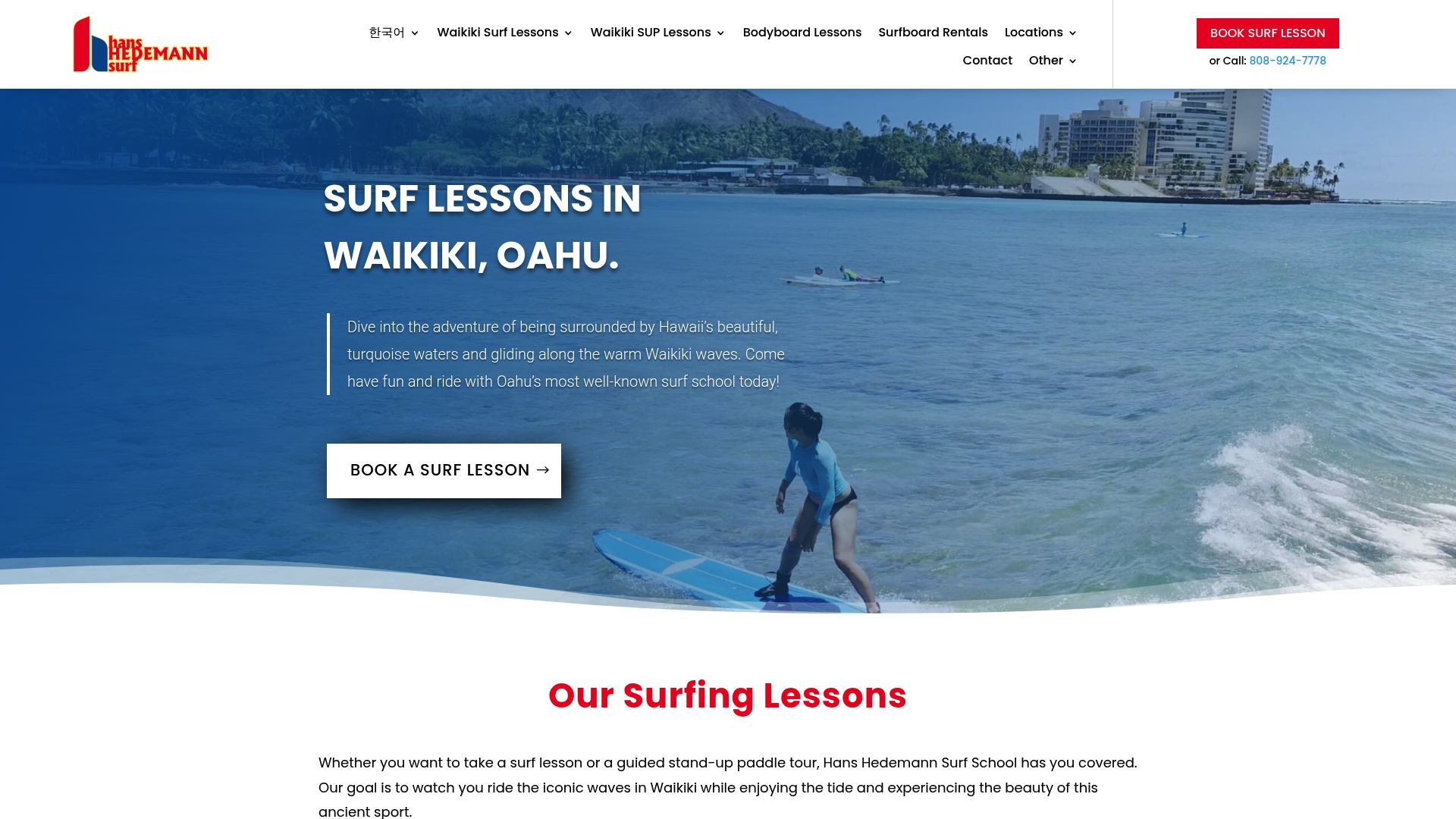
Hhsurf’s instructors are professional surfers who teach the same method every session, and testimonials on Tripadvisor repeatedly mention students standing up on their first wave within a single lesson. Semi-private is the default recommendation for most visitors, but if you’re set on one-on-one coaching, private lessons are available too, and families traveling with kids can look at the kids surf lessons page for age-appropriate options.
Before you lock in a date, check the main surf lesson page for current session times, confirm whether a photo or video package fits your budget, and review the cancellation window so your Hawaii schedule has some flexibility built in. Head to the booking calendar now and grab a slot while morning times are still open.
Where to Verify Prices, Times, and Local Details
Check current pricing and availability directly on the Hans Hedemann Surf School booking page, or compare sample rates and traveler feedback on Tripadvisor’s Waikiki lesson listings. For general orientation to the area, Honolulu’s Waikiki neighborhood is where nearly all these lessons take place.
0 Comments