
Yes. Beginner SUP lessons in Waikiki are safe when a certified instructor runs them from a lifeguarded, protected launch with a low student-to-instructor ratio. The single best move you can make is booking a private or small-group lesson with a safety-first school rather than a rental with no instruction at all. A good lesson includes fitted equipment and a full safety briefing before you ever touch the water. Everything below explains how to judge a provider and what to expect once you’re out there.
TL;DR:
- Small student-to-instructor ratios of 1:1 or 2:1 are essential for beginner safety and allow immediate correction during Waikiki SUP lessons.
- Lessons should be launched from lifeguarded beaches or protected lagoons, not open coastlines, and instructors must have CPR, first aid, and local awareness credentials.
- Proper gear fit, including buoyancy aids and appropriate leashes, is critical, and instructors should conduct equipment checks before water entry to prevent mid-lesson issues.
- Preferring private or semi-private lessons over group formats improves safety, with dedicated fall-and-recover drills helping beginners build confidence and skills faster.
- Rescheduling lessons due to weather warnings and avoiding lessons at night or in unsafe conditions are crucial for a safe and effective learning experience.
Table of Contents
- What to Look for in Waikiki SUP Lesson Safety
- Private, Semi-Private, and Group SUP Lessons: What’s Included
- Your Pre-Lesson Gear Checklist
- What Happens During a Safe Beginner SUP Lesson
- Why Waikiki’s Water Makes It a Good Place to Learn
- Why Professional Instruction Actually Changes the Outcome
- Why the “Just Rent a Board” Advice Falls Short
- Book a Safety-First SUP Lesson in Waikiki
- Sources
- FAQ
What to Look for in Waikiki SUP Lesson Safety
Not every operator on the beach runs things the same way, and the differences matter more than the marketing does. Before you hand over your credit card, check these five things.
- Instructor certifications: Ask whether instructors hold CPR and first aid training, and whether they have lifeguard experience or deep local knowledge of Waikiki’s currents.
- Student-to-instructor ratio: A 1:1 or 2:1 ratio is ideal for absolute beginners, since it means someone is watching you the entire time, not glancing over from across the lineup.
- Launch location: Reputable Waikiki lessons launch from lifeguarded beaches or permitted, protected lagoon areas, not open stretches of coastline.
- Safety policies: Look for clear age minimums, swimming ability requirements, and a stated policy for canceling or rescheduling lessons when conditions turn unsafe.
- Equipment provided: Confirm the price includes a properly sized buoyancy aid, a leash suited to the conditions, and a board sized for beginners, not leftover gear from the rental rack.
Pro Tip: Call ahead and ask what happens if the surf picks up on your lesson day. A school with a real weather cancellation policy, rather than a “we’ll figure it out” answer, is usually the one that takes safety seriously year-round.
Private, Semi-Private, and Group SUP Lessons: What’s Included
Waikiki operators generally offer four formats, and the ratio you pick changes how fast you progress and how closely you’re supervised. Private lessons put one instructor on one student, which speeds up correction because every mistake gets caught immediately. Semi-private lessons pair two or three students with one instructor, which keeps costs down while still allowing close supervision, and this format works well for couples or friends learning together. Group lessons run larger, often six to eight students per instructor, and suit families or groups who want a shared experience over one-on-one polish. Both private and semi-private formats are pedagogically sound for beginners; the instructional approach matters more than the label, since either keeps ratios tight enough for real attention.
Most beginner lessons run around an hour and a half and should include:
- A board, paddle, and properly fitted leash
- A buoyancy aid or PFD sized to your weight
- A land briefing covering stance and paddle technique
- Fall-and-recover practice before you’re expected to paddle unsupervised
- A rashguard option and guidance on sun exposure
A one-hour lesson leaves less room for repeated fall-and-recover drills than a 90-minute session, so if you’re genuinely nervous in the water, the longer format buys you more practice time before you’re on your own.
Your Pre-Lesson Gear Checklist
Good instruction handles most of this for you, but knowing why each piece matters helps you speak up if something feels off. Run through this list before you paddle out.
- Wear a properly fitted buoyancy aid. A PFD sized to your chest and weight should let you paddle freely while still helping you re-mount the board quickly after a fall.
- Confirm your leash type matches the water. RoSPA recommends waist quick-release leashes for tidal or flowing water, and ankle leashes only in flat, calm conditions like Waikiki’s protected lagoon.
- Keep a waterproof phone pouch clipped to you, not stowed on the board. If you and the board separate, you still want a way to signal for help.
- Dress for sun and water temperature. A rashguard handles most Waikiki days; a light wetsuit only makes sense on cooler, windier mornings.
- Watch the instructor inspect the equipment before launch. Fin condition, inflation on an inflatable board, and leash attachment all take thirty seconds to check and can prevent a mid-lesson problem.
Transport Canada’s boating safety guidance is blunt on one point that applies just as well in Hawaii: a leash is never a substitute for a proper PFD. Wear both, every time you’re on the board.
What Happens During a Safe Beginner SUP Lesson
A well-run lesson follows a predictable rhythm, and knowing it ahead of time takes a lot of the anxiety out of the experience. You’ll arrive 15 to 20 minutes early to check in, stow your belongings, and get fitted for a board and buoyancy aid. From there:
- A land briefing covers proper stance, paddle grip, and, most importantly, how to fall and recover without panicking.
- You’ll practice kneeling on the board in shallow water before anyone asks you to stand.
- Instructors assist your first stand-up attempts, then let you take short, controlled paddles as balance improves.
- Fall-and-recover drills repeat throughout, since staying calm after a fall is the skill that actually keeps beginners safe.
- Instructors keep the group within sight at all times and often anchor boards during early drills to prevent drift.
- A short debrief at the end covers what to practice next time, whether that’s a return lesson or a supervised rental session.
This structure is also the reason lessons beat renting a board and figuring it out alone. Instruction builds the technique and situational awareness that actually reduces risk on the water, not just the ability to stand up for a photo.
Why Waikiki’s Water Makes It a Good Place to Learn
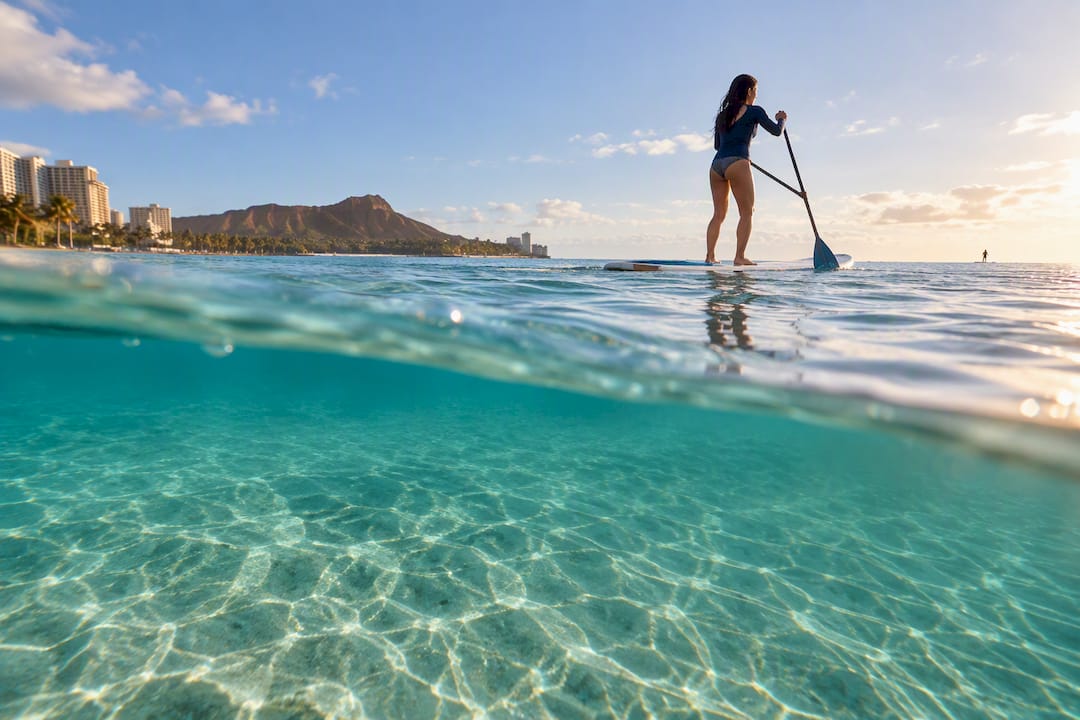
Waikiki’s near-shore water sits inside a shallow, protected reef system that blocks most of the open-ocean swell before it reaches the beach. That combination of calm water and sandy bottom is exactly why Waikiki has become one of the best places to learn SUP anywhere in Hawaii, and why local instructors can anchor boards in waist-deep water during early drills instead of chasing students downwind.
Two things still deserve your attention:
- Offshore winds. They build through the afternoon and can carry an unanchored board out to sea faster than most beginners can paddle against.
- Tide changes. Currents shift near channels and piers, which is exactly why lessons stay inside lifeguarded, marked zones.
Morning sessions are almost always calmer than late afternoon ones. If lifeguards raise a warning flag or the forecast mentions building wind or swell, check conditions and reschedule rather than pushing through.
Why Professional Instruction Actually Changes the Outcome
Hans Hedemann Surf School has built its Waikiki program around one idea: most beginners don’t need more time on the water, they need better coaching in the time they have. That’s the logic behind small-ratio lessons and instructors who spend their days, not just their weekends, reading Waikiki’s swell and wind patterns.
Age and health matter here too. Reputable lesson pages routinely list swimming ability requirements and medical cautions, including advising against SUP lessons for pregnant women or anyone with an existing neck or back injury. A good instructor asks about this before your lesson starts, not after you’re struggling to stand.
Why the “Just Rent a Board” Advice Falls Short
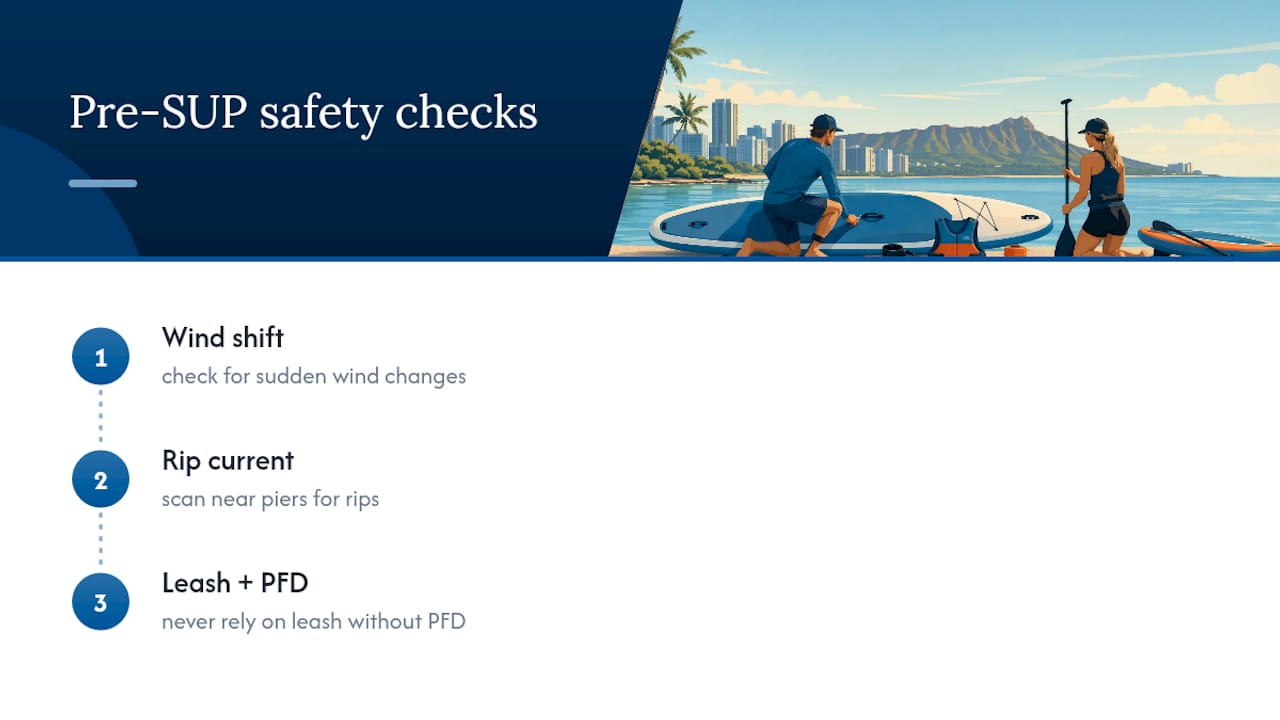
Plenty of visitors assume a SUP lesson is optional, that renting a board and watching a few videos gets you 90% of the way there. It doesn’t, and the gap isn’t really about balance or technique. It’s about judgment: knowing when the wind has shifted, recognizing a rip current near the piers, and understanding that a leash without a PFD is only half a safety plan.
What gets overlooked most often is how much the ratio matters more than the venue. Waikiki’s protected water forgives a lot of mistakes, but a group lesson with eight students and one instructor still leaves long stretches where nobody’s watching you specifically. If safety and speed of progress are both priorities, private or semi-private formats earn their higher price by keeping someone’s eyes on you the entire session.
The other overlooked point: gear fit isn’t a formality. A buoyancy aid that’s too loose won’t help you re-mount a board efficiently, and an ankle leash in the wrong conditions creates its own risk. These are small details that separate a genuinely safety-first lesson from one that just checks a box.
— Johann
Book a Safety-First SUP Lesson in Waikiki
A safety-first SUP lesson service is the alternative to figuring this out on your own. Instead of renting a board and guessing at technique, you can get certified instructors, small student-to-instructor ratios, and lessons launched from Waikiki’s protected, lifeguarded water, all with equipment included in the price.
Every lesson starts with a full safety briefing and fall-and-recover practice before you’re asked to stand, and instructors reschedule when conditions turn unsafe rather than pushing a lesson through. You can book a private SUP lesson for one-on-one coaching, or a group SUP lesson if you’re learning with family or friends. For the full range of options and current pricing, visit the SUP lessons page or call ahead to check availability and ask about the cancellation policy for the day you have in mind.
Sources
FAQ
Is Waikiki safe for SUP lessons at night?
Lessons don’t run at night, and that’s by design. Locals generally avoid Waikiki’s water after dark because lifeguard supervision ends and visibility drops, which is exactly why reputable schools schedule SUP lessons during daylight hours when lifeguards are on duty.
Is the water in Waikiki safe to swim and paddle in right now?
Waikiki’s water quality and surf conditions vary day to day with rainfall and wind, so check posted lifeguard flags and any advisories before heading out. A safety-first operator checks this for you and reschedules lessons when conditions turn unsafe.
Is SUP harder to learn than kayaking?
SUP has a steeper initial learning curve than kayaking because you’re balancing standing up, not sitting in a stable hull. That said, a structured lesson with fall-and-recover practice typically gets beginners standing and paddling within their first session.
Is Waikiki Beach protected from sharks?
Shark encounters in Waikiki’s near-shore water are rare, and lifeguards monitor conditions and post advisories when marine hazards are reported. Staying within the lifeguarded, protected lagoon area, which is where SUP lessons are taught, keeps you in the area with the most active supervision.
What should I bring to my first SUP lesson?
Bring a swimsuit, a rashguard or light layer for sun protection, sunscreen, and a way to secure your phone. Reputable schools like Hans Hedemann Surf School provide the board, paddle, leash, and buoyancy aid as part of the lesson price.
0 Comments