
Surf certification for tourists is defined as the process of verifying that your surf instructor holds a recognized credential, not obtaining a personal license yourself. No official surf certification exists for tourists. What matters is whether your instructor is certified by the International Surfing Association (ISA) or an equivalent national body. That distinction shapes your safety, your learning speed, and the quality of every lesson you take. Hhsurf, based in Waikiki, builds its entire teaching model around certified professional instructors who get students standing on a board within their first session.
What is surf certification and why does it matter for tourists?
Surf certification for tourists is a widely misunderstood concept. Tourists do not get personally certified to surf. The certification that matters belongs to your instructor, and the gold standard is the ISA credential issued by the International Surfing Association.
ISA certification covers teaching methodology, ocean safety, and risk management. Instructors typically pay $400–$800 to earn it. That cost reflects the depth of training involved, which goes well beyond knowing how to ride a wave.
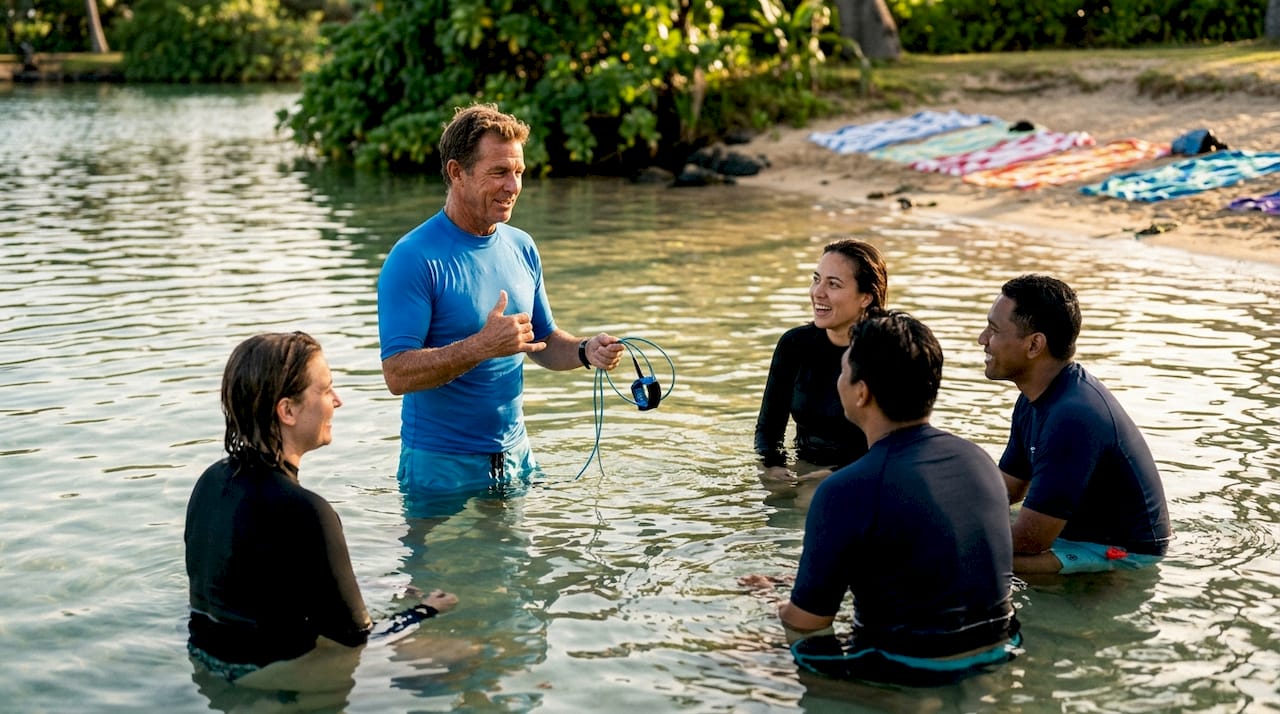
Surf instructors must hold ISA Level 1 or Level 2 certification, plus CPR and first aid as minimum requirements. Lifeguard certification is recommended, though local laws vary on whether it is mandatory. When you book a lesson, these are the credentials worth asking about.
The practical benefit for you is direct. A certified instructor knows how to read ocean conditions, spot hazards, and adjust their teaching to your ability. An uncertified instructor may surf well but lack the training to keep a beginner safe in unpredictable water.
Pro Tip: Before booking any surf lesson, ask the school one direct question: “Are your instructors ISA certified?” A school that cannot answer clearly is a school worth skipping.
Key things ISA certification covers:
- Teaching progressions for complete beginners
- Ocean safety protocols and hazard identification
- Risk management in open water environments
- Emergency response and first aid procedures
- Surf etiquette and environmental awareness
How do you choose the right surf school as a tourist?
The right surf school does more than employ certified instructors. It structures lessons to maximize your safety and your progress. Several criteria separate quality schools from average ones.
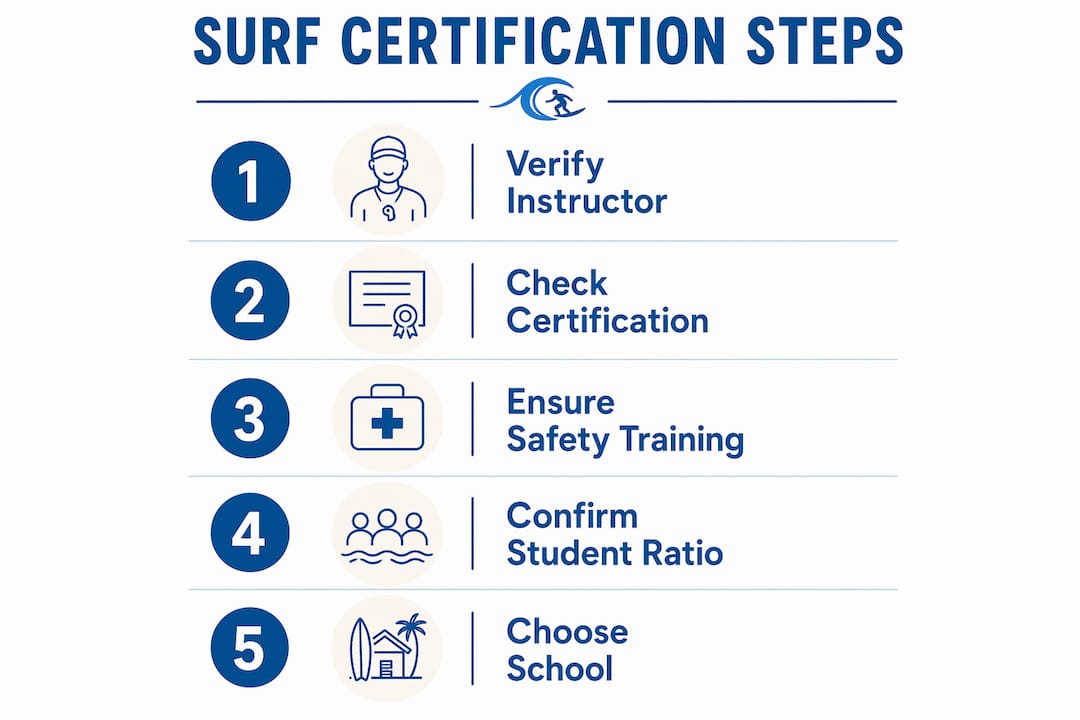
Instructor-to-student ratio is the single most telling metric. Top surf schools cap groups at six students per instructor. Larger groups mean less individual attention, slower progress, and higher risk if something goes wrong in the water.
In-water instruction is non-negotiable. An instructor standing on the beach watching you paddle is not coaching you. The best schools send instructors into the water with students. That physical presence allows real-time correction of your pop-up technique, paddle position, and wave timing.
Equipment quality tells you a lot about a school’s priorities. Beginners need soft-top boards, which are wider, more stable, and far safer than hard fiberglass boards. Rash guards and leashes should be included in the lesson price. Schools that charge extra for basic safety gear are cutting corners.
Here are four questions to ask any surf school before you book:
- Are all instructors ISA certified with current CPR and first aid credentials?
- What is the maximum number of students per instructor in group lessons?
- Do instructors enter the water during lessons or coach from the beach?
- Does the school offer a stand-up guarantee backed by small group sizes?
A stand-up guarantee signals instructor confidence. Schools that offer it typically pair the promise with low student ratios and active in-water coaching. That combination produces results.
Pro Tip: Check whether the school requires you to swim at least 200 meters unaided before joining a lesson. Schools that enforce this requirement take safety seriously. Those that skip it are prioritizing bookings over your wellbeing.
When evaluating schools in unfamiliar destinations, surf school evaluation criteria from established tourism markets provide a useful benchmark for what quality instruction looks like across different regions.
What does learning to surf as a tourist actually involve?
Learning to surf follows a predictable arc. Most beginners stand on a board within their first one or two lessons. Reaching basic proficiency, meaning you can consistently catch and ride unbroken waves, takes 30 or more sessions over 6–18 months. That gap between standing up and surfing well is where most tourists underestimate the sport.
A typical beginner lesson runs about two hours. Group lessons generally cost $25–$45 per session, while private lessons run $60–$90 per hour. Multi-lesson packages offer better value per session and give you the repetition needed to build real muscle memory. Your first surf lesson will cover beach safety, paddling technique, and the pop-up movement before you ever enter the water.
The ideal learning environment matters as much as the instruction itself. Beaches with sandy bottoms, gentle whitewater waves, and surf under two feet reduce injury risk and let you focus on technique rather than survival. Avoid rocky reef breaks or powerful beach breaks as a beginner.
Ocean awareness is a skill that develops alongside surfing technique. Rip currents cause the majority of surf rescues worldwide. The escape technique is simple: swim parallel to shore rather than fighting the current back to the beach. Every certified instructor teaches this in the pre-water safety briefing.
Here is what a standard beginner lesson covers:
- Safety briefing covering rip currents, ocean hazards, and beach flags
- Paddling technique on the sand before entering the water
- Pop-up practice: the movement from lying flat to standing
- Reading whitewater waves and timing your paddle
- Basic surf etiquette: right of way rules and how to fall safely
| Lesson type | Typical duration | Approximate cost | Best for |
|---|---|---|---|
| Group lesson | 2 hours | $25–$45 | First-timers on a budget |
| Private lesson | 1 hour | $60–$90 | Faster individual progress |
| Multi-lesson package | 5 sessions | $120–$200 | Tourists staying a week or more |
What misconceptions do tourists have about surf certification?
The biggest misconception is that tourists need to get certified before they can surf. No such requirement exists anywhere in the world. Surfing is not a licensed activity for recreational participants. You do not need a certificate, a permit, or a formal qualification to paddle out.
The confusion usually comes from marketing. Some surf schools offer “beginner certificates” or “completion cards” at the end of a course. These are not official credentials. They carry no legal weight and are not recognized by any governing body. They are a souvenir, not a qualification.
The only certification that protects you in the water is the one held by your instructor. Tourists do not get surf certified. Instructors do. Before you book a lesson, verify that your instructor holds ISA Level 1 or Level 2 certification, current CPR credentials, and first aid training. Everything else is secondary.
Swimming ability is the one real prerequisite that tourists often overlook. Certified schools require students to swim at least 200 meters unaided. This is not a formality. Ocean conditions change fast, and a surfer who cannot swim is a liability to themselves and to the instructor responsible for them.
The difference between instructor certification and personal surfing ability is also worth understanding. A highly skilled surfer with no teaching credentials is not qualified to run a safe lesson. Certification trains instructors to manage groups, identify hazards, and respond to emergencies. Raw surfing talent does not cover those skills.
Key Takeaways
Surf certification for tourists means verifying instructor credentials, not obtaining a personal license, and the ISA standard is the benchmark that separates safe schools from risky ones.
| Point | Details |
|---|---|
| No tourist certification exists | Tourists do not need personal surf certification; focus entirely on instructor credentials. |
| ISA is the global standard | Look for ISA Level 1 or Level 2 certification plus current CPR and first aid from every instructor. |
| Ratio and in-water coaching matter | Cap group size at six students per instructor and confirm instructors enter the water during lessons. |
| Stand-up guarantees signal quality | Schools offering this guarantee typically back it with small groups and active in-water coaching. |
| Swimming ability is a real requirement | You must swim at least 200 meters unaided before joining any certified beginner surf lesson. |
What I have learned after years of watching tourists learn to surf
Most tourists arrive focused on the wrong thing. They want to know if they need a certificate. They should be asking whether their instructor has one.
The tourists who progress fastest share one habit: they choose conditions over convenience. A gentle, waist-deep whitewater break on a sandy beach teaches you more in two hours than a powerful beach break teaches you in a week. Location selection is a skill most beginners do not know they need. A good instructor makes that choice for you, which is exactly why credentials matter.
Patience is the other variable that separates tourists who leave frustrated from those who leave hooked. The learning curve in surfing is real. Standing up in your first lesson is genuinely achievable. Riding unbroken waves consistently takes months of practice. Both things are true at the same time, and understanding that gap sets realistic expectations.
The tourists I have seen struggle most are those who skip the safety briefing mentally, treating it as a formality before the fun starts. Rip current awareness, wave timing, and fall technique are not bureaucratic checkboxes. They are the skills that keep you safe when conditions shift unexpectedly. Respect the ocean first. The surfing follows.
— Johann
Hhsurf surf lessons for tourists in Waikiki
Hhsurf runs beginner surf lessons in Waikiki with ISA-certified instructors who teach small groups and enter the water with every student. The school’s proven approach gets tourists standing on a board within their first lesson, with all gear included: soft-top boards, rash guards, and leashes.
Every beginner surf lesson at Hhsurf includes a full safety briefing, in-water coaching, and personalized technique feedback. Private lessons are available for tourists who want faster individual progress. Families, solo travelers, and groups all find a format that fits. Book your Waikiki surf lesson with confidence, knowing your instructor’s credentials are the real thing.
FAQ
Do tourists need a surf certification to surf?
No tourist surf certification exists anywhere in the world. Recreational surfing requires no personal license or formal credential.
What is ISA certification for surf instructors?
ISA stands for International Surfing Association. ISA certification is the global standard for surf instructors, covering teaching methods, ocean safety, and risk management.
How many students should a certified surf instructor teach at once?
The recommended maximum is six students per instructor. Smaller groups produce faster progress and safer lessons.
Can a beginner tourist stand up on a surfboard in the first lesson?
Most beginners stand on a board within their first one or two lessons. Consistent wave-riding proficiency takes 30 or more sessions over several months.
What swimming ability do you need before taking a surf lesson?
Certified surf schools require students to swim at least 200 meters unaided. This prerequisite exists because ocean conditions can change quickly and unexpectedly.
0 Comments