
The photographer or surf school owns the copyright to your surf lesson photos the moment the shutter clicks, and buying a photo package usually hands you a personal-use license, not the copyright itself. That license typically lets you post, print, and share for yourself, but not sell or use the images commercially. If you want broader rights, you need to ask for them in writing before or right after your lesson.
TL;DR:
- Buying a surf lesson photo package usually grants a personal-use license, not ownership of the underlying copyright or broader commercial rights.
- The photographer or surf school automatically owns the copyright unless there is a work-for-hire agreement or a signed transfer of rights.
- Using your surf photos for commercial purposes, like ads or product sales, requires a separate license or explicit permission from the copyright owner.
- Schools can photograph you in public lessons without issue, but any commercial marketing use of your likeness requires your written consent, especially for minors.
- Negotiating additional rights should happen upfront through clear, written requests specifying permitted uses, territory, duration, and whether rights are exclusive.
Table of Contents
- Why the photographer or school usually owns the copyright
- What you actually get: personal-use license versus owning the copyright
- Right of publicity and consent: when a school can use your image for marketing
- How to negotiate additional rights: releases, assignments, and sample clauses
- Booking-day checklist: what to ask before you pay
- How a trustworthy surf school handles photo rights
- What matters most in this whole conversation
- If you want clear photo options, book with confidence
- FAQ
- Sources
Why the photographer or school usually owns the copyright
Copyright Office guidance. That means an instructor or hired photographer who snaps your wave ride owns that image by default, even though you are the one riding the wave.
There are exceptions. If the photographer is an employee shooting within the scope of a job, the “work made for hire” doctrine can shift ownership to the employer, in this case the surf school. A written assignment can also transfer copyright, but that requires a signed document, not a verbal agreement.
- Copyright exists automatically once a photo is fixed in a digital file or print.
- The shooter, not the subject, is normally the legal author.
- Work made for hire or a signed assignment are the main exceptions.
Registration is automatic upon creation, but filing with the Copyright Office adds real teeth. Registering gives photographers access to statutory damages and attorney’s fees if someone infringes their work, and group registration lets a school or freelance shooter register a whole batch of lesson photos in one filing rather than one at a time.
What you actually get: personal-use license versus owning the copyright
Owning a photo file is not the same as owning the copyright to it. You might have the JPG on your phone, but the legal right to copy, distribute, or profit from that image still belongs to whoever took it, unless a license says otherwise.
Most surf-photo marketplaces sell a non-exclusive, non-transferable personal-use license. You get permission to use the image for yourself, but the underlying copyright stays with the photographer. Isurf spell out this structure clearly: buyers get personal display and sharing rights, while commercial use requires contacting the copyright owner directly for a separate agreement.
Typical permitted and prohibited uses look like this:
- Permitted: posting to your own social media, printing for your wall, setting it as a phone wallpaper.
- Prohibited without a separate license: using the photo in an ad, selling prints, or putting it on a product you sell.
Pro Tip: Before you pay for a photo package, search the word “commercial” in the fine print. If it’s missing entirely, ask the seller directly what counts as personal use.
Right of publicity and consent: when a school can use your image for marketing
Copyright and publicity rights are two different things. Copyright governs who owns the photo file. The right of publicity governs whether someone can use your face and likeness commercially, and it is controlled mostly by state law rather than federal rule, according to Cornell’s Legal Information Institute.
A school can usually photograph you in a public lesson setting without a problem. But using your image in an advertisement, a brochure, or a promotional social post is a different matter in many states, and that typically calls for your written consent, separate from any copyright the school already holds on the image.
- Right of publicity blocks unauthorized commercial use of your name or likeness.
- Editorial and newsworthy uses are treated differently than advertising uses.
- Minors need a parent or guardian’s signed consent before any promotional use.
If your child is in the lesson, insist on seeing the release form before signing anything. A verbal “it’s fine, we do this for everyone” is not a substitute for a written release that names the specific uses allowed.
How to negotiate additional rights: releases, assignments, and sample clauses
If you want more than personal-use rights, the moment to ask is before you book or at check-in, not after you have already paid and left. Get the answer in an email or a signed release so there is a record of what was agreed.
- Ask what the standard package includes and whether commercial use is available at an added cost.
- Request specific clauses if you want broader rights: permitted uses, duration, territory, exclusivity, photo credit, payment terms, and delivery format (high resolution, watermark-free).
- Decide which tier fits your need: a one-time commercial license for a single ad or product listing, print-only rights for personal framing, or a full copyright assignment, which is rare and usually carries the highest fee.
Marketplace terms from sellers like Wave Cam and SurfShot confirm this pattern: photographers retain ownership by default, and buyers who want anything beyond personal use have to negotiate separately.
Pro Tip: Put your intended use in one sentence when you ask, such as “I want to use this photo on my small business website.” A specific request gets a faster, clearer answer than a vague one.
Booking-day checklist: what to ask before you pay
Before you hand over your card at checkout, run through a short list of questions. It takes two minutes and can save you from a dispute later.
- Who owns the photos: the school, the photographer, or a third-party vendor?
- Exactly what does my purchased license allow me to do with the images?
- If my child is in the lesson, is there a parental release form, and can I see it?
- What is the delivery format and timeline for prints or digital files?
- Are high-resolution, watermark-free files included, or is that an upgrade?
Red flags worth walking away from: a seller who gives only verbal promises with nothing in writing, a license with no visible terms at all, or a policy that tries to forbid you from sharing your own vacation photos on personal social media.
How a trustworthy surf school handles photo rights
A responsible approach looks like this: written release forms, clear parental consent procedures for minors, and transparent pricing when a customer wants rights beyond personal use. Hans Hedemann Surf School offers optional photo and video packages alongside its lessons, built around the same safety-first, consent-focused approach that shapes its instruction methodology.
That combination matters because photo rights questions tend to surface only after money has changed hands; for useful insights on local surf conditions and etiquette, see La Jolla Cove Surfing. A school that documents its terms before you book, rather than explaining them after a dispute, is doing the part of this process that most operators skip.
What matters most in this whole conversation
The legal framework here is not complicated, but most surf schools and photo vendors do not explain it clearly, and most customers never ask. That gap, not the law itself, is where disappointment happens. A beginner assumes that paying for a photo package means they own the picture outright. They usually do not, and the fine print rarely gets read until there is already a disagreement.

The conventional advice, “just read the terms,” is technically correct and practically useless, because terms are often vague or buried. The better habit is asking one direct question before you pay: “Can I use this photo for anything beyond my own personal posts?” That single sentence forces a clear answer and puts it in writing, which is worth more than any clause you might parse later.
Prioritize the written release over the photo quality. A stunning wave shot with no clear usage terms is a liability if you ever want to use it for more than a social post.
— Johann
If you want clear photo options, book with confidence
We built our lesson structure around the same clarity we recommend here: know what you are getting before you pay. Our surf lessons in Waikiki come with optional photo and video add-ons, and we document consent requirements for young surfers rather than leaving it to a verbal promise at check-in.
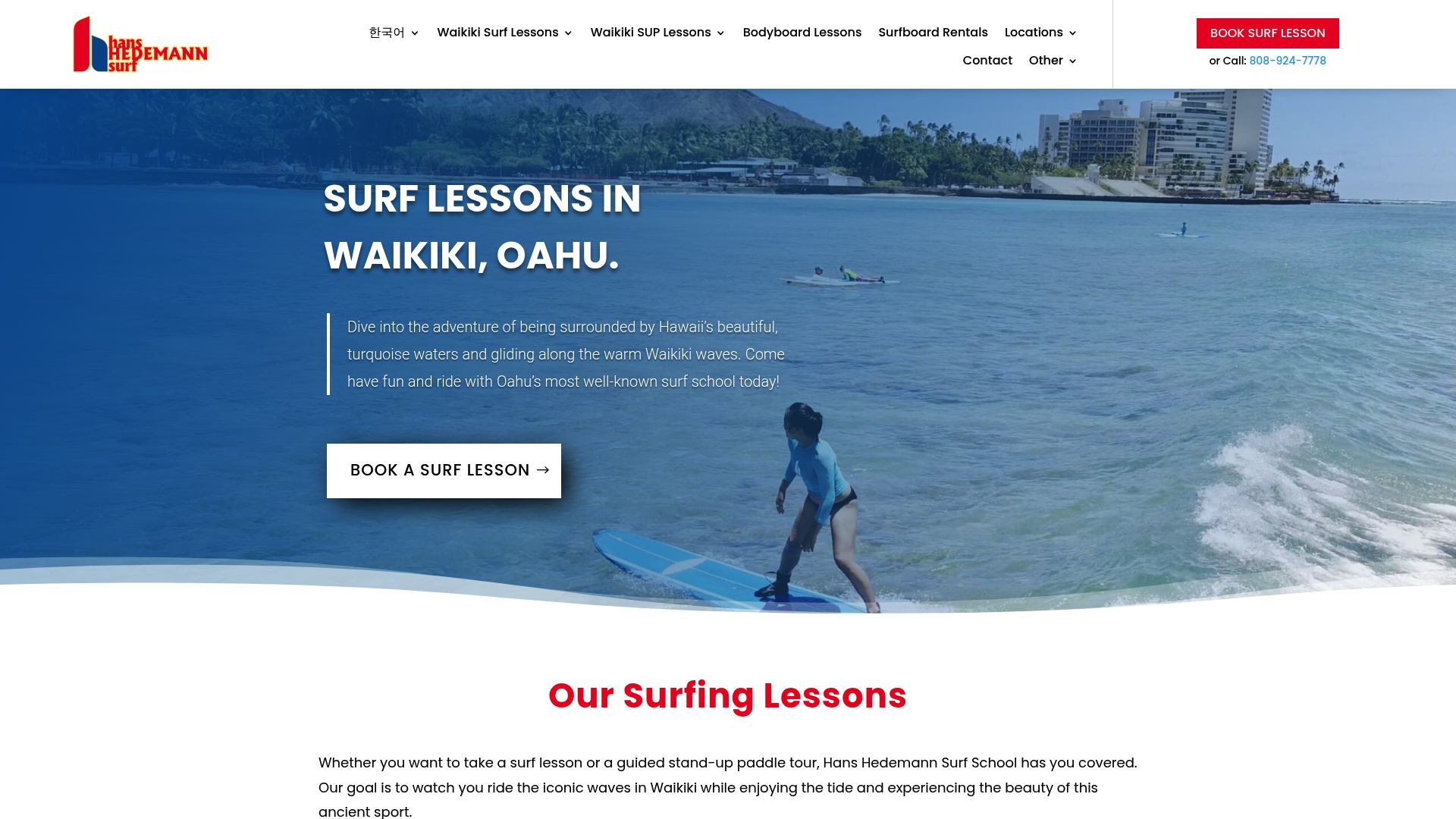
Photo packages are never required to book a lesson with us. If your plans call for more than personal use, such as a business website or a printed campaign, ask us in writing before your session so we can confirm what is available.
- Review our photo packages page before you pay.
- Request any extra usage rights by email so there is a record.
- Bring signed parental consent if a minor is joining the lesson.
Ready to book? Start with our group, semi-private, and private lesson options in Waikiki, or check our North Shore lessons if you want a different stretch of coastline.
FAQ
Who owns the copyright to surf lesson photos?
The photographer or the surf school that employs them owns the copyright by default, since copyright protection attaches automatically to whoever captures the image. Buying a photo package typically gives you a usage license, not the copyright itself.
Can I post my surf lesson photos on social media?
Yes, personal social sharing is almost always included in a standard personal-use license. What is usually excluded is commercial use, such as using the photo in an ad or on a product for sale, which needs a separate agreement with the copyright holder.
Do I need written consent to use a surf school’s photo for my business?
Yes, using someone’s image for commercial promotion typically requires their consent under right-of-publicity rules, and the reverse is also true: if the school wants to use your image in its own marketing, it should get your written consent first, according to right-of-publicity guidance. Verbal agreements are hard to enforce if a dispute comes up later.
What is the 12 second rule in surfing?
The “12 second rule” is informal surf etiquette guidance suggesting a time buffer surfers use when judging right of way or spacing between riders on a wave. Specific definitions vary by region and surf community, so it is best treated as a general courtesy guideline rather than a fixed rule.
What should be in a photo release form for a surf lesson?
A solid release names the specific permitted uses, the duration of those rights, whether the use is exclusive, and any payment terms for commercial use. For a minor, it should also include a parent or guardian’s signature confirming consent, as recommended by right-of-publicity guidance.
Sources
- What Photographers Should Know about Copyright | U.S. Copyright Office
- publicity | Wex | US Law | LII / Legal Information Institute
- Isurf
0 Comments