
Soft-top foam surfboards are the safest and most effective starting point for kids learning to surf, offering high buoyancy, impact absorption, and the stability children need to catch waves and build confidence. The types of surfboards kids beginners should ride differ significantly from what you see pros using, and choosing the wrong shape or size is the single fastest way to kill a child’s enthusiasm for the sport. This guide breaks down every board type, size range, and key feature parents need to know before buying or renting a board for their child.
1. What are the main types of surfboards for kids beginners?
The surfboard market groups beginner-friendly shapes into four main categories. Each serves a different age range, body size, and skill stage.
Soft-top foam boards (foamies)
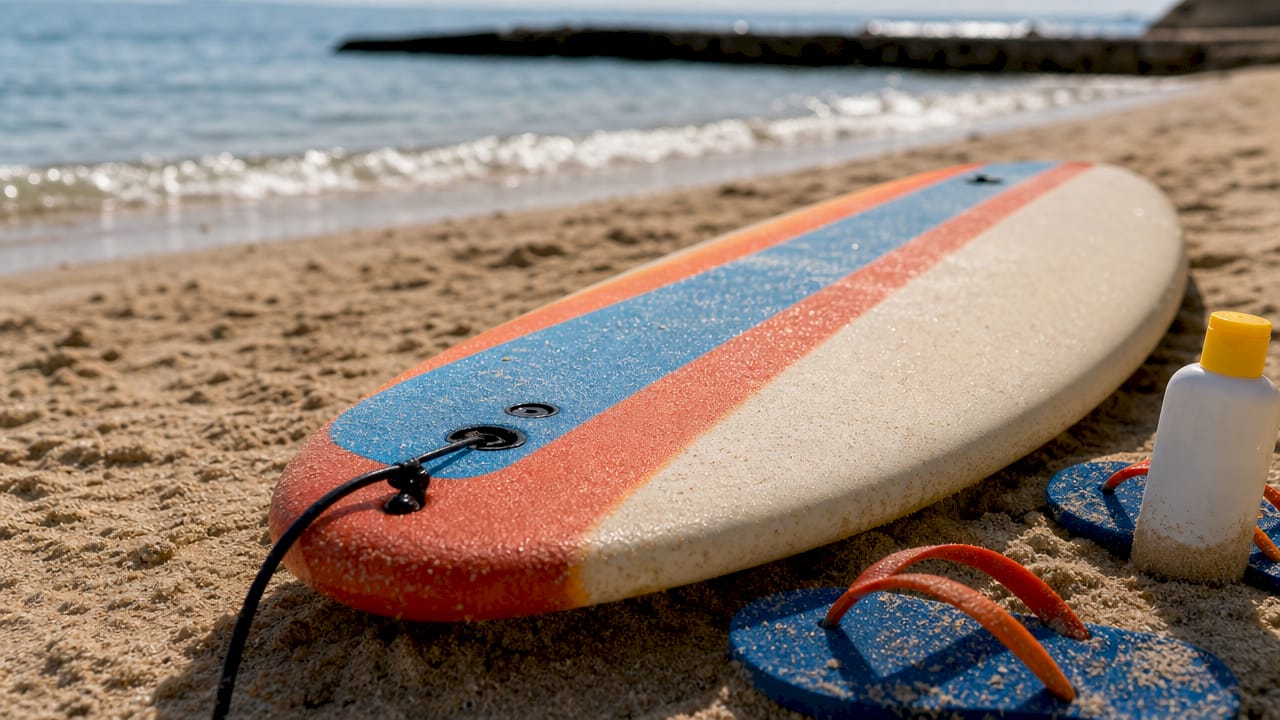
The soft-top foam board is the gold standard for children learning to surf. Industry guidance recommends foam boards for young beginners because of their impact absorption and buoyancy. When a child falls, they land on foam instead of hard fiberglass. That difference matters enormously for safety and for keeping kids willing to paddle back out.
Mini longboards and mini-malibus
A mini longboard runs roughly 7’0" to 8’6" and shares the wide, rounded nose of a classic longboard. Mini-malibus sit in the same family. Both shapes give kids a large, stable platform that catches waves easily. They work best for children ages 10 and up who have outgrown shorter foam boards but are not yet ready for performance shapes.
Fish boards
A fish board has a wide, stubby outline and a swallow tail. It generates speed in small, weak waves and suits intermediate beginners who have already mastered the pop-up and basic steering. Fish boards are not ideal as a first board because their lower volume makes paddling harder for inexperienced kids.
Hybrid and funboard shapes
Hybrid boards blend the width of a longboard with the shorter length of a shortboard. They offer more maneuverability than a mini-malibu while keeping enough volume for consistent wave catching. Larger, more stable boards increase wave-catching opportunities and accelerate learning. Hybrids are a natural bridge for kids moving from foam boards toward performance surfing.
2. How to choose the right size surfboard for your child
Size is the most critical variable in beginner surfboard selection. A board that is too small creates paddling struggles and balance problems that frustrate kids and slow their progress.
Recommended board lengths by age
Board length recommendations vary by age and weight to optimize stability and paddling ease. The table below gives practical starting points.
| Age range | Recommended board length |
|---|---|
| Ages 4–6 | 4’0"–5’8" |
| Ages 7–10 | 5’8"–6’2" |
| Ages 11–13 | 6’2"–7’0" |
| Ages 14+ | 7’0"–8’0"+ |
These ranges assume average height and weight for each age group. A heavier or taller child should move to the longer end of the range, or even the next range up.
Why volume matters more than length alone
Volume, measured in liters, determines how well a board floats a rider. A board with high volume sits higher in the water, paddles faster, and catches waves earlier. Length gives you a rough guide, but two boards of the same length can have very different volumes depending on their thickness and width. When selecting a board for your child, ask about volume, not just length.
Choosing a board too small or with insufficient volume causes paddling and balance struggles. Parents often pick boards based on looks or what they imagine their child will grow into. That approach backfires. A child who cannot catch waves stops wanting to surf.
Pro Tip: If your child is between size ranges, always go bigger. A slightly oversized board is far easier to learn on than one that is too small. Kids grow into boards quickly.
3. Key features that make a beginner board safer and more effective
Size and shape are not the whole story. Several technical features separate a genuinely beginner-friendly board from one that just looks the part.
- Soft, rounded rails. Rails are the edges of the board. Flatter rockers and softer, rounded rails provide more forgiveness and stability. Sharp rails are designed for carving turns, which beginners do not need yet.
- Flat or low rocker. Rocker is the curve of the board from nose to tail. A flatter rocker paddles faster and catches waves more easily. High rocker suits advanced surfers in steep, powerful waves.
- Soft fins. Foam boards typically come with flexible rubber or plastic fins. Hard fiberglass fins can cut skin during a wipeout. Soft fins reduce that risk significantly for young surfers.
- Built-in handles. Many foam boards designed for kids include molded handles on the deck. These make it easier for small children to carry their board from the car to the water without dragging it across the ground.
- Foam density and durability. Not all foam boards are equal. Higher-density foam holds up better to repeated use, dings, and the general abuse kids deliver to equipment. Foam boards significantly reduce injury risk because the soft material absorbs impacts during falls.
Pro Tip: Check whether the board’s leash plug is reinforced. Kids pull on leashes constantly, and a weak plug can tear out of a foam board faster than you expect.
Understanding the role of surfboard shape for beginners goes beyond just picking the right outline. Every design element works together to create a forgiving, confidence-building experience for young surfers.
4. When and how to progress beyond a foam board
Most children spend six months to two years on a foam board before they are ready to move on. Progression is not about age. It is about skill mastery.
Signs your child is ready to progress:
- Consistent pop-ups. They stand up smoothly on nearly every wave, not just occasionally.
- Wave selection. They can read incoming waves and paddle into position without help.
- Basic steering. They can shift their weight to change direction, even slightly.
- Whitewater mastery. They ride broken waves confidently and want to move to unbroken green waves.
Progress to harder boards should follow mastering paddling, wave selection, and pop-ups during whitewater conditions. Rushing this step is the most common mistake parents make. A child who moves to a smaller, harder board before they are ready loses wave count and loses motivation.
The best intermediate options for kids who have cleared these benchmarks are fish boards, mini-malibus, and epoxy shortboards. Epoxy construction makes boards lighter and more buoyant than traditional fiberglass, which suits younger surfers who lack the upper body strength to paddle heavier boards. Learning why kids progress faster often comes down to matching the board to the skill stage, not the other way around.
Soft-top foam boards remain valuable even for experienced surfers in small or weak waves. Do not sell the foam board the moment your child upgrades. Keep it in the quiver for fun sessions and for days when the surf is too small to enjoy on a performance board.
5. Cost, buying used, and what to budget
Beginner surfboards for kids do not need to be expensive. Buying used foam boards is a practical, cost-saving approach because foam boards are durable and hold their value well. A used foam board in good condition typically costs significantly less than a new one and performs just as well for a learning child.
New foam boards designed for kids range widely in price. Higher-end models include features like built-in handles, better fin systems, and denser foam that lasts longer. Budget boards work fine for casual learners but may show wear faster under daily use.
The smartest approach for most families is to buy a used foam board for the first year, then invest in a quality board once the child demonstrates consistent commitment to the sport. Foam boards are nearly indestructible compared to fiberglass, so a used board bought from a reputable surf shop or online marketplace will hold up through an entire season of learning.
Key Takeaways
The right beginner surfboard for a child is always the one that maximizes wave count, prioritizes safety, and matches the child’s actual size and skill level.
| Point | Details |
|---|---|
| Foam boards are the safest choice | Soft-top construction absorbs impacts and reduces injury risk for young beginners. |
| Size by age and volume | Match board length to age range and prioritize volume over looks for consistent wave catching. |
| Shape features matter | Flat rocker, rounded rails, and soft fins create a forgiving, stable learning experience. |
| Progress on skill, not age | Move to fish or hybrid shapes only after mastering pop-ups, wave selection, and steering. |
| Keep the foam board | Experienced kids still benefit from foam boards on small-wave days for fun and confidence. |
What I’ve learned watching kids progress through board types
Parents consistently underestimate how much the board controls the outcome. I have watched children on undersized boards struggle for an entire lesson without catching a single wave, then switch to a proper foam board and stand up within minutes. The board is not a reward for skill. It is the tool that creates skill.
The instinct to buy a board that looks cool or matches what older surfers ride is understandable. Kids want to feel like real surfers. But a child who catches ten waves per session on a foam board builds more confidence and more muscle memory than one who catches two waves on a sleek shortboard. Volume and stability win every time at the beginner stage.
One practical note on cost: foam boards bought secondhand and resold after a season rarely lose much value. They are nearly indestructible. Treating the first board as a short-term tool rather than a long-term investment removes a lot of financial pressure from the decision. Buy the right size, use it until your child outgrows it, then sell it and move up. That cycle works well for most families through the first three or four years of surfing.
— Johann
Hhsurf makes the first wave count for your child
Choosing the right board is step one. Pairing it with expert instruction is what turns a good board into a great first experience.
Hhsurf runs kids surf lessons in Waikiki designed specifically for young beginners, with professional instructors who use proven techniques to get children standing on their boards within the first session. Every lesson prioritizes safety, uses age-appropriate foam boards, and gives kids the individual attention they need to build real confidence in the water. Hhsurf’s instructors know exactly how to match board selection to each child’s size and skill level, removing the guesswork from your first day. You can also explore all surf lesson options to find the right fit for your child’s age and experience.
FAQ
What is the best surfboard type for a young beginner?
Soft-top foam boards are the best choice for young beginners. They offer high buoyancy, impact absorption, and stability that make learning to surf safer and faster.
What size surfboard does a child need?
Board size depends on age and weight. Children ages 4–6 typically start on boards between 4’0" and 5’8", while kids ages 11–13 use boards in the 6’2"–7’0" range.
Are foam boards only for absolute beginners?
Foam boards suit all skill levels for casual, fun sessions. Many experienced surfers keep foam boards for small-wave days because they paddle easily and deliver a relaxed, enjoyable ride.
How do I know when my child is ready to upgrade their board?
Your child is ready to progress when they consistently pop up, select waves independently, and can steer the board. Rushing the upgrade before these skills are solid leads to frustration and fewer waves caught.
Is it worth buying a used foam surfboard for a beginner child?
Yes. Used foam boards are durable, hold their value, and perform just as well as new boards for learning purposes. They are a practical choice for families testing whether a child will stick with the sport.
0 Comments