
Surfing etiquette is the set of unwritten rules that govern how surfers share waves, avoid collisions, and treat each other with respect in the water. Every new surfer needs this surfing etiquette beginners guide before paddling out into a shared lineup. The rules are not optional. They protect you, protect others, and determine whether you are welcomed or resented at any break. Authorities like Surfer.com, Billabong, and WAHA Surf all frame etiquette as both a safety mechanism and a social contract. Get it right from day one, and the ocean becomes a far better place.
What is right of way in surfing, and how do beginners understand wave priority?
Wave priority is the single most important rule in surfing. The surfer closest to the peak has the right of way, full stop. The peak is the highest point of the breaking wave, where the wave first begins to curl. Whoever sits deepest at that spot when the wave arrives owns it.
Most beginners assume that whoever stands up first wins the wave. That is wrong. Priority is determined by position before the wave arrives, not by who pops to their feet fastest. A surfer already paddling into the peak has priority over someone who sprints from the shoulder and stands up a split second earlier. Misreading this is the root cause of most lineup conflict.

Dropping in is what happens when you take off on a wave that someone with priority is already riding. Dropping in and snaking are the two most serious breaches of surf etiquette. Dropping in cuts off the other surfer’s ride, creates a collision risk, and marks you immediately as someone who does not know the rules.
The practical fix is simple: before you paddle for any wave, look toward the peak. If someone is already paddling in from a deeper position, pull back. Aborting a wave you have no right to is not weakness. It is the correct move.
Pro Tip: If you are unsure whether you have priority, you probably do not. Let the wave go and wait for a clear opportunity.
Most conflict arises not from who stands up first but from misreading spatial priority. Train your eyes to read the peak and the paddlers around it before you commit to any wave.
What behaviors should beginners avoid in the lineup?
Bad lineup behavior falls into a few clear categories. Knowing them by name helps you recognize and avoid them.
- Dropping in. Taking off on a wave when another surfer already has priority. This is the most serious breach and can cause direct physical harm.
- Snaking. Paddling around another surfer repeatedly to steal the inside position and claim priority. It is subtle, deliberate, and deeply disrespectful. Beginners sometimes do it accidentally by drifting without realizing they have cut someone off.
- Wave hogging. Catching every wave in sight without giving others a turn. Even if you have the skill to catch ten waves in a row, doing so poisons the lineup atmosphere fast.
- Paddle battles. Aggressively sprinting for position against a local or experienced surfer who has been waiting longer. You will rarely win, and you will always create tension.
- Ditching your board. Letting go of your surfboard when a wave hits you. A loose board becomes a projectile. Hold it or control it at all times.
Good etiquette reduces confusion and collision risk. The goal is smooth, respectful integration into the lineup, not aggressive claiming of waves.
When you arrive at a new break, sit wide and watch for a few minutes. Identify who has been waiting longest. Let a few waves pass. This signals patience and respect, and experienced surfers notice it immediately. You earn your place in the rotation by showing you understand the system, not by charging the peak on your first paddle out.
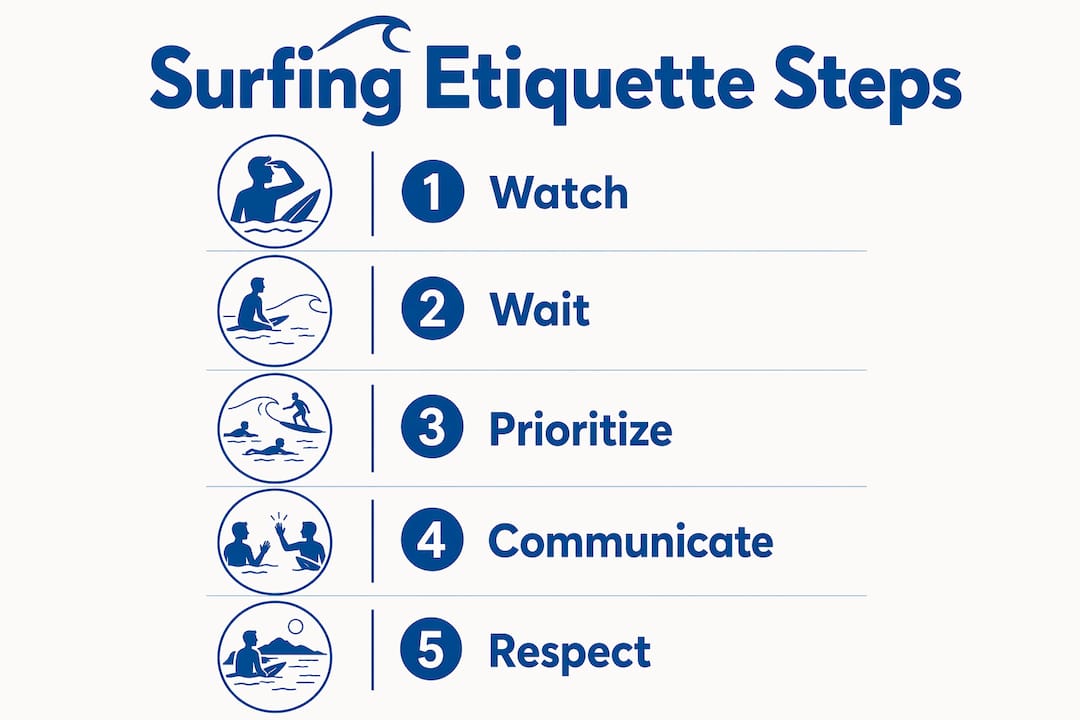
How should beginners paddle out and position themselves?
Paddling out correctly is where beginners cause the most unintentional disruption. The wrong line can ruin someone’s ride before you even catch a wave yourself.
- Paddle around the break, not through it. The channel is the deeper water on the side of the break where waves do not crash. Use it. Paddling straight through the impact zone forces active surfers to dodge you.
- Paddle behind riders, not in front of them. Paddle behind riders on whitewater rather than cutting across the wave face. If a surfer is riding toward you, paddle toward the whitewater behind them, not toward the open wave face where they are heading.
- Start wide and lower in the lineup. Do not paddle straight to the peak on your first session at a new spot. Position yourself on the shoulder, catch smaller waves, and work your way in gradually as you read the break.
- Time your paddle out between sets. Watch the ocean for a lull between wave sets, then paddle out quickly and efficiently. Hesitating in the impact zone creates danger for you and others.
- Call your direction before takeoff. Calling takeoff directions like “going left” or “going right” tells other surfers which way you plan to ride. This one habit prevents a large number of collisions.
Pro Tip: Improving your surf fitness through cross-training gives you better board control and faster paddle speed, which means fewer awkward moments in the lineup.
Timing your position and avoiding aggressive moves to the peak reduces lineup stress and improves your overall wave count as a beginner. Patience is not just polite. It is a tactic that works.
What safety and communication practices do beginners need?
Safety and etiquette overlap more than most beginners expect. The habits that keep you safe are the same ones that make you a good lineup citizen.
- Control your board at all times. Board control is critical to prevent accidents. Never let go of your board when a wave hits you. A surfboard launched into a crowd can cause serious injury.
- Surf waves that match your skill level. Beginners should choose spots with lighter crowds and conditions suited to their ability. Paddling out at an advanced break before you are ready is dangerous for everyone around you.
- Respect local surfers and local culture. Every break has regulars who surf it daily. They know the currents, the peaks, and the unspoken rules of that specific spot. Watch them, learn from them, and do not assume your approach overrides theirs.
- Apologize sincerely when you make a mistake. A calm pull-off and sincere apology resolve most etiquette breaches immediately. Do not argue about who had priority. Pull back, say sorry, and move on.
- Follow beach safety guidelines. Surf Life Saving patrols and lifeguards provide critical safety oversight at many beaches. Swim and surf in designated areas when they apply.
Surfing etiquette is a safety mechanism that reduces collisions and promotes enjoyable sessions for everyone. The rules exist because surfboards are heavy, waves are powerful, and shared water requires coordination. Treat every rule as a safety protocol, not just a social nicety.
Clear verbal communication is underused by beginners. Calling your direction before takeoff, making eye contact with other paddlers, and nodding to acknowledge someone’s priority all reduce ambiguity. The lineup is a shared space. Treat it like one.
Key Takeaways
Beginner surfers who master wave priority, paddle out correctly, and communicate clearly will integrate into any lineup with respect and safety from their very first session.
| Point | Details |
|---|---|
| Wave priority is positional | The surfer closest to the peak has the right of way, regardless of who stands up first. |
| Dropping in is the biggest breach | Taking off on a wave someone else has priority on creates collision risk and damages your reputation. |
| Paddle around the break | Use the channel to paddle out and always paddle behind riders, not across the wave face. |
| Call your direction | Saying “going left” or “going right” before takeoff prevents a large number of collisions. |
| Apologize and move on | A sincere apology resolves most lineup conflicts faster than any argument ever will. |
What I have learned watching beginners in the lineup
The most common mistake I see from new surfers is not ignorance of the rules. It is the assumption that etiquette is something you learn after you get comfortable in the water. That thinking gets people hurt.
Etiquette is not a finishing touch. It is the foundation. A beginner who understands wave priority and paddles out correctly causes far less disruption than an intermediate surfer who charges the peak without reading the lineup. Skill level does not excuse bad behavior, and good behavior earns respect faster than any impressive maneuver.
Surf culture is also changing. Participation has grown sharply over the past decade, and lineups that were once quiet are now crowded. That makes patience more valuable than ever. The surfers who thrive in busy lineups are not the most aggressive ones. They are the ones who read the rotation, wait their turn, and build goodwill over time.
My honest advice: spend your first few sessions watching more than surfing. Sit in the channel. Watch where the peak breaks, who has priority, and how experienced surfers communicate. You will learn more in thirty minutes of observation than in hours of charging blindly. The ocean rewards patience and punishes impatience with equal consistency.
— Johann
Learning etiquette the right way with professional instruction
New surfers who learn etiquette alongside technique from day one avoid the bad habits that take years to unlearn.

Hhsurf, the Hans Hedemann Surf School in Waikiki, teaches beginners proper technique and lineup behavior together in every session. Instructors cover wave priority, paddling routes, and communication before students ever enter the water. That structure means you arrive in the lineup already knowing how to surf with respect for others. Hhsurf’s Waikiki surf lessons are designed for all skill levels, with professional surfers providing hands-on guidance in a safe, supportive environment. Students regularly stand up on their boards within their first lesson, with etiquette built in from the start.
FAQ
What is the most important rule in surfing etiquette?
The surfer closest to the peak has the right of way. Never take off on a wave if another surfer is already riding it or has a deeper position at the peak.
What does “dropping in” mean in surfing?
Dropping in means taking off on a wave when another surfer already has priority. It is the most serious breach of surf etiquette and creates a direct collision risk.
How should a beginner paddle out without disrupting others?
Paddle through the channel on the side of the break, not through the impact zone. Always paddle behind riders on the whitewater side, never across the open wave face.
How do you communicate direction before catching a wave?
Call out “going left” or “going right” as you begin your takeoff. This tells nearby surfers which way you plan to ride and prevents collisions at the peak.
What should you do if you accidentally break surf etiquette?
Pull back from the wave immediately, stay calm, and apologize sincerely. A genuine apology resolves most lineup conflicts without further tension.
0 Comments