
Taking surfing lessons during your vacation is the single fastest way to stand on a board, stay safe in the ocean, and walk away with a skill that lasts long after you land back home. The benefits of surfing lessons on vacation go far beyond just learning to ride a wave. Professional instruction cuts months off the learning curve, builds real ocean confidence, and delivers physical and mental health gains that a week of lounging on the beach simply cannot match. Hhsurf, the Hans Hedemann Surf School in Waikiki, has built its entire program around this reality, getting complete beginners upright on their boards within a single lesson.
1. How surfing lessons accelerate your progress faster than self-teaching
Professional surf instruction reduces the learning curve by months compared to self-teaching because instructors catch and correct technique errors the moment they happen. Bad habits set in fast when you practice alone. An instructor watching your stance, weight distribution, and pop-up timing prevents those habits from ever forming.
The equipment matters just as much as the coaching. Instructors match beginners with soft-top boards sized for their body weight and skill level. That single decision improves your success rate in the water before you even paddle out.
- Immediate feedback: Instructors correct your stance and board angle in real time, saving you from repeating the same mistake dozens of times.
- Right gear from the start: Soft-top boards are forgiving, buoyant, and safe. Self-taught beginners often grab the wrong board entirely.
- Structured progression: Lessons move from beach drills to shallow water to open waves in a logical sequence that builds confidence at each step.
- Wave timing guidance: Instructors teach you to surrender to the wave’s rhythm rather than fight it. That mental shift is the key that unlocks real progress.
Pro Tip: Book at least two or three lessons back to back during your trip. The biggest skill jump happens between your second and fifth session, when your body stops thinking and starts reacting.
2. Physical and mental health benefits of surfing lessons on vacation
Surfing is a full-body workout that most vacationers never expect. Paddling builds shoulder and back strength. The pop-up movement fires your core. Balancing on a moving board activates stabilizer muscles in your legs and hips that most gym routines never touch. A single hour in the water delivers cardiovascular, strength, and balance training simultaneously.
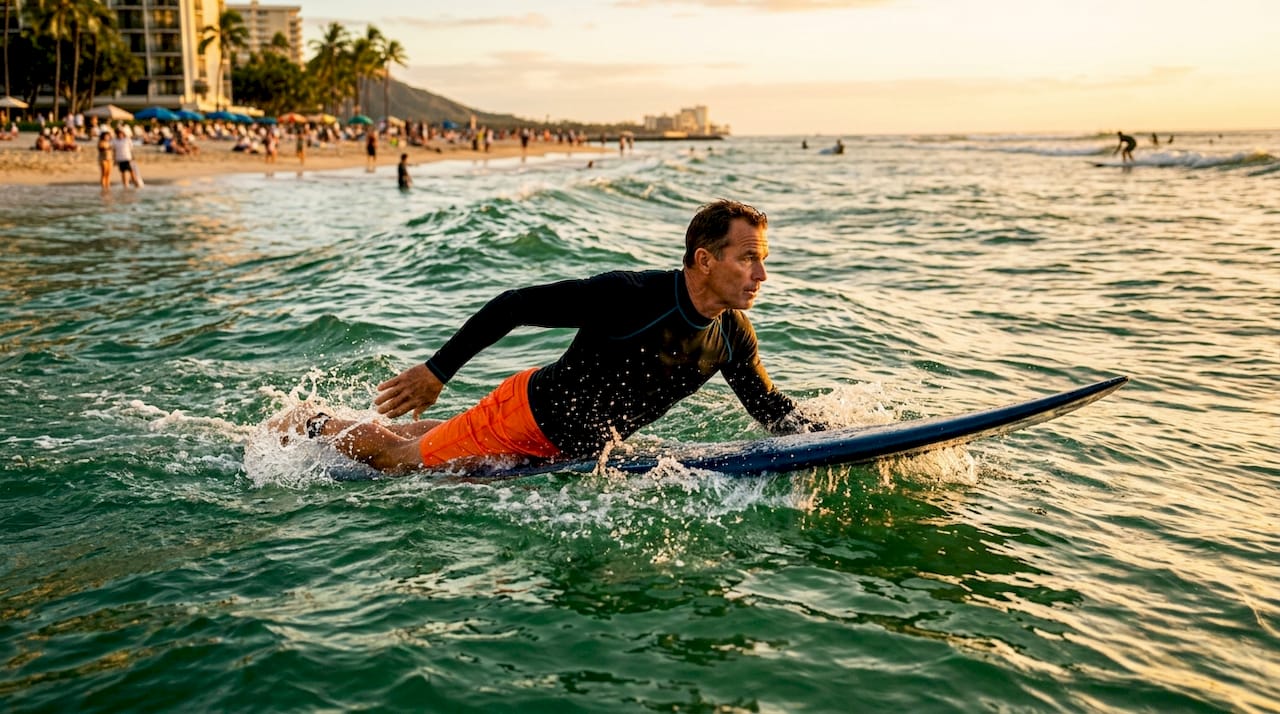
The mental health benefits are equally well documented. Psychologist Josh Dickson describes surfing as “enforced mindfulness” because the ocean demands your complete attention. You cannot think about work emails when a wave is breaking toward you. That forced focus creates a therapeutic flow state researchers call “blue therapy.”
A randomized control trial on surf therapy found that a six-week program reduced anxiety and hyperactivity symptoms in youth participants. That is a clinical result from structured surfing instruction, not casual beach time. The implication is clear: lessons amplify the mental health benefit because they keep you engaged and progressing rather than frustrated and flailing.
- Strength and endurance: Paddling and popping up builds real upper body and core strength within days.
- Balance and coordination: Standing on a moving board trains proprioception in ways land-based exercise cannot replicate.
- Stress reduction: Ocean exposure combined with physical exertion drops cortisol levels measurably.
- Vitamin D and fresh air: Time in the Hawaiian sun during a Waikiki lesson delivers natural mood and immune system support.
- Better sleep: Physical exhaustion from a surf session produces deeper, more restorative sleep that extends your vacation recovery.
3. Safety advantages and confidence-building through guided lessons
The ocean is not a swimming pool. Currents, tides, reef conditions, and wave sets create hazards that an unguided beginner cannot read or predict. Surf lessons embed ocean safety education directly into the curriculum, so you understand what you are dealing with before you enter the water.
Local instructors carry knowledge that no guidebook can replicate. Spot selection by experienced instructors accounts for tide, wind direction, reef layout, and wave size to find conditions that are genuinely safe for beginners. That judgment call alone separates a productive lesson from a dangerous one.
- Pre-water safety briefing: Every lesson starts on the beach with instruction on rip currents, wave sets, and how to fall safely.
- Supervised entry: Instructors guide you into the water and position you correctly before any wave arrives.
- Real-time hazard awareness: Your instructor watches conditions continuously and calls you in if anything changes.
- Equipment as a safety tool: A soft-top board and proper leash keep you connected to a flotation device at all times.
- Milestone-based confidence: Small, achievable goals like catching your first whitewater wave build genuine confidence rather than false bravado.
Pro Tip: Tell your instructor your swimming ability and any physical limitations before the lesson starts. That information shapes every decision they make about your session, from spot selection to wave choice.
4. Social and environmental benefits of surfing lessons on vacation
Group surf lessons create an instant social environment that solo beach days rarely produce. You share wipeouts, cheer each other’s first rides, and bond over a shared challenge. That dynamic makes the experience more memorable and more fun, especially for families or couples learning together.
Lessons also introduce you to surf culture and ocean etiquette from day one. You learn right-of-way rules, how to paddle out without cutting across other surfers, and how to read a lineup. That knowledge makes you a respectful, aware participant in the ocean rather than an accidental hazard.
- Community connection: Shared learning builds friendships with other vacationers and local surfers quickly.
- Environmental awareness: Instructors regularly discuss reef protection, ocean pollution, and responsible beach behavior as part of the lesson.
- Respect for nature: Understanding how tides and swells work deepens your appreciation for the ocean as a living system.
- Long-term engagement: Vacationers who learn to surf in a structured setting are far more likely to continue surfing and supporting ocean conservation efforts at home.
“The ocean is not something you conquer. It is something you learn to move with.” This is the mindset that good surf instructors pass on, and it shapes how students relate to the ocean for the rest of their lives.
5. Why surfing lessons are especially valuable for kids on vacation
Children learn physical skills faster than adults, and surf lessons are specifically designed to use that advantage. Kids who take structured surf lessons develop balance, coordination, and water confidence at a pace that consistently surprises parents. The structured environment also teaches discipline and focus in a setting that feels like pure play.
The safety argument is even stronger for children. Kids lack the experience to read ocean conditions, recognize rip currents, or understand wave timing. A qualified instructor provides constant supervision and adjusts the session instantly if conditions change. That supervision is not something a parent in the water can reliably replicate.
Family surf lessons create shared memories that outlast any hotel amenity. When a child stands up on a board for the first time, the moment is genuinely unforgettable. Hhsurf’s kids surf lessons in Waikiki are built around exactly that outcome, with instructors trained to make the experience safe, fun, and successful for young learners.
6. Choosing the right lesson format to maximize your vacation
Not every lesson format delivers the same result. The right choice depends on your goals, your schedule, and how much time you have in the water.
| Format | Best for | Key advantage |
|---|---|---|
| Single group lesson | First-timers wanting a taste | Low cost, social, great introduction |
| Multi-day group package | Vacationers with 3+ days | Builds on each session; biggest skill gains |
| Private lesson | Fastest individual progress | One-on-one correction and personalized pacing |
| Family package | Groups with kids and adults | Shared experience, safety-focused instruction |
| All-inclusive surf camp | Dedicated surf trips | Eliminates logistics, maximizes water time |
Private lessons deliver the fastest individual progress because every correction and every wave choice is made for you specifically. Group lessons offer social energy and are excellent value for beginners who benefit from watching others learn. Multi-day packages produce the most measurable skill improvement because the largest gains happen between sessions two and five, not in a single afternoon.
All-inclusive packages remove every logistical friction point, from gear rental to transportation to meal planning. That reduction in stress means more mental energy goes toward actually learning to surf. For a vacation where time is limited, that efficiency matters.
Pro Tip: If you are booking for a family, look for schools that offer family surf lessons with instructors who specialize in mixed-age groups. The coaching approach for a seven-year-old is genuinely different from the one used for an adult.
Key takeaways
Surfing lessons during a vacation deliver faster skill gains, better safety outcomes, and deeper physical and mental health benefits than any amount of unguided time in the water.
| Point | Details |
|---|---|
| Accelerated skill acquisition | Professional correction prevents bad habits and cuts months off the self-teaching timeline. |
| Real safety education | Instructors select safe spots and teach ocean awareness before you ever enter the water. |
| Full-body health benefits | Surfing builds strength, balance, and endurance while reducing stress through blue therapy. |
| Social and cultural value | Group lessons build connections and teach surf etiquette that makes you a respectful ocean participant. |
| Lesson format matters | Multi-day and private formats deliver the biggest skill gains for vacationers with limited time. |
What I’ve learned watching beginners catch their first wave
I have watched hundreds of first-timers walk onto a beach with zero surfing experience and walk off an hour later with a skill they will carry for life. The pattern is always the same. The people who take a proper lesson stand up. The people who borrow a board and figure it out alone spend most of their time underwater.
What surprises most beginners is how much of surfing happens before the wave arrives. Board angle, body position, paddle timing. Get those wrong and no amount of effort fixes it once the wave hits. An instructor standing in the water next to you, adjusting your hands and shifting your weight, changes the outcome completely. That physical correction is something no YouTube video can deliver.
The mental shift is just as real. Surfing forces you to be completely present. You cannot plan your next meeting while reading a wave. That enforced focus is genuinely restorative in a way that most vacations are not. People come off the water looking lighter. That is not a metaphor. It is a consistent, observable result.
My honest advice: do not treat a surf lesson as a box to check on your vacation itinerary. Treat it as the main event. Book more than one session. Give yourself the chance to move past the first-lesson awkwardness and into the second-lesson confidence. That is where the real experience lives.
— Johann
Hhsurf lessons in Waikiki: built for vacationers
Hhsurf, the Hans Hedemann Surf School, runs lessons at Waikiki and the North Shore with one clear goal: get you riding waves within your first session. Every instructor is a professional surfer who knows how to read conditions, select the right spot, and deliver real-time corrections that produce results fast.
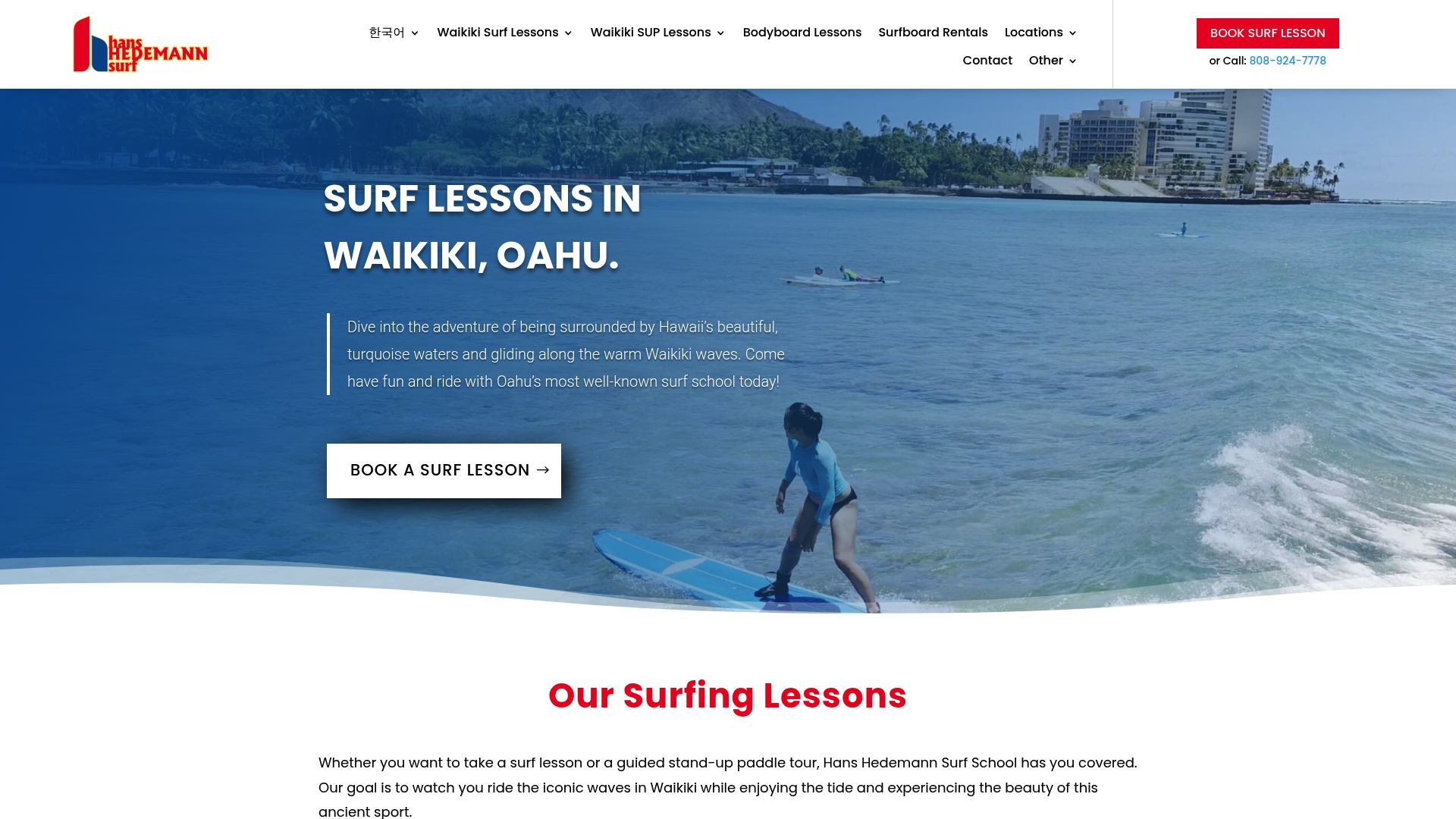
Whether you want a private surf lesson for the fastest individual progress or a group session that the whole family can share, Hhsurf has a format built for your trip. Equipment is included, safety is built into every session, and the Waikiki location gives beginners some of the most forgiving waves in the world. Book your Waikiki surf lesson before your trip fills up.
FAQ
What are the main benefits of surfing lessons on vacation?
Surfing lessons on vacation accelerate skill acquisition, improve ocean safety, and deliver full-body physical and mental health benefits that unguided attempts cannot match. Professional instruction corrects technique errors immediately, preventing the bad habits that slow self-taught surfers for months.
Is one surf lesson enough to learn to surf?
One lesson gives you the fundamentals and a real chance to stand up, but the biggest skill gains happen between your second and fifth session. Booking a multi-day package during your vacation produces measurably better results than a single session.
Are surf lessons safe for kids?
Surf lessons are one of the safest ways for kids to enter the ocean because instructors provide constant supervision, select beginner-appropriate conditions, and teach water safety from the start. Hhsurf offers dedicated kids surf lessons designed specifically for young learners.
What is the difference between private and group surf lessons?
Private lessons deliver faster individual progress through one-on-one coaching and personalized wave selection. Group lessons offer a social, energetic environment at a lower cost and are excellent for beginners who benefit from watching others learn alongside them.
Do surf lessons help with stress and anxiety?
Research confirms that structured surf programs reduce anxiety symptoms. Psychologist Josh Dickson identifies surfing as “enforced mindfulness” that creates a therapeutic flow state, and a clinical trial found measurable anxiety reduction in participants after a surf therapy program.
0 Comments