
Yes, a guided surf lesson is one of the most reliable team-building bookings you’ll make on Oahu. Book a group session with a professional surf school in Waikiki or on the North Shore, typically lasting around two hours, matched to your headcount and skill mix. Pick a provider that bundles equipment, a safety briefing, trained instructors, and an optional photo package, and the event runs itself on the day.
TL;DR:
- Group surf lessons on Oahu typically last two hours, including instruction, safety briefing, and equipment, with content tailored to all skill levels.
- Booking early, especially during peak seasons, ensures availability and allows planning for tide conditions, ability levels, and location preferences.
- Waikiki is ideal for beginners and large groups due to its calm, consistent waves and proximity to hotels, while the North Shore offers a more authentic surf experience with more variable conditions.
- Pricing usually follows either a per-person rate or a flat fee for the entire group, with additional costs for photos, private instruction, or permits.
- A well-structured lesson includes land demonstrations, dry drills, supervised water practice, and instructor rotation, maximizing safety and progress for all participants.
Table of Contents
- Why Team Building Surfing on Oahu Actually Works
- What a Corporate Surf Session on Oahu Actually Includes
- Planning Checklist for Organizers
- Waikiki or North Shore: Which Beach Fits Your Group?
- How Corporate Surf Lessons Are Priced
- Why Hans Hedemann Surf School Is a Strong Fit for Corporate Groups
- What I’ve Learned Running Surf Days for Teams
- Book Your Group Surf Lesson With Hhsurf
- Sources
- FAQ
Why Team Building Surfing on Oahu Actually Works
Standing up on a board for the first time in front of coworkers is a small, public risk. That’s the point. Everyone starts at zero, everyone wobbles, and everyone claps when the quiet analyst from accounting rides one in standing up. Shared physical challenge with a visible finish line, one person catching a wave while the rest cheer from the water, does more for cohesion than a trust fall ever will.
Teams that come back from a surf-based offsite tend to report the same things: better cross-team rapport, a bump in morale that outlasts the trip, and easier conversations across departments that rarely interact. That effect holds only when the surf session sits inside a larger, intentional agenda rather than functioning as a standalone perk tacked onto a work trip.
Oahu makes the logistics easy in a way that matters more than planners expect. The island pairs Honolulu’s hotel density and infrastructure with beach access and a manageable climate, so you’re not chartering buses for an hour each way just to reach sand. A few concrete benefits organizers cite most often:
-
Visible individual progress within a single two-hour session, which builds confidence fast.
-
A shared story the team keeps referencing months later.
-
Natural conversation starters between people who don’t normally work together.
-
Low logistical overhead compared to multi-day retreat formats elsewhere.
What a Corporate Surf Session on Oahu Actually Includes
A well-run group lesson follows a tight, repeatable structure, not a loose beach hangout. Most providers on Oahu run sessions around two hours total, which is long enough for real progress and short enough to fit before lunch or between meetings.
- Check-in and waivers. Staff verify headcount, collect signed waivers, and size boards and rash guards for the group.
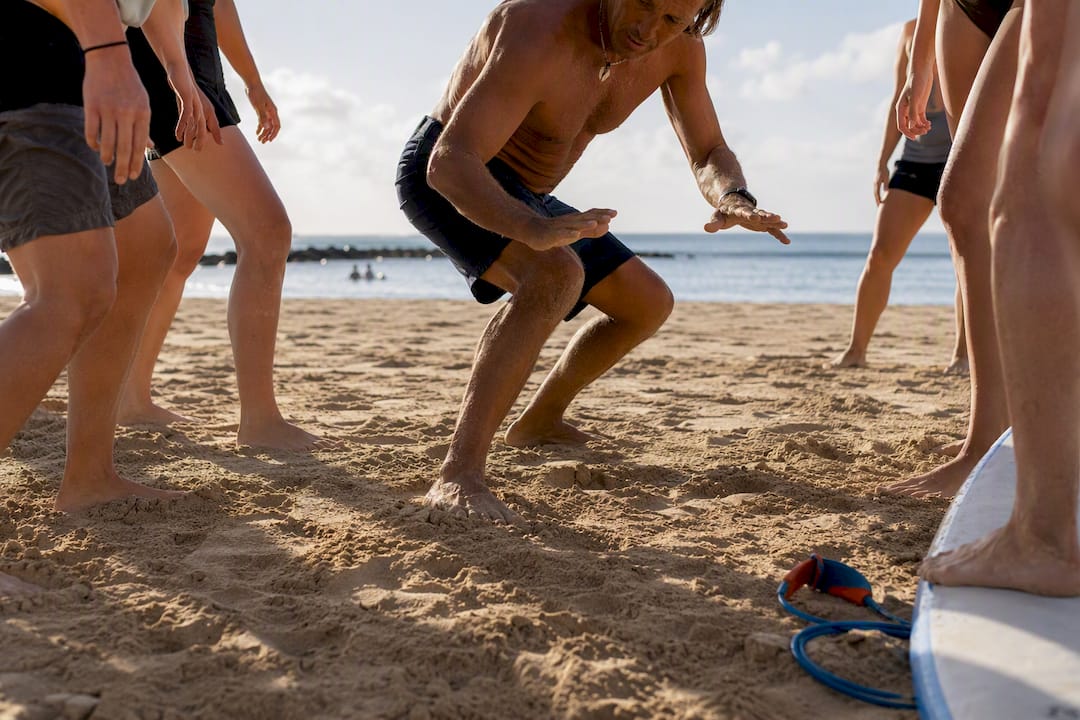
- Land demonstration. An instructor walks through the pop-up motion, paddling technique, and basic ocean safety on the sand.
- Technique drills. Participants practice the pop-up on their boards, dry, until the motion is muscle memory.
- Paired water time. Groups head into the shallows with instructors, usually rotating so everyone gets coached individually.
- Coached surf time. This is the main event, catching whitewater waves with an instructor pushing and calling timing.
- Group debrief and photos. A quick wrap-up on the beach, plus time for photos or handoff of any video captured.
Pro Tip: Ask your provider how they structure instructor rotation for mixed-ability groups. A school that stages coached water time in waves rather than one long block keeps stronger surfers challenged while beginners still get individual attention.
Standard inclusions typically cover the board, leash, rash guard, and reef shoes where required, plus instruction for the full session. Groups running larger events often add a photo or video package to capture people standing up on their first wave, which tends to be the most shared image from the whole trip. Reputable operators emphasize a clear instructor-to-participant ratio and a staged teaching progression, land demo, sand practice, then supervised water time, specifically because it gets beginners riding safely on their first attempt rather than guessing in the lineup.
Planning Checklist for Organizers
Booking the lesson is the easy part. The logistics around it decide whether the day feels effortless or chaotic.
Before the event:
- Lock a date and time with a favorable tide window; ask your provider which hours run calmest for beginners.
- Confirm final headcount and get an honest read on swimming ability across the group.
- Arrange transport from hotels and build in buffer time, especially if you’re heading to the North Shore.
- Collect signed waivers ahead of arrival so check-in doesn’t eat into lesson time.
- Confirm your provider’s insurance coverage and ask whether your company needs its own event permission or rider.
Day of the event:
- Build in a 15 to 20 minute arrival and check-in window before the scheduled start.
- Expect a short warm-up and safety briefing before anyone touches water.
- Ask how instructors will be assigned across ability levels, and whether they’ll swap partners mid-session.
- Designate one person to manage the photo or video handoff so nothing gets lost after the event.
After the event:
- Send a short survey within a day or two while the experience is fresh.
- Share photos and video with the whole team, not just attendees, to extend the reach of the event.
- Turn a moment or two from the day into a workplace callback, a Slack shoutout, a slide in the next all hands, so the experience does more than live in a photo album.
Pro Tip: Skip the generic “how did you like it” survey. Ask one specific question instead, “What’s one thing you noticed about how your team worked together in the water?” You’ll get answers you can actually use in a debrief.
Waikiki or North Shore: Which Beach Fits Your Group?
The two most common venues for corporate surf events on Oahu solve different problems, and picking wrong adds friction you didn’t need.
Waikiki is the default choice for most companies, and for good reason. The waves are sheltered and consistent, ideal for total beginners, and the beach sits within walking distance of most Honolulu hotels. For a large group or a tight schedule squeezed between meetings, Waikiki cuts out the travel variable entirely, which matters more than people expect once you’re coordinating thirty or forty schedules.
The North Shore trades convenience for scenery and a more authentic surf culture experience. Conditions vary more by season, and some operators run exclusive lessons for groups of ten or more rather than open sign-ups, which suits a smaller, more surf-curious group willing to spend an hour or more in transit each way.
A few other variables worth checking before you commit to a beach:
- Winter months bring bigger surf, especially on the North Shore, which can push beginner lessons to different breaks.
- Shoulder seasons (April through June, September through November) run less crowded and typically calmer.
- Some beach locations require permits for large group gatherings; ask your provider who handles that paperwork.
- Factor in whether your group skews toward first-timers or includes people who’ve surfed before.
How Corporate Surf Lessons Are Priced
Pricing on Oahu surf lessons generally follows one of two models, and knowing which one you’re being quoted saves you from a surprise invoice.
- Per-person rate. Common for groups under a certain size, where each participant is billed individually and the total scales with headcount.
- Flat group fee. More common for larger bookings or full corporate buyouts, where you pay one price for a set instructor team and time block regardless of the exact final count.
- Private or semi-private add-ons. Reserving instructors exclusively for your group, or booking outside standard hours, typically carries a premium over the standard group rate.
A handful of factors push the price up or down: the instructor-to-guest ratio you request, whether you add a photo or video package, transport if you’re bundling it into the booking, permit costs for certain beach locations, and the season. Some organizers also bundle surf time with other activities, land-based team challenges through operators like Kualoa Ranch, which can affect total cost and scheduling.
Before you sign off on a quote, get straight answers to a few questions: What’s the group minimum? What’s the cancellation and weather refund policy? What exactly is included, board, wetsuit, photos? What certifications do the instructors hold? And does the quote include liability insurance, or is that on your company?
Why Hans Hedemann Surf School Is a Strong Fit for Corporate Groups
One surf school built its reputation on getting first-timers standing up fast, which is exactly the outcome a corporate event needs on a fixed schedule. The proven teaching methodology emphasizes individual attention within a group setting, so nobody gets lost in the back of a crowd waiting their turn.
Lessons are taught by instructors who focus on proper technique from the first minute in the water, not just getting people up on a board and hoping for the best. Participants often report standing up and riding a wave within their first session, a track record the school points to as evidence its progression, land demo through coached surf time, actually works under real beginner conditions.
The school runs private, semi-private, and group lessons in Waikiki, plus North Shore lessons for groups wanting that setting instead. Safety is a central focus, with a supportive, low-pressure teaching style set against calm water conditions that make it easier for nervous first-timers to relax and actually learn.
When you reach out to book, come prepared with:
- Your target dates and preferred time of day.
- Final or estimated headcount.
- A rough read on the group’s ability mix, mostly beginners versus some prior surf experience.
- Preferred beach, Waikiki or North Shore.
- Any add-ons you want, photo or video packages, private instruction for VIPs or leadership.
What I’ve Learned Running Surf Days for Teams
Mixed-ability groups do best with an early morning slot. Winds stay calmer, water is less crowded, and nobody’s fighting afternoon fatigue on top of new muscles. Always ask your provider for a rain or high-surf contingency plan before you book. It’s rarely needed, but the one time it is, you’ll be glad the answer wasn’t “we’ll figure it out.”
Non-surfers and reluctant participants usually come around once they see a teammate catch a wave, but give them a job anyway. Photographer, cheerleader, timekeeper, something that keeps them engaged from the sand if they opt out of the water. For measuring impact, skip the long survey. One sharp question and a few photos tell you more about whether the day worked than a five-page form ever will.
— Johann
Book Your Group Surf Lesson With Hhsurf
Once you’ve settled on a date and a beach, booking is the last hurdle, and this surf school aims to make that step fast instead of another vendor back and forth. Where other providers might require multiple emails to nail down instructor ratios or what’s actually included, Hhsurf’s group lesson page lays out equipment, safety briefing, and instruction as one package, so your quote request comes back with a real answer, not a follow-up call.
Reach out through the surf lessons booking page with your date range, final headcount, ability mix, hotel location, and any add-ons you want, photo packages, private instructors for leadership, or a North Shore location instead of Waikiki. Peak season and large groups fill up fast, so lock your date a few weeks ahead if you can. Once it’s booked, the school handles gear, the safety briefing, and beginner instruction end to end, so your job on the day is showing up and watching your team stand up on a board for the first time.
FAQ
What are some good team building activities in Honolulu besides surfing?
Land-based options near Honolulu include ranch-style corporate packages that combine outdoor challenges with catered meals, such as those offered at Kualoa Ranch, often paired with a surf session for a fuller day.
Do participants need to know how to swim for a group surf lesson?
Basic swimming ability is generally expected since lessons take place in shallow, sheltered water with instructors nearby, but confirm your provider’s specific requirement when booking, especially for participants who are uneasy in open water.
What should participants wear or bring to a corporate surf lesson?
A swimsuit under comfortable clothes, sunscreen, a towel, and water are the essentials. Most providers, including Hhsurf, supply the board, leash, and rash guard as part of the group lesson.
How far in advance should we book a corporate surf event on Oahu?
Book several weeks ahead for peak season or large groups, since instructor availability and preferred time slots fill quickly during busier travel months.
Is Waikiki or the North Shore better for a company with mostly first-time surfers?
Waikiki is the stronger choice for beginners and large groups because of its sheltered, consistent conditions and proximity to Honolulu hotels, while the North Shore suits smaller, more surf-curious groups with extra travel time to spare.
0 Comments