
Box jellyfish typically show up on Waikiki’s shoreline 8 to 12 days after each full moon, a pattern tracked by the Waikīkī Aquarium’s Box Jellyfish Calendar. It applies most reliably to south-facing Oʻahu beaches such as Waikiki, Ala Moana, and Hanauma Bay. Treat it as a planning tool, not a guarantee, and always confirm with lifeguards before you get in the water.
TL;DR:
- Jellyfish tend to arrive on Waikiki beaches 8 to 12 days after each full moon, with the timing influenced by lunar cycles and tidal shifts.
- The pattern is most reliable at south-facing beaches like Waikiki, Ala Moana, and Hanauma Bay, but environmental factors can cause deviations.
- Always confirm water conditions with lifeguards and posted flags on the day of your visit, regardless of the predicted window.
- Wearing a full-coverage rash guard significantly reduces sting risk during high-alert periods, especially within the predicted watch windows.
- Guided surf lessons offer real-time condition monitoring, making them safer options than relying solely on calendar predictions.
Table of Contents
- Waikiki Jellyfish Calendar: 2026 Watch Windows by Month
- How the Lunar Cycle Predicts Jellyfish Timing
- Which Oʻahu Beaches Does This Calendar Apply To?
- What to Do If You Get Stung
- Planning a Beach or Surf Day Around the Calendar
- What Local Instructors Watch For Before Every Lesson
- Book a Guided Lesson Instead of Guessing at Conditions
- Where to Check Before Your Trip
- Sources
Waikiki Jellyfish Calendar: 2026 Watch Windows by Month
Each window represents the stretch of days when box jellyfish are statistically most likely to concentrate along south-facing shores, based on the UH research on lunar cycle and jellyfish timing.
Here’s how the projected 2026 windows break down. Dates mark the full moon, followed by the predicted arrival window several days after the full moon that follows it.
| Month | Full Moon Date | Predicted Watch Window |
|---|---|---|
| January | January 3 | January 8 to 12 |
| February | February 1 | February 6 to 10 |
| March | March 3 | March 8 to 12 |
| April | April 1 | April 6 to 10 |
| May | May 1 | May 6 to 10 |
| May (blue moon) | May 29 | June 8 to 12 |
| June | June 27 | July 4 to 8 |
| July | July 27 | August 3 to 7 |
| August | August 25 | September 4 to 8 |
| September | September 23 | October 4 to 8 |
| October | October 25 | November 1 to 5 |
| November | November 22 | December 1 to 5 |
| December | December 21 | December 29 to January 2 |
These dates are estimates drawn from lunar timing, not confirmed sightings. Jellyfish can appear outside these windows or stay away during a predicted one. Public tracking pages like SafeToSwimHawaii’s jellyfish calendar echo the same caveat: use the table to plan around, then check current conditions the morning of your visit.
How to use this table: pick your beach day, glance at whether it falls inside a watch window, and treat that as a “pack the rash guard and check in with lifeguards first” signal rather than a reason to cancel. Same-day status always beats a calendar printed months in advance.
How the Lunar Cycle Predicts Jellyfish Timing
Box jellyfish spawn in deeper water, and tidal shifts tied to each full moon push currents toward shore about a week later. UH researchers documented this pattern by tracking jellyfish behavior and current conditions that concentrate animals along specific coastlines rather than spreading them evenly around the island.
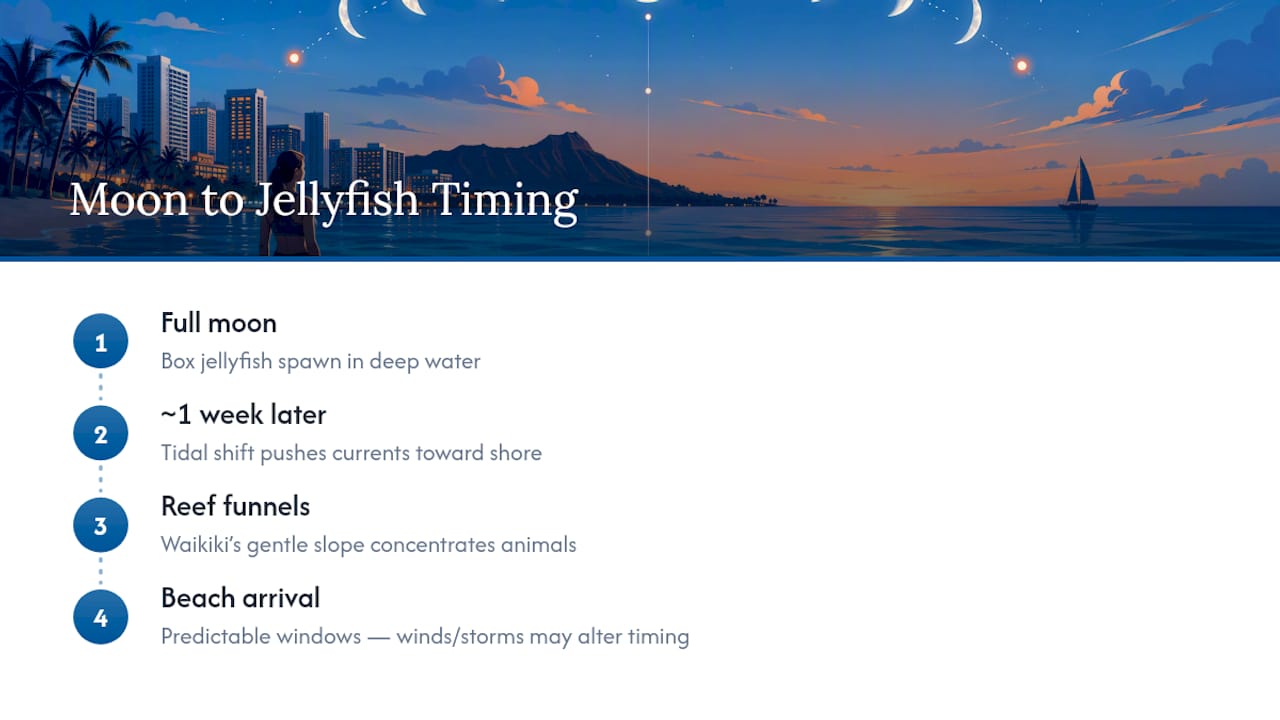
Reef shape matters as much as the moon. Waikiki’s gently sloping, south-facing reef acts almost like a catch basin, funneling jellyfish toward the beach as currents shift. The North Shore’s steeper bathymetry and different current exposure don’t produce the same predictable buildup, which is why this calendar barely applies there.
Various environmental factors such as winds, storms, and currents can influence jellyfish arrival timing, sometimes causing deviations from predicted windows. That variability is exactly why the calendar carries the same disclaimer the aquarium prints on its own page: jellyfish may show up any day of the year, moon phase or not.
Which Oʻahu Beaches Does This Calendar Apply To?
The lunar pattern is strongest at a specific set of south-facing beaches, and weaker or unreliable everywhere else.
- Waikiki Beach sees the clearest signal, thanks to its shallow, south-facing exposure and heavy visitor traffic that makes lifeguard reporting consistent.
- Ala Moana Beach Park shares Waikiki’s south shore orientation and shows a similar arrival pattern.
- Hanauma Bay follows the same lunar timing, though its enclosed bay shape can trap jellyfish longer once they arrive.
- Some south shore beaches near Kihei, Maui occasionally show the same pattern, though it’s less consistently documented than on Oʻahu.
- North shore Oʻahu and neighbor island beaches facing other directions don’t reliably follow this timing at all.
If your plans fall inside a predicted window and you’re not sure which stretch of sand to pick, stick to the lifeguarded sections of these beaches. A guarded tower means faster warning flags and faster help if something goes wrong.
What to Do If You Get Stung
Move fast, but don’t panic. Box jellyfish stings hurt, but most are treatable on the beach within minutes when you follow the right steps.
- Get out of the water immediately and alert a lifeguard.
- Rinse the sting area with vinegar if available; avoid fresh water, which can worsen the reaction.
- Do not rub the area or scrape it with sand, a credit card, or anything else. That myth actually spreads the stinging cells rather than removing them, according to UH research on jellyfish sting treatment.
- Remove any visible tentacle fragments carefully, using tweezers or a gloved hand.
- Call 911 for signs of a severe reaction: difficulty breathing, chest pain, widespread welts, or dizziness.
Lifeguards on duty are trained for exactly this and typically carry vinegar and first-aid supplies. The Hawaii Department of Health also maintains live water quality and beach advisories worth checking before you head out.
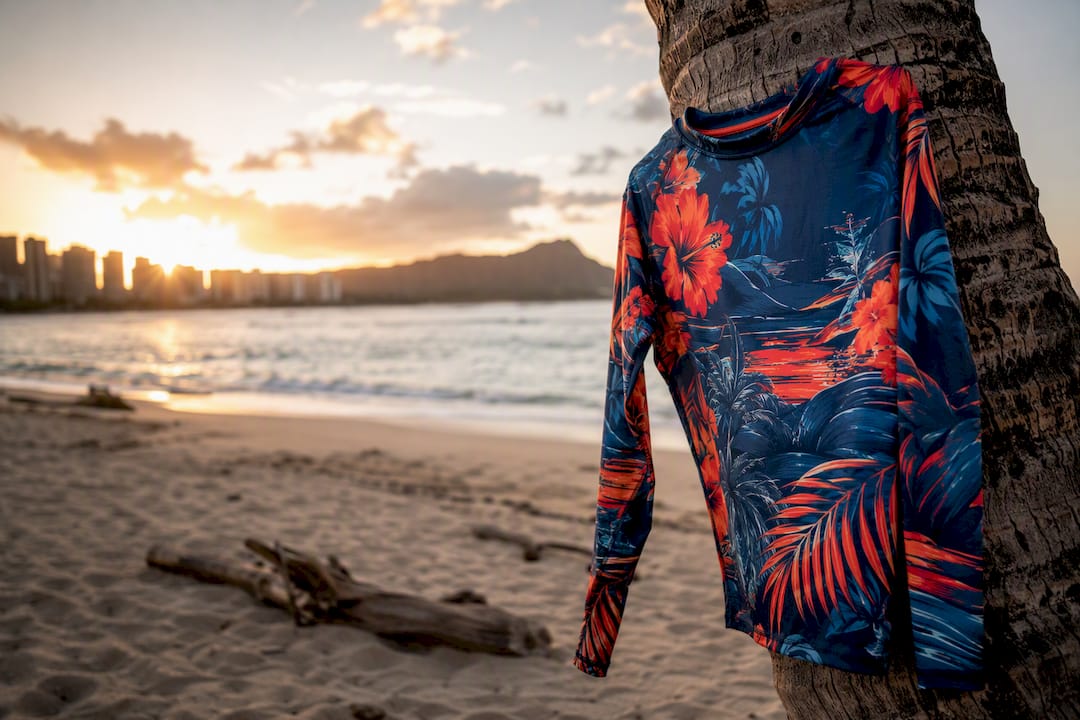
Pro Tip: A full-coverage rash guard cuts down exposed skin significantly and takes seconds to put on. If you’re heading out during a predicted window, it’s the cheapest insurance you’ll buy that day.
Planning a Beach or Surf Day Around the Calendar
Check the watch windows early when you’re mapping out your trip, then confirm again the morning of with lifeguards or posted purple warning flags. Purple flags mean jellyfish or other stinging hazards have been spotted that day, and they override anything a calendar predicted weeks earlier.
If your dates land inside a window and rescheduling isn’t an option, pick a lifeguarded beach, go with a guided operator who tracks conditions in real time, and wear a rash guard or full-coverage swimwear. On days that look genuinely risky, a pool session, a scenic drive, or a cultural site visit keeps the trip moving without the guesswork.
What Local Instructors Watch For Before Every Lesson
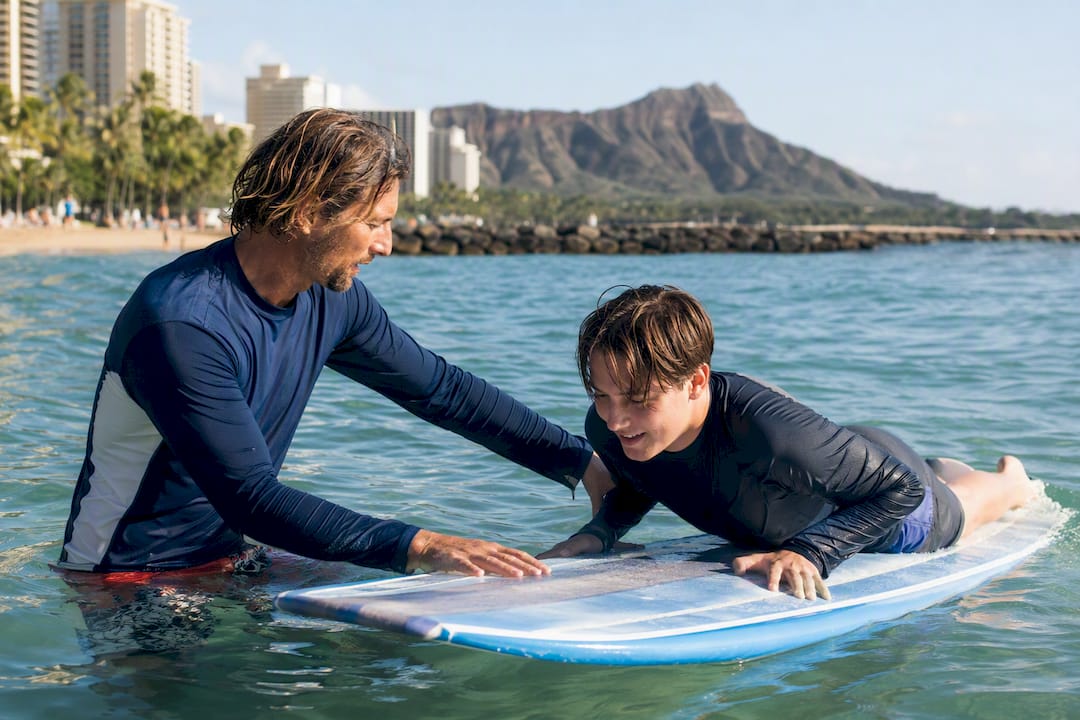
Instructors who work Waikiki’s water every day don’t rely on a printed calendar alone. They check in with lifeguards each morning, watch flag colors, and shift lesson zones or timing when conditions call for it. That real-time coordination is something a solo visitor checking a calendar from a hotel room simply can’t replicate.
Guided lessons carry an extra layer of protection on uncertain days precisely because someone is watching the water, not just the moon phase, before you paddle out.
— Johann
Book a Guided Lesson Instead of Guessing at Conditions
Skipping the guesswork is the real advantage here. Hans Hedemann Surf School coordinates directly with Waikiki lifeguards before every session, so instructors already know the day’s flag status and jellyfish advisories before a single student touches the water. That’s a level of same-day awareness a printed calendar can’t give you on its own.

Beginners get group lessons in Waikiki built around proper technique from the first wave, while visitors who want more one-on-one guidance can book private surf lessons with an instructor watching conditions the entire session. Families traveling with children can book kids surf lessons designed for younger beginners under close supervision. If you’re deciding between a solo beach day and a supervised one during an uncertain window, book a surf lesson and let someone else handle the condition-checking while you focus on standing up on a board.
Where to Check Before Your Trip
Confirm timing with the Waikīkī Aquarium’s calendar while planning, and cross-check the Ocean Safety lifeguard PDF the same week. On the beach, a lifeguard’s word and posted flags always take priority over any printed date.
Sources
- UH research on lunar cycle and jellyfish timing
- Waikīkī Aquarium — Box Jellyfish Calendar
- Ocean Safety — Waikīkī Aquarium Box Jellyfish Calendar PDF
- SafeToSwimHawaii — Hawaii Jellyfish Calendar 2026
0 Comments