
Mid tide on an incoming push gives Waikiki its best combination of shape and safety, and that’s the stage to build a session around. Very high tide tends to flatten the surf into mush, while very low tide bares the reef and turns a fun day into a hazard. Before paddling out, check NOAA station 1612340 and a live surf report from Surfline to confirm what the water is actually doing that day.
TL;DR:
- Mid incoming tide offers the best balance of wave shape and reef safety, particularly in Waikiki’s shallow reef environment.
- Surf spots react differently to tide stages, with Canoes being the most forgiving and Ala Moana Bowls preferring mid to incoming tide for optimal conditions.
- Checking the tide height in feet provides a more precise understanding of reef exposure and wave quality than just the high or low time.
- Rip currents and reef hazards increase when the tide is very low or outgoing, especially with larger swell or strong winds, demanding caution.
- Guided lessons are best scheduled around mid incoming tide, as instructors can adapt to changing conditions and help beginners avoid dangerous shallow spots.
Table of Contents
- Waikiki Tides Surfing 101: What High, Low, and Incoming Actually Mean
- Which Waikiki Spot Fits Your Tide and Skill Level
- How to Plan a Waikiki Surf Session Around the Tide
- Rip Currents, Reef Hazards, and When to Skip the Session
- Where to Check Waikiki Tide Predictions Before You Paddle Out
- How Waikiki Instructors Plan Lessons Around the Tide
- A Waikiki Surfer’s Honest Take on Tide Planning
- Book a Tide-Aware Lesson in Waikiki
- Sources
- FAQ
Waikiki Tides Surfing 101: What High, Low, and Incoming Actually Mean
Tide is just the rise and fall of ocean level driven by the moon and sun, and in Waikiki it happens twice a day, following the mixed semidiurnal pattern typical of Hawaiian waters. High tide means more water covering the reef. Low tide strips that water away. Incoming (or rising) tide is the window between low and high, when depth is increasing. Outgoing is the reverse. Tidal range is simply the gap, in feet, between the day’s low and high.
None of that sounds dramatic until you remember how shallow Waikiki’s reef shelf actually is. A change of even a foot and a half can be the difference between a wave breaking cleanly over covered coral and a wave slamming into exposed rock. Depth over the reef controls wave speed and steepness, which is why the same swell can look completely different at 9 a.m. and 2 p.m. on the same day.
- High tide: deeper water, softer and mushier waves, safer over the reef but less punch
- Low tide: shallower water, steeper and sometimes hollower waves, but real risk of hitting bottom
- Incoming (rising) tide: depth building steadily, generally the best window for shape and safety together
- Outgoing (falling) tide: depth dropping, reef exposure risk increasing as the session goes on
Pro Tip: If you only have time to check one number before a session, check the tide height in feet, not just the high/low time. A 0.3 ft low is a very different day at Waikiki than a 1.8 ft low.
Which Waikiki Spot Fits Your Tide and Skill Level
Waikiki isn’t one wave. It’s a string of distinct reef breaks, and each one reacts to tide differently.
- Canoes: A mellow, forgiving break that works across most tide stages, which is exactly why it’s the default spot for first-timers and longboarders. It holds shape reasonably well even as the tide pushes higher.
- Queens: Sits closer to the reef edge and gets better definition on a mid to incoming tide. At very low tide, the inside section can get shallow enough to expose coral heads, so intermediate surfers should watch depth closely here.
- Publics: A steeper, punchier peak that favors surfers with more experience. Low tide can sharpen it nicely, but it also raises the reef-strike risk, making mid tide the safer sweet spot for most visitors.
- Ala Moana Bowls: A faster, hollower wave that local shortboarders favor. It wants a bit more swell and tends to work best from mid to incoming tide, when there’s enough water to keep the bowl section from going dry.
- Diamond Head / Kaisers: More exposed to open ocean swell and less tide-sensitive than the inner reefs, making it a reasonable backup when the main Waikiki breaks go flat or too shallow at low tide.
If the tide drops out from under you mid session, the smart move is sliding to a deeper spot like Canoes rather than forcing it at a shallow peak.
How to Plan a Waikiki Surf Session Around the Tide
Tide alone doesn’t make or break a session. It’s tide plus swell plus wind plus time of day, and the order you check them in matters.
- Pull today’s tide times and heights for the Honolulu station before you leave the hotel, not after you’re already at the beach.
- Check swell direction and period. A long-period south or SSW groundswell is what actually wakes Waikiki up, according to local Oahu surf forecast guides.
- Check wind. Waikiki holds up best in light or east tradewinds, before the afternoon sea breeze roughens the surface.
- Pick mid incoming tide if the schedule allows it. That’s the window where depth, wave shape, and wind conditions most often line up together.
Mornings are usually calmer and glassier before the sea breeze fills in, but the tide doesn’t run on a fixed clock. It shifts by roughly 50 minutes each day, so “morning is best” only holds true if the incoming tide actually falls in the morning that week.
Pro Tip: Look at a two-day tide window, not just today. If tomorrow’s incoming tide lands at 7 a.m. instead of noon, that’s often the better day to book a lesson or paddle out solo.
You can also fold in reading a surf forecast properly and glancing at the lifeguard tower noticeboard, which often posts current hazard flags before you even reach the water.
Rip Currents, Reef Hazards, and When to Skip the Session
Rip currents form where a break in a sandbar or reef lets water rush back out to sea, and their strength shifts directly with wave size, wind, and tide stage, according to the National Weather Service. A falling tide can intensify a rip as the ocean pulls accumulated water back out through channels, which is part of why outgoing tide near reef breaks deserves extra caution.
Look for a channel that looks calmer or choppier than the water around it, a visible foam or debris line moving steadily seaward, or a gap in the incoming wave pattern. At Waikiki specifically, watch for exposed brown or dark patches at low tide. That’s coral, not sand, and it can shred skin or a board in a hard fall.
- Check the lifeguard tower and posted flags before you paddle out, every single time
- Stay near lifeguarded stretches of beach, especially if you’re new to the area
- If caught in a rip, swim parallel to shore rather than fighting straight against it, then angle back in once free
- Skip the session entirely if the tide is very low and swell is bigger than usual. It’s not worth it
The National Weather Service notes rip strength depends on the combined effect of waves, tide, and beach shape rather than any single factor, which is exactly why a spot that felt safe yesterday can turn risky today.
Where to Check Waikiki Tide Predictions Before You Paddle Out
The Honolulu tide station, station ID 1612340, is the reference point nearly every Waikiki surf report is built on. It gives you today’s predicted high and low times along with the actual height in feet, which matters more than the time alone.
- NOAA (station 1612340): the authoritative source for tide times and heights, plus bench mark data showing how local datums are set
- Surfline: live surf reports that often flag Waikiki’s preferred tide stage alongside swell and wind
- LazySurfer: community-logged conditions showing which tide stages surfers consistently rate highest
- Surf-Forecast: an alternative tide chart source worth cross-checking against NOAA’s numbers
A rough rule of thumb: a predicted height below roughly one foot at Waikiki generally means visible or shallow reef in the inside sections, while higher predicted heights usually mean enough water to surf comfortably but with softer, less defined waves.
How Waikiki Instructors Plan Lessons Around the Tide
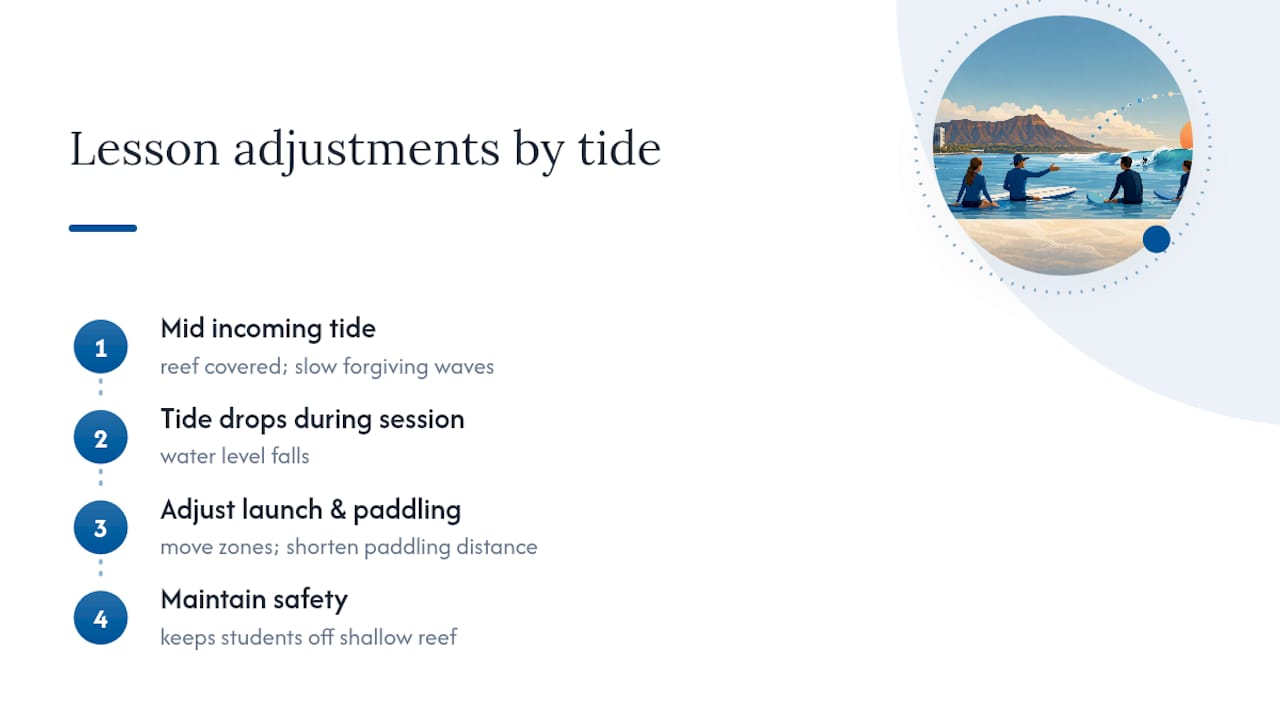
Instructors at Hans Hedemann Surf School favor mid incoming tide for beginner lessons for a practical reason: there’s enough depth to keep the shallow reef sections covered, but the waves stay slow and forgiving enough for someone standing up for the first time. As the tide shifts through a session, instructors adjust launch zones and paddling distance so students aren’t pushed toward shallower reef as the water drops. That kind of on-the-fly adjustment, built from structured lesson progressions, is a big part of why guided sessions tend to run safer than solo ones for first-timers.
A Waikiki Surfer’s Honest Take on Tide Planning
Most visitors treat tide as an afterthought behind swell size, and that’s backwards in Waikiki specifically. The reef here is unforgiving in a way open-ocean beach breaks aren’t, so mid incoming tide should be the first box you check, not the last. Trust the lifeguards over your own read of the water, and if you’re new to this reef, a guided session will get you through the learning curve faster and safer than guessing alone.
— Johann
Book a Tide-Aware Lesson in Waikiki
Reading tide charts is useful, but showing up at the right stage of the tide with the right board and the right guidance is what actually turns into a good session. A reputable local surf school has spent decades teaching in these exact waters, and its instructors plan launch times and locations around the tide rather than a fixed clock, so beginners spend their first lesson catching waves instead of fighting the reef.
Group, semi-private, and private lessons are all available, along with family-friendly options for parents surfing alongside kids, and lessons typically include equipment. If you’d rather rent a board and read the tide yourself once you’ve built some confidence, surfboard rentals are available by the day. For visitors planning more than one session, the multi-day guided packages bundle several tide-aware lessons across your trip. Start by checking surf lesson availability for your dates.
Sources
- Station Details — Honolulu (1612340) | NOAA Tides & Currents
- Rip Current FAQs | National Weather Service
- Waikiki Beach Surf Report — Surfline
FAQ
How big are the waves in Waikiki right now?
Waikiki’s wave heights change daily based on swell size and tide stage, typically running small to moderate compared to Oahu’s North Shore. Check a live report from Surfline for today’s exact height and conditions rather than relying on a general estimate.
Why do locals avoid Waikiki at night?
Visibility drops sharply after dark, which makes it harder to spot reef hazards, rip currents, and other surfers or swimmers in the water. Lifeguard coverage also ends at sunset, so anyone in trouble has no one watching for them.
Which month is the best to surf in Waikiki?
Waikiki gets its most consistent surf when south or southwest groundswells are active, which tends to run stronger through the warmer months. Conditions still depend on the day’s tide and wind, so checking a current report matters more than picking a calendar month.
Is Waikiki Beach protected from sharks?
Waikiki has no physical shark barrier, but shark encounters there are rare given the volume of swimmers and surfers in the water daily. Lifeguards monitor conditions and will clear the water if a hazard is reported, so following posted flags is the most reliable safety step.
0 Comments