
Waikiki’s ocean stays comfortably swimmable year-round, with water temperatures generally ranging in the mid-70s to low-80s °F depending on the month. Water peaks in late summer, from August through October, and dips coolest in February and March. Day-to-day readings can swing a few degrees from the monthly average, so check a short-term forecast the day before your swim, snorkel, or surf lesson.
TL;DR:
- Water temperatures in Waikiki rarely fall below the mid-70s °F, making the water comfortable for swimming year-round without a full wetsuit.
- Short-term forecasts and ocean advisories, especially after heavy rains, are more critical for planning than monthly averages, which can differ by a degree or two daily.
- The warmest months are August through October, when water temperatures often reach the low 80s °F, ideal for extended water activities.
- Wave and visibility conditions fluctuate more with weather and rainfall than with temperature, affecting snorkeling and surfing quality.
- Most swim and surf lessons can be scheduled year-round, with gear and water conditions remaining generally consistent, and weather extremes rarely limiting activities.
Table of Contents
- Waikiki Water Temperature by Month: The Full Breakdown
- What to Wear in the Water by Season
- How Water Temperature Changes What You Can Do
- Checking Real-Time Conditions Before You Go
- Water Quality Matters More Than Water Temperature
- An Instructor’s View on Planning Lessons Around Conditions
- Why the Monthly Chart Isn’t the Whole Story
- Book a Lesson That Matches Your Waikiki Trip
- Sources
Waikiki Water Temperature by Month: The Full Breakdown
Waikiki doesn’t have a true “cold” season. That narrow annual range is exactly why the beach draws swimmers year-round, but a few degrees still matter if you’re planning a multi-hour snorkel session or a lesson for young kids. NOAA’s long-term tide-gauge and climate records put Waikiki’s monthly averages between the mid-70s and low-80s throughout the year, and that dataset is the backbone for the figures below. Live readings can run warmer on any given day. Beach.report has logged summer afternoons pushing past 84°F, so treat these as reliable averages, not guarantees.
- January: Around the mid-70s °F. Comfortable for swimming, though this is one of the cooler stretches of the year. Fine for lessons, but longer snorkel sessions feel better with a light top.
- February: Generally mid-70s °F, typically the coolest or second-coolest month. Still swimmable without a wetsuit for most visitors.
- March: Similar mid-70s °F. Trade winds can make air temps feel cooler than the water actually is.
- April: Climbing to the higher 70s °F. A good transition month, warm enough for extended water time.
- May: High 70s °F. Snorkeling visibility tends to improve as winter swell and rain events taper off.
- June: Around high 70s to low 80s °F. Consistent, calm conditions make this a favorite month for beginner surf lessons.
- July: About low 80s °F. Warm, clear, and reliably calm on the south shore.
- August: Often the warmest or tied-warmest month in the low 80s °F.
- September: Still near the low 80s °F. Late summer keeps the water at its annual peak.
- October: Around low 80s °F. Warmth lingers even as the season starts to turn.
- November: Cooling to the high 70s °F as winter swell begins arriving.
- December: About mid to high 70s °F. Air and water both cool slightly, though it’s still shorts-and-rash-guard weather for most visitors.
Two things to keep in mind: PacIOOS’s short-term forecast model sometimes reads a degree or two warmer or cooler than these averages on any specific day, since it factors in real-time satellite and current data rather than decades of historical readings. And these numbers describe Waikiki’s protected south shore specifically. Conditions can differ noticeably at other points around Oʻahu.
What to Wear in the Water by Season
You won’t need a full wetsuit in Waikiki at any point in the year. Water temperatures never drop low enough to demand one, even in February and March. What changes month to month is how long you’ll want to stay comfortable without added insulation.
- December through March: A rash guard or thin long-sleeve top helps if you’re snorkeling for an hour or more, or if you chill easily.
- April through November: Board shorts, a swimsuit, or a short-sleeve rash guard is plenty for swimming, surfing, or lessons of any length.
- Multi-hour snorkelers, year-round: Consider a shorty wetsuit top. Extended stillness in the water cools you faster than active swimming or paddling.
- Surf lesson students, any month: A rash guard prevents board rash more than it provides warmth. Water temps stay lesson-friendly all year.
Pro Tip: Apply reef-safe sunscreen 15 to 20 minutes before you get in the water so it has time to bond to skin instead of washing off in the first wave. Waikiki’s sun is strong even on overcast days, and a sunburn will bother you more than any water temperature will. For a full packing rundown, see our surf lesson attire guide.
How Water Temperature Changes What You Can Do
A few degrees of difference sounds minor, but it shapes how activities actually feel.
- At 74°F to 76°F (typical for February and March), most swimmers stay comfortable for 30 to 60 minutes before feeling the chill. Snorkelers in this range often prefer a light top for anything longer.
- At 80°F to 82°F (August through October), time in the water stops being the limiting factor. Sun exposure and hydration matter more than cold.
- Visibility and marine life shift more with rainfall than temperature. Calmer, drier months (May through September) generally offer clearer water for snorkeling.
- Beginner surf lessons run comfortably year-round because Waikiki’s temperature band never gets extreme. Instructors adjust session length and gear recommendations slightly by month, not the lesson itself.
- Families and older visitors benefit most from choosing morning sessions in cooler months, when water and air temps are closest and wind is typically calmer.
Checking Real-Time Conditions Before You Go
Monthly averages tell you what to expect in general. They won’t tell you what the water is doing on the Tuesday you’re actually there. For that, use a short-term forecast instead of an annual chart.
- Check PacIOOS’s Waikīkī forecast for an hourly, three-day outlook built by the University of Hawaiʻi at Mānoa’s ROMS ocean model, updated daily.
- Cross-reference NOAA’s tide station data for the longer-term baseline behind those forecasts and current tide timing.
- Scan the City & County of Honolulu’s beach advisory postings for any water-quality closures before you head out.
Run through this three-step check the morning of your visit. It takes less time than deciding what to pack, and it catches the day-to-day swings that monthly averages can’t. Our guide to reading surf forecasts walks through interpreting the PacIOOS charts if the terminology is new to you.
Water Quality Matters More Than Water Temperature
Temperature isn’t the biggest variable to watch. Heavy rain and runoff are. After significant storms, particularly Kona low events, the City & County of Honolulu’s ocean safety office has advised swimmers to stay out of the water until runoff clears, regardless of how warm it feels.
What this means for your trip: if it’s rained heavily in the past 24 to 48 hours and you see an advisory posted, treat that as a hard no, even on a warm August afternoon. Runoff carries bacteria and debris that have nothing to do with the thermometer.
- Heed posted warning signs and flags at the beach access points.
- Check local advisory postings the same morning you plan to swim.
- Rinse off with fresh water after any ocean session, especially post-rain.
An Instructor’s View on Planning Lessons Around Conditions
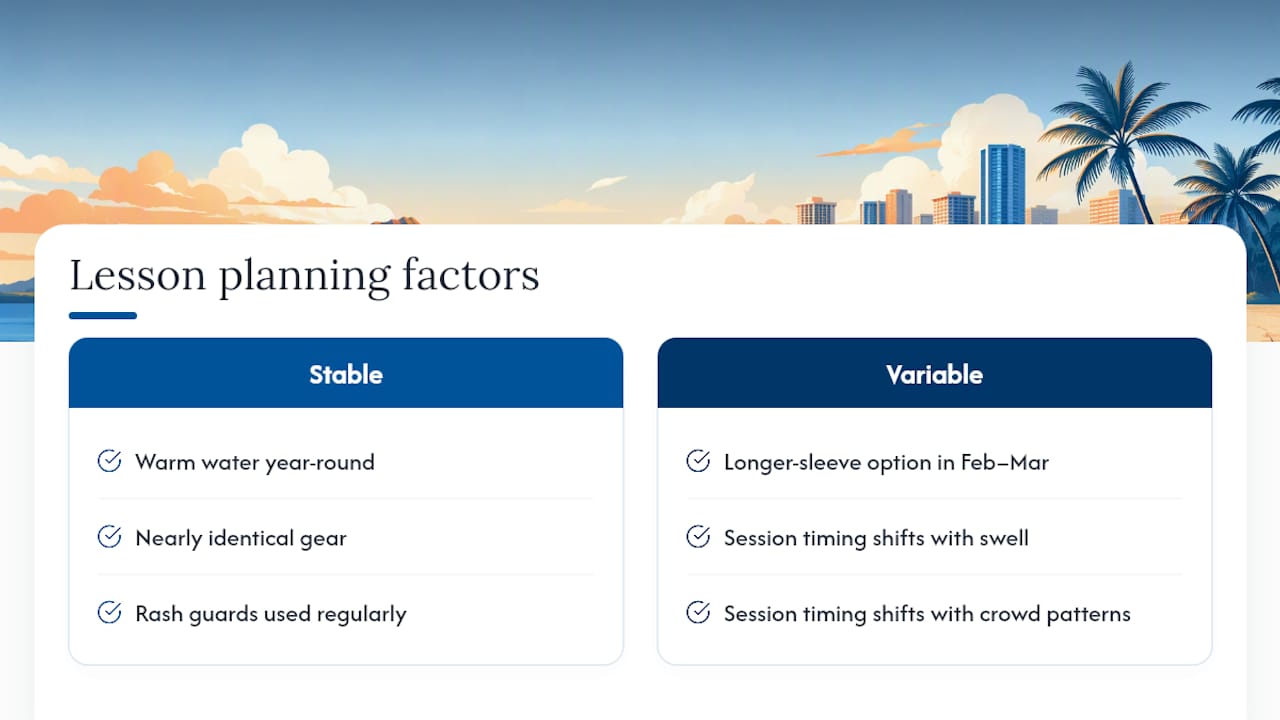
Waikiki’s narrow year-round temperature range is part of why lessons run every month without interruption. Gear stays nearly identical across seasons. Rash guards year-round, with a slightly longer-sleeve option offered in February and March for students who run cold. Session timing shifts more with swell and crowd patterns than with the thermometer. What doesn’t change is the expectation: warm, forgiving water on a gentle beach break that lets beginners focus on standing up, not surviving the cold.
Why the Monthly Chart Isn’t the Whole Story
Most guides stop at the monthly average, and that’s the part that actually undersells Waikiki. A 74°F February and an 82°F September sound like a meaningful gap on paper. In the water, both are comfortable for hours. The bigger mistake tourists make isn’t picking the “wrong” month. It’s skipping the day-of check and assuming the annual chart applies to their specific Tuesday.
Pairing NOAA’s historical averages with a PacIOOS forecast the morning of your trip solves that gap in about two minutes. Conventional advice treats temperature as the main variable to plan around. It usually isn’t. Rainfall and runoff advisories cause more canceled plans than a cool February reading ever will. If you take one thing from this guide, make it this: check the short-term forecast and the current advisory status, not just the month on the calendar.
— Johann
Book a Lesson That Matches Your Waikiki Trip
Waikiki’s water stays lesson-ready in every month of the year, which means you don’t have to time your trip around the ocean, just around your schedule. Surf lessons are available in group, private, and family-focused formats on the forgiving south-shore break covered throughout this guide.

Traveling with kids? Our kids surf lessons are built around shorter attention spans and steady, beginner-friendly waves. Want more one-on-one coaching or flexible timing around your ideal water window? A private lesson lets you pick the pace. For most first-timers, the best starting point is still our main surf lessons page, where you can check available times and book directly for your dates in Waikiki.
Sources
- Water Temperature Forecast: Waikīkī, Oʻahu, Hawaiʻi | PacIOOS
- AVERAGE WATER TEMPERATURES AT WAIKIKI BEACH — Hawaii DataBook (NOAA/NCDC excerpt)
- Ocean safety: city advisory about staying out of the ocean after heavy rains — City & County of Honolulu
- NOAA Tides & Currents: Physical oceanography station information
0 Comments