
In surfing, regular means you ride with your left foot forward (pointing toward the nose of the board), and goofy means you ride with your right foot forward. That’s the whole definition. This article covers surfing stance only — not snowboarding, skateboarding, or any other boardsport.
A majority of surfers ride regular, while a smaller portion ride goofy. Neither is better. Your stance is a natural body preference, not a skill level.
Key Takeaways
Your stance is determined by your body, not your handedness — and you’ll confirm it on the sand before you ever paddle out.
| Point | Details |
|---|---|
| Regular vs. goofy defined | Regular = left foot forward; goofy = right foot forward on the surfboard. |
| Prevalence | Roughly 60–70% of surfers ride regular; about 30–40% ride goofy. |
| Two quick tests | Push test and stair test both point to your natural front foot before class. |
| Leash placement | Always attach the leash to your back ankle — right for regular, left for goofy. |
| Hhsurf lessons | Instructors confirm your stance during on-land pop-up practice; no need to know it before booking. |
Table of Contents
- What does regular vs. goofy mean for your surfing stance?
- How can you find your natural surf stance before class?
- How does your stance change the way you face a wave?
- What do instructors actually do during your first surf lesson?
- Quick land drills to try before your lesson
- Common myths about regular and goofy stance
- An instructor’s note for first-timers
- Hhsurf lessons in Waikiki and on the North Shore
- Sources
What does regular vs. goofy mean for your surfing stance?
The terms sound quirky, but the logic is simple. Your front foot is the one closest to the nose of the board. Your back foot sits near the tail and does most of the steering work.
- Regular stance: left foot forward, right foot back
- Goofy stance: right foot forward, left foot back
The word “goofy” has nothing to do with awkwardness. It comes from a 1959 Disney short where Goofy the cartoon character surfed right-foot-forward, and the label stuck. Both stances are equally valid at every level of surfing, from first-timers at Waikiki to pros at Pipeline.
How can you find your natural surf stance before class?
Three quick land tests will point you in the right direction. These tests are easy to do before a lesson, though none of them is 100% definitive — they’re starting points, not verdicts.
- Push test: Stand relaxed with feet together and have a friend gently push you from behind. Whichever foot shoots forward to catch yourself is almost always your front foot.
- Stair test: Walk toward a staircase without thinking about it. The foot that steps up first tends to be your lead foot.
- Jump/slide test: Take a short running start and slide on a smooth floor in socks. The foot that leads the slide is usually your front foot.
Pro Tip: Once you have a guess, drop into a mock pop-up on the sand. Try it both ways. The stance that feels more balanced and natural after two or three tries is almost certainly yours.
How does your stance change the way you face a wave?
Your stance determines which side of your body faces the wave, and that affects how comfortable early rides feel.
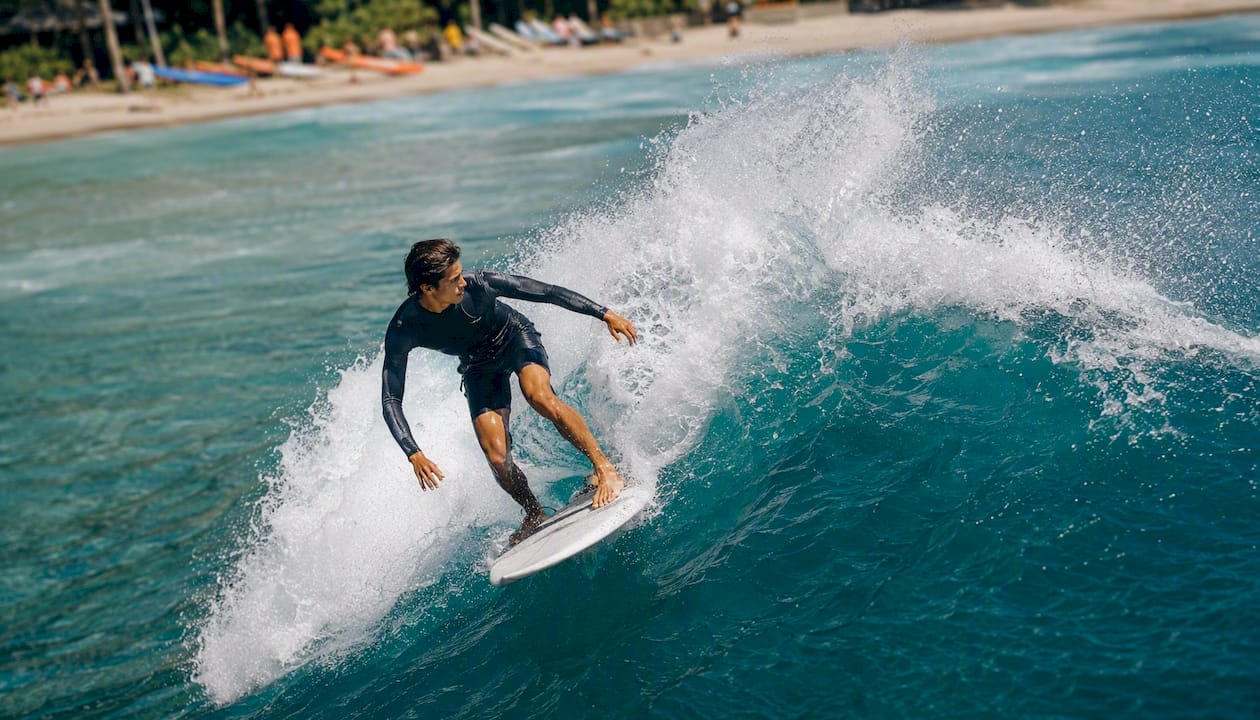
When you ride frontside, your chest faces the wave. When you ride backside, your back faces it. Which one you get depends on your stance and the direction the wave breaks.
| Stance | Right-breaking wave | Left-breaking wave |
|---|---|---|
| Regular (left foot forward) | Frontside | Backside |
| Goofy (right foot forward) | Backside | Frontside |
Most beginners find frontside riding slightly more intuitive because you can see the wave face directly. At Waikiki’s surf spots, many waves break to the right, which gives regular-stance beginners an early frontside advantage. Goofy riders get that same advantage on left-breaking waves.
Leash placement: Always attach the leash to your back ankle — right ankle for regular, left ankle for goofy. A leash on the front ankle can tangle around your feet during the pop-up and send you face-first into the board. One simple habit, zero unnecessary wipeouts.
What do instructors actually do during your first surf lesson?
You do not need to know your stance before you book. Instructors figure it out with you on the sand, before anyone touches the water.
A typical first surf lesson follows this progression:
- Safety briefing — ocean awareness, how to fall safely, and board etiquette
- On-land pop-up practice — lying on the board on the sand, then springing to your feet repeatedly
- Stance check — the instructor watches your pop-up and confirms which foot lands forward naturally
- Escorted paddle-out — the instructor guides you into the water once your pop-up feels solid
- Assisted take-offs — the instructor pushes the board into the wave and coaches your timing
The goal of on-land training isn’t perfection — it’s giving your body a movement pattern to repeat. By the time you paddle out, your stance is already confirmed, your pop-up has muscle memory behind it, and the instructor knows exactly how to position you for the best chance of standing up on your first wave.
At Hhsurf, the Surf Buddy system pairs each student with an instructor in the water, so stance corrections and timing cues happen in real time, not just on the beach. Good instructors prioritize safety, balance, and timing over locking you into a “perfect” stance on day one.
Quick land drills to try before your lesson
Arriving with even five minutes of practice behind you makes a difference. Here’s a short sequence worth running through on the beach:
- Mock pop-up on sand — lay flat, hands under your shoulders, then push up and jump both feet onto the board position. Repeat 5–10 times.
- Stance-switching balance drill — stand in your natural stance, hold for 10 seconds, then switch feet and notice the difference in comfort.
- Leash-attachment check — practice clipping and unclipping the leash to your back ankle so it becomes automatic.
- Shoulder and hip alignment — once standing, check that your shoulders and hips are parallel to the board’s rails, not twisted toward the nose.
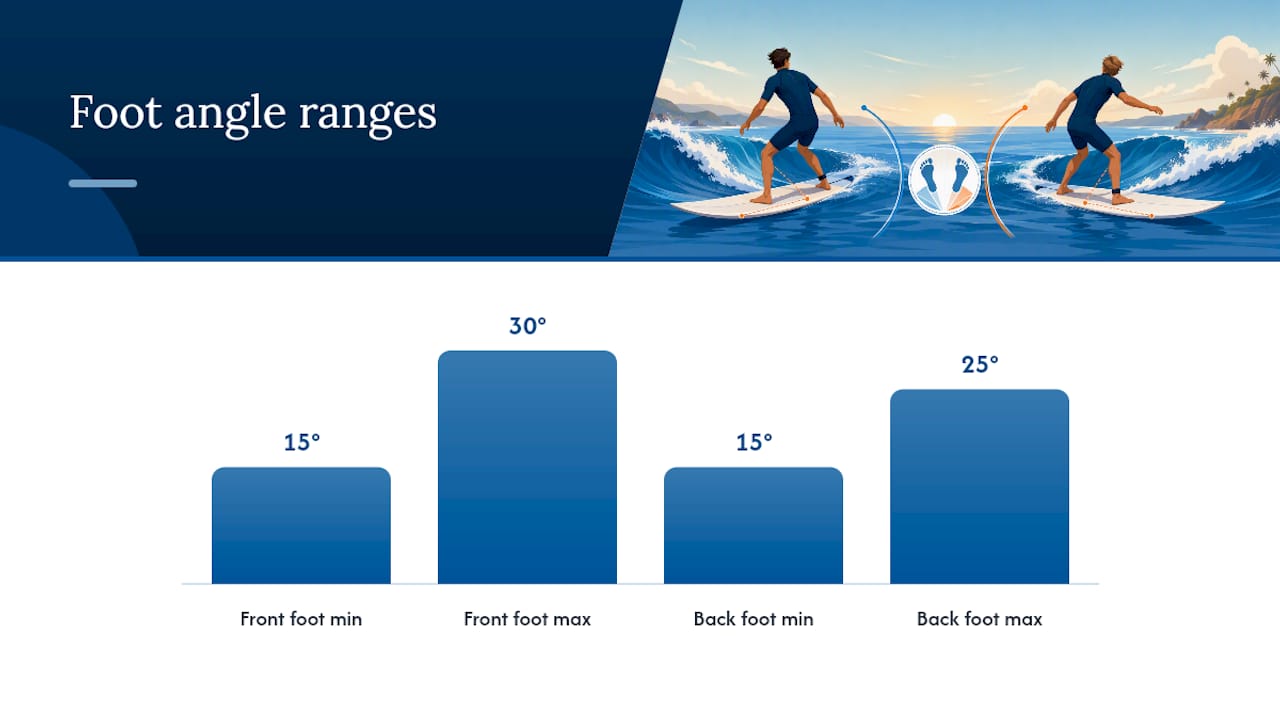
For foot angles, aim for roughly 15–30° on your front foot and 15–25° on your back foot, with your feet about shoulder-width apart. Those angles let your knees bend naturally and keep your weight centered. Practice these on dry sand away from the waterline — not in a crowded area where a board can clip someone.
Common myths about regular and goofy stance
A few misconceptions cause beginners to second-guess themselves before they even hit the water.
- “Right-handed people ride regular.” Not true. Hand dominance and foot dominance are often unrelated. Plenty of right-handed surfers ride goofy.
- “Regular is the correct stance.” The name is misleading. “Regular” just means more common — neither stance is inherently better, and elite surfers exist in both.
- Putting the leash on the front ankle — this is the most common first-lesson mistake and the easiest to fix. Back ankle, always.
- Stance that’s too wide or too narrow — wider than shoulder-width makes turning stiff; narrower makes balance shaky. Shoulder-width is the sweet spot.
- Forcing a stance because you decided beforehand — your body knows. Don’t commit to a stance before your pop-up tells you which one clicks.
Pro Tip: If you’re genuinely unsure after the land tests, tell your instructor before paddling out. They’ll watch your first few pop-ups and confirm your stance within minutes.
An instructor’s note for first-timers
Most students find their stance within the first few pop-ups on the sand. The body just knows. What actually determines whether you stand up on your first wave isn’t which foot goes forward — it’s timing, a little bit of balance, and the willingness to commit to the jump.
The students who ride their first wave are almost always the ones who stop overthinking and let the instructor’s push do half the work. Focus on smiling. The stance sorts itself out.
Hhsurf lessons in Waikiki and on the North Shore
Stance anxiety is real, but a guided lesson dissolves it in about 15 minutes of on-land practice. Hhsurf’s Hans Hedemann Surf School offers group and private surf lessons in Waikiki, North Shore surf experiences, kids surf lessons, plus SUP and bodyboard options for the whole group.
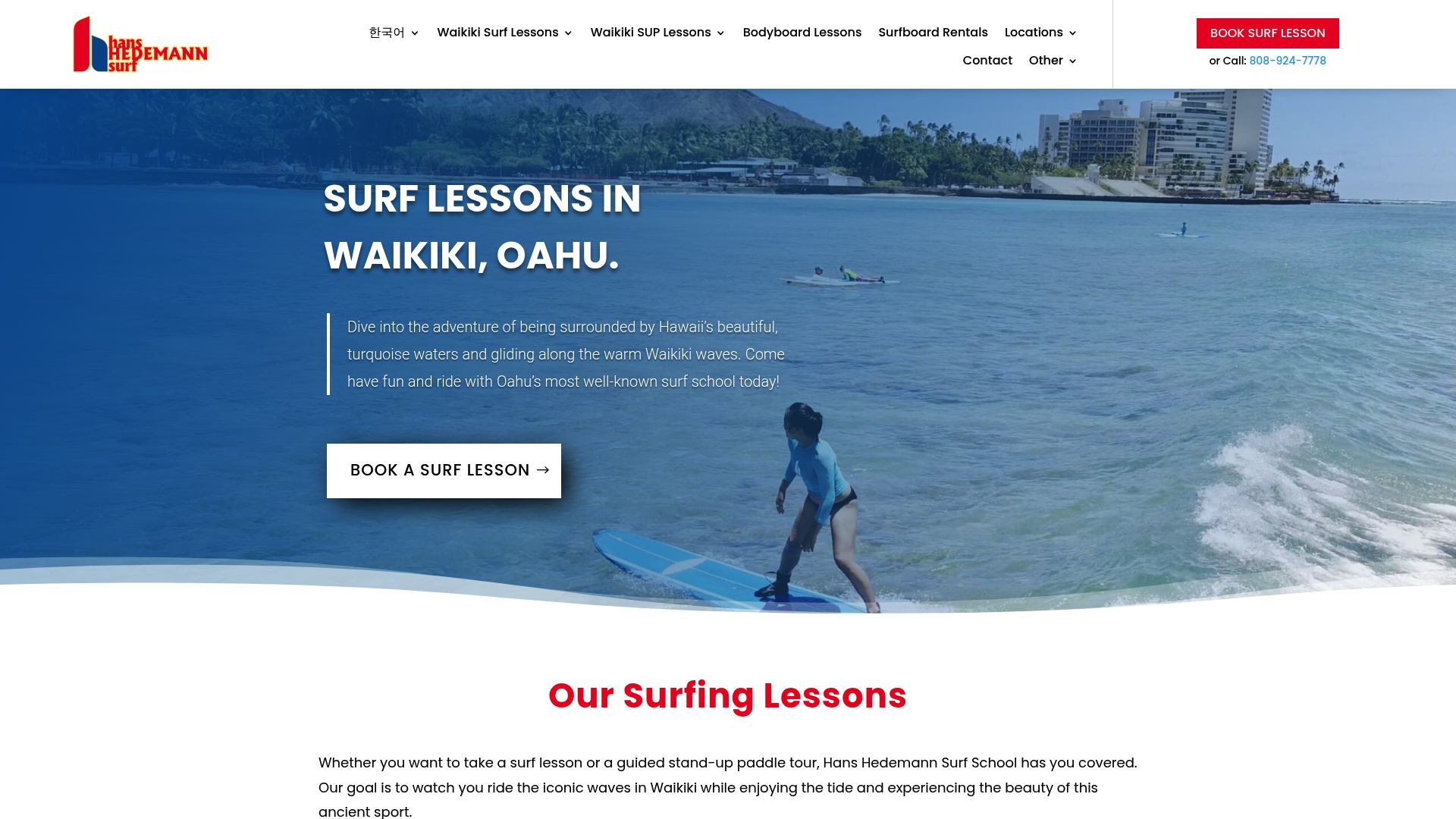
Every lesson starts on land, where instructors confirm your stance, drill your pop-up, and brief you on safety before you touch the water. The Surf Buddy system keeps an instructor beside you in the lineup for your first waves. Optional photo and video packages let you watch your own pop-up afterward — useful for seeing exactly what your stance looks like in motion.
Book your Waikiki surf lesson and show up ready to ride.
Sources
- What Is Goofy Foot Surfing? | A Look at the Surfing Stance | Surf Hungry
- Gowiththesurf
- Why are some surfers called goofy and how to find out if you’re one? – NoBadWave
0 Comments