
A supervised surf session is a structured, instructor-led surf lesson where a certified coach actively guides you from the beach briefing through every moment in the water. The instructor manages your safety, corrects your technique in real time, and adjusts the lesson based on ocean conditions and your progress. A typical session runs 90–120 minutes, split between a land briefing and in-water practice. For anyone asking what is a supervised surf session, the short answer is this: it is the safest and most effective way to learn surfing from scratch, with a professional watching every move you make.
What does a supervised surf session include?
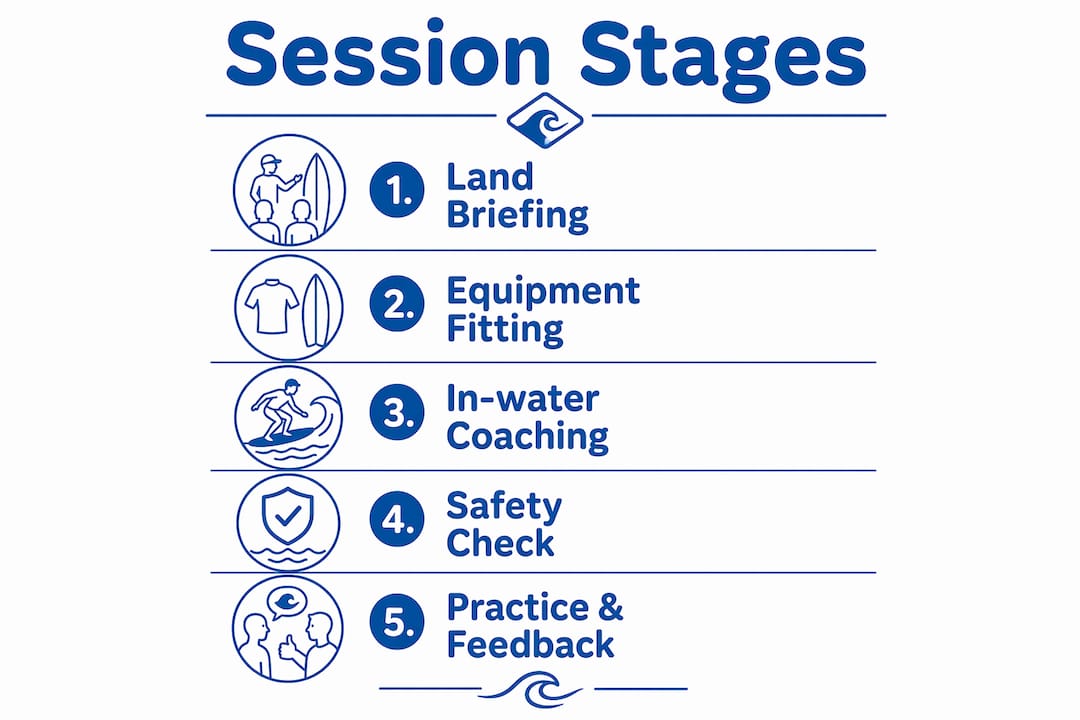
A supervised surf lesson follows a clear, repeatable structure designed to build your skills in the right order. Every component serves a specific purpose, and skipping any one of them increases both your risk and your learning curve.
The land briefing
Every session starts on the beach, not in the water. The land safety briefing covers ocean awareness, rip currents, how to fall safely, and the basic mechanics of the pop-up. This phase typically runs 20–30 minutes. Beginners who skip this step and go straight into the water take far longer to stand up on a board.
Equipment fitting
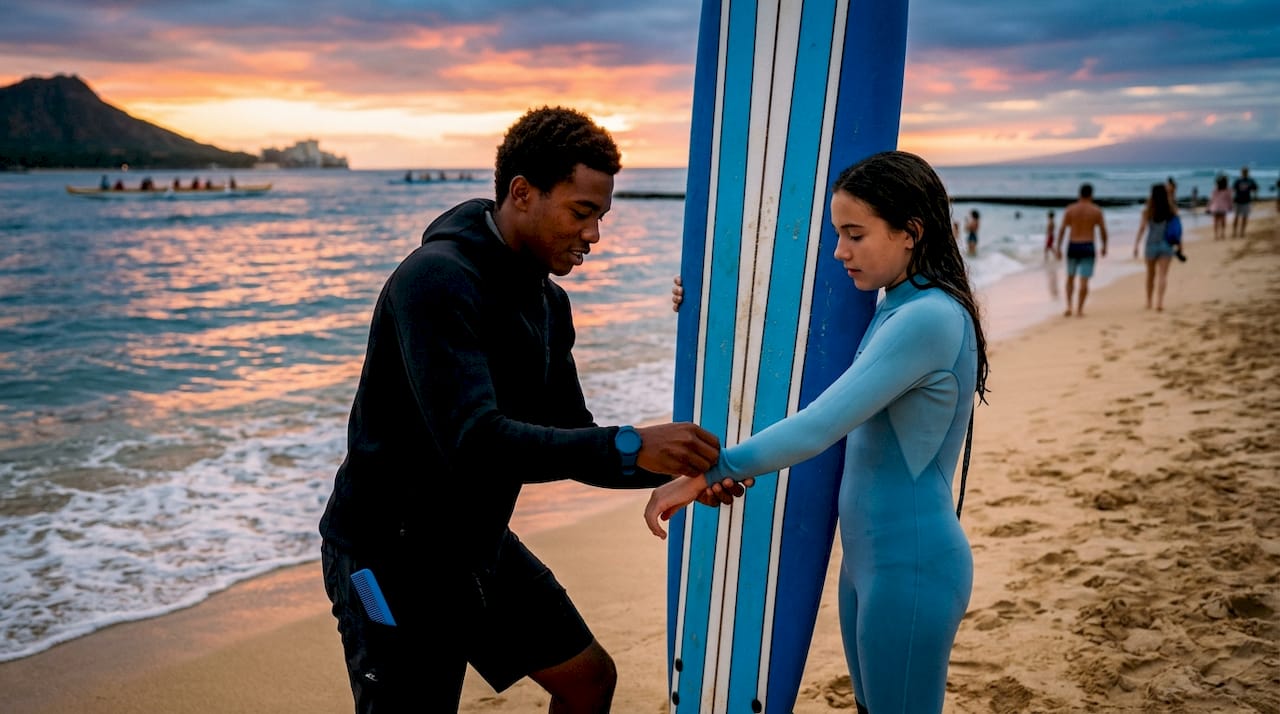
After the briefing, your instructor fits you with the right board and wetsuit. Beginners use longer, wider foam boards because they offer more stability. The board size is matched to your weight and height, not your confidence level.
In-water coaching
The core of the session is 60–90 minutes of in-water practice with your instructor beside you. Instructor-to-student ratios run from 1:1 in private lessons to a maximum of 1:6 in group settings. School group programs sometimes use a 1:8 ratio, but those sessions include risk assessments and emergency procedures to compensate. The smaller the ratio, the more feedback you receive per wave.
Safety and emergency protocols
Instructors monitor sea conditions throughout the session and will move the group to shallower or calmer water if conditions change. All supervised sessions take place in waist-to-chest-deep water where you can stand at any point. This removes the panic factor that stops most beginners from progressing.
Pro Tip: Ask your instructor about the session’s emergency protocol before you enter the water. A good school will explain it without hesitation, and knowing the plan reduces your anxiety before you even touch a wave.
How do supervised sessions improve safety and learning?
Supervision serves two distinct functions at once: it manages physical risk and it reduces psychological fear. Both matter equally for a beginner.
- Real-time hazard assessment. Instructors read the ocean constantly. They spot rip currents, changing tides, and incoming sets before you do. Their job is to position you where the waves are manageable, not just wherever looks fun.
- Anxiety reduction through presence. Expert instructors confirm that a coach’s constant physical presence helps learners manage natural ocean fear. When someone experienced is standing next to you, your brain stops spending energy on threat detection and starts focusing on technique.
- Immediate feedback loops. Self-taught surfers repeat the same mistakes for months. An instructor catches a bad habit after one wave and corrects it before it becomes ingrained.
- Controlled environment for non-swimmers. Beginners do not need to be strong swimmers because sessions stay in shallow water where participants can stand at all times. Ocean confidence builds gradually from that safe starting point.
- Condition-based adjustments. Instructors shift the lesson plan when the sea changes. A self-taught beginner has no framework for making that call safely.
Pro Tip: If you feel nervous before your first lesson, tell your instructor. Experienced coaches use that information to slow the pace, stay closer, and choose calmer water. Hiding your anxiety only slows your progress.
Knowing the signs of a good beginner surf instructor before you book makes a real difference in how safe and supported you feel throughout the session.
What are the physical and mental health benefits of supervised surfing?
Supervised surfing delivers measurable physical and mental health gains that go well beyond learning to ride a wave.
On the physical side, surfing builds cardiovascular fitness, core strength, balance, and coordination simultaneously. Paddling out works your shoulders, back, and arms. The pop-up and riding position engage your core and legs. A 90-minute session is a full-body workout that most beginners do not even notice because they are too focused on the waves.
The mental health evidence is striking. Structured surf therapy sessions reduce anxiety by up to 59% and depression symptoms by 44% among participants, measured using the GAD-7 and PHQ-8 clinical scales. Those results lasted up to 30 days after the intervention ended. That is a clinically significant outcome from an activity most people associate purely with recreation.
“Surfing produces neurochemical changes that provide immediate mental relief, but long-term benefits depend on regular supervised practice. Consistent engagement is necessary to sustain improvements in anxiety and depression scores.”
Group supervised sessions add a social dimension that amplifies these benefits. Sharing the experience of catching your first wave with others builds connection and confidence at the same time.
The International Surf Therapy Organization draws a clear line between standard supervised lessons and clinical surf therapy programs. Standard lessons focus on technical skill acquisition. Therapy programs layer in psychoeducation, mindfulness, and group support, often with 1:1 or 1:2 instructor ratios. Both formats use supervision as their foundation. The distinction matters if you are seeking surfing specifically for mental health support rather than sport.
| Benefit | What it means for you |
|---|---|
| Cardiovascular fitness | Paddling and wave-riding raise your heart rate for the full session |
| Anxiety reduction | Clinical studies show up to 59% reduction after supervised surf sessions |
| Balance and coordination | Riding a board trains proprioception that transfers to everyday movement |
| Social confidence | Group lessons create shared wins that build connection and self-belief |
| Sustained mental health gains | Regular attendance maintains improvements in anxiety and depression scores |
Pairing your lessons with surfing lessons on vacation is one of the most efficient ways to stack multiple sessions in a short period and lock in those neurochemical benefits.
How can beginners find and join the right supervised surf session?
Choosing the right session matters as much as showing up. A poorly matched lesson wastes your time and can knock your confidence before it has a chance to grow.
- Check instructor credentials. Look for instructors certified by a recognized surf coaching body. Certification confirms they have completed water safety training, first aid, and structured coaching methodology.
- Evaluate the instructor-to-student ratio. Private lessons offer 1:1 attention and the fastest skill progression. Group lessons capped at 1:6 still provide meaningful feedback. Avoid any session that packs more than eight students per instructor without a clear safety plan.
- Assess the location and water conditions. Beginner sessions belong in sheltered bays or beach breaks with small, consistent waves. Avoid schools that run beginner lessons at exposed reef breaks or in strong current zones.
- Confirm what equipment is provided. Reputable schools supply boards matched to your ability and wetsuits suited to the water temperature. You should not need to bring anything except sunscreen and a towel.
- Understand the cost and what it covers. Standard supervised surf lessons run $35–$80 per session. That range reflects location, ratio, and session length. A lower price is not always a bargain if it means larger groups or less qualified instructors.
- Prepare your body. Stretch your shoulders, hips, and lower back before your first session. Surfing uses muscle groups most people rarely train, and arriving loose reduces soreness and improves your pop-up.
Reading a guide on how to surf before your first lesson gives you a vocabulary for what your instructor will teach, which speeds up your learning from the first minute.
What should you expect during your first supervised surf session?
Your first lesson will follow a predictable sequence. Knowing it in advance removes the uncertainty that makes beginners nervous.
- Arrival and welcome. Your instructor introduces themselves, checks your experience level, and explains the session plan. This is the moment to mention any health conditions, fears, or physical limitations.
- Equipment fitting. You receive a board and wetsuit matched to your size and the day’s conditions. The instructor explains how to carry the board safely to the water.
- Land briefing. You practice the pop-up on the sand. This is the move that takes you from lying flat to standing on the board. Most beginners need 10–15 repetitions on land before it feels natural.
- Entering the water. Your instructor walks you into waist-deep water and explains how to read the incoming waves. You start by paddling and feeling the board’s movement before attempting to stand.
- Catching your first waves. The instructor pushes your board into small waves and coaches your pop-up in real time. Most beginners stand up within the first few attempts when an instructor is guiding the timing.
- Feedback and progression. After each wave, your instructor gives one or two specific corrections. The session builds from small white-water waves toward slightly larger ones as your confidence grows.
The most common beginner challenge is timing the pop-up too early or too late. Supervision solves this directly because your instructor calls the moment to stand based on the wave’s speed, not your guess.
Key Takeaways
A supervised surf session is the most effective starting point for any beginner because it combines certified instruction, real-time safety management, and structured skill progression in a controlled ocean environment.
| Point | Details |
|---|---|
| Session structure | Lessons run 90–120 minutes, split between a land briefing and in-water coaching |
| Safety by design | Sessions stay in waist-to-chest-deep water so beginners can stand at any time |
| Mental health impact | Supervised surfing reduces anxiety by up to 59% and depression by 44% in clinical studies |
| Instructor ratio matters | Private lessons offer 1:1 coaching; group sessions cap at 1:6 for meaningful feedback |
| Consistency builds results | Regular attendance sustains mental health improvements and accelerates skill development |
Why I think beginners underestimate what supervision actually does
Most beginners assume a surf instructor is there to stop them from drowning. That is the smallest part of the job. What supervision actually does is free your brain to learn.
When you are in the ocean without guidance, a significant portion of your mental energy goes toward threat detection. Is that wave too big? Am I too far out? What do I do if I fall? An instructor absorbs all of those questions. The moment you trust that someone experienced is managing those variables, your focus shifts entirely to the physical task of surfing. That shift is where real learning happens.
I have watched beginners who spent weeks trying to teach themselves finally stand up on their first wave in a supervised session. The technique was not the missing piece. The mental space was. Structured progression versus self-teaching is not just a safety debate. It is a cognitive one.
The other misconception I see constantly is that supervision is for people who are afraid. It is not. It is for anyone who wants to learn correctly the first time. Bad habits formed in unsupervised sessions take months to undo. A few hours with a qualified instructor sets a foundation that holds for years.
If you are on the fence about booking a lesson, the research is clear and the experience backs it up. Supervision works. The fastest ways to learn surfing basics all point back to the same starting point: get in the water with someone who knows what they are doing.
— Johann
Supervised surf lessons at Hhsurf in Waikiki
Hhsurf, the Hans Hedemann Surf School in Waikiki, runs supervised surf lessons for beginners and all skill levels on one of the world’s most beginner-friendly breaks. Certified instructors lead every session with a focus on safety, correct technique, and getting you standing on a board within your first lesson.
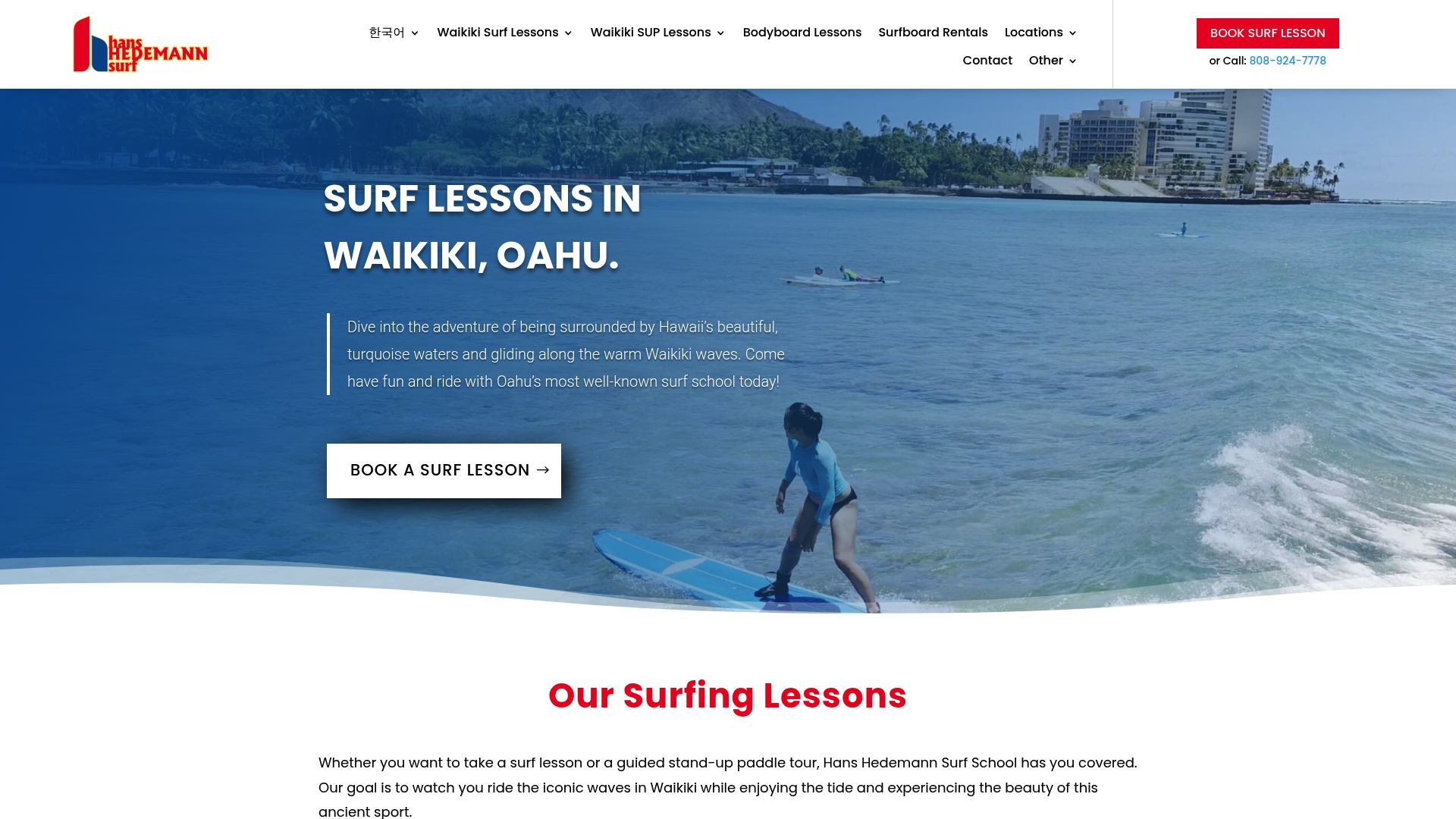
Group and private surf lessons are available, with small ratios that keep instruction personal and effective. The Waikiki location offers warm water, consistent small waves, and a welcoming environment that makes the learning process feel natural from the first minute. Whether you are visiting for a week or looking to build a regular practice, Hhsurf structures each session to match your current level and move you forward.
FAQ
What is a supervised surf session?
A supervised surf session is an instructor-led surf lesson where a certified coach guides you through safety briefings, equipment use, and in-water practice. Sessions typically run 90–120 minutes and take place in waist-to-chest-deep water.
Do I need to know how to swim to join a supervised surf lesson?
Strong swimming skills are not required. Supervised sessions stay in shallow water where participants can stand at all times, building ocean confidence gradually from a safe starting point.
How many students share one instructor in a group session?
Group supervised surf lessons typically maintain a ratio of 1:6, meaning one instructor for every six students. Some school programs use 1:8 ratios but include formal risk assessments and emergency procedures.
How long does it take to stand up on a surfboard in a supervised lesson?
Most beginners stand up within their first supervised session when an instructor coaches the timing of the pop-up in real time. Land practice before entering the water significantly speeds up this milestone.
Are there mental health benefits to supervised surfing?
Clinical research shows supervised surf sessions reduce anxiety by up to 59% and depression symptoms by 44%, with benefits lasting up to 30 days after the session. Regular attendance is necessary to sustain those improvements over time.
0 Comments