
Advanced surfing technique is the difference between reacting to waves and commanding them. When your body, board, and wave timing work together, you stop gambling on whether a ride will work and start producing repeatable results across conditions. Technical mastery leads to measurable performance gains in challenging surf, with experienced surfers outperforming beginners substantially when conditions get demanding.
Here is the short version of what that means in practice:
- More usable waves per session: better positioning and paddling efficiency put you on waves others miss entirely.
- Higher-quality sections: precise rail engagement and weight transfer let you hit the fast, steep parts of a wave instead of surviving them.
- Energy conservation: a relaxed, low center of gravity reduces drag and preserves stamina across a long session.
- Reduced injury risk: controlled movement and sound decision-making lower the chance of wipeouts that lead to reef contact or impact injuries.
The core claim is simple: technique converts wave energy into performance. Everything else in this guide explains how.
Table of Contents
- Why advanced technique matters in surfing: the real performance shift
- How wave physics and board design shape what techniques are possible
- What core movement principles actually unlock advanced maneuvers
- How do surf conditions change your technique priorities?
- The mental and physical habits that multiply technical gains
- A practical 8–12 week drill progression for intermediate surfers
- How do you transfer advanced technique to new breaks and bigger waves?
- Why does professional coaching accelerate surfing progression?
- Key Takeaways
- The learning curve is longer than the highlight reels suggest
- Focused coaching at Waikiki and North Shore with Hhsurf
- Useful sources and further reading
Why advanced technique matters in surfing: the real performance shift
Advanced technique is not a collection of flashy tricks. It is the synchronized use of body mechanics, board design, and wave reading to extract maximum ride potential from whatever the ocean gives you. That definition matters because it frames technique as a system, not a checklist.
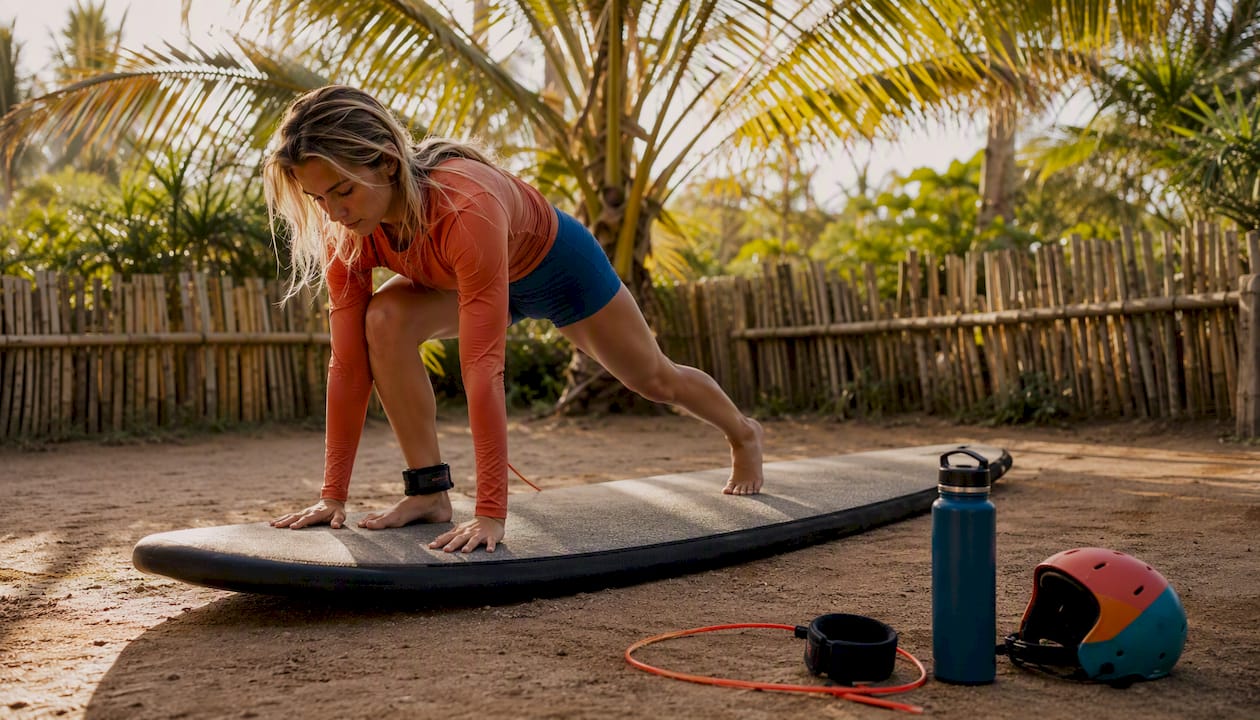
The immediate, practical benefits show up fast once you start training deliberately. Choosing the right wave, paddling efficiently, positioning on the peak, and finishing maneuvers cleanly are small details that compound into big improvements over a season. Miss one of them and the others lose half their value.
Consider three scenarios where technique changes everything:
Steep peak takeoff. A late drop on a fast-breaking peak punishes anyone who pops up with their weight too far back. The board stalls, the lip catches you, and the wave wins. With correct weight distribution and a low, forward pop-up, you drive down the face and generate speed before the section even breaks. The difference is not strength. It is timing and body position.
Cutback on a closing section. When a wave walls up and starts to close, most intermediate surfers straighten out and kick off. An advanced surfer reads the section two beats ahead, compresses into a bottom turn, and redirects back toward the whitewater with a carving cutback. That single maneuver keeps the ride alive for another 10–15 seconds.
Aerial attempt. Aerials look like athleticism. They are actually physics. The approach angle, speed, and launch point are all calculated decisions. Without the right technique foundation, the attempt is random. With it, the outcome becomes predictable enough to practice.
Pro Tip: Film yourself from the beach for two sessions before changing anything. Most surfers are surprised by how different their actual movement looks compared to what they feel they are doing. That gap is where technique work starts.
How wave physics and board design shape what techniques are possible
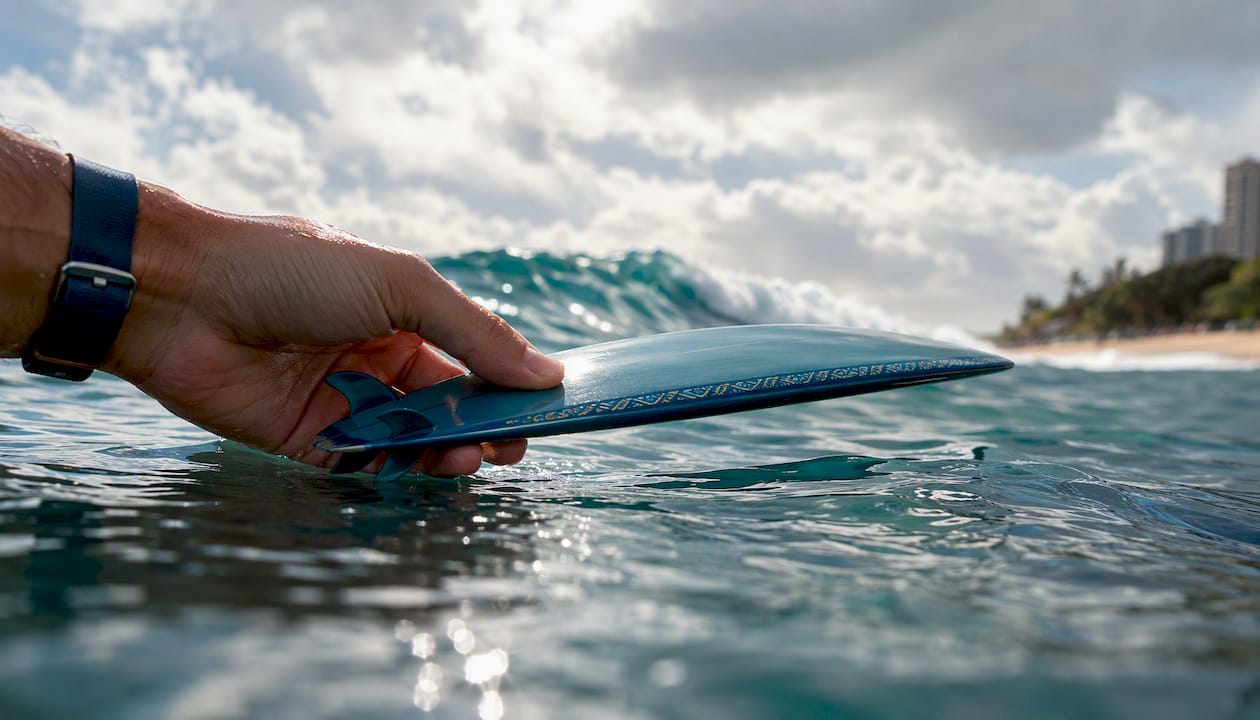
Every wave is a moving packet of energy traveling through water. What you see on the surface, the face, the lip, the shoulder, is the ocean floor or shallow water forcing that energy upward. The steeper the face, the more gravitational potential you can convert into speed by angling your board down it. Timing your takeoff to catch that energy at its peak, rather than chasing a wave that has already broken, is the single biggest leverage point in surfing.
The face is where technique lives. The section is where it gets tested. A section is the part of the wave that is about to break, and reading it accurately tells you whether to accelerate, stall, or redirect. Wave dynamics, maneuver technique, and paddle efficiency are the three differentiators that separate experienced surfers from beginners in challenging conditions.
Board design either supports or limits what your technique can do. Here is how the main variables interact with advanced movement:
- Volume: higher volume increases paddling speed and makes early takeoffs easier, but reduces sensitivity to rail engagement. Lower volume demands more precise weight transfer and rewards it with sharper response.
- Rocker: a flatter rocker generates speed in small, weak waves. A higher rocker handles steep, fast waves without the nose diving, but requires more drive from the bottom turn to maintain momentum.
- Rail shape: fuller, rounder rails are forgiving and generate lift. Thinner, harder rails grip the face and allow tighter turns, but punish sloppy foot placement.
- Fin setup: a thruster (three fins) balances drive and pivot. A twin fin is looser and faster in small surf. A quad generates speed and hold on open faces but can feel stiff in tight turns.
| Board category | Best-suited conditions | Technical advantages | Trade-offs for advanced maneuvers |
|---|---|---|---|
| High-volume groveler | Small, weak, mushy surf | Easy paddling, early entry, forgiving on takeoffs | Limited rail sensitivity, reduced aerial potential |
| Mid-performance shortboard | Waist-to-head-high, varied conditions | Balanced drive and pivot, versatile maneuver range | Requires consistent technique to perform well |
| High-performance shortboard | Head-high and above, quality waves | Maximum rail engagement, aerial potential, tight turning radius | Punishes weight-transfer errors, demands precise timing |
Matching your board to your current technique level is not a compromise. Riding a board that rewards your actual skill set lets you build the movement patterns that transfer to higher-performance equipment later.
What core movement principles actually unlock advanced maneuvers
Every advanced maneuver traces back to five movement principles. Get these right and the maneuver categories open up. Get them wrong and no amount of repetition fixes the result.
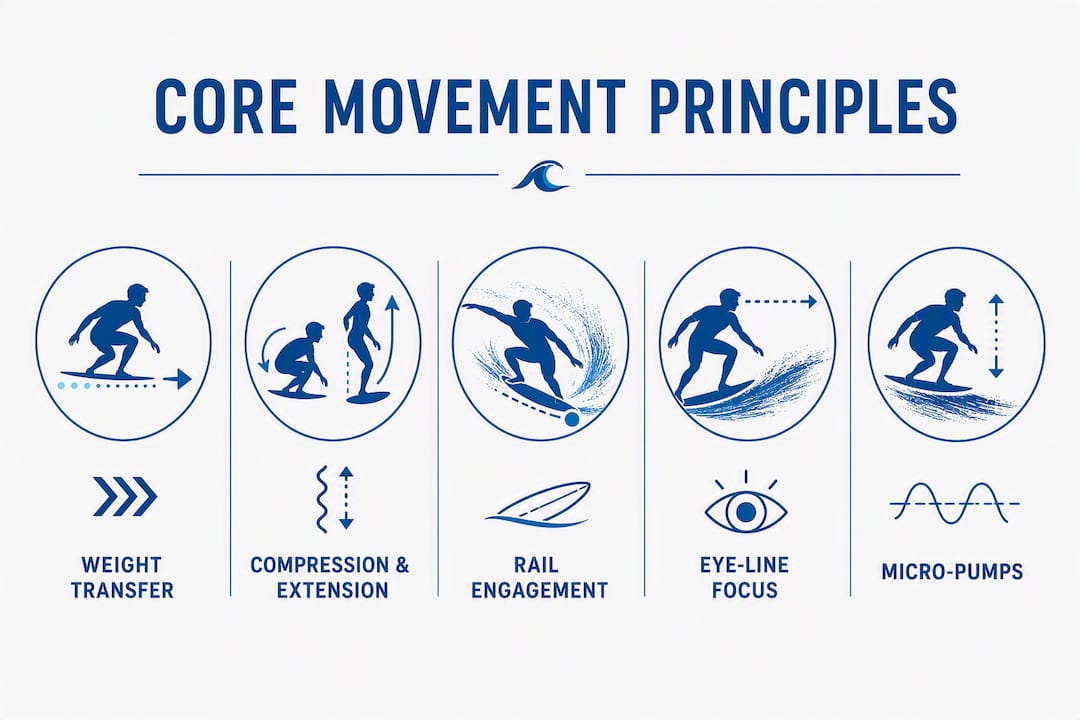
Weight transfer is the foundation. Shifting your weight forward drives speed down the face. Shifting back stalls the board to let a section catch up. The transition between the two, timed to the wave’s shape, is what creates flow.
Compression and extension generate speed without paddling. Compressing (bending your knees) loads energy into the board. Extending through a turn releases it. Micro-adjustments like the “umph turn” (a double pump) and immediate post-turn compression convert the wave’s gravitational potential into usable speed. This is what separates surfers who look fast from those who actually are.
Rail engagement determines turn shape. Pressing your heelside or toeside rail into the water changes the board’s trajectory. Shallow engagement produces a wide, drawn-out carve. Deep engagement produces a tight, snapping pivot. Most intermediate surfers never fully commit to the rail, which is why their turns look flat.
Eye-line and target selection are underrated. Where you look, your body follows. Advanced surfers pick their exit point before they enter a turn. Intermediates look at the board or the lip, which delays the body’s rotation and kills momentum.
Micro-pumps maintain speed between maneuvers. Short, rhythmic pumps down the face keep the board in the wave’s power zone. Without them, speed bleeds off between turns and the next maneuver has no foundation.
| Maneuver category | Primary principles required | Common fault | What to watch in video review |
|---|---|---|---|
| Bottom turn | Weight transfer, rail engagement | Weight too far back, flat rail | Hip angle at the base of the wave |
| Cutback | Eye-line, compression/extension | Looking at the board mid-turn | Head rotation initiating the redirect |
| Snap/off-the-top | Rail engagement, micro-pumps | Approaching too slowly | Speed entering the top section |
| Floater | Eye-line, extension | Leaning back on the foam | Chest angle over the front foot |
| Aerial | Weight transfer, micro-pumps, timing | Wrong launch angle | Approach line and crouch depth |
| Rail-to-rail transition | Compression, rail engagement | Pausing between rail changes | Foot pressure continuity through the switch |
Pro Tip: When reviewing session footage, watch your hips, not your hands. Hip position tells you where your weight actually is. Hands are a symptom; hips are the cause.
How do surf conditions change your technique priorities?
Conditions are not just a backdrop. They are an active variable that changes which techniques work, which ones are risky, and how much margin for error you have. A snap that works perfectly on a punchy beach break will stall on a slow, mushy point wave. The same bottom turn that drives speed on a head-high reef can send you over the falls on a double-overhead close-out.
Wave height and steepness change timing demands. Steeper waves require a faster pop-up and a more committed weight-forward position. Mushy waves reward patience, micro-pumps, and a flatter board angle to generate speed.
Wind direction changes the wave’s surface and your takeoff window. Offshore wind holds the face up and gives you more time. Onshore wind chops the surface and shortens your decision window. Sideshore wind creates a predictable drift in the lineup that affects where you need to sit.
Tide affects bottom contour. A reef that produces a perfect A-frame at mid-tide can become a dangerous close-out at low tide or a slow, fat wave at high tide. Knowing the tide chart before you paddle out is not optional at technical breaks.
Wave-reading checklist (10–15 minutes before paddling out):
- Identify the consistent peak section, not the occasional one.
- Watch where the wave breaks first and how fast the section moves.
- Note where surfers are catching waves versus where they are missing them.
- Observe the channel and the safest paddle-out route.
- Check wind direction by watching spray off the lip.
- Count sets and estimate the interval to time your paddle-out.
Practice recommendations by condition:
- Small, mushy waves (knee to waist high): ideal for micro-pump drills, rail-to-rail transitions, and floater timing. Speed generation is the focus.
- Punchy beach break (waist to head high): best environment for snap and cutback practice. The quick sections force decisive movement.
- Steeper reef or point waves (head high and above): use for bottom-turn precision, tube positioning, and reading predictable sections. Prioritize control over progression.
For a deeper breakdown of how different break types behave, the wave types and break behavior guide covers reef, beach, and point breaks in detail.
Pro Tip: At a new break, spend your first session only catching waves you are 100% confident about. You are collecting data on the break’s behavior, not performing. The aggressive sessions come after you understand the pattern.
The mental and physical habits that multiply technical gains
Technique without physical preparation is a ceiling. Your body needs to be ready to execute movements that require balance, explosive compression, and sustained endurance across a two-hour session. Strength, agility, and balance conditioning directly support advanced maneuver training, and skipping that work shows up as fatigue-related errors in the back half of every session.
Pre-surf routine
A 10-minute pre-surf routine makes a measurable difference. Start with dynamic mobility: hip circles, thoracic rotations, and ankle rolls. Follow with activation movements: glute bridges, lateral band walks, and shoulder rotations. Finish with two to three pop-up rehearsals on flat ground, focusing on foot placement and weight distribution. Then spend 10–15 minutes observing the lineup before entering the water. Cross-training for surfers that includes yoga, resistance training, and balance work builds the physical foundation that advanced technique demands.
Mental habits in the water
A relaxed posture is not just comfort; embracing the vibrant role of Hawaiian shirts in surf culture reflects the laid-back, expressive style that complements advanced surfing technique. Tension in your shoulders and arms travels down the kinetic chain and stiffens your rail engagement. Consciously dropping your shoulders and softening your grip on the rail before a turn produces noticeably cleaner movement.
Low center of gravity is a decision, not a default. Bending your knees deliberately before entering a critical section keeps your weight centered and your reaction time short. Surfers who stand tall on the board are one unexpected movement away from losing balance.
Decision rules for high-risk sections are worth writing down before you surf. Decide in advance: at what wave height do you not attempt aerials? At what visibility of the bottom do you not go for a tube? Pre-committed rules remove the hesitation that causes the worst wipeouts.
Safety red flags tied to technique attempts:
- Attempting aerials on waves with shallow reef within the landing zone.
- Going for steep takeoffs when you have not warmed up and your pop-up timing is slow.
- Trying progressive maneuvers in crowded lineups where a wipeout affects others.
- Pushing into bigger surf without having mastered the same maneuvers in smaller conditions first.
Pro Tip: After a bad wipeout, take 30 seconds before paddling back out. Breathe, reset your posture, and choose your next wave deliberately. Reactive paddling after a wipeout leads to rushed decisions.
A practical 8–12 week drill progression for intermediate surfers
The most common mistake in technique training is the scattergun approach: working on everything at once and mastering nothing. Focus on one technical goal until it becomes automatic, then layer the next one on top. Slow-motion video review is the fastest way to identify what is actually happening versus what you think is happening.
Core drills to build into your sessions:
- Pop-up timing drill: practice pop-ups on a foam board in small surf, focusing solely on foot placement and the moment of commitment. Count how many waves you catch cleanly versus how many you miss or rush.
- Bottom-turn precision drill: on every wave, commit to a full bottom turn before attempting any top-of-wave maneuver. No shortcuts. The bottom turn is the engine of every maneuver that follows.
- Rail engagement drill: on a small, forgiving wave, practice pressing your heelside rail into the face and holding it through a full arc. Then switch to toeside. The goal is to feel the board track, not skid.
- Micro-pump drill: on a slow, mushy section, generate speed using only pumps, no turns. Count how many pumps it takes to reach the fast part of the wave. Fewer pumps with more speed means better timing.
- Aerial approach drill: on a wave with a defined ramp section, practice the approach line and crouch without launching. Build the muscle memory of the setup before committing to the air.
| Week | Focus area | Session goal | Metric to track |
|---|---|---|---|
| 1–2 | Pop-up timing and foot placement | Consistent foot position on every wave | % of waves with correct front foot placement |
| 3–4 | Bottom-turn precision | Full bottom turn before every top maneuver | Bottom turns completed vs. skipped |
| 5–6 | Rail engagement and micro-pumps | Hold rail arc through full turn; generate speed on mushy sections | Speed at section entry (subjective: fast/medium/slow) |
| — | Cutback and snap mechanics | Land 3 clean cutbacks per session | Successful cutbacks per session |
| — | Floater and rail-to-rail transitions | Complete floater on 2 waves per session | Floaters completed vs. attempted |
| — | Aerial approach or progressive variant | Consistent approach line on ramp sections | Approach quality score (self-rated 1–5) |
For video feedback, film from the beach at a 45-degree angle to the wave, not straight on. Straight-on footage flattens the wave face and hides weight transfer. Review in slow motion, focusing on hip position at the base of the turn and eye-line through the maneuver. Session logging does not need to be complicated: wave count, successful maneuvers per session, and one technical note per session is enough to track a trend over 12 weeks.
Session frequency matters. Three to four water sessions per week, combined with two dry-land conditioning sessions, produces the fastest gains. Recovery is part of the progression: two consecutive days of high-intensity surfing without rest leads to fatigue-pattern errors that reinforce bad habits.
The consistent wave riding techniques guide pairs well with this progression for surfers who want additional drill variations and consistency strategies.
How do you transfer advanced technique to new breaks and bigger waves?
Practiced technique does not automatically transfer to a new environment. A snap that works at your home beach break needs recalibration at a reef or point wave. The principles are the same; the timing, approach angle, and risk profile are different.
Environment adaptation:
- Beach break: unpredictable peak location demands fast decision-making and flexible positioning. Technique priority: quick pop-up, adaptive bottom turn, reading shifting peaks.
- Reef break: consistent wave shape rewards precision. Technique priority: exact takeoff positioning, controlled speed management, awareness of the reef’s location relative to your landing zone.
- Point break: long, predictable rides allow for linked maneuvers. Technique priority: section reading, energy conservation between turns, and etiquette awareness in a crowded lineup.
Efficient movement, awareness of channels and lineups, and respecting local rules all improve session quality and reduce conflict. At a new break, technique and etiquette are interlinked: knowing where to sit, when to paddle, and how to exit safely is part of the skill set.
Safety checklist for stepping up to bigger or faster waves:
- Observe the break for at least 20 minutes. Identify the set wave pattern, the channel, and the hold-down zones.
- Confirm your exit route before paddling out.
- Surf with a buddy who knows the break.
- Start on the shoulder, not the peak. Build familiarity with the wave’s speed and shape before committing to the critical section.
- Have a clear rule for when to pull back: if the wave doubles up unexpectedly, straighten out rather than commit to a maneuver you have not rehearsed at that size.
Scaling maneuvers follows the same logic. A cutback you can land consistently at head-high is ready to attempt at overhead. An aerial you are still inconsistent with at head-high is not ready for overhead. Consistency in smaller conditions is the only honest measure of readiness.
Why does professional coaching accelerate surfing progression?
Self-directed practice builds habits. Coached practice builds the right habits. The difference is feedback quality and speed. When you practice alone, you are reinforcing whatever movement pattern you already have, including the ingrained faults that are holding you back. A coach with video analysis identifies those faults in one session and gives you a specific correction to work on, rather than letting you repeat the same error for another six months.
Professional coaching is the recommended pathway for breaking skill plateaus, with advanced lessons offering tailored feedback, fear management, and coordinated mental and physical training. That combination is hard to replicate through self-directed practice alone, particularly for the mental side of surfing.
The coaching benefits that matter most for intermediate-to-advanced surfers:
- Personalized drill selection: a coach identifies your specific limiting factor and builds a drill sequence around it, rather than giving you a generic progression.
- Faster habit correction: video analysis in real time breaks ingrained movement patterns that feel correct but are not.
- Fear management: a coach who has surfed at a high level can help you build a decision framework for high-risk sections, which is something technique tutorials cannot replicate.
- Safety oversight: having an experienced surfer watching your sessions in bigger conditions adds a layer of risk management that matters.
What to look for when choosing a coach or lesson:
- Video analysis is included, not optional.
- The coach has experience surfing the conditions you want to improve in, not just teaching beginners.
- Lesson format allows for water time, not just instruction on the beach.
- Safety record and credentials are transparent.
- Small group or private format so feedback is specific to you.
Research on how targeted instruction accelerates skill acquisition shows that personalized attention shortens the learning curve significantly compared to unstructured practice. The same principle applies at the intermediate-to-advanced level. If you are weighing coached lessons against solo practice, the surf school vs. self-teaching comparison lays out the trade-offs clearly.
Hhsurf’s instructors at Waikiki and North Shore are working surfers who bring that real-water experience into every lesson. The format, private or small group, means the feedback you get is about your surfing, not a generic script.
Pro Tip: Before booking a lesson, write down the one technical fault you most want to fix. Bring it to the coach at the start of the session. A specific problem gets a specific solution. “I want to get better” gets a generic lesson.
Key Takeaways
Advanced surfing technique converts wave energy into repeatable, high-quality performance by synchronizing body mechanics, board design, and wave reading across all conditions.
| Point | Details |
|---|---|
| Technique is a system, not a checklist | Body mechanics, board choice, and wave reading must work together for consistent results. |
| Board design shapes what is possible | Volume, rocker, rails, and fins either support or limit the maneuvers your technique can execute. |
| Drills beat repetition | An 8–12 week focused progression with video review produces faster gains than unstructured session volume. |
| Conditions change technique priorities | Match your maneuver selection and approach to wave height, wind, tide, and break type before paddling out. |
| Hhsurf coaching shortens the timeline | Private and small-group lessons at Waikiki and North Shore deliver personalized video feedback and targeted drills that break plateaus faster than solo practice. |
The learning curve is longer than the highlight reels suggest
The gap between intermediate and advanced surfing is not a gap in athleticism. It is a gap in precision. The surfers who close it fastest are not the ones who surf the most hours. They are the ones who surf with the most intention: one technical goal per session, video review after, and a willingness to surf smaller waves badly while they rebuild a movement pattern correctly.
What most surfers underestimate is how long it takes for a corrected movement to feel natural. The old pattern is wired in. The new one feels wrong for weeks before it feels right. That discomfort is the signal that something is actually changing, not a sign that the correction is wrong.
The other thing worth saying plainly: respect the breaks you surf. Lineup etiquette is not separate from technique. Knowing when to paddle, where to sit, and how to read a crowded peak is part of the skill set. Surfers who ignore it do not just create conflict. They miss waves because they are out of position, and they create hazards for themselves and others.
Use video. Book a session with a coach at least once a season. And when you find a break that challenges you, spend more time watching it from the beach than you think you need to. The ocean rewards patience and punishes impatience in equal measure.
Focused coaching at Waikiki and North Shore with Hhsurf
The fastest path from intermediate to advanced is not more sessions. It is better sessions, with someone watching who can tell you exactly what to fix.
Hhsurf’s private surf lessons in Waikiki are built for surfers who already know the basics and want to push past the plateau. Each session includes in-water coaching from professional surfers, video feedback, and drills matched to your specific technical gaps, not a generic curriculum. If you are ready to work on bigger conditions, North Shore surf lessons put you on some of the most technically demanding waves in the world with an instructor who knows every section of those breaks. Both formats are small enough that the feedback is yours, not shared across a group of eight. Book your lesson and come with one specific technical goal. That is all it takes to make the session count.
Useful sources and further reading
The sources below informed this guide and are worth reading directly for deeper technical detail:
- Micro Surfing Adjustments for Huge Speed | Surf Technique — detailed tutorial on the umph turn, double pump, and post-turn compression.
- The Best Advanced Surfing Tips and Techniques | SurferToday — practical tips on wave selection, paddling efficiency, and maneuver finishing.
- Intermediate Surf Techniques Guide — Hhsurf’s guide bridging intermediate skills to advanced technique.
- Surf Lessons in Waikiki | Hhsurf — local lesson options for surfers at all levels on Oahu.
0 Comments