
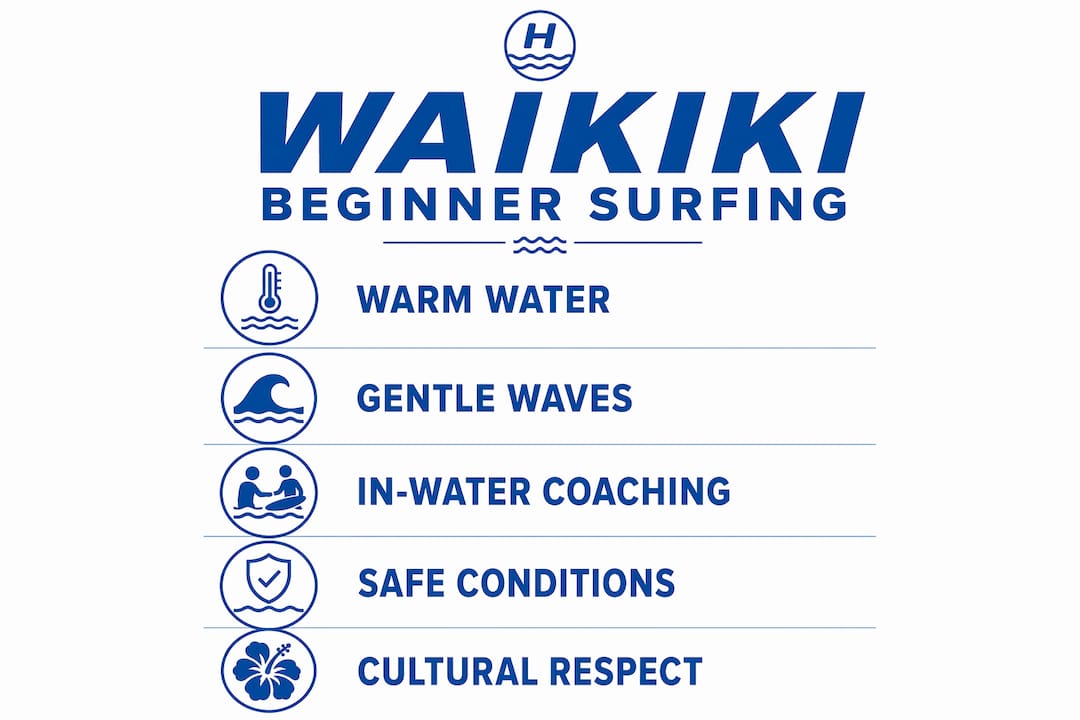
Waikiki is one of the fastest places on earth to learn to surf. Gentle, chest-high whitewater rolls in predictably, water temperature hovers around 78°F year-round, and professional instructors are never more than a few feet away. Most beginners at Waikiki stand on their first wave within their very first lesson. That combination of forgiving conditions, dense instructor availability, and a place-based cultural framework called pono (balance and respect) is why Hawaii skill development for surfers happens faster here than almost anywhere else.
Why Waikiki works for beginners at a glance:
- Waves break slowly and consistently over a sandy, protected bottom, reducing wipeout risk.
- Warm water means longer, more comfortable sessions with no thermal fatigue.
- Lifeguarded beaches and a dedicated beginner surf zone keep new surfers away from crowded lineups.
- Instructor density is among the highest of any surf destination in the United States.
- Pono-centered teaching, rooted in Nā Honua Mauli Ola cultural pathways, creates a supportive environment that lowers fear and builds belonging fast.
Your clearest next step: book a supervised beginner lesson with an in-water instructor before your first paddle out.
Table of Contents
- Why Waikiki’s natural conditions speed up skill building
- How deliberate practice and in-water coaching turn one lesson into real skills
- What proven beginner teaching looks like at Hans Hedemann Surf School
- What to expect in your first lessons: timeline and cost
- How to prepare physically, mentally, and culturally before your lesson
- How to choose the right Waikiki surf school
- Key Takeaways
- What I actually see happen when beginners surf Waikiki
- Ready to ride? Book your first lesson with Hhsurf
- Useful sources and further reading
Why Waikiki’s natural conditions speed up skill building
The physics of Waikiki’s waves are genuinely unusual. The reef shelf off the beach slows and softens incoming swells, producing long, slow-rolling waves that give beginners two to three seconds more to pop up compared with steeper beach breaks. That extra time is the difference between catching a wave and missing it entirely.
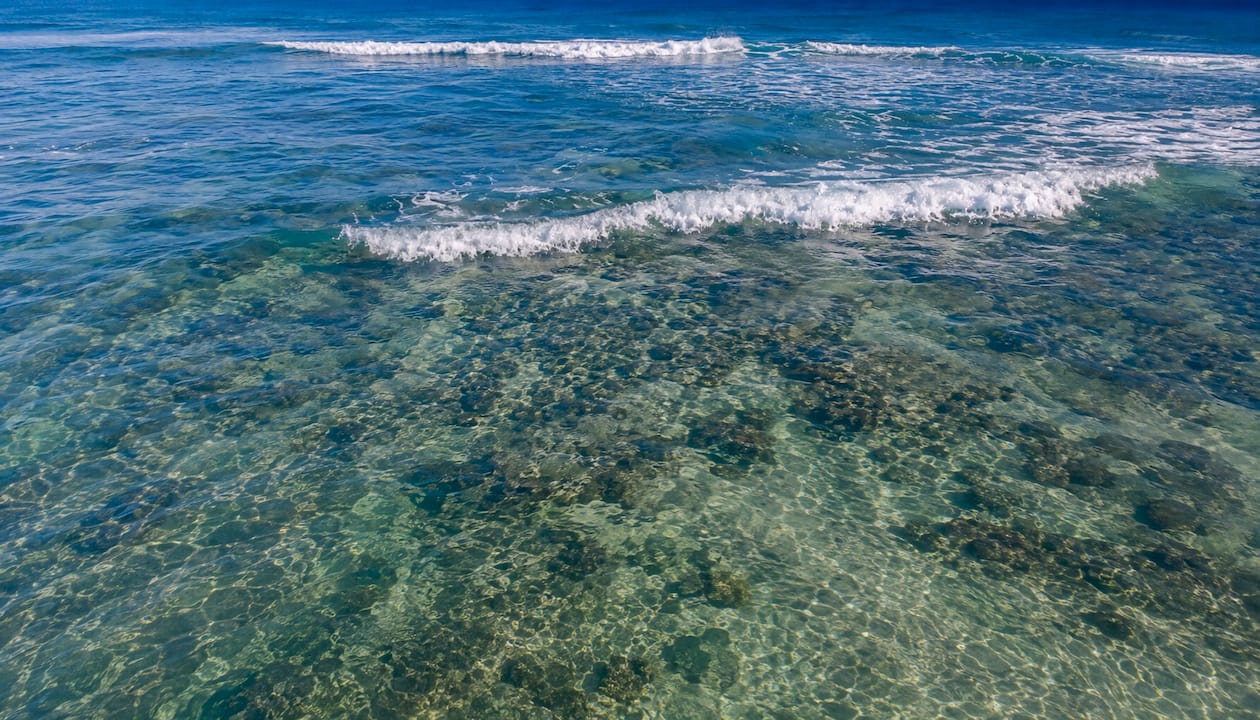
Water temperature stays warm enough year-round that you can surf in board shorts every month. No wetsuit means no restricted shoulder movement, which matters when you are learning to paddle. Sessions run longer, and longer sessions mean more repetitions per visit.
Morning offshore winds, typically calm before 10 AM, flatten the surface and make wave faces cleaner and more readable. Afternoons can bring onshore chop, so morning slots are consistently better for beginners. The beginner surf zone at Waikiki is a protected stretch of beach where instructors concentrate new surfers away from experienced riders, reducing collision risk and anxiety.
Lifeguards staff the main Waikiki beaches daily. That safety net, combined with shallow water at the break, means a wipeout is uncomfortable at worst, not dangerous.
How deliberate practice and in-water coaching turn one lesson into real skills
Deliberate practice means focused repetition with immediate corrective feedback, and it is the fastest-known path to motor skill acquisition. The Chamber of Commerce Hawaii’s Professional Skill Acquisition Guide identifies this feedback loop as the core driver of rapid skill-building. Surfing is a perfect match for it: every wave is a short, discrete attempt you can analyze and adjust before the next one.
In-water instructors change everything. An instructor standing waist-deep next to you can physically guide your board, call your timing, and correct your stance mid-pop-up. That is real-time feedback on a motor skill, which is far more effective than watching a video or hearing a post-session debrief. The Workforce Learning Hawaii Guide shows that experiential learning combined with social coaching produces higher retention and faster application than solo study.
Typical Waikiki beginner lessons run with small groups of students per instructor, with the instructor in the water the entire time. That proximity is what makes the difference.
What a good in-water feedback loop looks like:
- Instructor positions you on the board and calls the wave.
- You paddle; instructor gives a push and calls “pop up.”
- You stand (or attempt it); instructor notes one specific correction.
- You paddle back and repeat with that single cue in mind.
Pro Tip: Focus on one correction per wave. If your instructor says “back foot first,” ignore everything else until that feels automatic. Chasing three fixes at once slows learning down.
What proven beginner teaching looks like at Hans Hedemann Surf School
Hans Hedemann Surf School (Hhsurf) runs a structured beginner progression that mirrors what learning science recommends: shoreline drills first, then assisted paddling, then guided in-water takeoffs, then incremental independence as confidence builds. Professional surfers staff every lesson, and the school’s methodology is built around getting students to stand and ride within their first session.
“Hans Hedemann Surf School’s beginner method emphasizes safety, individual attention, and rapid hands-on coaching. The goal is a quick win: students standing and riding waves in their first lesson, which builds the confidence to keep going.”
— Hhsurf, Why Learn Surfing in Hawaii
Research on pono-centered schools shows that embedding pono as a shared cultural value improves belonging, engagement, and sustained behavior change. Hhsurf’s instructors carry that ethos into the water: respectful, encouraging, and focused on each student’s pace rather than rushing through a script.
Beginner safety checklist at Hhsurf:
- Soft-top foam boards used for all beginners (lower injury risk on wideouts).
- Instructor remains in the water for the full lesson.
- Lifeguards present on all Waikiki lesson beaches.
- Students briefed on lineup rules and local etiquette before entering the water.
What to expect in your first lessons: timeline and cost
Many beginners catch their first whitewater wave soon after entering the water. By the end of lesson one, a reasonable goal is attempting a controlled stand. Lessons two and three typically bring improved paddle timing and more consistent pop-ups. A multi-day package usually gets beginners riding small green waves (unbroken swell) with some independence.
Learning science recommends reviewing a new motor skill after one day, one week, and one month to move it into long-term retention, per the Professional Skill Acquisition Guide.
| Practice checkpoint | Goal |
|---|---|
| After lesson 1 (same day) | Mental replay: visualize your pop-up sequence before sleeping |
| After lesson 2–3 (1 week) | Paddle and pop-up feel more automatic; attempt green waves |
| After multi-day package (1 month) | Ride unbroken waves with consistent foot placement |
Typical Waikiki beginner lesson pricing:
- Group lessons: roughly $60–$85 per person.
- Private lessons: roughly $150–$200 per session.
- Multi-day packages: vary by school and session count; generally offer better per-lesson value.
Variables that affect your timeline: prior board sports experience, baseline fitness, wave conditions on the day, and instructor ratio. A private lesson compresses the timeline noticeably because feedback is continuous.
How to prepare physically, mentally, and culturally before your lesson
Show up ready and you will get more out of every session.
What to pack:
- Board shorts or a one-piece swimsuit; a rashguard protects against board rash.
- Reef-safe sunscreen (required at most Waikiki beaches).
- A towel and a quick-dry change of clothes.
- Water bottle; paddling is more aerobic than it looks.
Physical prep matters even for a single lesson. Upper-body paddling endurance and basic hip mobility reduce fatigue and injury risk. Mobility work before a surf trip, especially hip flexor and thoracic spine drills, directly improves your pop-up mechanics. ʻĀina-based education research shows that connecting skill practice to local environment and meaning accelerates independent decision-making, which is exactly what instructors who teach Waikiki’s currents and reef lines by name are doing.
Culturally, adopt pono from the start: listen to your instructor without interrupting, do not paddle into another surfer’s wave (dropping in), and thank the ocean and the people who share it with you. Local surfers notice respectful visitors and respond warmly.
Pro Tip: Arrive 15 minutes early, do a short paddle warm-up in shallow water, and book a morning slot. Conditions before 10 AM are almost always calmer and cleaner for beginners.
How to choose the right Waikiki surf school
- Confirm in-water coaching. Ask directly: “Will my instructor be in the water with me the entire lesson?” If the answer is no, keep looking.
- Check the student-to-instructor ratio. Four to six students per instructor is workable; more than eight dilutes feedback significantly.
- Pick your time of day. Morning sessions (before 10 AM) offer the best conditions for beginners.
- Verify safety protocols. Foam boards for beginners, lifeguard presence, and a pre-lesson safety briefing are non-negotiable.
Questions worth asking when you book: “What is the maximum group size?” “Do you provide boards, wetsuits, and sunscreen?” “Can I book a private lesson or a multi-day progression package?”
A higher per-lesson cost for private or small-group instruction usually pays off in faster progress. The Workforce Learning Hawaii Guide cites peer-supported learning structures as producing higher completion rates than solo attempts, which is a strong argument for group lessons over self-teaching, and for multi-day packages over a single one-off session.
Key Takeaways
Waikiki accelerates beginner surfing because gentle waves, warm water, dense in-water instruction, and pono-centered teaching combine in a way no other destination quite matches.
| Point | Details |
|---|---|
| Waikiki waves are beginner-built | Slow, long-rolling whitewater over a protected bottom gives beginners more time to stand. |
| Morning sessions are best | Calm offshore winds before 10 AM produce cleaner, more readable waves for new surfers. |
| In-water coaching drives retention | Instructors in the water provide real-time, single-cue feedback that accelerates motor skill learning. |
| Pono reduces fear and builds belonging | Place-based cultural values create a supportive environment that speeds confidence for adult learners. |
| Hhsurf is the local authority | Hans Hedemann Surf School’s proven methodology gets most beginners standing in their first lesson. |
What I actually see happen when beginners surf Waikiki
The learning curve here is genuinely shorter than most people expect. A beginner who commits to two or three morning sessions with a qualified in-water instructor, follows the single-cue feedback approach, and respects local etiquette will almost always leave Waikiki able to catch and ride a wave independently. The pono framework is not just cultural decoration; it creates a low-pressure environment where adults feel safe enough to fail fast and try again. The learning science backs it up: place-based instruction tied to real environment and meaning produces faster independent decision-making, and Waikiki’s instructors, reef lines, and cultural context deliver exactly that.
Ready to ride? Book your first lesson with Hhsurf
Hhsurf gives you something most beginner surf experiences do not: a professional surfer in the water with you from the first paddle to the first stand, using a methodology built specifically to get tourists riding waves fast.
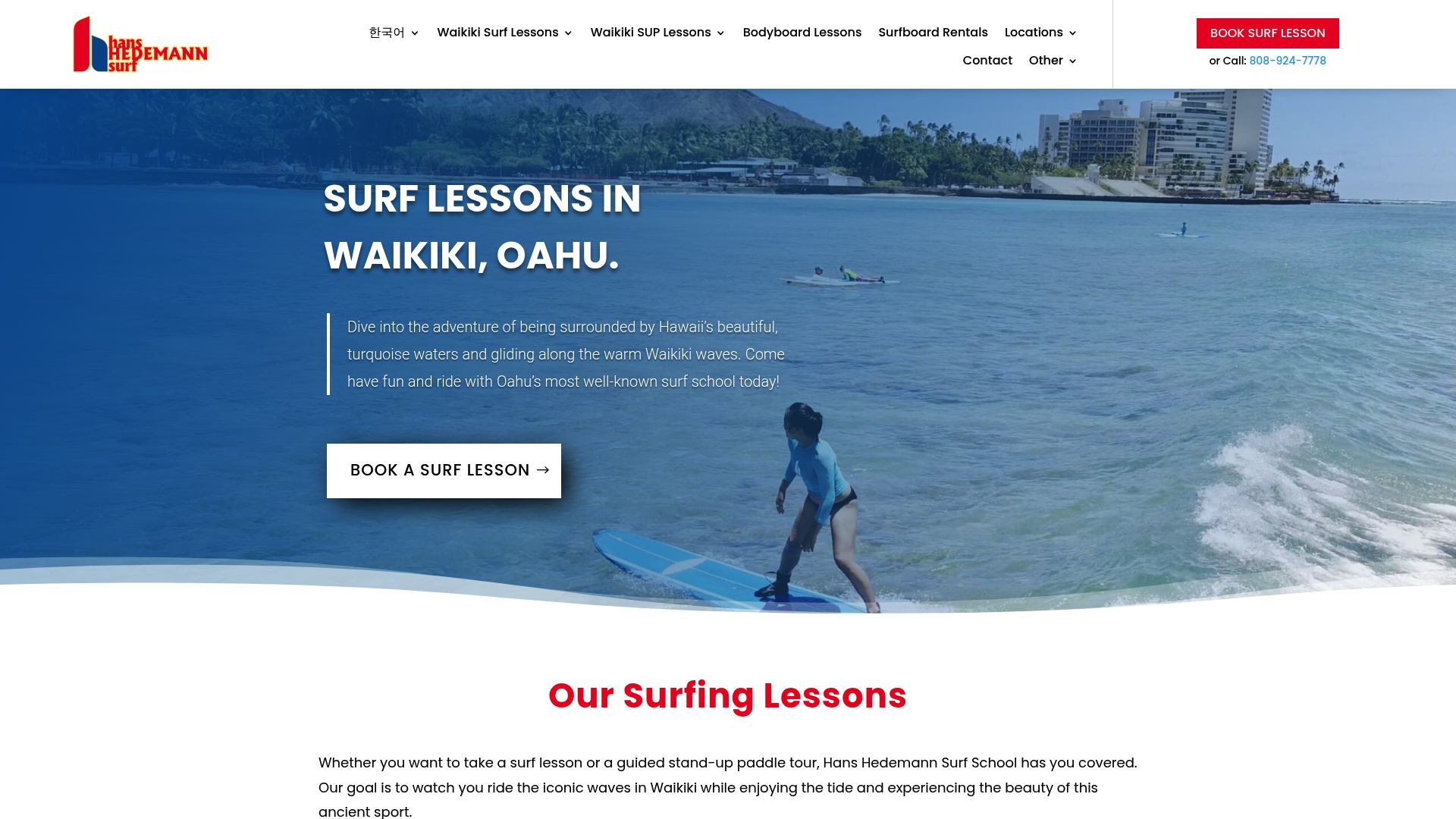
Hans Hedemann Surf School offers group beginner lessons, private one-on-one sessions, kids lessons, and multi-day progression packages, all based out of Waikiki’s beginner zone. Morning slots fill quickly, especially in summer. Book your surf lesson directly on the Hhsurf site and confirm your preferred time when you reserve.
Useful sources and further reading
- Nā Honua Mauli Ola (Third Edition) — Hawaiian cultural pathways for healthy, pono-centered learning environments: olelo.hawaii.edu
- IES ʻĀina-Based Education Infographic — Place-based and project-based learning components that drive sustained skill acquisition: ies.ed.gov
- Chamber of Commerce Hawaii: Professional Skill Acquisition Guide — Deliberate practice and feedback loops for rapid skill-building: cochawaii.org
- Workforce Learning Hawaii Guide — Experiential and social learning frameworks (70-20-10) and retention data: cochawaii.org
- Hhsurf: Why Learn Surfing in Hawaii — Beginner methodology, outcomes, and instructor approach: hhsurf.com
- Hhsurf: Beginner Surf Zone Explained — Waikiki’s designated beginner zone and safety setup: hhsurf.com
- Native Hawaiian Culturally Based Education research (SCIRP) — Pono schools, belonging, and sustained behavior change: scirp.net
0 Comments