
Hawaii is the birthplace of surfing, and Waikiki Beach on Oahu remains the world’s most beginner-friendly place to learn the sport. The combination of warm water, gentle rolling waves, and a century-old teaching tradition makes the case for why learn surfing Hawaii clear from the first paddle out. No other destination pairs ideal wave physics with deep cultural knowledge and professional instruction the way Waikiki does. If you want to stand up on a board your first day, this is where it happens.
Why Waikiki is the perfect place to learn surfing
Waikiki’s waves are not just gentle. They are scientifically ideal for beginners. Wave heights in Waikiki’s beginner zones typically range from 1 to 3 feet, with water temperatures in the high 70s to low 80s Fahrenheit year-round. That warmth means no wetsuit, no cold-water shock, and nothing pulling your focus away from learning the pop-up.
The physical geography of Waikiki creates a rare learning window. Offshore winds blow nearly 350 days per year, keeping wave faces clean and smooth rather than choppy. That consistency is not common anywhere else in the world. Most beginner surf destinations deal with onshore winds that chop up the water and make wave reading far harder.
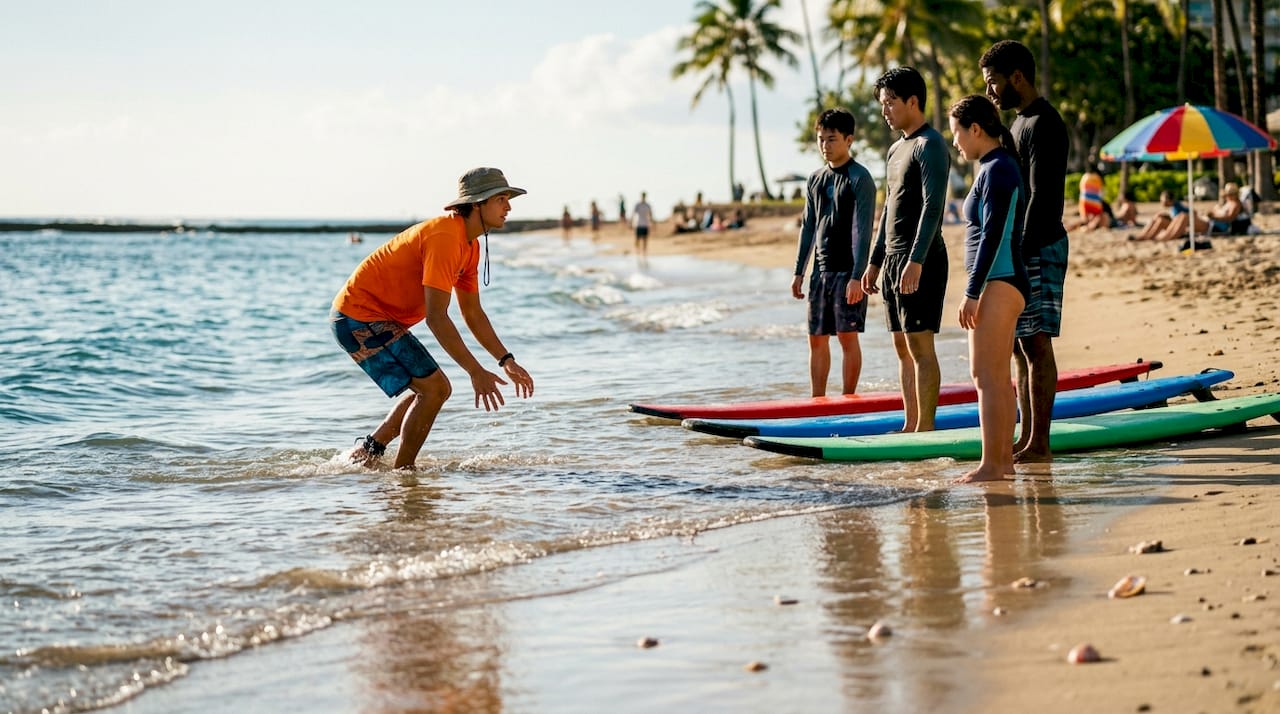
Waikiki’s unique bottom contour adds another layer of advantage. The combination of sand and reef creates a gradual slope that slows waves down and stretches them out. Beginner surfers can ride a single wave for 100 yards or more. That extended ride time gives you real seconds to find your balance, adjust your stance, and feel what it means to actually surf.
Pro Tip: Book your lesson for early morning, ideally before 9:00 AM. The wind is lightest, the crowd is smallest, and the waves are at their most consistent. Afternoon sessions often bring stronger onshore breezes that roughen the water.
| Condition | Waikiki detail |
|---|---|
| Wave height | 1–3 feet in beginner zones |
| Water temperature | High 70s to low 80s °F year-round |
| Wind pattern | Offshore nearly 350 days per year |
| Wave length | Rides of 100 yards or more possible |
| Bottom type | Sand and reef combination for safe, gradual breaks |
How Hawaii’s surf culture accelerates your learning
Hawaii’s surf culture is not a backdrop. It is an active part of the learning process. Surfing originated in Hawaii, and the teaching traditions that developed here over centuries are embedded in how local instructors work with beginners today. That depth of knowledge shows up in every lesson.
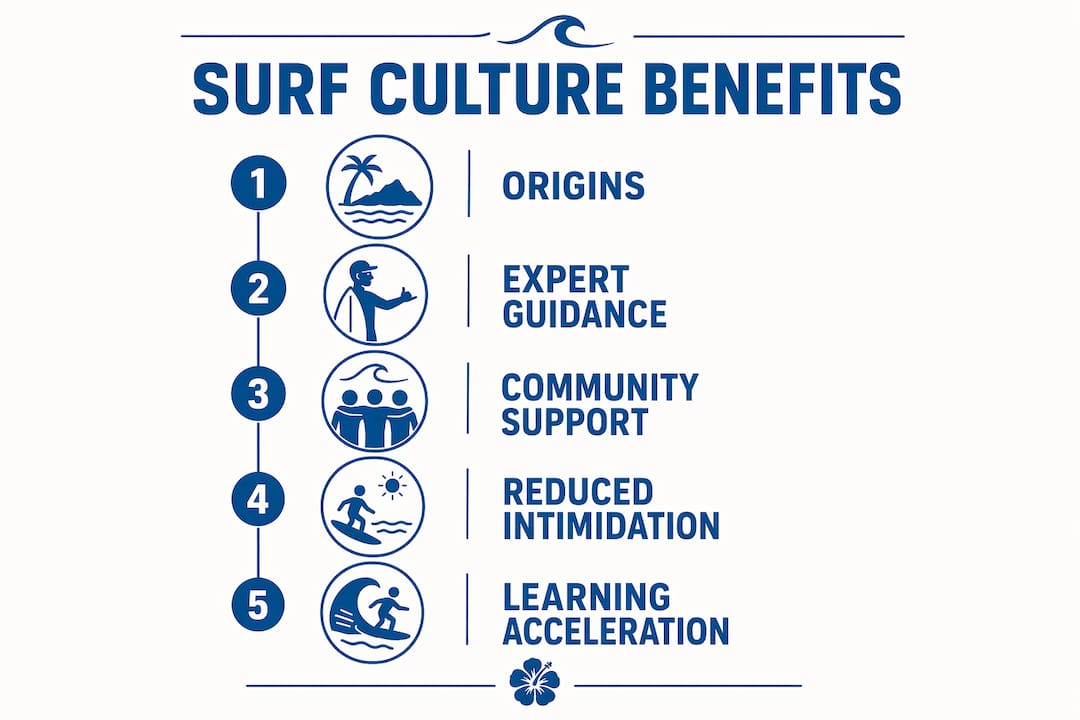
Professional instructors at established Waikiki surf schools have developed refined methodologies over decades of teaching beginners. They know exactly where to position you in the water so you catch waves with high consistency. That positioning knowledge is not something you can replicate by watching YouTube videos. It comes from thousands of hours reading specific breaks.
The cultural environment also reduces the intimidation factor that stops many beginners before they start. Waikiki’s beginner zones attract learners from every country and every age group. The atmosphere is encouraging, not competitive. Local instructors treat the ocean as a shared space and pass that attitude directly to students.
Surf etiquette is a real part of the learning curve. The lineup has a social hierarchy that experienced surfers take seriously. A good instructor introduces you to these customs early, so you avoid accidental conflicts and feel confident in the water from day one. Understanding the lineup is as important as learning the pop-up.
Key cultural advantages Waikiki offers beginners:
- Local expertise: Instructors trained in Hawaiian surf traditions understand wave behavior at specific Waikiki breaks in ways that generic surf coaches do not.
- Community spirit: Waikiki’s beginner zones attract a welcoming mix of learners, reducing social pressure and building confidence.
- Etiquette coaching: Qualified instructors teach lineup rules alongside physical technique, so beginners integrate socially from the start.
- Cultural immersion: Learning where surfing was born adds meaning to every wave you catch.
Pro Tip: Ask your instructor to explain the right-of-way rules before you paddle out. Knowing who has priority on a wave prevents awkward moments and earns you immediate respect from other surfers in the water.
Is it safe to learn surfing in Hawaii?
Safety in Hawaiian surfing depends entirely on where you surf. Waikiki and the North Shore of Oahu are two completely different environments. The North Shore’s winter waves are dangerous, with sharp reef breaks that are life-threatening to inexperienced surfers. Beginners have no business paddling out at Pipeline or Sunset Beach.
Waikiki’s beginner zones are the opposite. They are lifeguard-monitored, clearly defined, and designed for people who have never touched a surfboard. The sand and reef bottom combination creates a forgiving environment where wipeouts are part of learning, not a danger.
Practical safety guidelines for first-time surfers in Hawaii:
- Stay in designated beginner zones. These areas exist for a reason. Paddle outside them and you enter waves beyond your skill level.
- Always surf with an instructor for your first session. Guided instruction produces faster results and keeps you out of situations you cannot handle alone.
- Use a soft-top longboard. A soft-top board at 8–9 feet offers stability and reduces injury risk from board contact.
- Respect the lifeguards. Waikiki’s lifeguards know the water better than anyone. Follow their flags and signals without question.
- Check conditions before you go. Summer months bring gentler south swells. Summer surf in Waikiki is more spaced out and rolling, making it the friendliest season for first-timers.
What to expect from your first surf lesson in Waikiki
A standard beginner surf lesson in Waikiki runs approximately 2 hours. Most reasonably fit beginners stand up and ride a wave to shore within that single session. That success rate is a direct result of Waikiki’s wave conditions combined with structured instruction. It is not luck.
Here is what a typical first lesson looks like, step by step:
- Equipment setup. Your instructor provides a soft-top longboard and a rash guard. Boards can be rented separately starting at $20 per day if you want to practice outside of lessons.
- Dry land practice. You spend 20–30 minutes on the beach practicing the pop-up. Repeating the pop-up 10–15 times on sand builds the muscle memory you need before hitting the water. Your instructor will correct your form here, not in the ocean.
- Paddling out. Your instructor guides you to the beginner zone and teaches you how to paddle efficiently and duck under small waves.
- Wave positioning. The instructor places you precisely where waves are breaking consistently. This is where local knowledge makes the biggest difference.
- Catching your first wave. The instructor pushes your board at the right moment and calls out when to pop up. Most beginners ride their first wave within the first 30 minutes in the water.
- Feedback and repetition. You repeat the process with real-time coaching. Each wave builds on the last.
The pop-up is the single most important physical skill to practice before your lesson. Stand with feet shoulder-width apart, hands flat on the board near your chest, and push up in one smooth motion. Avoid using your knees as a stepping stone. That habit slows your pop-up and throws off your balance on the wave.
Hhsurf offers group lessons, private sessions, and kids surf lessons designed for different learning styles and group sizes. Private lessons give you more one-on-one time with an instructor, which accelerates progress noticeably. Group lessons are social, affordable, and ideal for families or bachelor parties looking for a shared experience.
Key Takeaways
Learning to surf in Hawaii is the most effective beginner experience in the world because Waikiki combines ideal wave physics, expert local instruction, and a welcoming surf culture that no other destination matches.
| Point | Details |
|---|---|
| Waikiki wave conditions | Waves of 1–3 feet, warm water, and offshore winds create the world’s best beginner surf environment. |
| Instructor expertise | Local instructors use decades-refined methods to position beginners for consistent wave catches from lesson one. |
| Safety awareness | Beginners must stay in lifeguard-monitored Waikiki zones and avoid North Shore breaks entirely. |
| Lesson structure | A 2-hour group lesson with dry-land pop-up practice gives most beginners their first real wave ride. |
| Cultural value | Learning surf etiquette and Hawaiian surf history deepens the experience beyond just physical skill. |
What learning to surf in Waikiki actually taught me
Most travel articles tell you that Hawaii is beautiful and that surfing is fun. That is not a useful opinion. What I want to share is what the experience actually does to you as a beginner.
The first thing Waikiki’s waves teach you is patience. You cannot force a wave. You read it, you position yourself, and you commit at the right moment. That lesson transfers off the board faster than you expect. The second thing the experience teaches you is that fear is mostly about the unknown. Once you understand that Waikiki’s beginner zones are genuinely safe, that the water is warm, and that your instructor has done this thousands of times, the fear dissolves quickly.
What surprised me most was the community. Waikiki’s beginner zones are full of people cheering each other on. A stranger on the beach celebrates your first ride as loudly as your friends do. That energy is not manufactured. It comes from a surf culture that has always treated the ocean as a shared gift.
The lasting impact of learning to surf in Hawaii is not the skill itself. It is the confidence that comes from doing something physically challenging in an unfamiliar environment and succeeding. That confidence follows you home. I have seen it happen with beginners of every age and fitness level. Hawaii does not just teach you to surf. It teaches you what you are capable of.
— Johann
Ready to book your first Waikiki surf lesson?
Hhsurf makes it straightforward to get on a board and catch your first wave. Group lessons, private sessions, and kids surf lessons are all available, with equipment included and no prior experience required.
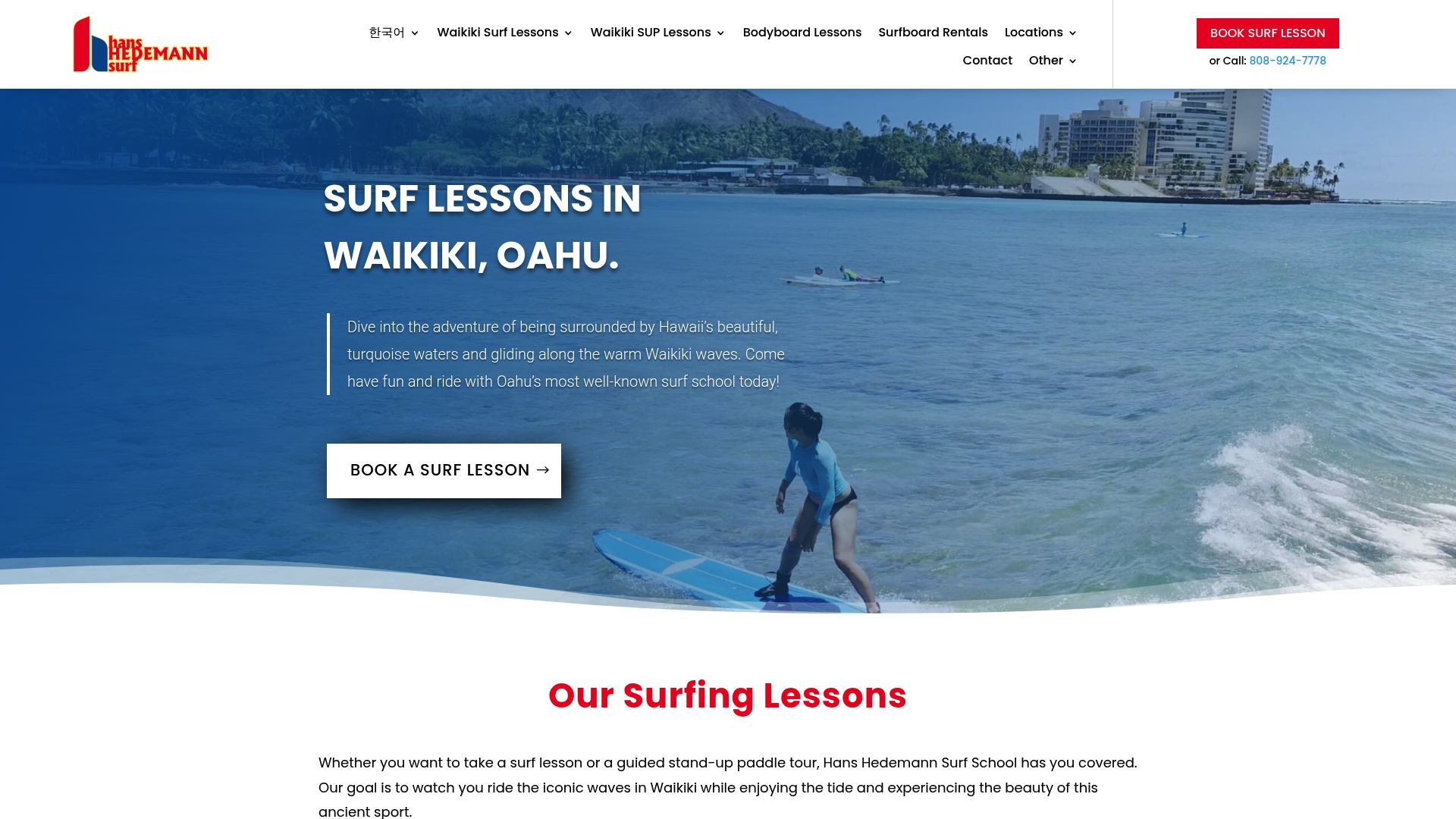
Hhsurf’s instructors are professional surfers who have taught thousands of beginners using a proven method that gets students standing up within their first session. Online booking is available, and spots fill quickly during peak travel months. Book your surf lesson in advance to lock in your preferred time. Whether you are traveling solo, with family, or as part of a group celebration, Hhsurf has a format that fits your trip.
FAQ
What is the best age to learn surfing in Hawaii?
Surfing in Hawaii is accessible to children as young as 5 and adults of any age. Hhsurf offers beginner programs for kids and adults with no upper age limit, provided you are in reasonable physical health.
How long does it take to stand up on a surfboard in Waikiki?
Most reasonably fit beginners stand up and ride a wave within a single 2-hour group lesson in Waikiki’s beginner zones. Waikiki’s consistent 1–3 foot waves and expert instructor positioning make that success rate achievable.
Do I need to know how to swim to surf in Waikiki?
Basic swimming ability is required before taking a surf lesson. You do not need to be a strong swimmer, but you must be comfortable in the water and able to swim at least 50 yards unassisted.
What should I bring to my first surf lesson?
Bring sunscreen, a swimsuit, and water. Your surf school provides the board, rash guard, and all necessary equipment. Leave jewelry at the hotel and apply reef-safe sunscreen before you arrive at the beach.
Is Waikiki surfing safe for families with young children?
Waikiki’s beginner zones are lifeguard-monitored and specifically designed for new surfers, including children. Family-friendly surf lessons in Waikiki are structured to keep young learners in shallow, calm water with direct instructor supervision throughout the session.
0 Comments