
Most beginners stand up on a board during their first lesson, riding whitewater with an instructor’s push and guidance. That counts as real progress, but it is not the same as independently catching and riding an unbroken wave, which usually takes several more sessions. Success in that first hour means standing up, catching whitewater, and getting comfortable in the water, not full wave mastery. How fast you move past that point depends on a handful of factors you can actually influence.
TL;DR:
- After 2 to 3 lessons, pop ups usually need less prompting; many beginners catch their first unbroken green wave after 3 to 5 sessions.
- Independent surfing usually takes more than five lessons, and readiness depends on judging catchable waves, paddling into position, and standing reliably across conditions.
- Progress varies with swimming confidence, fitness, board sport experience, and practice frequency; small, soft waves and larger foam boards make early attempts easier.
- Ask about instructor ratios and water time: groups of two or three per instructor allow more attempts, while ocean practice builds skills that dry land cannot.
Table of Contents
- What You Can Expect After Your First Surf Lesson
- Progression Timeline: What To Expect Across Multiple Lessons
- Key Factors That Change a Surf Lesson’s Success Rate
- How Teaching Method and Instructor Approach Affect Outcomes
- Practical Tips to Improve Your Lesson Success
- Safety and Realistic Outcome Expectations for Beginners
- What I’ve Learned Watching Beginners Progress
- Ready for Faster Progress? Here’s What Waikiki Lessons Look Like
- FAQ
- Sources
What You Can Expect After Your First Surf Lesson
A typical first lesson follows a predictable structure, and knowing it ahead of time helps you set the right expectations. Instructors usually start on the sand with a safety briefing covering currents, board etiquette, and how to fall safely, then move into pop-up practice, the motion of pushing from lying down to a standing stance. Only after that does the group head into the shallows to practice paddling and catching whitewater, the foamy, already-broken part of a wave that pushes you toward shore with far more stability than an open-face wave.
By the end of that first session, most beginners have:
- Stood up at least once, usually with an instructor pushing the board at the right moment.
- Caught several whitewater rides, even if wobbly or short.
- Practiced paddling technique well enough to move the board forward with purpose.
- Gained a clearer sense of ocean movement, including how waves form and break.
- Built enough comfort in the water to want to try again.
That last point matters more than it might seem. Confidence gained during early mastery moments, like a first successful pop-up, is identified as a mechanism that helps beginners stay engaged and continue practicing. A realist synthesis on surf therapy and wellbeing found self-efficacy cited as a driving factor across more than a third of the studies it reviewed, linking learning-to-surf activities to measurable gains in confidence that support continued practice. In plain terms, the moment you stand up, even briefly, your brain registers it as proof you can do this again, and that belief tends to speed up everything that follows.
This is also why the structure of a first lesson matters so much. A rushed session that skips land-based pop-up repetition or crowds too many students onto one wave tends to produce fewer of those confidence-building moments. A step-by-step walkthrough of what a first lesson typically includes can help you compare what a given school offers against what actually moves a beginner forward.
It is worth being honest about what does not happen in lesson one. You are unlikely to turn the board, generate your own speed on an unbroken wave, or read ocean conditions well enough to pick your own wave. Those skills build on the foundation laid in the first session, and expecting them too soon is one of the most common reasons beginners feel discouraged after a perfectly normal first outing. The goal of lesson one is not fluency. It is a working foundation: a body that remembers the pop-up motion, a nervous system that has registered the ocean as manageable rather than threatening, and a first taste of the feeling that makes people come back for lesson two.
Progression Timeline: What To Expect Across Multiple Lessons
Surfing improves in stages, and knowing the general shape of that curve helps you judge whether you are progressing normally or need a different approach. Progress is rarely a straight line. Some beginners click with the pop-up by lesson two, while others need five sessions to find the same consistency, and both are completely normal outcomes.
- After 2 to 3 lessons, pop-ups become more consistent and less reliant on an instructor’s countdown. Paddling technique improves enough that you can position yourself for a wave instead of just reacting to one, and you start catching whitewater rides with less assistance.
- After 3 to 5 lessons, many beginners catch their first small green waves, the term for an unbroken wave face rather than whitewater. Rides get longer, balance holds up over rougher water, and the instructor’s role shifts from physically pushing the board to coaching timing and positioning from the side.
- With continued practice beyond 5 lessons, basic turning, better wave selection, and the ability to paddle out and catch waves without direct assistance start to emerge. This stage often includes a transition from foam boards to slightly smaller boards as balance and paddle strength increase.
- Independent sessions become realistic once you can judge which waves are catchable, paddle into position on your own, and pop up reliably in a range of conditions, a milestone that usually reflects a mix of lesson time and self-directed practice rather than lesson count alone.
The variability in that timeline is not a flaw in the process. Age, prior board-sport experience, swimming comfort, and even how often you practice between lessons all shift the curve in either direction. A guide to the fastest ways to pick up surfing basics breaks down specific drills that tend to compress this timeline for people willing to put in practice time outside the water.
What stays consistent across most learners is the shape of the curve itself: rapid early gains tied to novel skills like standing up, followed by a slower, more technical middle stretch where wave reading and timing become the bottleneck rather than balance.
Key Factors That Change a Surf Lesson’s Success Rate
Two people in the same lesson, with the same instructor and the same waves, can walk away with very different results. That gap usually comes down to a specific, identifiable set of factors rather than raw talent.
Personal factors shape how quickly your body adapts to the demands of the sport:
- Swimming ability and general water confidence, since fear of the water slows every other skill.
- Baseline fitness, particularly shoulder and core strength needed for paddling and popping up.
- Age and coordination, which affect balance and reaction speed differently across learners.
- Prior experience with balance sports like skateboarding or snowboarding, which often transfers directly.
Environmental conditions matter just as much as personal readiness. Small, soft waves at a sandy beach break are far more forgiving than a rocky point break with a strong tide pull, and wind direction affects how clean and predictable the wave face is. Lessons scheduled during calmer, smaller swell windows consistently produce more standing attempts per session simply because there are more catchable waves.
Equipment plays a bigger role than most beginners expect. Larger foam boards with more volume float higher and more stable in the water, which makes popping up considerably easier than it would be on a shorter, narrower board designed for experienced surfers. A comparison of renting versus using lesson equipment explains why board choice alone can be the difference between a frustrating session and a productive one.
Instructor and class factors round out the list, and they are often the easiest for a beginner to influence by choosing carefully. Smaller group sizes mean more individual pushes and corrections per student, and experienced instructors read wave timing well enough to put you in position at the right second rather than leaving you to guess.
Pro Tip: Ask any surf school directly how many students are assigned per instructor before you book: a ratio of two or three to one tends to produce far more standing attempts per session than a crowded group class.
How Teaching Method and Instructor Approach Affect Outcomes
The single biggest lever beginners can pull, short of personal fitness, is the quality of instruction itself. Research into skill acquisition in surfing points to a specific principle: training works best when it closely mirrors the real conditions a surfer will face. A study on skill acquisition in competitive surfing recommends prioritizing ocean-based practice for effective skill transfer, noting that dry-land tools like balance boards or video review can support learning but cannot replace time spent actually catching waves. In other words, a lesson heavy on land-based pop-up drills followed by limited water time will teach you the motion, but only repeated ocean practice, ideally with waves scaled to your skill level, turns that motion into something you can do reflexively.
This is where individual attention changes outcomes. A few teaching features consistently correlate with faster beginner progress:
- Short, focused land drills before paddling out, rather than long lectures.
- Repeated attempts on appropriately sized waves rather than one or two chances per session.
- Direct, in-water coaching and physical positioning help rather than shouted instructions from the beach.
- Quick, specific feedback after each attempt instead of general encouragement.
One surf school in Waikiki builds its beginner program around this kind of individual attention, with instructors working to get most first-time students standing and riding whitewater within their first lesson. The school’s stated approach centers on hands-on coaching from professional surfers, scaled group sizes, and equipment suited to beginners, all aimed at shortening the usual learning curve rather than leaving students to figure out timing on their own.
A lesson built around repeated, well-timed attempts in forgiving conditions teaches the body faster than any amount of talking on the sand ever will.
When you are comparing schools, it helps to ask pointed questions: how many students per instructor, what board sizes beginners start on, and how much of the session happens in the water versus on land. A list of traits that separate strong beginner instructors from mediocre ones gives a useful checklist for that conversation.
Practical Tips to Improve Your Lesson Success
A surf lesson is only one piece of the learning process. What you do before and between sessions can meaningfully shift how fast you progress.
- Before your first lesson, build basic swim fitness and comfort treading water, since instructors spend less time managing fear and more time coaching technique when a student is already water-confident.
- Practice pop-ups on dry land in the days before your lesson, even on a yoga mat or towel, so the motion feels familiar rather than foreign once you are on a moving board.
- Between lessons, short sessions on a balance board or surf-skate build the same core stability surfing demands, and light cardio or shoulder work improves paddling endurance.
- On lesson day, ask for a smaller group or private instruction if your school offers it, since more repetitions per session translate directly into faster skill gains.
- Request feedback on your pop-up timing or paddling form if the school offers video review. Seeing your own attempt is often more useful than being told what went wrong.
- When booking, consider private or semi-private lessons if faster progress matters to you more than cost. Fewer students per instructor means more waves caught and more corrections given per hour in the water.
Pro Tip: Wear a snug-fitting rash guard or swimsuit that will not shift during paddling and pop-ups. Options built for paddle sports, like stay-put swimwear designed for paddle boarding, hold up better than everyday swimwear once you are falling off a board repeatedly.
If progress matters more than cost, a private lesson structure gives an instructor room to adjust pacing to your specific sticking points, whether that is timing the pop-up or reading when a wave is about to break.
Safety and Realistic Outcome Expectations for Beginners
Every productive surf lesson starts with safety, and understanding what that training covers helps you set outcome expectations that match reality rather than marketing claims. Instructors typically brief beginners on rip-current awareness, how to hold and control a board so it does not become a hazard to others, and how to handle shore break, the point where waves collapse close to the sand and can knock an unsteady beginner off balance.
Instructors reduce risk in several concrete ways:
- Choosing calm, smaller-wave conditions for first-timers rather than pushing beginners into advanced surf.
- Using foam boards with extra flotation, which are harder to sink and gentler on impact.
- Staying in the water alongside students to physically assist with positioning and timing.
- Watching for fatigue or anxiety and adjusting pace before either becomes a safety issue.
A surfer rescue training evaluation found that structured safety training raised participants’ confidence in hazard recognition and rescue skills, with high reported satisfaction among those who completed it. That same principle applies at the beginner lesson level: a student who understands currents and shore break is both safer and more relaxed, which in turn supports faster skill pickup.
Realistic outcomes should be framed with safety in mind. Standing up once during a push from an instructor is a legitimate win for lesson one. Consistent, unassisted rides on green waves is a multi-lesson goal, not a first-session expectation. If you find yourself repeatedly unable to catch even whitewater after several attempts, or feeling consistently anxious in the water, that is a sign to ask for more one-on-one coaching time rather than to push through alone.
What I’ve Learned Watching Beginners Progress
Every beginner I have worked with arrives convinced they will be the exception, either the one who stands up instantly or the one who never gets it. Neither is usually true. What I see instead is a pattern: fast early wins on whitewater, a wobble in the middle sessions where wave timing becomes the real challenge, and then a second confidence jump once someone catches their first green wave unassisted.

The variability is real. Fitness, fear of the water, and even how often someone practices between lessons shift the timeline by weeks in either direction. None of that means progress has stalled. It usually means the next session needs a smaller class size, a calmer day, or simply one more repetition of the same wave.
If you are a few lessons in and feeling behind, the most useful next step is almost always more focused water time, not more waiting.
— Johann
Ready for Faster Progress? Here’s What Waikiki Lessons Look Like
If the staged timeline above sounds about right but you would rather compress it, the fastest path for most beginners is a lesson structure with more individual attention. Our programs are designed around exactly that idea: smaller groups, experienced local instructors, and all equipment included, so your first session is spent learning rather than figuring out gear.
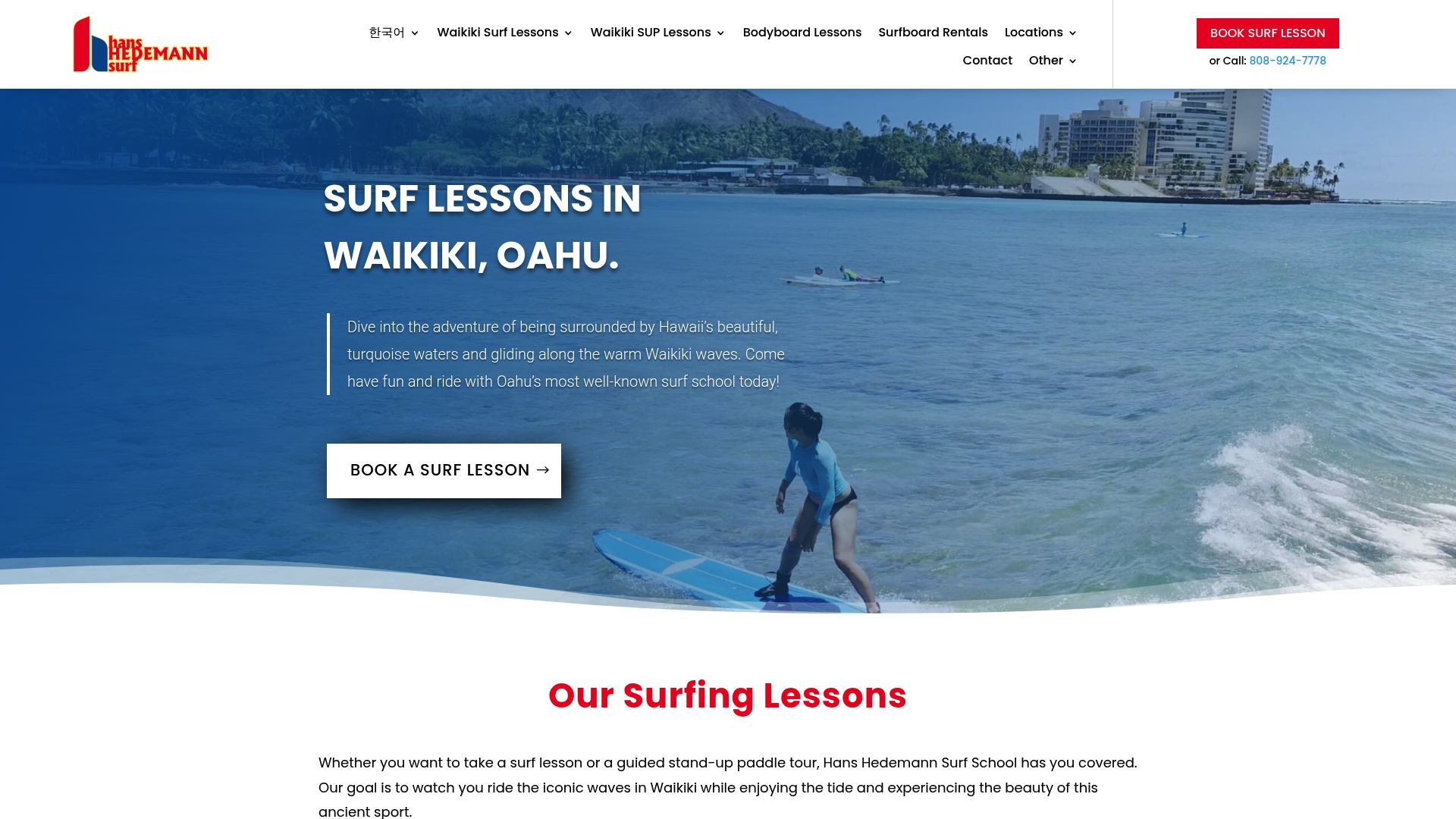
Our lesson lineup covers the range beginners actually need:
- Group Lessons at $100 per person, a solid starting point for first-timers comfortable learning alongside others.
- Semi Private Lessons at $150 per person, splitting instructor attention between fewer students.
- Private Lessons at $180 per person, built for anyone who wants every wave coached one-on-one.
- Surf with a Pro at $400 per person, for a fully dedicated session with a professional surfer.
When you arrive, expect a short safety briefing, a quick pop-up review on the sand, and then straight into the water on a board matched to your size and skill level. Choosing between group and private mainly comes down to how much individual coaching you want per wave: private lessons mean more repetitions and faster correction, while group lessons offer a lower-cost way to get a feel for the sport.
You can see the full breakdown of lesson types and book directly through our surf lessons page.
FAQ
What is the 12 second rule in surfing?
The “rule” generally refers to a guideline surfers use for wave etiquette and timing, often cited in discussions about how long to wait before paddling for a wave someone else is riding. Practices and exact definitions vary by region and surf break, so it is worth asking a local instructor how it applies at your specific beach.
Are surfing lessons worth it?
Yes, for most beginners, structured lessons speed up the learning curve considerably compared to teaching yourself, mainly because instructors correct pop-up timing and positioning in real time. Lessons also build the safety awareness, like recognizing rip currents and shore break, that self-taught surfers often miss early on.
Does surfing age you faster?
There is no established evidence that surfing itself accelerates aging, and sun exposure, not the sport’s physical demands, is the main age-related risk surfers face in the water. Wearing reef-safe sunscreen and protective rash guards addresses most of that concern.
Should surfers be tall or short?
Height does not determine surfing ability, since board size and volume can be adjusted to suit a surfer of any height or build. What matters more for beginners is core strength, balance, and comfort in the water, all of which develop with practice regardless of stature.
Sources
- Explaining how, why, for whom and when surf therapy improves mental health and wellbeing in adults: a realist synthesis
- A principled approach to skill acquisition in competitive surfing: Embracing representative learning design
- Impact of a surfer rescue training program in Australia and New Zealand: a mixed methods evaluation
0 Comments